


























Views
Plays

Locomotion and Movement Worksheet | Grade 12 Essential
Paste this activity's link or code into your existing LMS (Google Classroom, Canvas, Teams, Schoology, Moodle, etc.).
Students can open and work on the activity right away, with no student login required.
You'll still be able to track student progress and results from your teacher account.
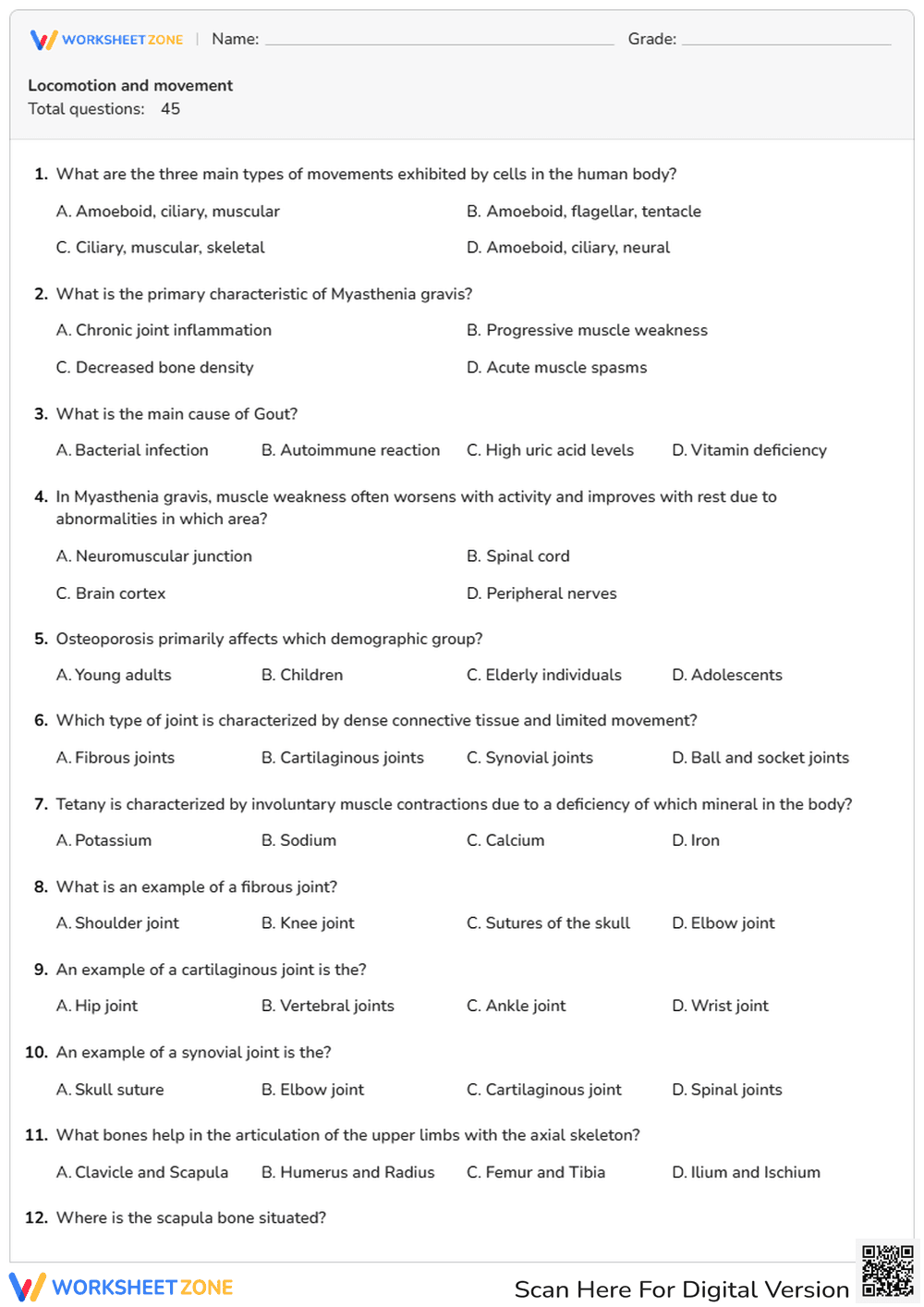
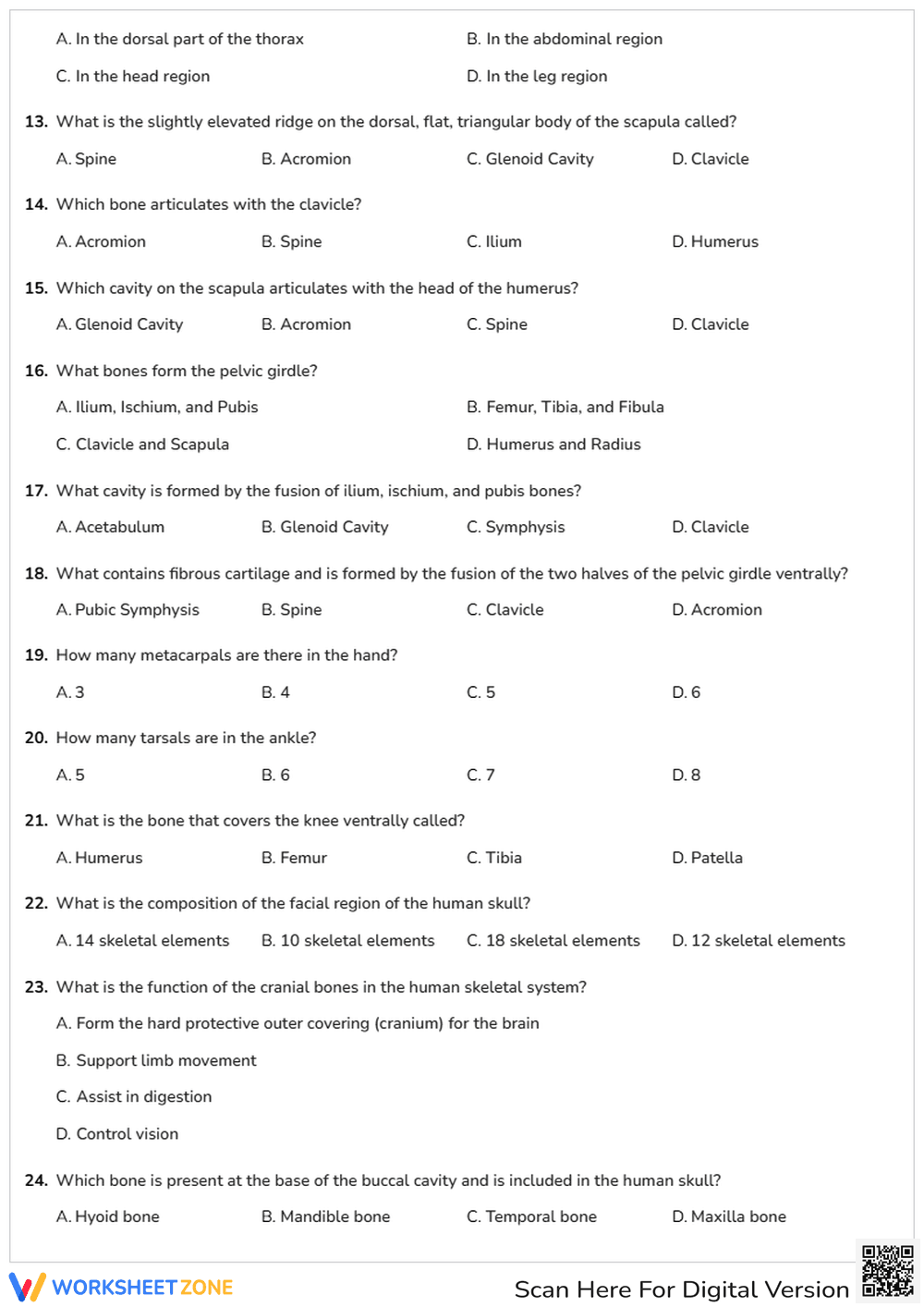
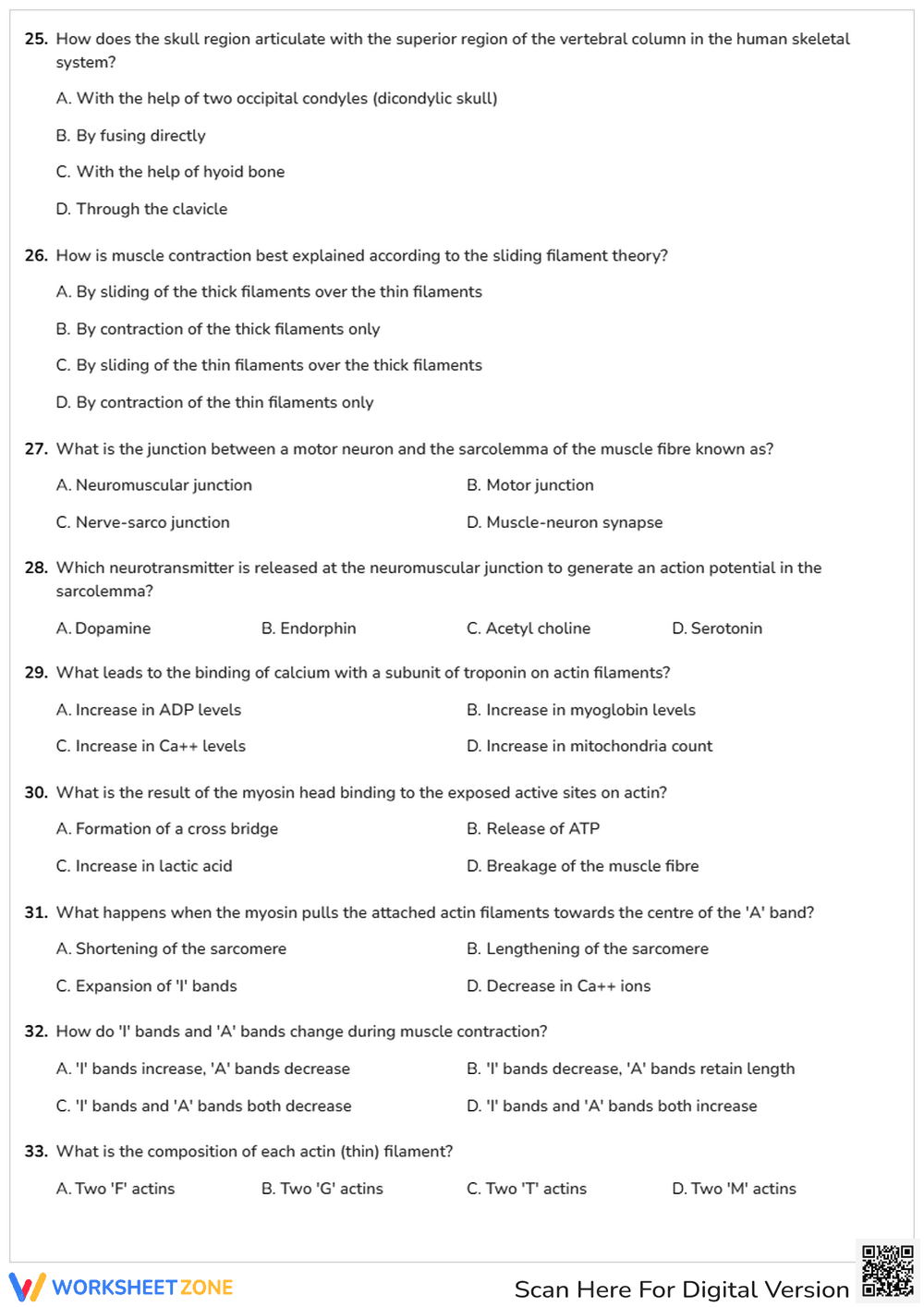
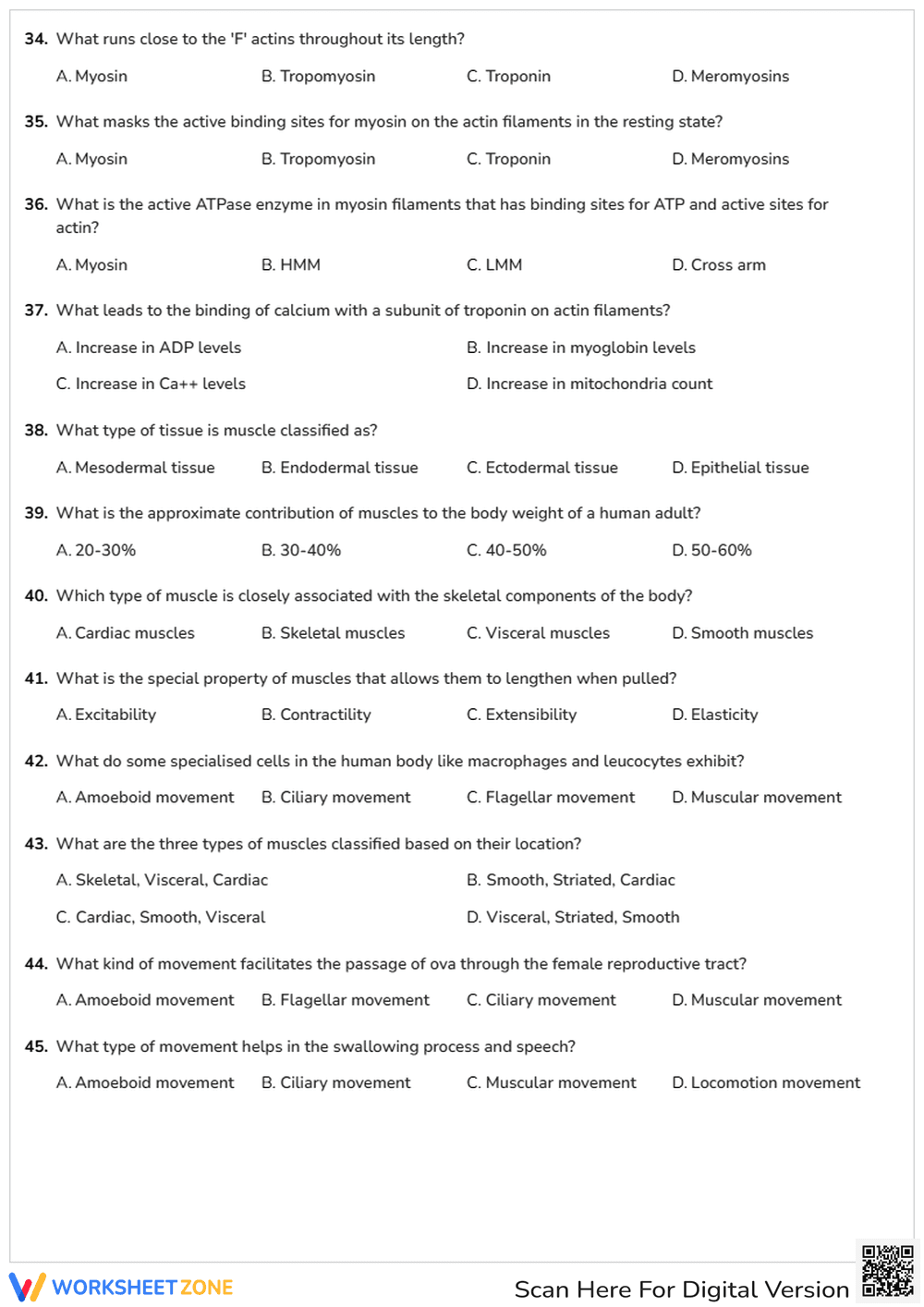
This Grade 12 biology worksheet provides a comprehensive assessment of the human muscular and skeletal systems. Students will analyze locomotion mechanisms, the sliding filament theory, and various physiological disorders. It ensures a deep understanding of how anatomical structures facilitate movement and maintain homeostasis through complex biological interactions.
At a Glance
- Grade: 12 · Subject: Biology
- Standard:
HS-LS1-2— Multicellular organisms have hierarchical structural organization to perform necessary life functions- Skill Focus: Muscular and Skeletal Physiology
- Format: 4 pages · 45 problems · Answer key included · PDF
- Best For: Unit assessment or sub plan
- Time: 45–60 minutes
This 4-page PDF contains 45 rigorous multiple-choice questions designed for high school anatomy or advanced biology courses. The content spans cellular movement types, specific bone articulations, the biochemistry of muscle contraction, and clinical pathologies like Tetany and Myasthenia gravis. A complete answer key is provided for rapid grading and immediate student feedback.
Zero-Prep Workflow:
1. Print: Select the 4-page PDF and print enough copies for your class (30 seconds).
2. Distribute: Hand out the assessment as a quiet individual activity or a collaborative review (1 minute).
3. Review: Use the included answer key to grade or lead a whole-class discussion on complex physiological pathways (15 minutes). Total teacher prep is under 2 minutes.
Standards Alignment: Primary standard HS-LS1-2: "Develop and use a model to illustrate the hierarchical organization of interacting systems that provide specific functions within multicellular organisms." This resource also supports HS-LS1-3 regarding feedback mechanisms and homeostasis. Both standard codes can be copied directly into lesson plans, IEP goals, or district curriculum mapping tools.
Use this as a summative assessment after completing the Muscular System unit. It serves as an excellent formative check during the "Explain" phase of a 5E lesson. Observe student responses to questions 26-32 to gauge mastery of the sliding filament theory and cross-bridge formation. Completion typically takes 50 minutes for most Grade 12 learners.
Designed for Grade 12 Biology or Anatomy & Physiology students, this resource is ideal for learners preparing for college-level science or medical certifications. It provides the necessary rigor for honors-level tracks. Pair this with a 3D skeletal model or a muscle contraction animation for a multi-modal learning experience in the classroom.
According to the RAND AIRS 2024 report, high-quality science assessments that integrate multiple-choice questions with complex physiological scenarios significantly improve student retention of anatomical terminology. This worksheet aligns with the HS-LS1-2 standard by requiring students to identify how the muscular and skeletal systems interact to produce locomotion. By covering 45 distinct data points—from the biochemistry of Acetylcholine to the structural composition of the pelvic girdle—the resource ensures a broad sampling of the curriculum. Research from Fisher & Frey (2014) suggests that structured practice with technical vocabulary in context, as seen in these 45 tasks, bridges the gap between basic recall and conceptual mastery. This PDF is a reliable tool for measuring student progress toward NGSS benchmarks in advanced secondary biology courses, providing clear evidence of student understanding regarding the mechanical and chemical basis of human movement.


