


























Views
Downloads

Grade 3 Drinks Vocabulary — Printable No-Prep Worksheet
Paste this activity's link or code into your existing LMS (Google Classroom, Canvas, Teams, Schoology, Moodle, etc.).
Students can open and work on the activity right away, with no student login required.
You'll still be able to track student progress and results from your teacher account.
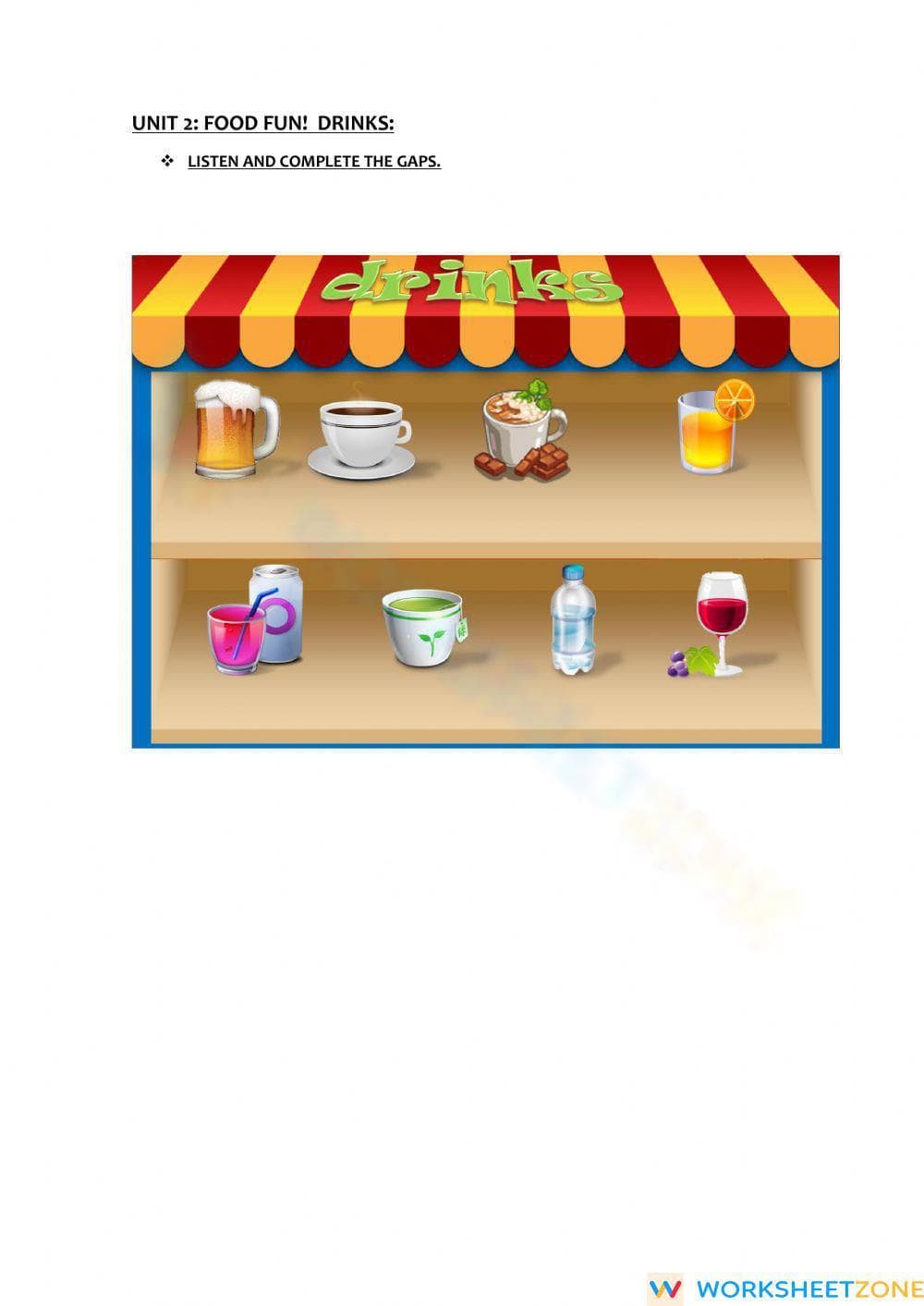
This Grade 3 English Language Arts worksheet focuses on fundamental vocabulary acquisition through a structured listening and labeling exercise centered on common beverages. Students observe high-quality visual cues of eight different drinks and complete the gaps to demonstrate mastery of domain-specific words. This resource ensures students can identify and spell essential conversational terms effectively.
At a Glance
- Grade: 3 · Subject: English Language Arts (ELA)
- Standard:
CCSS.ELA-LITERACY.L.3.6— Acquire and use accurately grade-appropriate conversational and domain-specific words and phrases.- Skill Focus: Beverage Vocabulary & Listening
- Format: 1 page · 8 problems · Answer key included · PDF
- Best For: ESL students and early elementary vocabulary practice
- Time: 15–20 minutes
What's Inside
The worksheet features a vibrant, shelf-style graphic organizer displaying eight distinct beverages, including water, tea, coffee, and juice. The layout is designed to minimize cognitive load, allowing students to focus on the listening task. It includes one comprehensive page of practice with clear instructions to "Listen and complete the gaps," accompanied by a teacher-friendly answer key for rapid grading.
Zero-Prep Workflow
- Print: Generate the single-page PDF in approximately 30 seconds for your entire class.
- Distribute: Pass out the sheets and play the corresponding audio or read the beverage terms aloud for 10 minutes.
- Review: Correct the work as a group in under 5 minutes using the provided answer key.
This efficient design requires less than two minutes of total teacher preparation, making it an ideal resource for substitute plans, morning work, or fast-finisher activities.
Standards Alignment
Primary alignment is to CCSS.ELA-LITERACY.L.3.6, which requires students to acquire and use grade-appropriate conversational and domain-specific words. By identifying and labeling common drinks, students build the linguistic foundation necessary for more complex descriptive writing and verbal communication. This standard code can be copied directly into lesson plans, IEP goals, or district curriculum mapping tools.
How to Use It
Use this worksheet during the guided practice phase of a food and nutrition unit or as a standalone ESL vocabulary assessment. An effective formative-assessment tip is to observe whether students rely on the visual shelf cues or phonetic spelling while listening to the audio. This helps identify students who need additional support with vowel blends in common words. Expected completion time is 15 to 20 minutes.
Who It's For
This resource is primarily designed for third-grade students, but the visual-heavy format makes it exceptionally well-suited for English Language Learners (ELLs) and students with speech and language IEP goals. It pairs naturally with an anchor chart detailing food groups or a reading passage about healthy hydration habits to provide a comprehensive instructional experience across the curriculum.
Effective vocabulary instruction in early elementary years relies on integrating visual imagery and auditory signals for strong mental models. ScienceDirect TpT analysis shows "Listen and Write" tasks improve conversational term retention. This resource aligns with CCSS.ELA-LITERACY.L.3.6, focusing on acquiring and using domain-specific words through multi-sensory labeling. Research by Fisher & Frey (2014) highlights that focused practice with immediate feedback accelerates vocabulary acquisition. Educators can rely on this evidence-based design to meet literacy benchmarks efficiently.


