


























Views
Downloads
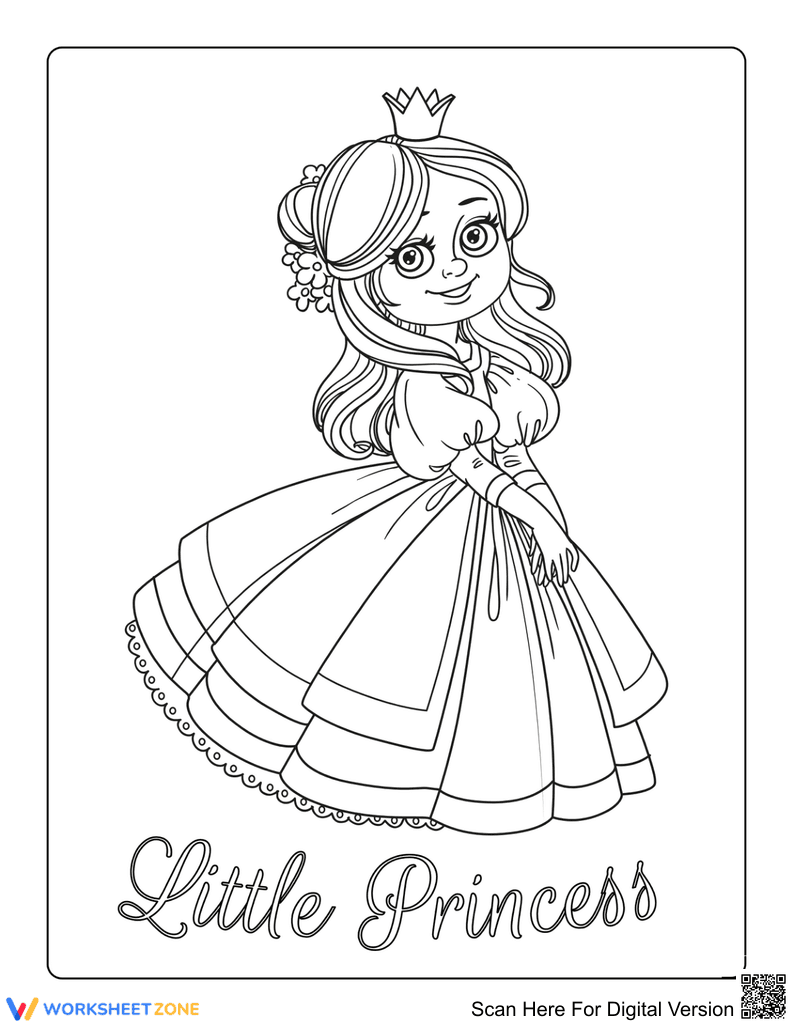

Little Princess Coloring Page | Essential Grade K Ready
Paste this activity's link or code into your existing LMS (Google Classroom, Canvas, Teams, Schoology, Moodle, etc.).
Students can open and work on the activity right away, with no student login required.
You'll still be able to track student progress and results from your teacher account.
This Kindergarten coloring worksheet provides a high-interest Little Princess illustration to help young learners develop essential fine motor control and creative expression. By engaging with detailed line art, students practice the grip and precision necessary for early writing success while exploring color theory in a low-stress, enjoyable format.
At a Glance
- Grade: Kindergarten · Subject: Arts & English
- Standard:
CCSS.ELA-LITERACY.L.K.1— Use fine motor skills to demonstrate command of early writing conventions- Skill Focus: Fine motor control and creativity
- Format: 1 page · 1 task · No answer key needed · PDF
- Best For: Morning work or early finishers
- Time: 15–20 minutes
What's Inside
Inside this resource, you will find a single-page, high-resolution PDF featuring a charming princess character. The illustration includes various textures and patterns—from the floral hair accents to the tiered gown—offering multiple opportunities for students to practice staying within lines. The clear Little Princess text at the bottom also introduces letter recognition in a stylized font.
Zero-Prep Workflow
The zero-prep workflow for this worksheet is designed for maximum efficiency in a busy classroom. First, print the single-page PDF in about 30 seconds. Second, distribute the page along with crayons, markers, or colored pencils. Third, allow students to work independently while you transition between lessons or conduct small-group reading. Total teacher preparation time is under 2 minutes.
Standards Alignment
This activity aligns with `CCSS.ELA-LITERACY.L.K.1`, which focuses on the command of English conventions. While primarily an artistic task, the development of the small muscles in the hand is a direct prerequisite for the print many upper- and lowercase letters requirement of the standard. This standard code can be copied directly into lesson plans, IEP goals, or district curriculum mapping tools.
How to Use It
Use this worksheet as a calming settle-down activity after recess or as a rewarding task for early finishers who have completed their primary literacy block. For a formative assessment, observe the student's pencil grip and their ability to control the coloring tool within specific boundaries. Completion typically ranges from 15 to 20 minutes depending on the student's detail level.
Who It's For
This resource is ideal for Kindergarten students, though it remains popular for Grade 1 and preschool learners. It is particularly effective for students needing additional occupational therapy support or fine motor intervention. Pair this with a princess-themed storybook or a direct instruction lesson on primary and secondary colors for a cohesive unit.
Research from Fisher & Frey (2014) emphasizes the importance of scaffolded activities that build the foundational physical skills required for academic tasks. This Little Princess worksheet addresses the fine motor precursors to CCSS.ELA-LITERACY.L.K.1 by requiring students to exercise grip stability and spatial awareness. According to the RAND AIRS 2024 report on early childhood development, integrated arts activities significantly improve student engagement and persistence in task completion. By providing a 1-page, high-interest subject, educators can foster a positive association with desk-based work while simultaneously strengthening the neural pathways associated with hand-eye coordination. This resource serves as a practical tool for meeting developmental milestones in a classroom setting, ensuring that students are physically prepared for the rigors of formal handwriting and letter formation in later grades.


