


























Views
Downloads

Printable Grade 2 Math: Line Plot Practice Worksheet
Paste this activity's link or code into your existing LMS (Google Classroom, Canvas, Teams, Schoology, Moodle, etc.).
Students can open and work on the activity right away, with no student login required.
You'll still be able to track student progress and results from your teacher account.
This Grade 2 math worksheet focuses on the essential skill of data visualization through line plots. Students learn to translate raw measurement data into organized visual displays, a critical foundation for statistical literacy. By completing these 13 targeted tasks, learners gain confidence in both constructing plots and extracting meaningful insights from existing graphs.
At a Glance
- Grade: 2 · Subject: Math
- Standard:
2.MD.D.9— Show measurements by making a line plot with whole-number units- Skill Focus: Creating and interpreting line plots
- Format: 4 pages · 13 problems · Answer key included · PDF
- Best For: Primary instruction and data graphing practice
- Time: 25–35 minutes
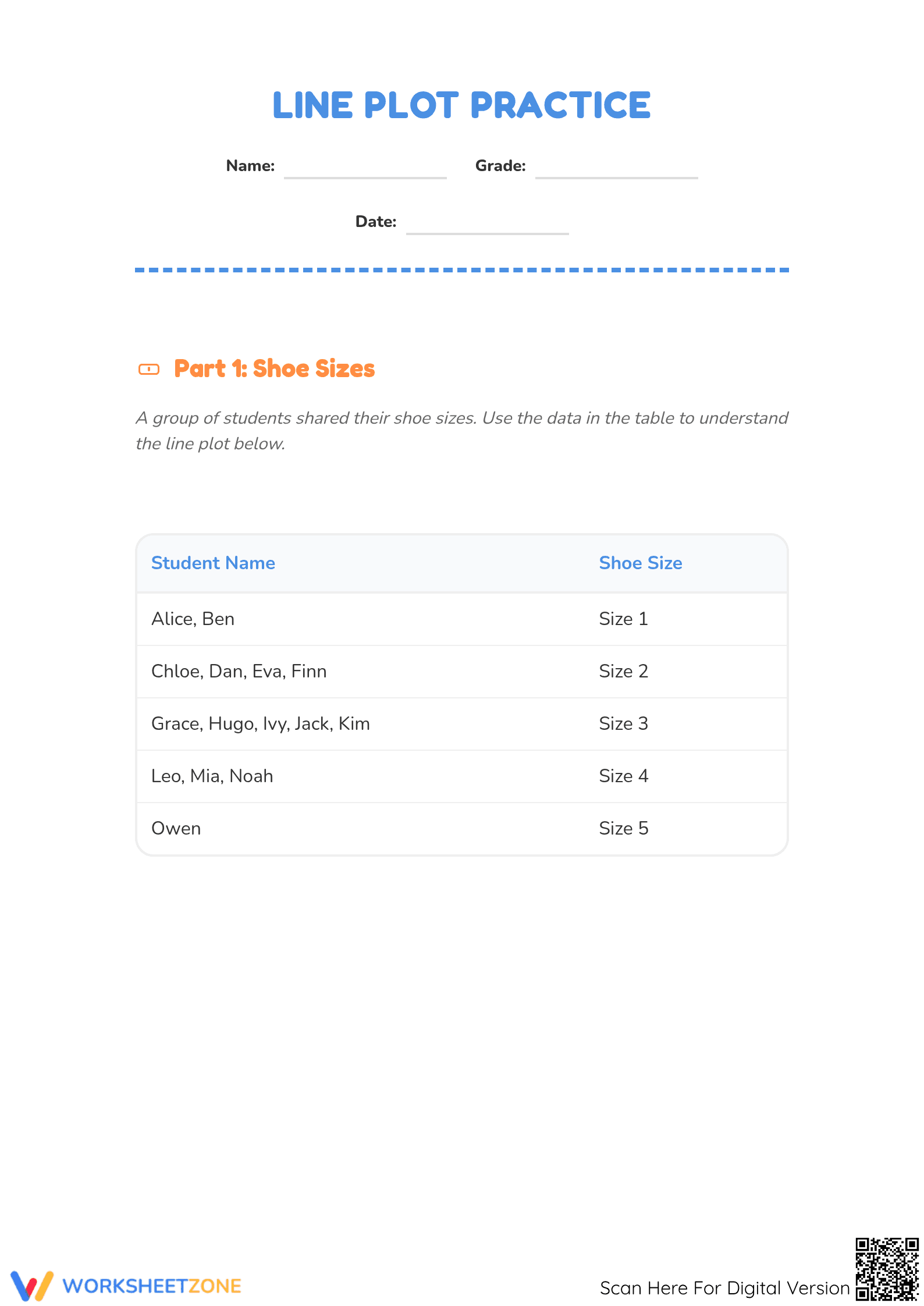
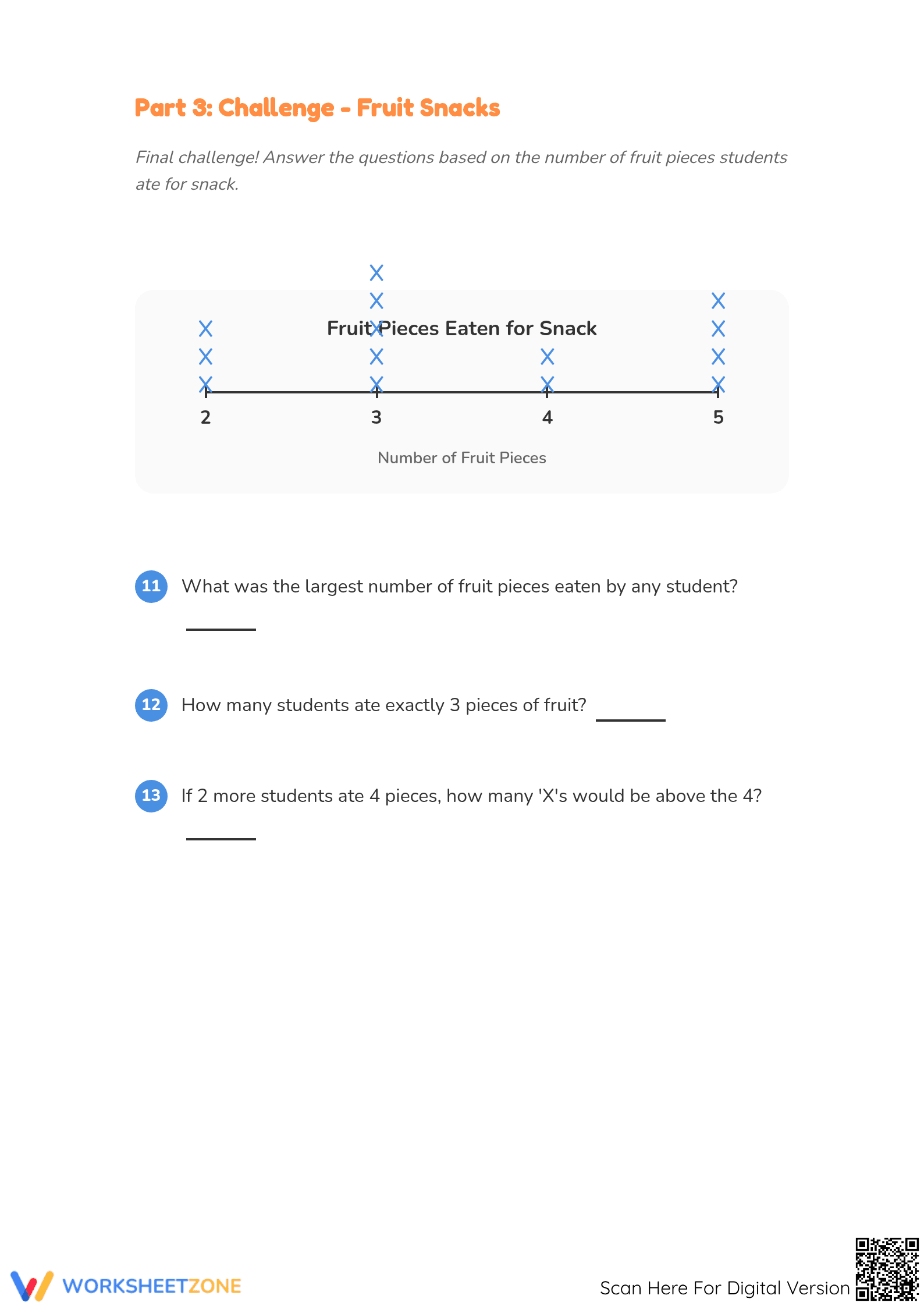
The packet contains four pages of structured practice divided into three distinct parts. It features a shoe size data table, a sibling count dataset for plot construction, and a challenge section on fruit snacks eaten. Each section includes clear labels, 'X' markers for plotting, and specific analytical questions. A full answer key is provided for immediate feedback.
Skill Progression
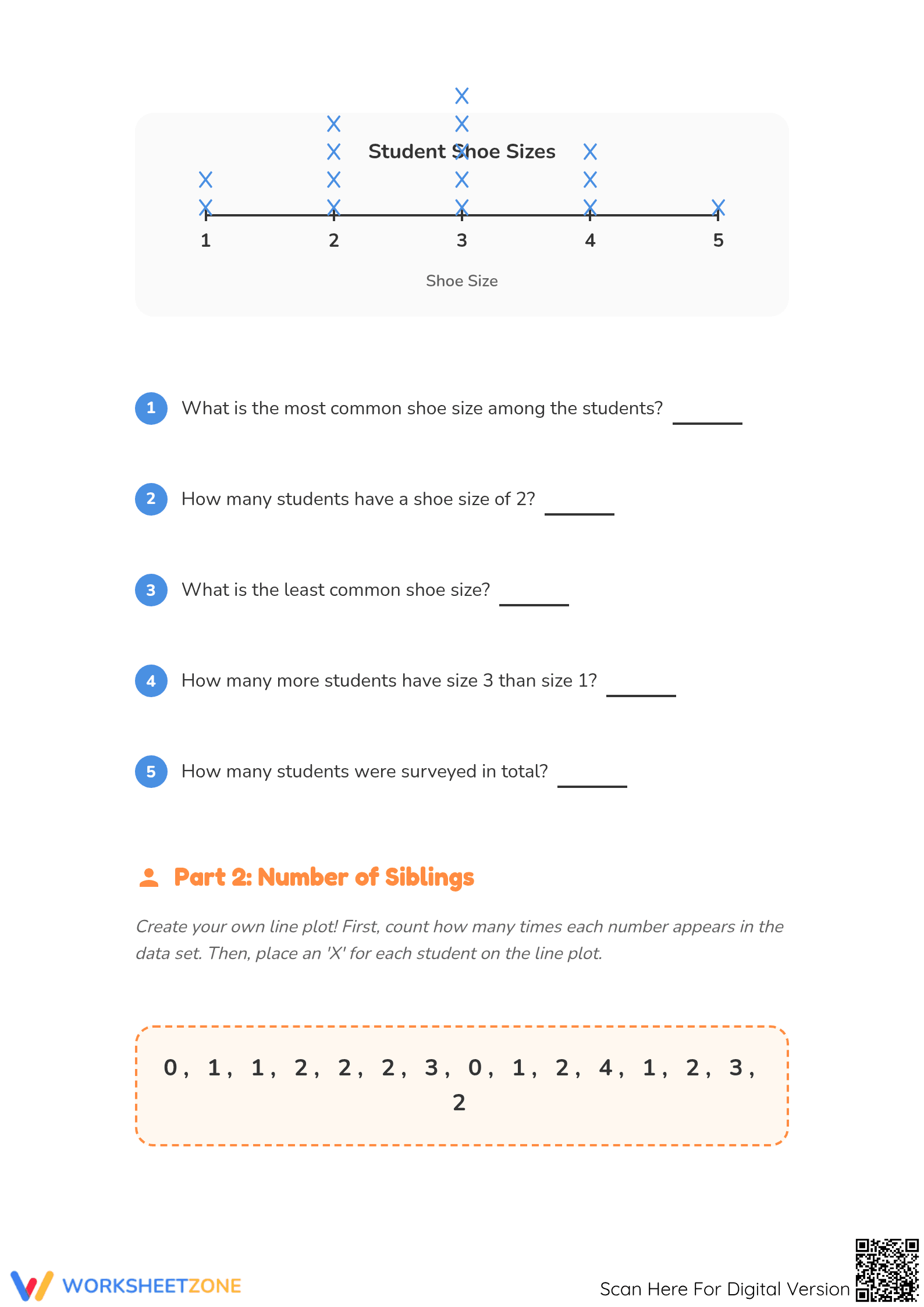
- Guided Practice: Students analyze a pre-made line plot about student shoe sizes, answering 5 basic interpretation questions to build visual data recognition and vocabulary.
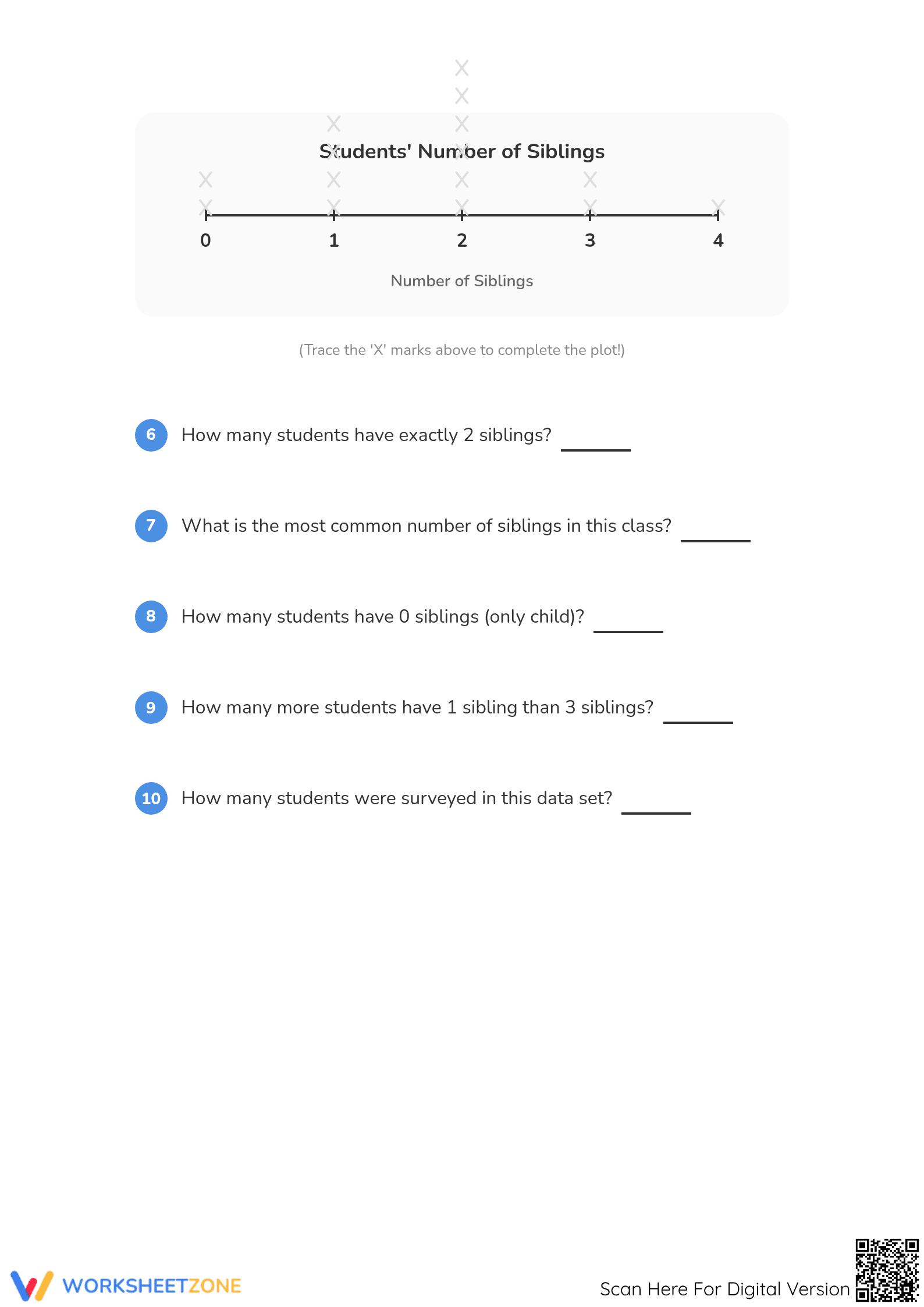
- Supported Practice: A raw dataset of sibling counts is provided with a traceable line plot template, requiring students to count frequencies and plot their own data points accurately.
- Independent Practice: The "Fruit Snacks" challenge requires students to analyze a more complex plot and solve multi-step problems involving comparative data points and hypothetical changes.
This sequence ensures students move from observational understanding to active mathematical construction following the gradual release of responsibility model.
Standards Alignment
This resource is directly aligned to `CCSS.MATH.CONTENT.2.MD.D.9`. It requires students to show measurements by making a line plot where the horizontal scale is marked off in whole-number units. By bridging the gap between raw tables and visual graphs, it supports the broader measurement and data domain. Standard codes can be copied directly into lesson plans or curriculum mapping tools.
How to Use It
Use this as a mid-lesson check during your unit on graphing. After demonstrating how to place an 'X' above a number line, distribute this worksheet for independent or pair work. Observe if students are accurately counting items in the dataset before plotting. It also serves as an excellent formative assessment for data interpretation skills during small-group instruction.
Who It's For
This is designed for Grade 2 students but works well for Grade 3 review or Grade 1 enrichment. It supports English Language Learners through visual cues and clear table structures. It pairs naturally with physical measurement activities where students measure classroom objects before recording results on a custom line plot.
According to the RAND AIRS 2024 report on elementary mathematics, the ability to visualize data is a primary predictor of later success in algebraic thinking and statistical reasoning. This Grade 2 Line Plot Practice worksheet addresses these needs by focusing on the 2.MD.D.9 standard. Students engage in the dual process of encoding and decoding data, which Fisher & Frey (2014) identify as a core component of mathematical literacy. By moving from guided interpretation to independent plot construction, the resource ensures students master the specific skill of whole-unit line plotting. Research indicates that structured, printable resources with clear visual scaffolds significantly reduce cognitive load during the initial stages of data graphing. This printable guide provides the exact number of tasks required to move students from exposure to functional mastery within a single instructional period while providing the necessary answer keys for teacher or student-led review sessions.


