


























Views
Downloads

Grade 1 Transparency — Printable No-Prep Worksheet
Paste this activity's link or code into your existing LMS (Google Classroom, Canvas, Teams, Schoology, Moodle, etc.).
Students can open and work on the activity right away, with no student login required.
You'll still be able to track student progress and results from your teacher account.
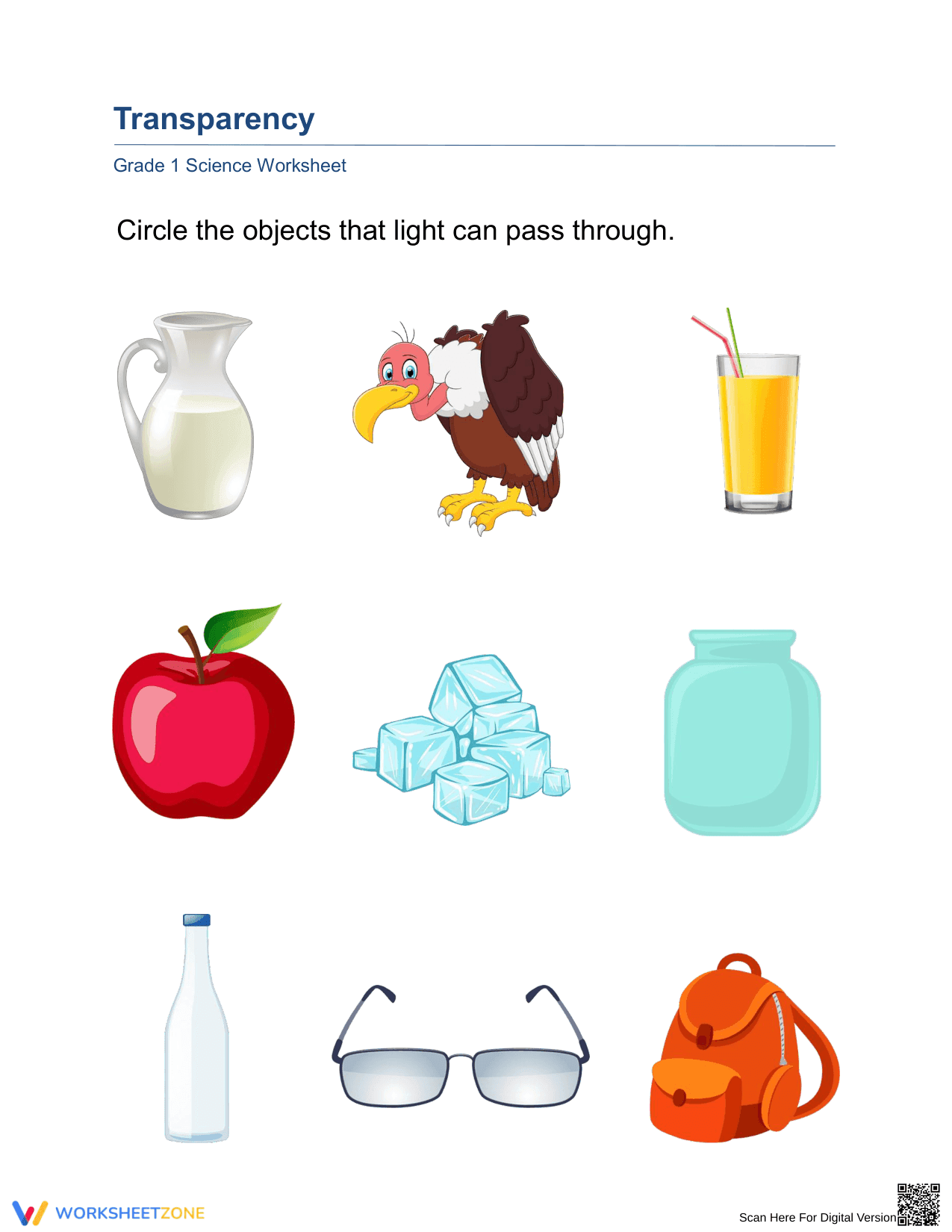
This first-grade science worksheet provides essential practice with the concept of transparency. Students will analyze nine common objects to determine whether light can pass through them, reinforcing their understanding of how light interacts with different materials. The activity is designed to build foundational knowledge for NGSS physical science standards.
At a Glance
- Grade: 1 · Subject: Science
- Standard:
1-PS4-3— Investigate how light is affected by different materials.- Skill Focus: Transparency, Opaque, and Translucent Materials
- Format: 1 page · 9 problems · Answer key included · PDF
- Best For: Independent practice, science centers, or a quick formative assessment.
- Time: 10–15 minutes
What's Inside
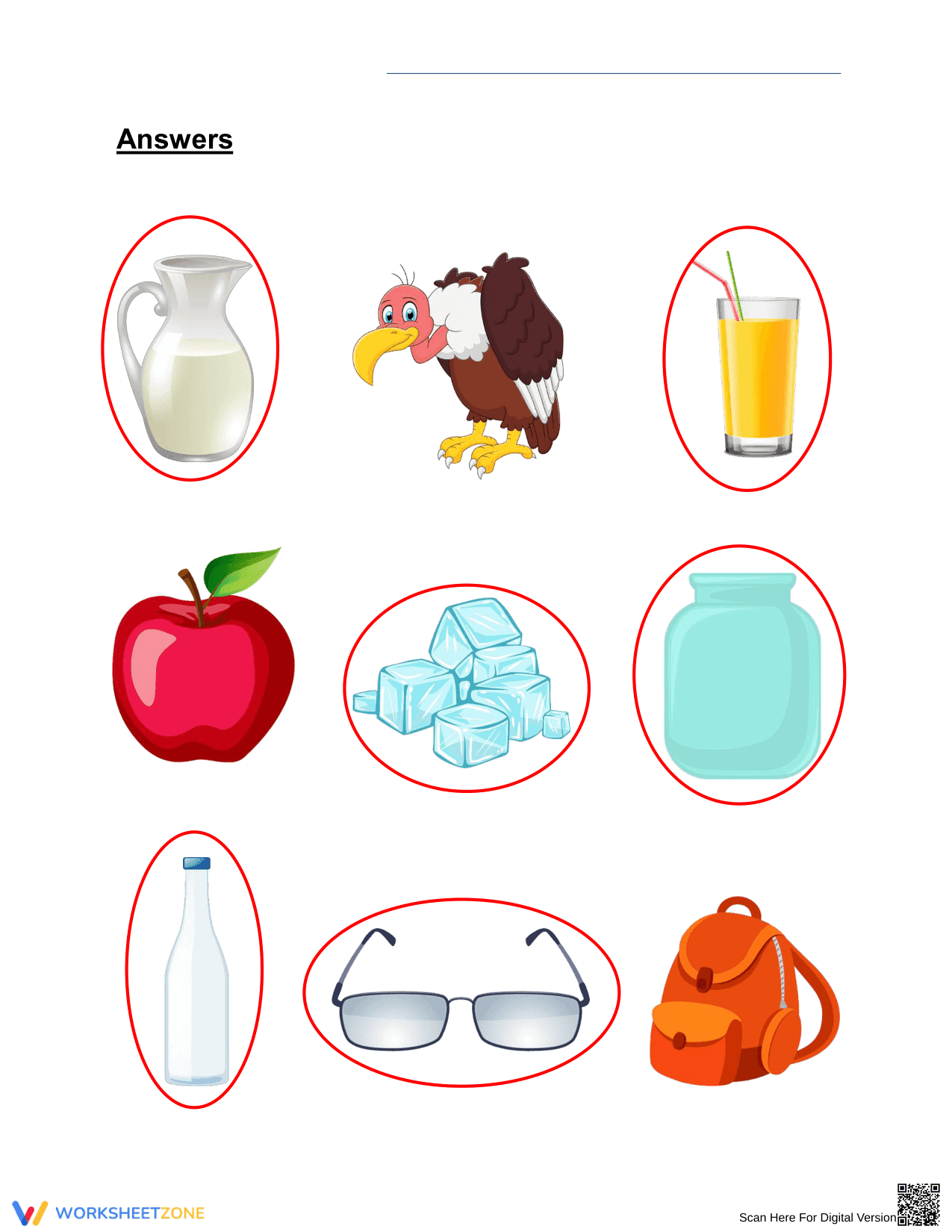
The download includes a single-page PDF worksheet ready for immediate printing. The main task presents students with nine clear illustrations of everyday objects. The instructions are simple: "Circle the objects that light can pass through." An accompanying answer key is provided on a separate page for quick and easy grading, making it simple for teachers or substitutes to review student work.
Zero-Prep Workflow
This resource offers a zero-prep workflow.
- Print (<1 minute): Print the single-page PDF.
- Distribute (1 minute): Hand out the sheet. Visual instructions require minimal explanation.
- Review (2 minutes): Use the included answer key for quick grading.
The entire activity is perfect for substitute plans, homework, or as a quick reinforcement task. Total prep and execution time is under 15 minutes.
Standards Alignment
This worksheet is directly aligned with NGSS standard 1-PS4-3, where students investigate how materials affect a beam of light. It provides a crucial first step in identifying materials based on transparency. This practice supports the standard by building foundational observational skills. Both standard codes can be copied directly into lesson plans, IEP goals, or district curriculum mapping tools.
How to Use It
Use this worksheet after a lesson on light for 10 minutes of independent practice. As a formative assessment, note which objects cause hesitation to identify misconceptions (e.g., translucent vs. transparent). It's also a great starter for a class discussion sorting all objects into transparent, translucent, and opaque categories.
Who It's For
Designed for first-grade students, the clear images support all learners, including ELLs. The simple task format makes it accessible for students with developing reading skills. Pair this worksheet with a visual anchor chart defining transparent, translucent, and opaque to reinforce vocabulary before students begin the task.
This Grade 1 science resource helps students master a key physical science concept aligned with standard 1-PS4-3. By identifying objects based on whether light can pass through them, learners build a foundational understanding of material properties. Early exposure to scientific classification and observation is critical for developing inquiry skills. Research from the NAEP indicates that students who engage in hands-on or observational science tasks at least once a week show higher science proficiency. While a worksheet is a representation, it serves as a vital bridge between abstract concepts and concrete scientific investigation. This activity provides structured practice in observation and categorization, a skill that Fisher & Frey (2014) identify as fundamental to close reading and analysis across all subjects. It effectively prepares students for more complex experiments involving light's interaction with matter.


