


























Views
Downloads

Printable Life on the Ice Worksheet | Grade 3-4 ELA
Paste this activity's link or code into your existing LMS (Google Classroom, Canvas, Teams, Schoology, Moodle, etc.).
Students can open and work on the activity right away, with no student login required.
You'll still be able to track student progress and results from your teacher account.
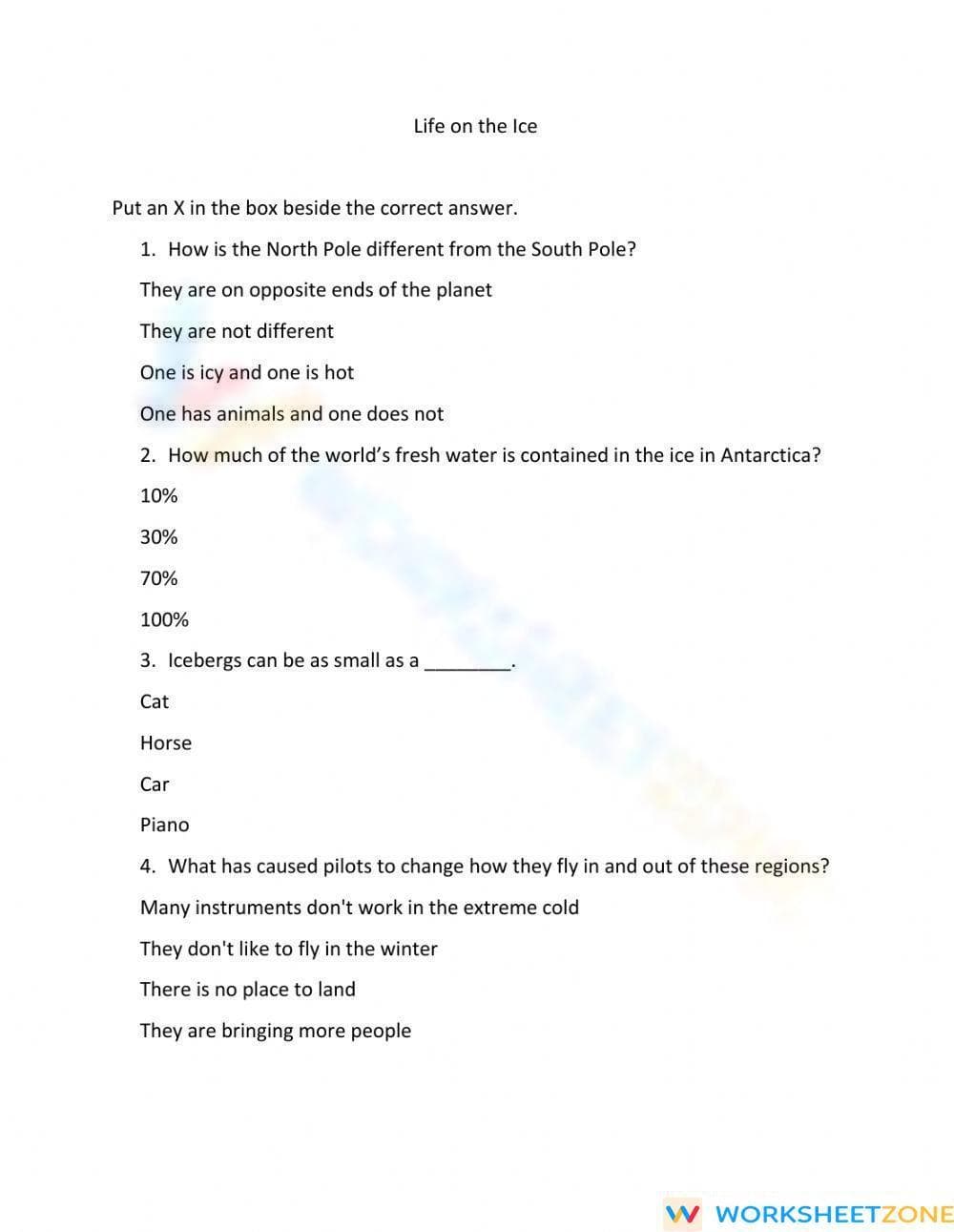
This "Life on the Ice" worksheet provides a comprehensive ELA assessment for third and fourth-grade students, focusing on informational text comprehension and foundational language skills. Students will demonstrate their ability to retrieve key details about polar regions while practicing essential vocabulary, compound words, and contractions in a structured format.
At a Glance
- Grade: 3-4 · Subject: ELA
- Standard:
CCSS.ELA-LITERACY.RI.3.1— Ask and answer questions to demonstrate understanding of a text referring explicitly to facts.- Skill Focus: Informational reading and language mechanics
- Format: 5 pages · 20 problems · Answer key included · PDF
- Best For: Independent practice and formative assessment
- Time: 25–35 minutes
What's Inside
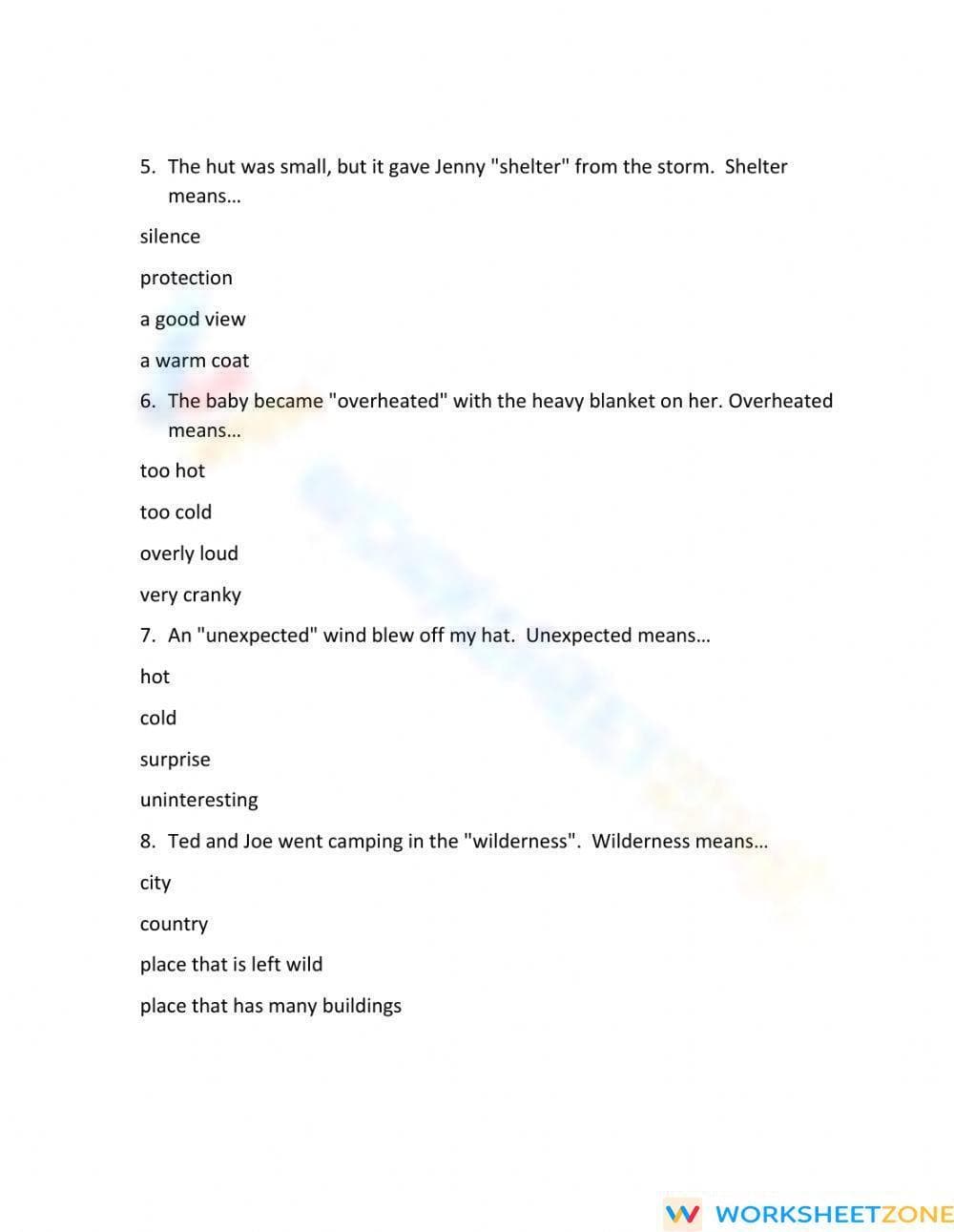
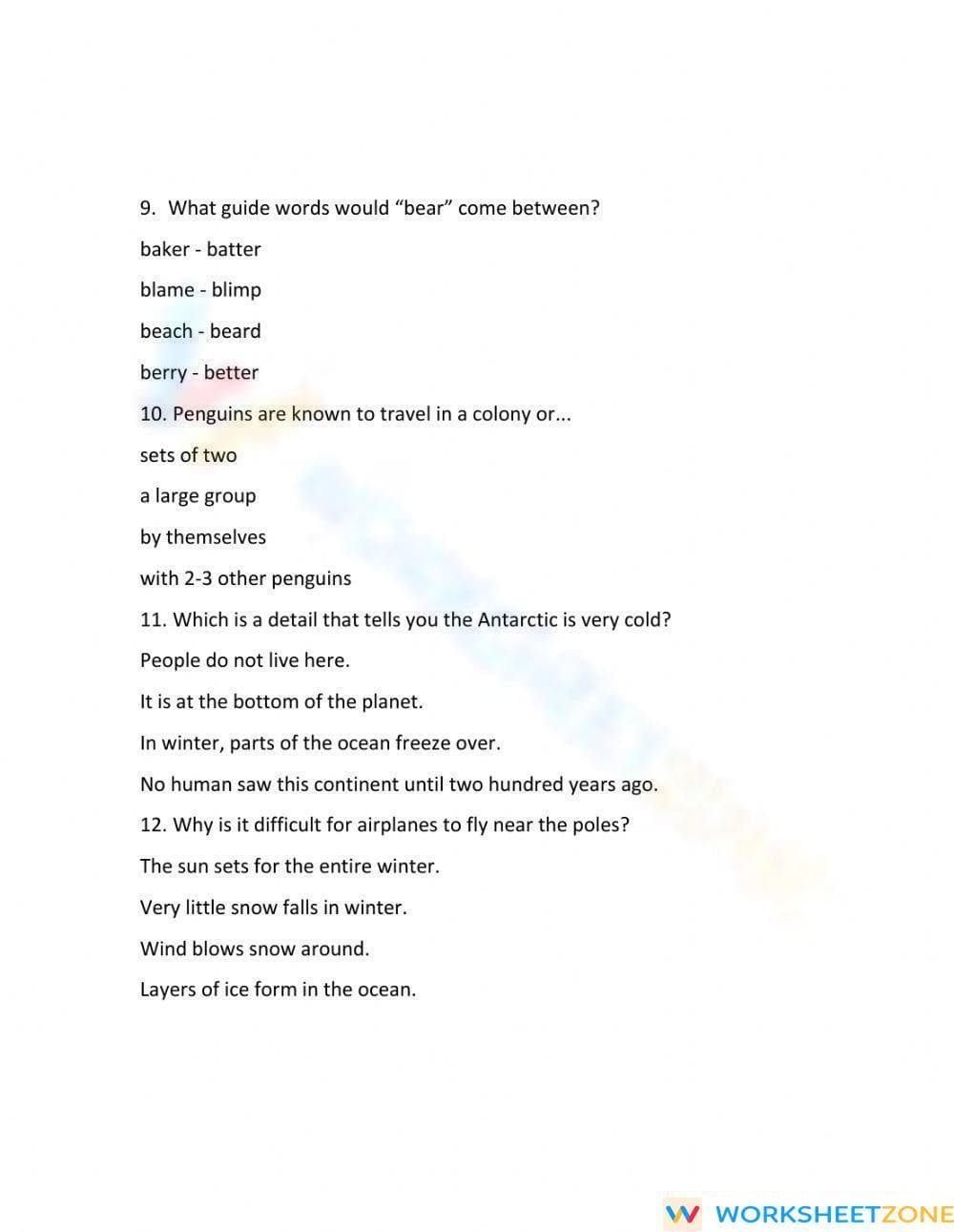
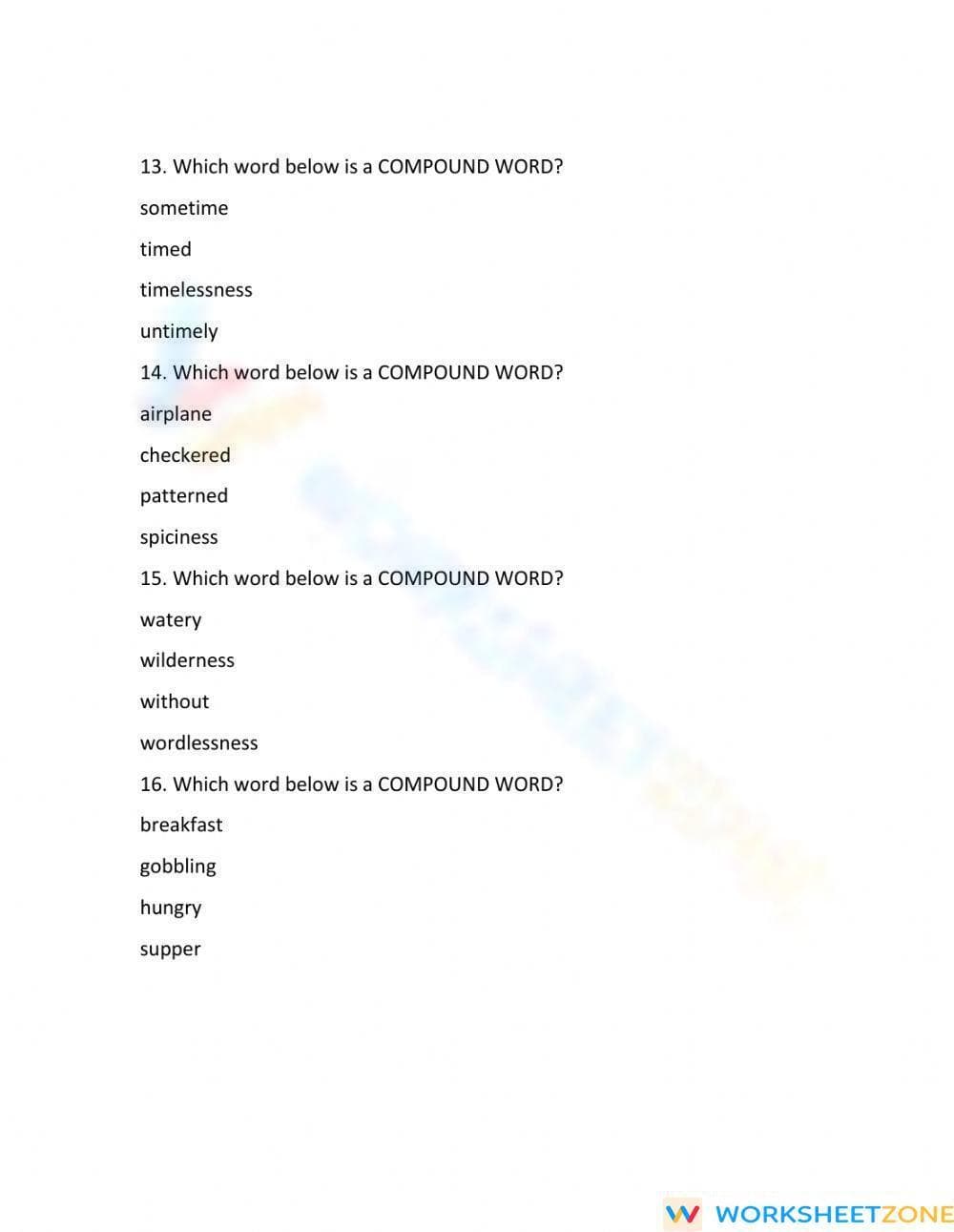
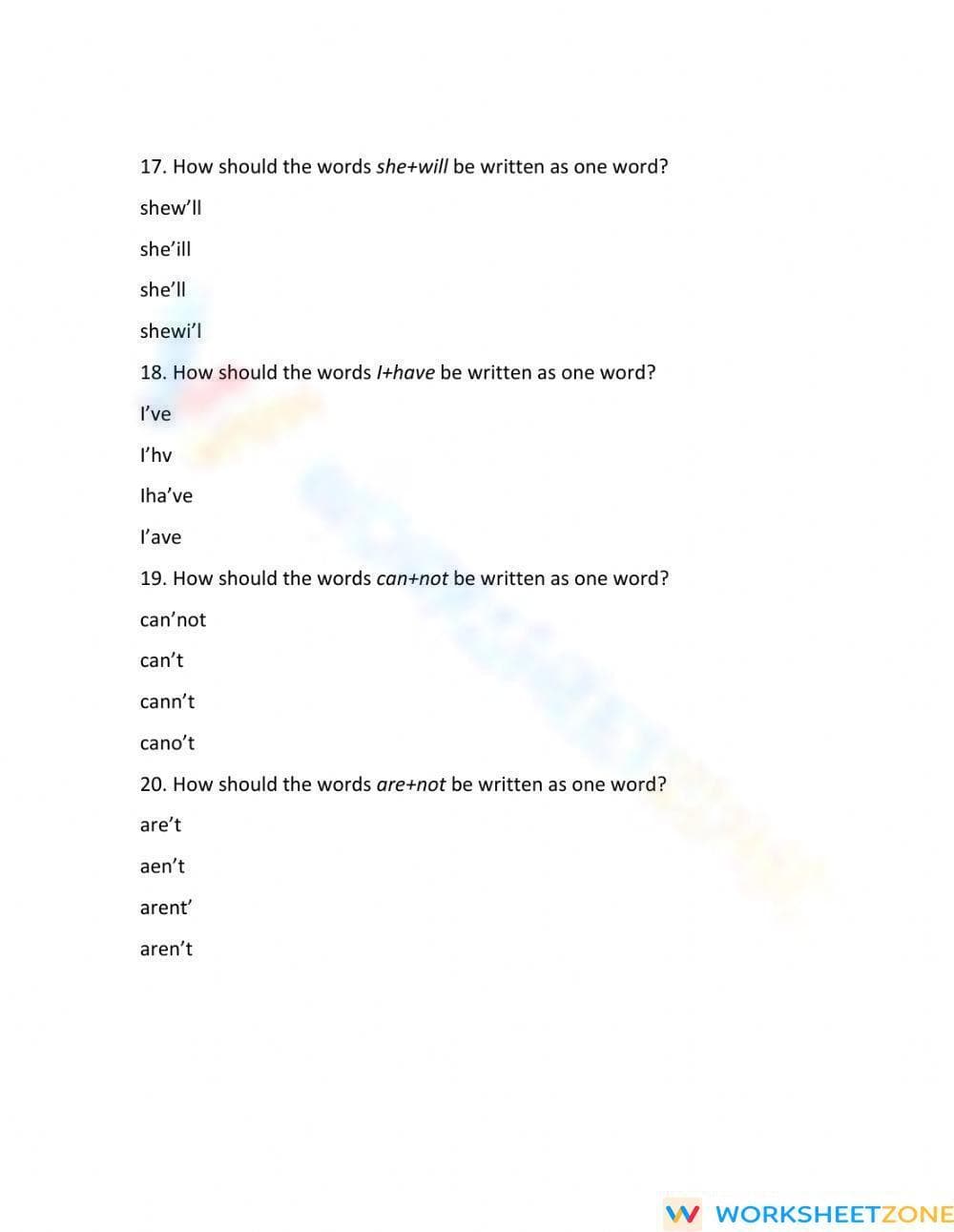
This 5-page PDF contains 20 multiple-choice questions designed to evaluate multiple facets of Literacy. The first section focuses on literal comprehension of polar facts, followed by contextual vocabulary definitions. Subsequent pages challenge students with dictionary skills, identifying compound words, and correctly formatting contractions. The layout is clean and spacious, making it ideal for young learners.
Zero-Prep Workflow
Teachers can implement this resource in under two minutes of total preparation. The workflow involves three simple steps: Print the 5-page packet (60 seconds), Distribute it to the class (30 seconds), and Review using the included answer key for rapid grading (30 seconds). This "no-prep" structure makes it an excellent choice for emergency sub plans or last-minute homework assignments.
Standards Alignment
The primary standard addressed is `CCSS.ELA-LITERACY.RI.3.1`, which requires students to ask and answer questions to demonstrate understanding of a text. Additionally, the worksheet supports `CCSS.ELA-LITERACY.L.3.4` through its focus on determining the meaning of unknown words and phrases. Both standard codes can be copied directly into lesson plans, IEP goals, or district curriculum mapping tools.
How to Use It
Use this worksheet as a post-reading assessment after studying a unit on extreme environments or polar animals. During instruction, teachers can observe students' ability to differentiate between similar-looking contraction options as a formative check. Most students will complete the 20 tasks within 30 minutes, allowing for a quick whole-group review session afterward.
Who It's For
This resource is tailored for Grade 3 and Grade 4 students, particularly those needing reinforcement in literal comprehension and basic grammar. It pairs naturally with informational passages about Antarctica or the Arctic, serving as a robust follow-up to direct instruction on informational text features and language mechanics.
This "Life on the Ice" assessment aligns with the evidence-based practices outlined by Fisher & Frey (2014) regarding the importance of scaffolding informational text comprehension through targeted questioning. By integrating literal retrieval tasks (CCSS.ELA-LITERACY.RI.3.1) with foundational language skills like compound word recognition and contraction usage, the resource ensures a balanced approach to literacy development. Research from EdReports (2024) emphasizes that high-quality instructional materials must explicitly link vocabulary acquisition to content-rich informational texts to bridge the achievement gap in upper elementary grades. This 20-task worksheet fulfills that requirement by requiring students to define domain-specific terms like "wilderness" and "overheated" within the context of polar exploration. Educators can rely on this structured PDF to provide consistent, standards-aligned practice that measures both reading proficiency and grammatical accuracy in a single, classroom-ready package.


