


























1 / 4
0
Views
0
Downloads

0.0
0
Save
0 Likes
Share
Levels of Organization Reading Worksheet
0 Views
0 Downloads
Paste this activity's link or code into your existing LMS (Google Classroom, Canvas, Teams, Schoology, Moodle, etc.).
Students can open and work on the activity right away, with no student login required.
You'll still be able to track student progress and results from your teacher account.
Information
Description
What It Is:
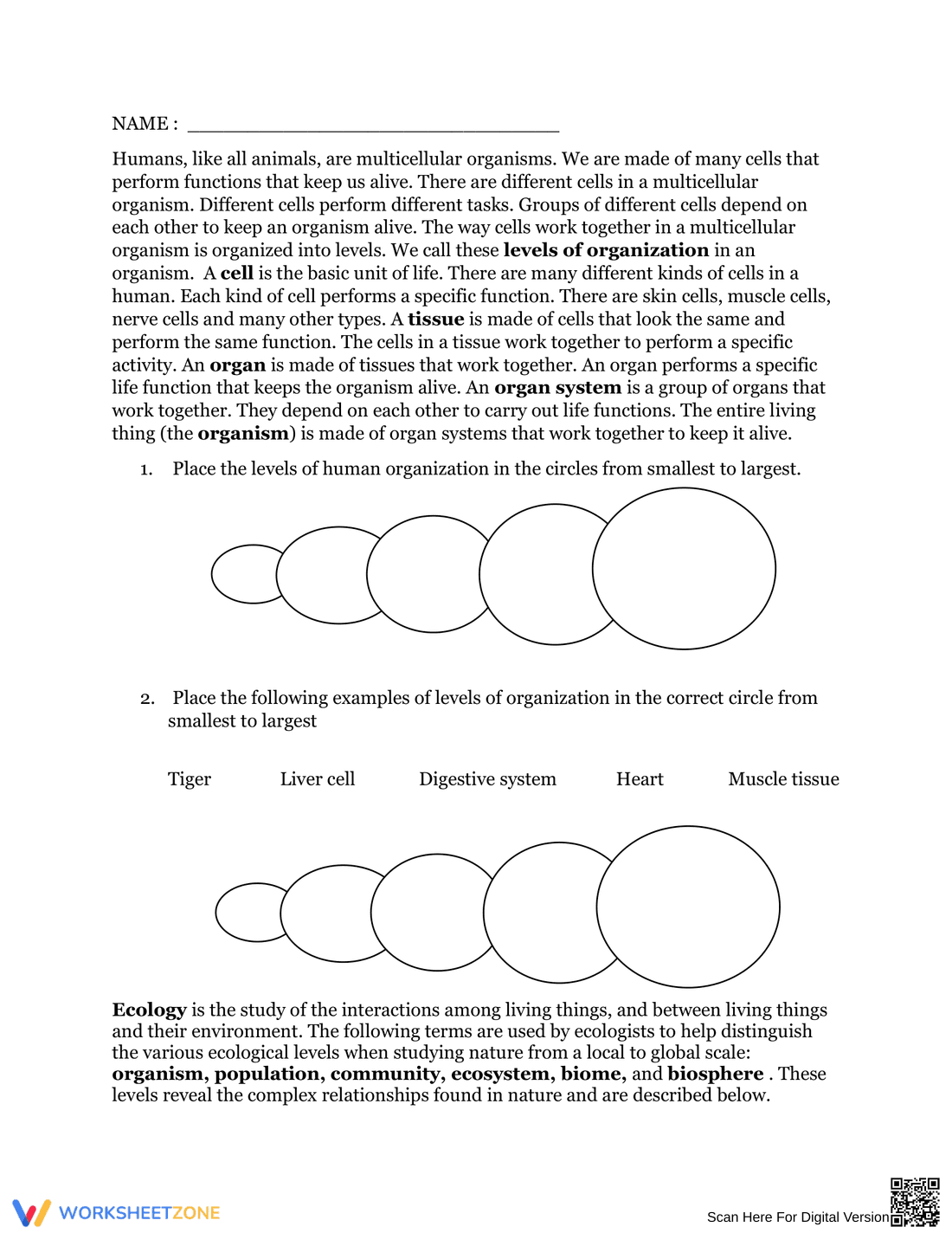
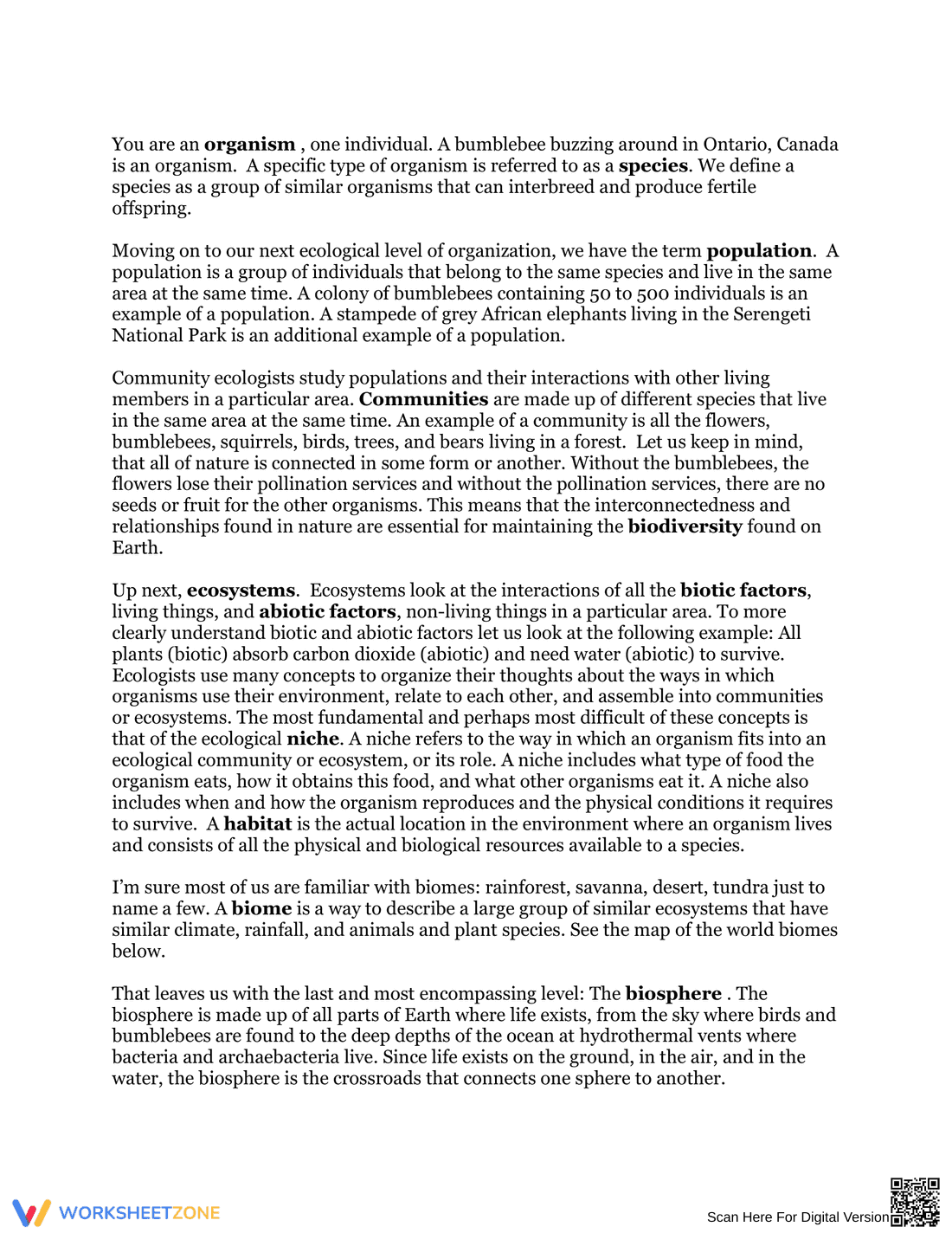
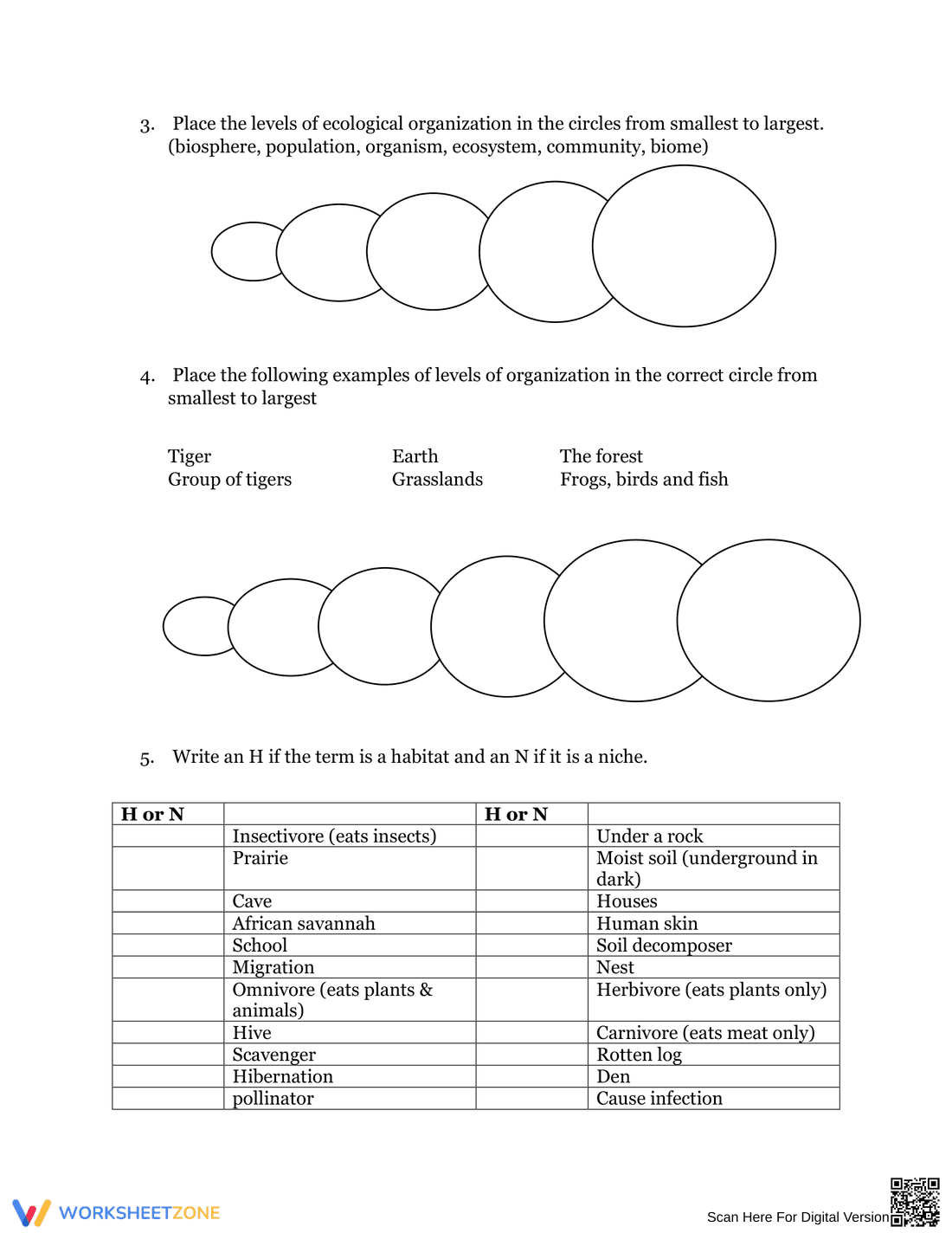
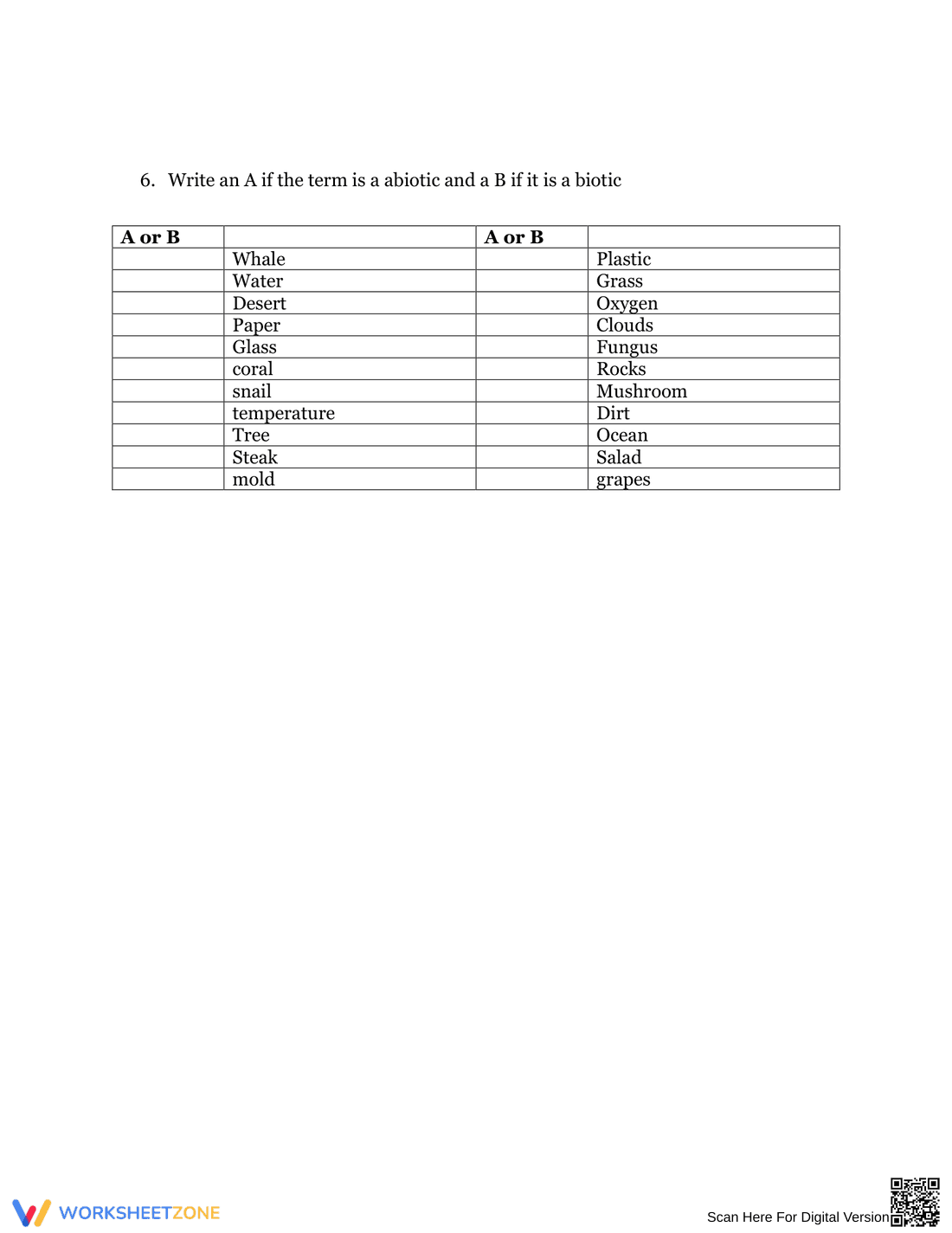
This is a science worksheet focused on levels of organization in living things. It includes definitions of cell, tissue, organ, and organ system, along with an introduction to ecology and related terms like organism, population, community, ecosystem, biome, and biosphere. The worksheet contains two activities: one requires students to place the levels of human organization in order from smallest to largest using a series of circles, and the other requires students to order examples like 'tiger,' 'liver cell,' 'digestive system,' 'heart,' and 'muscle tissue' similarly.
Grade Level Suitability:
This worksheet is suitable for grades 6-8. The vocabulary and concepts introduced (cell, tissue, organ, organ system, ecology) are typically covered in middle school life science curricula. The ordering activities reinforce understanding of hierarchical organization, a key concept in biology.
Why Use It:
This worksheet helps students understand the hierarchical organization of living things, from cells to organ systems and then to ecological levels. It reinforces vocabulary related to biology and ecology, and encourages critical thinking through ordering activities. It promotes understanding of how different levels of organization are related.
How to Use It:
Students should first read the definitions provided on the worksheet. Then, for the first activity, they should place the terms cell, tissue, organ, and organ system in the circles, ordering them from smallest to largest. For the second activity, they should place the terms tiger, liver cell, digestive system, heart, and muscle tissue in the circles from smallest to largest.
Target Users:
This worksheet is designed for middle school students (grades 6-8) learning about the levels of organization in living things. It is also suitable for students reviewing these concepts. It could be used in a classroom setting or as a homework assignment.
This is a science worksheet focused on levels of organization in living things. It includes definitions of cell, tissue, organ, and organ system, along with an introduction to ecology and related terms like organism, population, community, ecosystem, biome, and biosphere. The worksheet contains two activities: one requires students to place the levels of human organization in order from smallest to largest using a series of circles, and the other requires students to order examples like 'tiger,' 'liver cell,' 'digestive system,' 'heart,' and 'muscle tissue' similarly.
Grade Level Suitability:
This worksheet is suitable for grades 6-8. The vocabulary and concepts introduced (cell, tissue, organ, organ system, ecology) are typically covered in middle school life science curricula. The ordering activities reinforce understanding of hierarchical organization, a key concept in biology.
Why Use It:
This worksheet helps students understand the hierarchical organization of living things, from cells to organ systems and then to ecological levels. It reinforces vocabulary related to biology and ecology, and encourages critical thinking through ordering activities. It promotes understanding of how different levels of organization are related.
How to Use It:
Students should first read the definitions provided on the worksheet. Then, for the first activity, they should place the terms cell, tissue, organ, and organ system in the circles, ordering them from smallest to largest. For the second activity, they should place the terms tiger, liver cell, digestive system, heart, and muscle tissue in the circles from smallest to largest.
Target Users:
This worksheet is designed for middle school students (grades 6-8) learning about the levels of organization in living things. It is also suitable for students reviewing these concepts. It could be used in a classroom setting or as a homework assignment.


