




























Views
Downloads

Printable Levels of Biological Organization | Grade 9-12

Paste this activity's link or code into your existing LMS (Google Classroom, Canvas, Teams, Schoology, Moodle, etc.).
Students can open and work on the activity right away, with no student login required.
You'll still be able to track student progress and results from your teacher account.
This high school biology worksheet helps students master the hierarchical levels of biological organization. By analyzing specific examples of organelles, tissues, organs, and organ systems, learners will connect structural components to their specific functions within multicellular organisms, building a strong foundation for advanced anatomy and physiology concepts.
At a Glance
- Grade: 9-12 · Subject: Biology
- Standard:
HS-LS1-2— Illustrate hierarchical organization of interacting systems in multicellular organisms.- Skill Focus: Identifying levels of biological organization
- Format: 3 pages · 29 problems · Answer key included · PDF
- Best For: Independent practice and review
- Time: 25–35 minutes
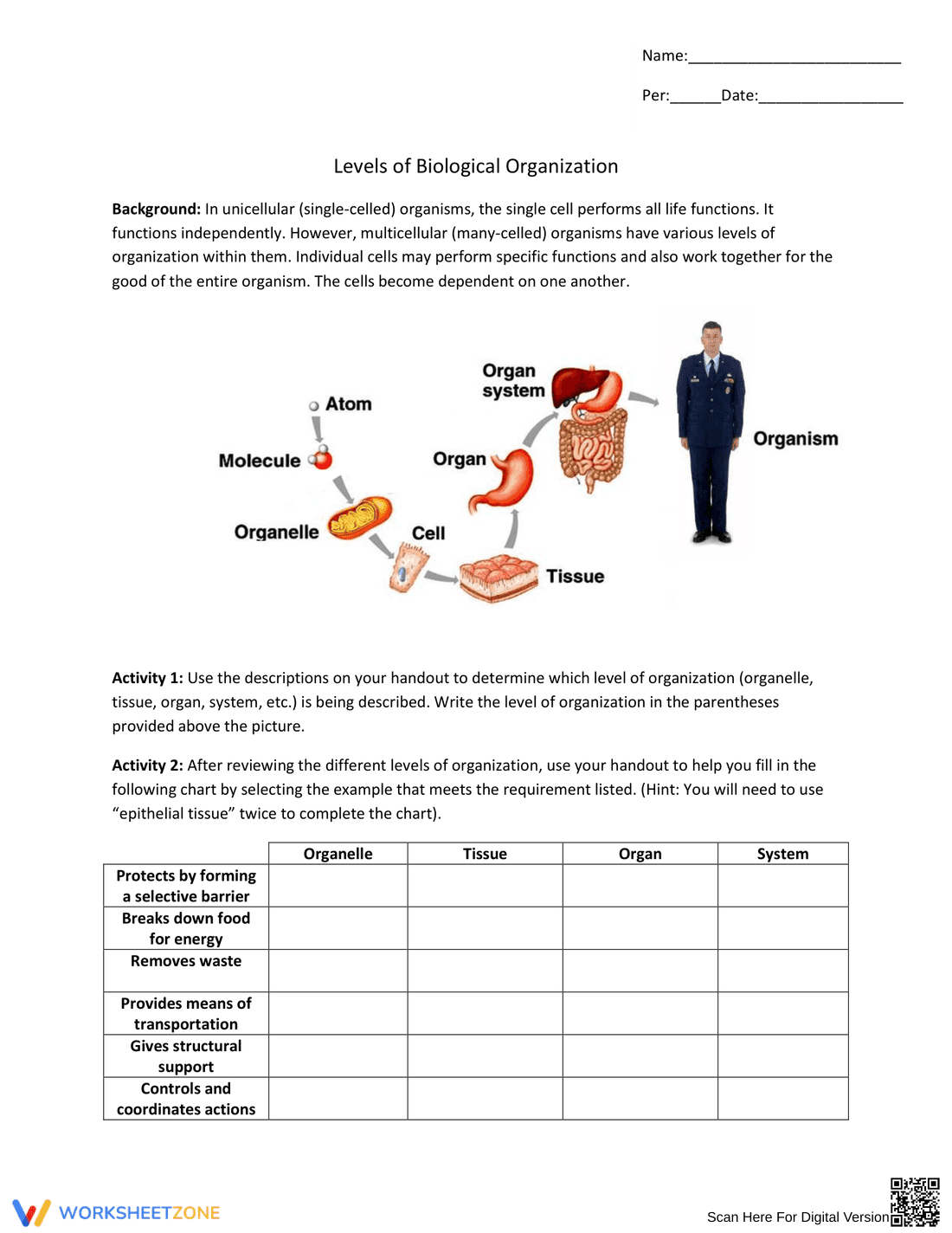
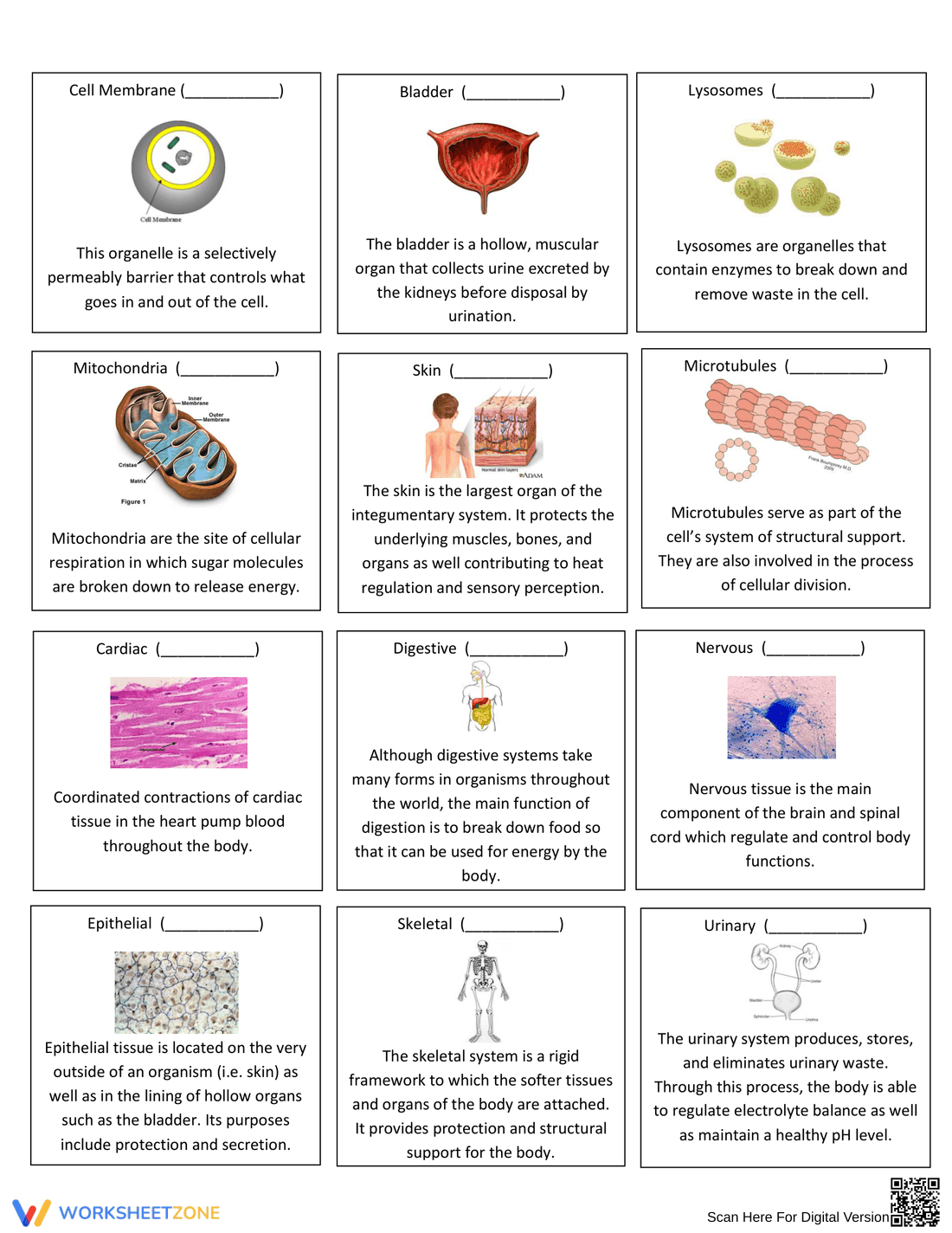
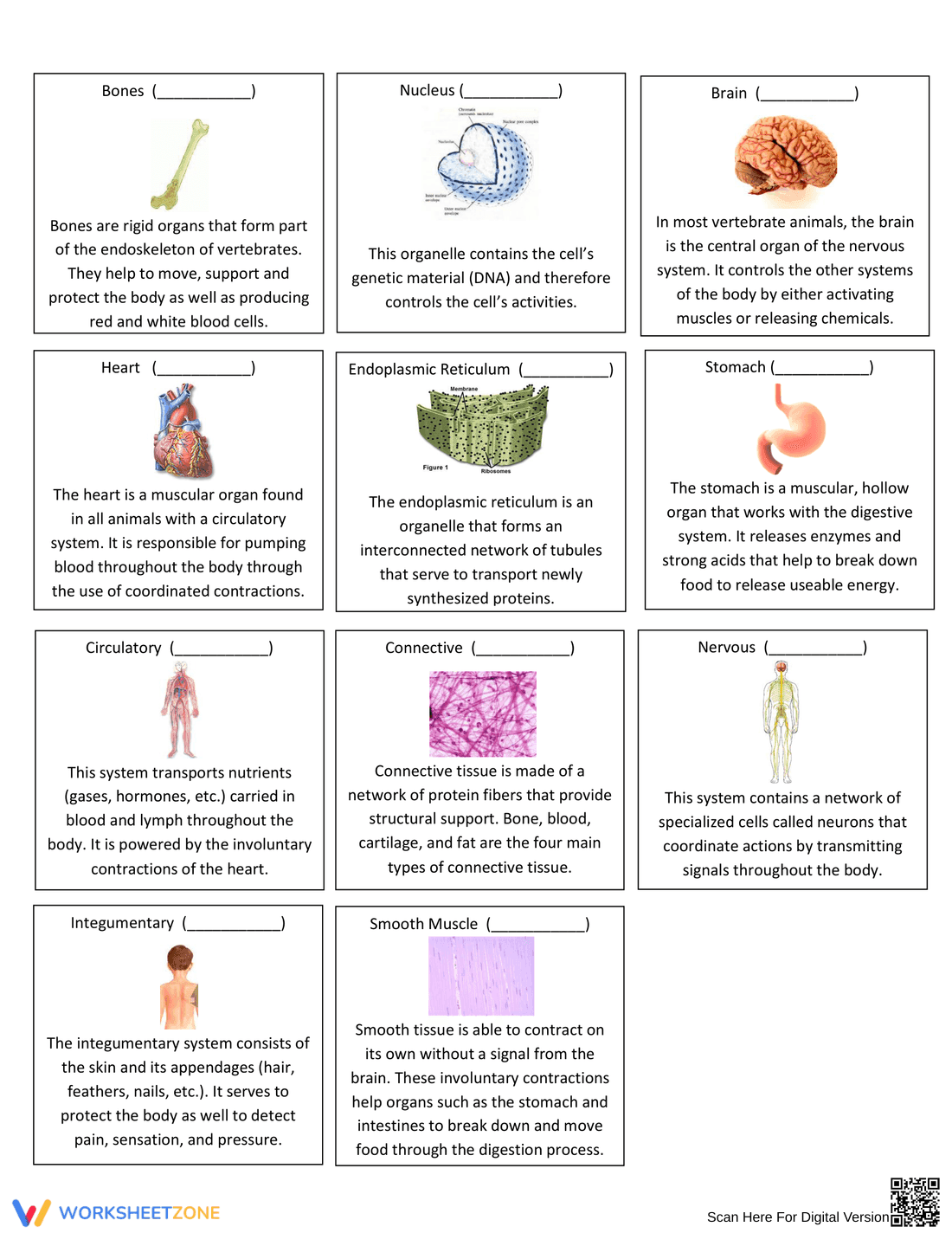
This comprehensive resource features a clear introductory diagram illustrating the progression from atoms to organisms. The core activity includes 23 detailed description cards where students identify the specific level of organization for various biological structures, such as the mitochondria, epithelial tissue, and the circulatory system. Additionally, a synthesis chart challenges students to categorize these examples based on their functional roles, such as providing structural support or breaking down food for energy.
- Guided practice: Students begin by reviewing the visual model of biological hierarchy, establishing a baseline understanding of how smaller units build into complex systems.
- Supported practice: The 23 description cards provide contextual clues and definitions, allowing learners to confidently classify each structure as an organelle, cell, tissue, organ, or system.
- Independent practice: The final synthesis chart requires students to independently map the previously identified structures to their overarching biological functions.
This gradual-release approach ensures students build confidence as they move from basic identification to functional application.
This activity is directly aligned with HS-LS1-2: Develop and use a model to illustrate the hierarchical organization of interacting systems that provide specific functions within multicellular organisms. It also supports foundational knowledge required for understanding cellular processes and systemic homeostasis. Both standard codes can be copied directly into lesson plans, IEP goals, or district curriculum mapping tools.
Deploy this worksheet during the introductory phase of a human body systems or cell biology unit. It serves as an excellent independent practice assignment after direct instruction on biological hierarchy. As a formative assessment tip, circulate the room while students complete the synthesis chart to quickly identify any misconceptions between tissues and organs. The entire activity is designed to be completed in 25 to 35 minutes.
This resource is ideal for high school biology and anatomy students. The clear visual cues and structured description cards provide built-in scaffolding, making it accessible for English Language Learners and students requiring modified pacing. It pairs perfectly with introductory cell biology anchor charts or interactive notebook inserts on human body systems.
Mastering the hierarchical structure of life is essential for understanding complex biological processes. This resource aligns with the HS-LS1-2 standard, focusing on the ability to illustrate hierarchical organization of interacting systems in multicellular organisms. According to a ScienceDirect TpT Analysis, instructional materials that explicitly connect structural vocabulary to functional roles significantly improve long-term retention in secondary science courses. By requiring students to categorize specific biological examples—from the endoplasmic reticulum to the integumentary system—this worksheet reinforces the critical concept that structure dictates function at every level of life. The structured progression from simple identification to functional categorization ensures that learners develop a robust mental model of biological organization. This foundational knowledge is crucial for preparing students for more advanced studies in human physiology, genetics, and cellular biology.


