


























Views
Plays
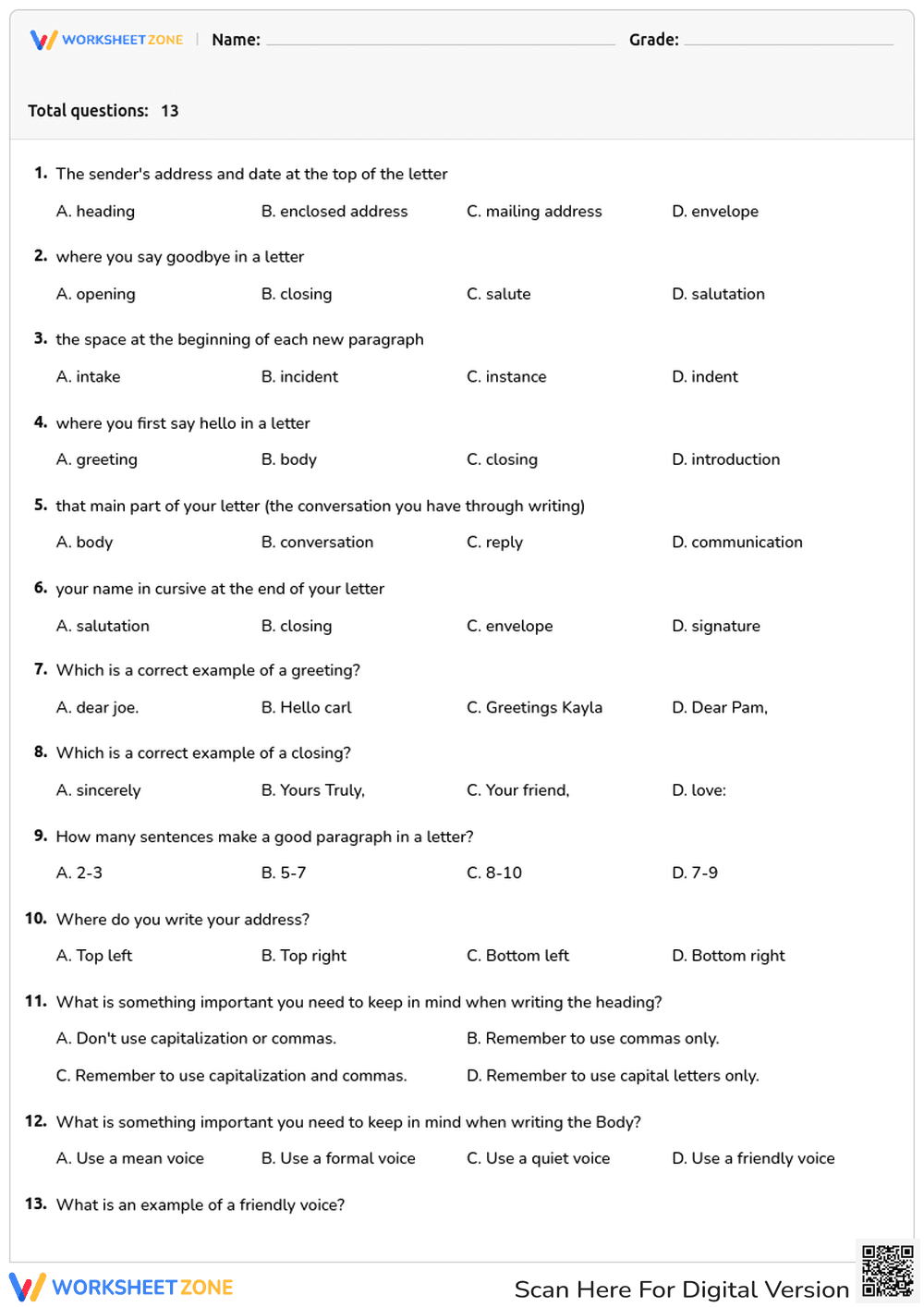
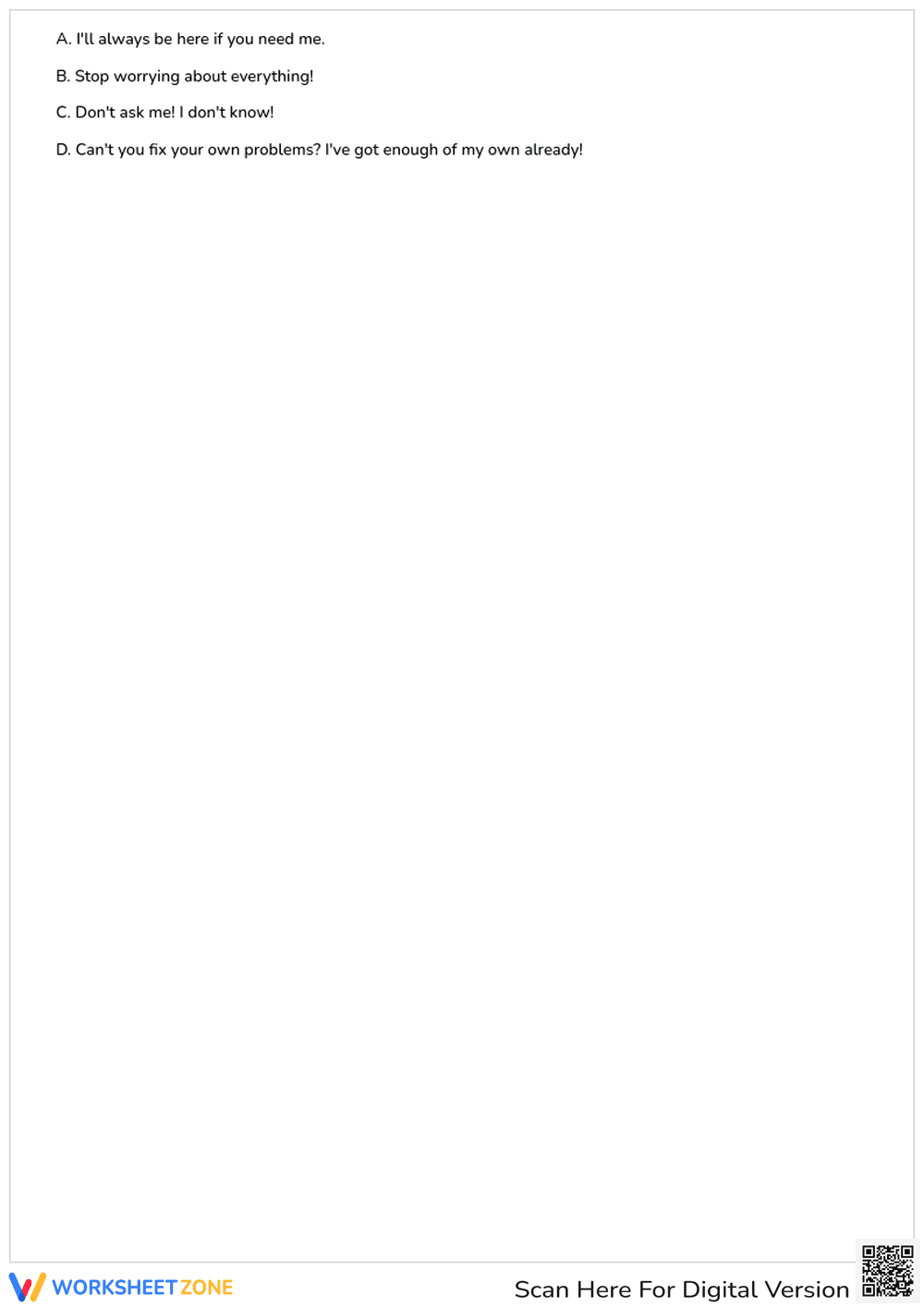

Grade 6 Letter Writing Basics — Printable No-Prep Worksheet
Paste this activity's link or code into your existing LMS (Google Classroom, Canvas, Teams, Schoology, Moodle, etc.).
Students can open and work on the activity right away, with no student login required.
You'll still be able to track student progress and results from your teacher account.
This Grade 6 English Language Arts worksheet gives students targeted practice with the essential components of letter writing. By identifying correct headings, salutations, body paragraphs, and closings, students build the foundational skills needed to produce clear, well-organized correspondence for various audiences and purposes.
At a Glance
- Grade: 6 · Subject: ELA
- Standard:
CCSS.ELA-LITERACY.W.6.4— Produce writing appropriate to task, purpose, and audience.- Skill Focus: Letter writing formatting and conventions
- Format: 2 pages · 13 problems · Answer key included · PDF
- Best For: Independent practice or formative assessment
- Time: 15–20 minutes
Inside this two-page resource, educators will find a comprehensive 13-question multiple-choice assessment focused on the mechanics of letter writing. The task types require students to identify definitions for key terms like "salutation" and "indent," select correctly punctuated greetings and closings, and determine the appropriate tone for a friendly letter. A complete answer key is included to ensure fast and accurate grading.
This resource features a streamlined zero-prep workflow:
- Print (1 minute): Simply download the PDF and print the two-page student assessment alongside the single-page answer key.
- Distribute (1 minute): Hand out the copies to students during your designated writing block or language arts center time.
- Review (3 minutes): Use the provided answer key to quickly grade submissions or facilitate a whole-class review session.
With total teacher preparation time under two minutes, this worksheet is perfect for emergency sub plans.
This worksheet is directly aligned to CCSS.ELA-LITERACY.W.6.4, which requires students to produce clear and coherent writing in which the development, organization, and style are appropriate to task, purpose, and audience. By mastering the structural elements of a letter, students demonstrate their understanding of organized, purpose-driven communication. Both standard codes can be copied directly into lesson plans, IEP goals, or district curriculum mapping tools.
This worksheet serves as an effective pre-assessment before a formal letter-writing unit to gauge baseline knowledge. Alternatively, it works perfectly as an independent practice activity following direct instruction on the parts of a letter. As a formative assessment observation tip, monitor students as they answer questions about capitalization and punctuation in greetings; this will quickly reveal who needs targeted reteaching on language conventions. Expected completion time is 15 to 20 minutes.
This resource is primarily designed for sixth and seventh-grade students developing their practical writing skills. The clear, multiple-choice format provides built-in differentiation for students who benefit from structured options rather than open-ended drafting. It pairs naturally with an anchor chart detailing the five parts of a friendly letter or a direct instruction lesson on formal versus informal writing tones.
Mastering the structural components of written correspondence remains a critical component of middle school literacy instruction. Aligned with CCSS.ELA-LITERACY.W.6.4, this resource helps students produce writing appropriate to task, purpose, and audience by reinforcing the mechanics of letter formatting. According to Fisher & Frey (2014), providing students with structured, targeted practice on specific writing conventions significantly improves their ability to independently organize and draft coherent texts. When learners can confidently identify correct headings, salutations, and closings in a multiple-choice format, they reduce the cognitive load required during the actual drafting process. This allows them to focus more deeply on content, tone, and audience awareness. By integrating this targeted practice into the curriculum, educators ensure students build the foundational communication skills necessary for both academic success and real-world application.


