


























Views
Downloads
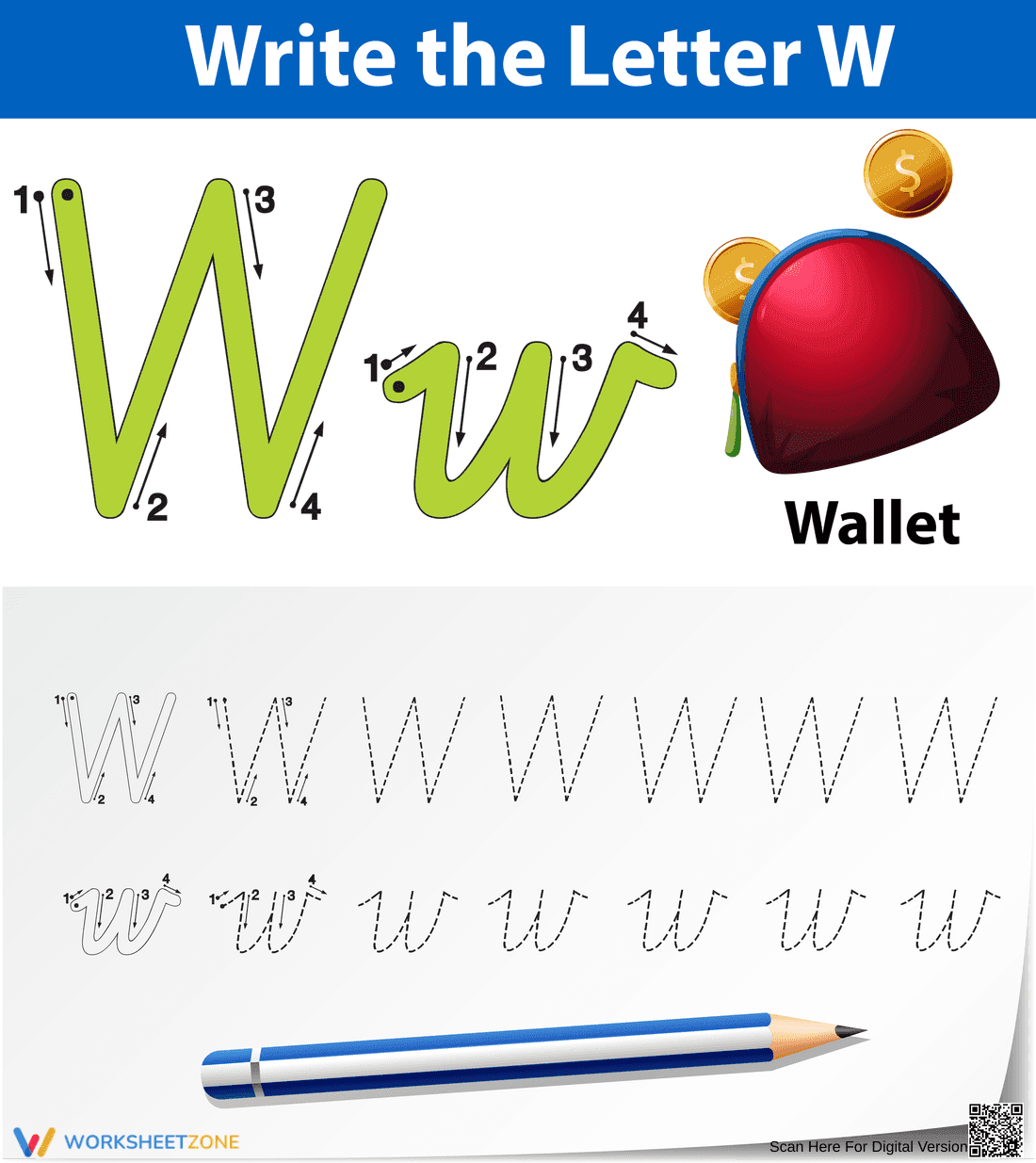

Printable Letter W Tracing Worksheet | Kindergarten
Paste this activity's link or code into your existing LMS (Google Classroom, Canvas, Teams, Schoology, Moodle, etc.).
Students can open and work on the activity right away, with no student login required.
You'll still be able to track student progress and results from your teacher account.
This foundational handwriting worksheet helps early learners master the formation of the uppercase and lowercase letter W. By providing clear, numbered stroke guides and ample tracing practice, students develop the fine motor skills required for legible print writing while associating the letter with a familiar vocabulary word.
At a Glance
- Grade: Kindergarten · Subject: English
- Standard:
CCSS.ELA-LITERACY.L.K.1.A— Print upper- and lowercase letters- Skill Focus: Letter W Formation and Tracing
- Format: 1 page · 16 problems · No answer key required · PDF
- Best For: Independent practice and centers
- Time: 10–15 minutes
This single-page resource features a large, color-coded instructional section at the top, demonstrating the exact four-stroke sequence for both the uppercase and lowercase letter W. A visual anchor of a "Wallet" reinforces letter-sound correspondence. Below the instructional guide, students will find two dedicated practice rows containing 16 dotted letters total—eight uppercase and eight lowercase—ready for guided tracing.
Designed for immediate classroom implementation, this resource requires absolutely zero teacher setup. Print (1 minute): Simply generate the PDF and print the required number of copies. Distribute (1 minute): Hand out the sheets along with standard pencils or crayons. Review (1 minute): Briefly model the numbered stroke sequence on the board before letting students work independently. With a total prep time of under three minutes, this is an ideal activity for morning work, literacy centers, or emergency substitute plans.
This activity is directly aligned with CCSS.ELA-LITERACY.L.K.1.A, which requires students to print many upper- and lowercase letters. By focusing on the specific directional strokes of the letter W, the worksheet ensures students build the muscle memory necessary for fluent writing. Both standard codes can be copied directly into lesson plans, IEP goals, or district curriculum mapping tools.
Teachers can utilize this worksheet during the initial introduction of the letter W. Before independent practice, have students "air write" the letter following the 1-2-3-4 stroke sequence shown at the top of the page. During the activity, use formative assessment by observing pencil grip and ensuring students are starting their strokes from the top down, rather than bottom up. The entire tracing exercise should take early learners approximately 10 to 15 minutes to complete.
This resource is specifically designed for Kindergarten and early first-grade students who are developing basic handwriting skills. It also serves as an excellent intervention tool for older students requiring occupational therapy support or fine motor skill refinement. For a comprehensive literacy block, pair this tracing sheet with a read-aloud book that heavily features "W" vocabulary words or an interactive alphabet anchor chart.
Effective handwriting instruction remains a critical component of early literacy development. According to Fisher & Frey (2014), explicit instruction in letter formation, combined with guided repetition, significantly improves both writing fluency and subsequent reading comprehension. This worksheet supports CCSS.ELA-LITERACY.L.K.1.A by helping students print upper- and lowercase letters accurately. By breaking down the letter W into a numbered, four-stroke sequence, early learners can internalize the correct motor patterns required for legible manuscript writing. Providing visual anchors, such as the wallet illustration, further bridges the gap between physical letter formation and phonemic awareness. Consistent practice with structured tracing tasks ensures that students move beyond basic letter recognition toward automaticity in their written expression, laying a strong foundation for future academic success across all subject areas.


