


























Views
Downloads
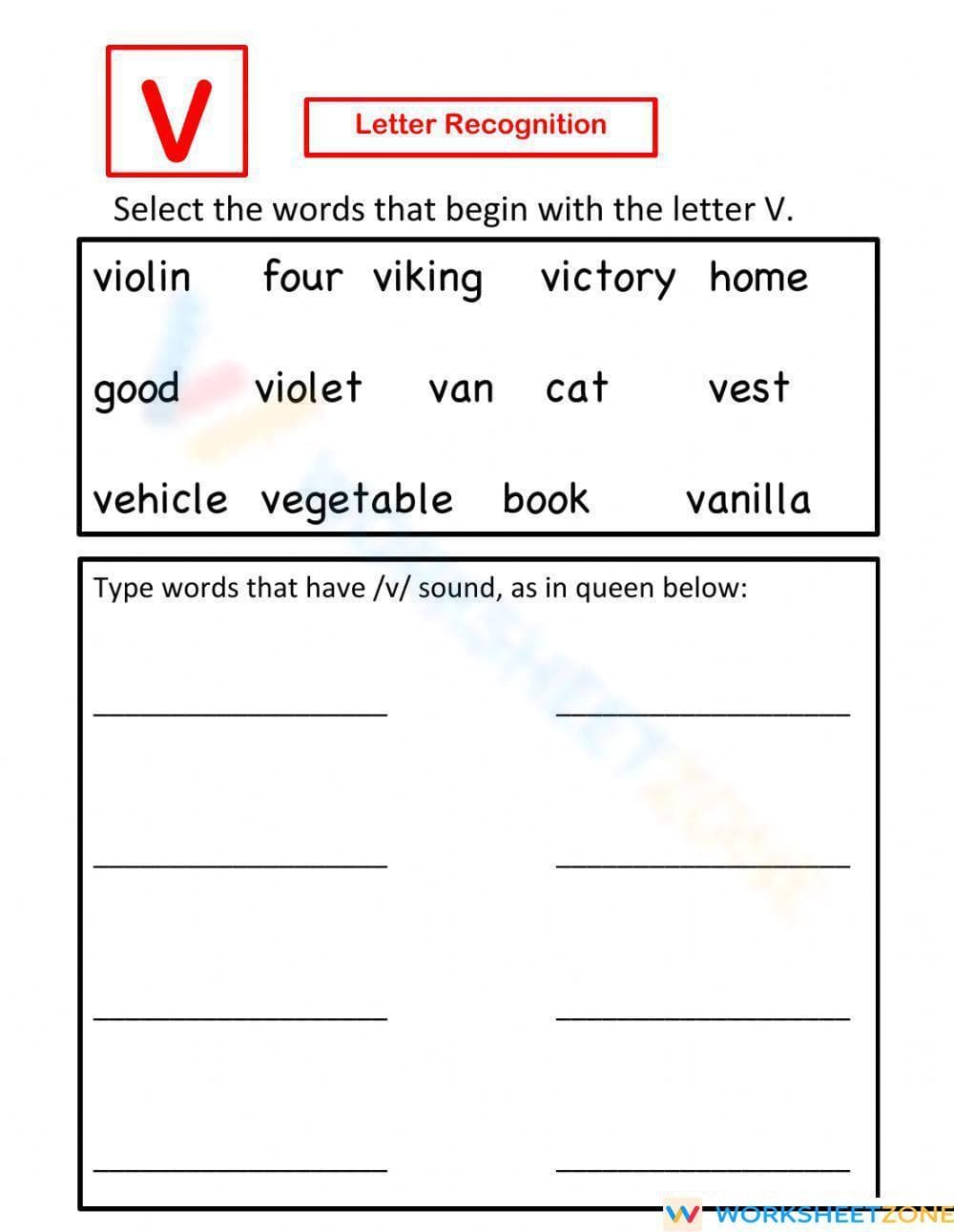

Kindergarten Letter V — Printable No-Prep Worksheet
Paste this activity's link or code into your existing LMS (Google Classroom, Canvas, Teams, Schoology, Moodle, etc.).
Students can open and work on the activity right away, with no student login required.
You'll still be able to track student progress and results from your teacher account.
This essential worksheet helps Kindergarten students master the letter 'V' through three targeted activities. Learners will practice identifying, writing, and recognizing the beginning sound of the letter V. It’s a straightforward resource designed to build foundational alphabet knowledge and improve fine motor skills with clear, engaging tasks.
At a Glance
- Grade: Kindergarten · Subject: English Language Arts (ELA)
- Standard:
CCSS.ELA-LITERACY.RF.K.1.d— Recognize and name all upper- and lowercase letters of the alphabet.- Skill Focus: Letter V Recognition, Writing, and Sound Association
- Format: 1 page · 3 problems · Answer key included · PDF
- Best For: Independent practice, literacy centers, or substitute plans
- Time: 10–15 minutes
What's Inside
This single-page PDF contains three distinct tasks for mastering the letter 'V'. The worksheet includes a letter identification section, a handwriting practice area for upper and lowercase letters, and an initial sound activity. Students will circle letters, trace and write, and identify pictures starting with the /v/ sound. A complete answer key is included for easy review.
Zero-Prep Classroom Workflow
Designed for the busy teacher, this resource is ready in moments. The entire workflow takes less than two minutes, making it a perfect tool for morning work, quick review, or an unplanned substitute lesson.
- Step 1: Print (30 seconds) — The worksheet is a single, economical black-and-white page.
- Step 2: Distribute (60 seconds) — Clear on-page instructions mean students can begin work immediately.
- Step 3: Review (30 seconds) — Use the provided answer key to check work quickly.
Standards Alignment
This worksheet is directly aligned with Common Core standard CCSS.ELA-LITERACY.RF.K.1.d: Recognize and name all upper- and lowercase letters of the alphabet. This targeted practice helps students meet a key foundational reading benchmark. The standard code can be copied directly into lesson plans, IEP goals, or curriculum maps.
How to Use This Worksheet
Use this versatile resource after a direct instruction lesson on the letter 'V' for hands-on practice. It also serves as an excellent independent activity for literacy centers or morning work. For a quick formative assessment, observe which task (recognition, writing, or sound) a student struggles with to get instant data for targeted support. Most students will complete the worksheet in 10 to 15 minutes.
Who It's For
This worksheet is ideal for Kindergarten students learning the alphabet. It's also suitable for preschoolers ready for letter-formation or first graders needing a quick review. The clear layout is accessible for all learners, including ELLs. Pair this activity with a letter 'V' anchor chart or a read-aloud to reinforce the concept and extend learning.
This worksheet offers practice for CCSS.ELA-LITERACY.RF.K.1.d, where students must recognize and name letters. Its tasks—identification, formation, and sound association—reflect a systematic approach to early literacy. Automatic letter recognition is a key predictor of reading success. The RAND AIRS 2024 report on foundational skills notes that explicit instruction and repeated exposure are critical for building this automaticity. This resource provides that exposure in a clear format, isolating one letter to prevent cognitive overload. By engaging with 'V' in multiple modalities, students build robust neural pathways for fluent reading. This is an essential step toward meeting grade-level benchmarks, ensuring students develop a strong foundation for decoding and future comprehension.


