




























Views
Downloads
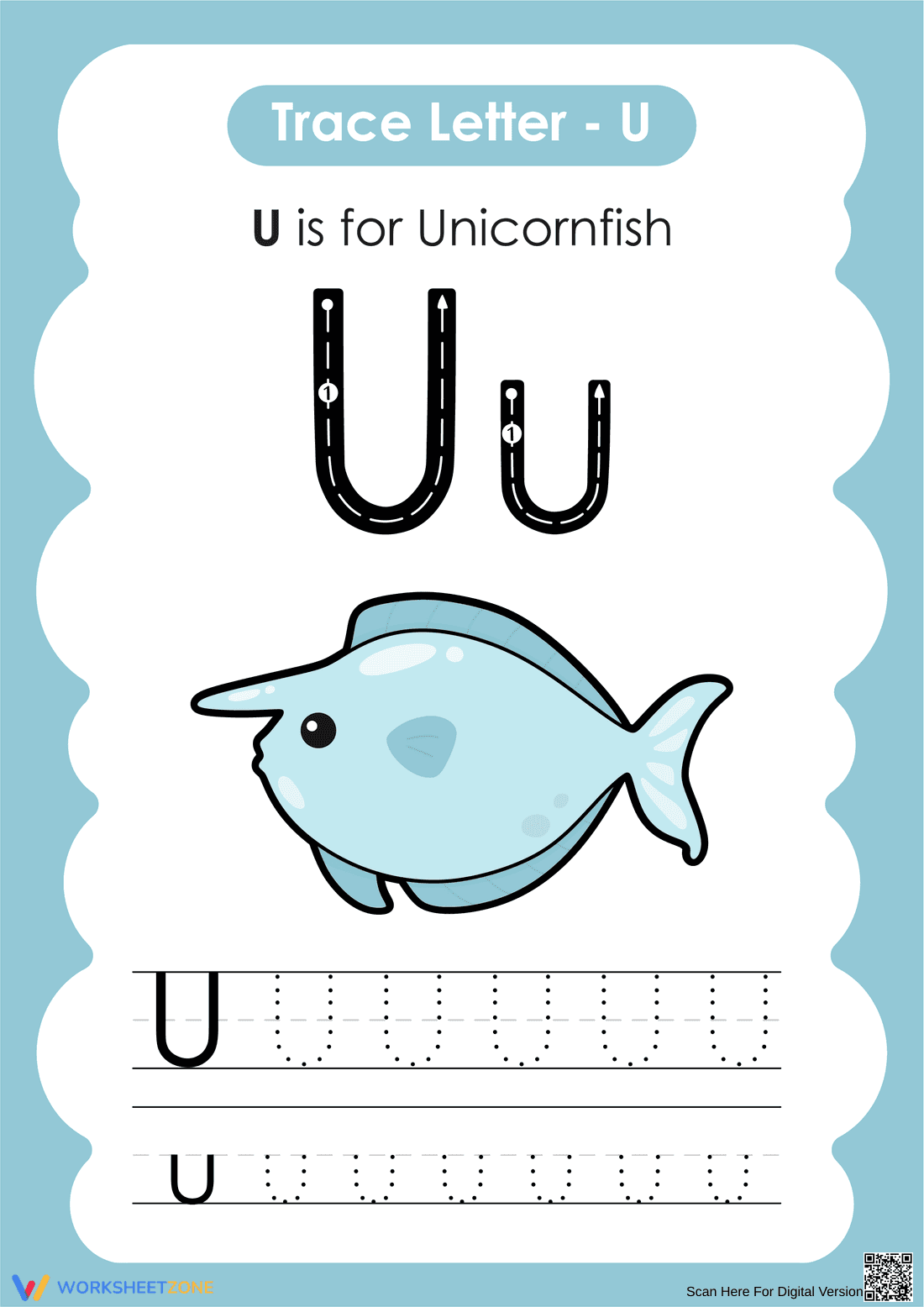

Grade K Letter U Tracing — Printable No-Prep Worksheet

Paste this activity's link or code into your existing LMS (Google Classroom, Canvas, Teams, Schoology, Moodle, etc.).
Students can open and work on the activity right away, with no student login required.
You'll still be able to track student progress and results from your teacher account.
This foundational handwriting worksheet provides early learners with focused practice on recognizing and forming the letter U. By tracing both large instructional models and standard dotted letters, students develop fine motor control and proper stroke sequence, ensuring confident alphabet writing skills.
At a Glance
- Grade: K · Subject: ELA
- Standard:
CCSS.ELA-LITERACY.L.K.1.A— Print many upper- and lowercase letters- Skill Focus: Letter U Tracing
- Format: 1 page · 14 problems · No answer key · PDF
- Best For: Independent practice
- Time: 5–10 minutes
This single-page resource features a clear, engaging layout designed specifically for young learners. It includes two large, directional models of the uppercase and lowercase letter U, complete with numbered arrows to guide proper stroke order. Below the models, an adorable unicornfish illustration reinforces the letter's phonetic sound. The bottom half of the page provides two structured lines containing twelve dotted uppercase U characters for repetitive tracing practice.
Zero-Prep Workflow
- Print (1 minute): Simply download the PDF and print the required number of copies. The black-and-white friendly design ensures crisp lines even on standard school printers.
- Distribute (1 minute): Hand out the worksheets along with pencils or crayons. The visual instructions are intuitive enough that students can begin immediately.
- Review (1 minute): Quickly scan student work to ensure they are following the directional arrows rather than drawing the letters backward.
With under two minutes of prep, this resource is perfect for morning work or sub plans.
Standards Alignment
This worksheet is directly aligned to CCSS.ELA-LITERACY.L.K.1.A, which requires students to print many upper- and lowercase letters. By providing explicit stroke guidance and repetitive practice, it builds the exact fine motor pathways needed to meet this foundational literacy goal. Both standard codes can be copied directly into lesson plans, IEP goals, or district curriculum mapping tools.
How to Use It
This tracing activity works exceptionally well during morning arrival routines. Students can independently complete the tracing lines while the teacher takes attendance. Alternatively, use it as a targeted station during literacy centers after a brief direct instruction lesson on the letter U. As a formative assessment tip, observe students while they trace the large model letters at the top; watch to see if they start at the top line and pull down, correcting any bottom-up strokes immediately. Expected completion time ranges from 5 to 10 minutes.
Who It's For
This resource is primarily designed for preschool, kindergarten, and first-grade students who are mastering the alphabet and developing fine motor skills. It also benefits occupational therapy sessions focusing on pencil grip. For differentiation, provide students who struggle with fine motor control a thick marker or crayon instead of a standard pencil. Pair this worksheet with a read-aloud book featuring the letter U or a classroom alphabet anchor chart to reinforce the phonetic connection.
Mastering handwriting through guided tracing is a critical step in early literacy development. According to Fisher & Frey (2014), explicit instruction in letter formation, combined with structured practice, significantly improves both writing fluency and subsequent reading comprehension. When students practice CCSS.ELA-LITERACY.L.K.1.A to print many upper- and lowercase letters, they reduce the cognitive load required for physical writing, freeing up mental resources for phonics and vocabulary acquisition. This Letter U tracing worksheet provides the exact type of repetitive, visually supported practice recommended by early childhood researchers. By integrating directional arrows, the resource ensures students internalize correct motor patterns early, preventing bad habits that are difficult to unlearn later.


