


























Views
Downloads

Letter M Beginning Sound Printable Worksheet | Grade K ELA
Paste this activity's link or code into your existing LMS (Google Classroom, Canvas, Teams, Schoology, Moodle, etc.).
Students can open and work on the activity right away, with no student login required.
You'll still be able to track student progress and results from your teacher account.
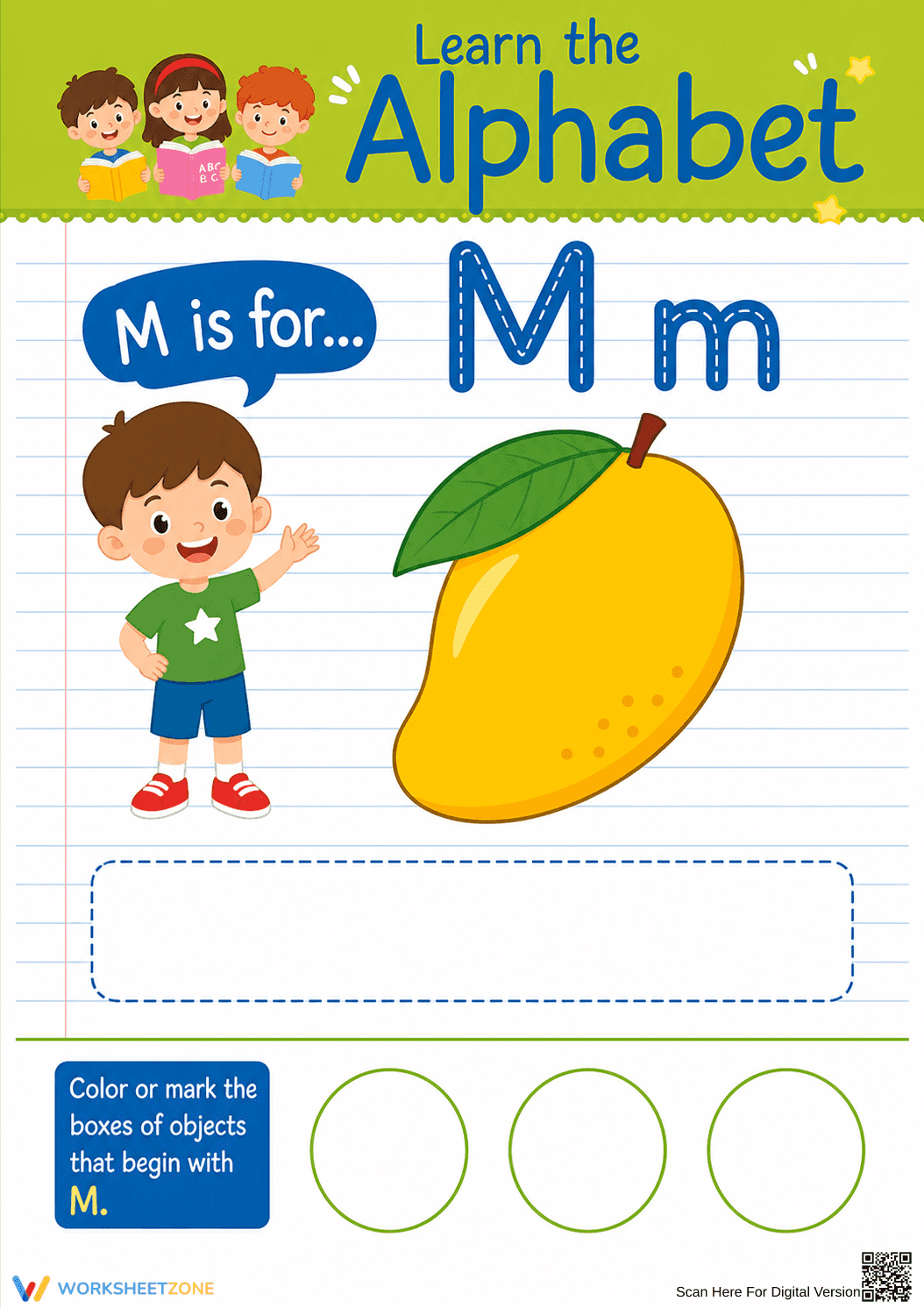
This foundational phonics worksheet helps early learners master the beginning sound of the letter M. Students practice identifying, tracing, and applying their knowledge of the /m/ sound through engaging, age-appropriate activities. By connecting the visual letter to its phonetic sound, young readers build the critical decoding skills necessary for future reading fluency.
At a Glance
- Grade: K · Subject: ELA
- Standard:
CCSS.ELA-LITERACY.RF.K.3.A— Produce the primary sound for each consonant- Skill Focus: Letter M Beginning Sound
- Format: 1 page · 4 problems · Answer key included · PDF
- Best For: Independent practice and centers
- Time: 10–15 minutes
Inside this single-page resource, educators will find a visual layout designed for kindergarten students. The worksheet features a mango illustration to anchor the /m/ sound, alongside guided tracing lines for uppercase and lowercase letter M. A drawing box encourages creative application, while the bottom section includes three marking tasks where students identify objects starting with the target letter. An answer key is provided.
This resource follows a gradual-release approach:
- Guided practice: Students begin by tracing the uppercase and lowercase letter M, reinforcing proper stroke order and letter formation with visual guides.
- Supported practice: The large anchor image connects the abstract letter to a concrete vocabulary word (mango), helping students internalize the beginning sound.
- Independent practice: The final marking tasks require students to independently evaluate different objects and determine if they start with the /m/ sound.
This structured I Do, We Do, You Do progression ensures early learners grasp the concept before working independently.
This worksheet is directly aligned to CCSS.ELA-LITERACY.RF.K.3.A: Demonstrate basic knowledge of one-to-one letter-sound correspondences by producing the primary sound or many of the most frequent sounds for each consonant. It also supports early handwriting standards by incorporating letter tracing. Both standard codes can be copied directly into lesson plans, IEP goals, or district curriculum mapping tools.
Deploy this worksheet during morning work to activate prior knowledge before a phonics lesson. Alternatively, it serves as a literacy center activity where students use dot markers to complete the bottom section. While students work, observe their pencil grip during tracing and listen to see if they vocalize the /m/ sound. Expect completion within 10 to 15 minutes.
This resource is primarily designed for kindergarten students developing their foundational phonics skills. It is also highly effective for pre-K students ready for a challenge, or first-grade students requiring targeted intervention on consonant sounds. For optimal results, pair this worksheet with a tactile alphabet anchor chart or a direct instruction lesson focusing on mouth formation for the /m/ sound.
Mastering early phonics concepts like the letter M beginning sound is a critical milestone in early childhood literacy. According to research from Fisher & Frey (2014), explicit instruction in letter-sound correspondence significantly accelerates a student's ability to decode unfamiliar words. When students practice producing the primary sound for each consonant, as outlined in CCSS.ELA-LITERACY.RF.K.3.A, they build the necessary neural pathways for fluent reading. This worksheet provides the exact type of multimodal practice—combining visual tracing, auditory vocalization, and conceptual categorization—that researchers identify as most effective for early learners. By integrating these targeted exercises into daily routines, educators ensure that students do not just memorize shapes, but actively connect letters to their phonetic functions. This foundational knowledge ultimately lowers the cognitive load required for future reading comprehension tasks, setting students up for long-term academic success.


