


























Views
Downloads

Kindergarten Letter H — Printable No-Prep Worksheet
Paste this activity's link or code into your existing LMS (Google Classroom, Canvas, Teams, Schoology, Moodle, etc.).
Students can open and work on the activity right away, with no student login required.
You'll still be able to track student progress and results from your teacher account.
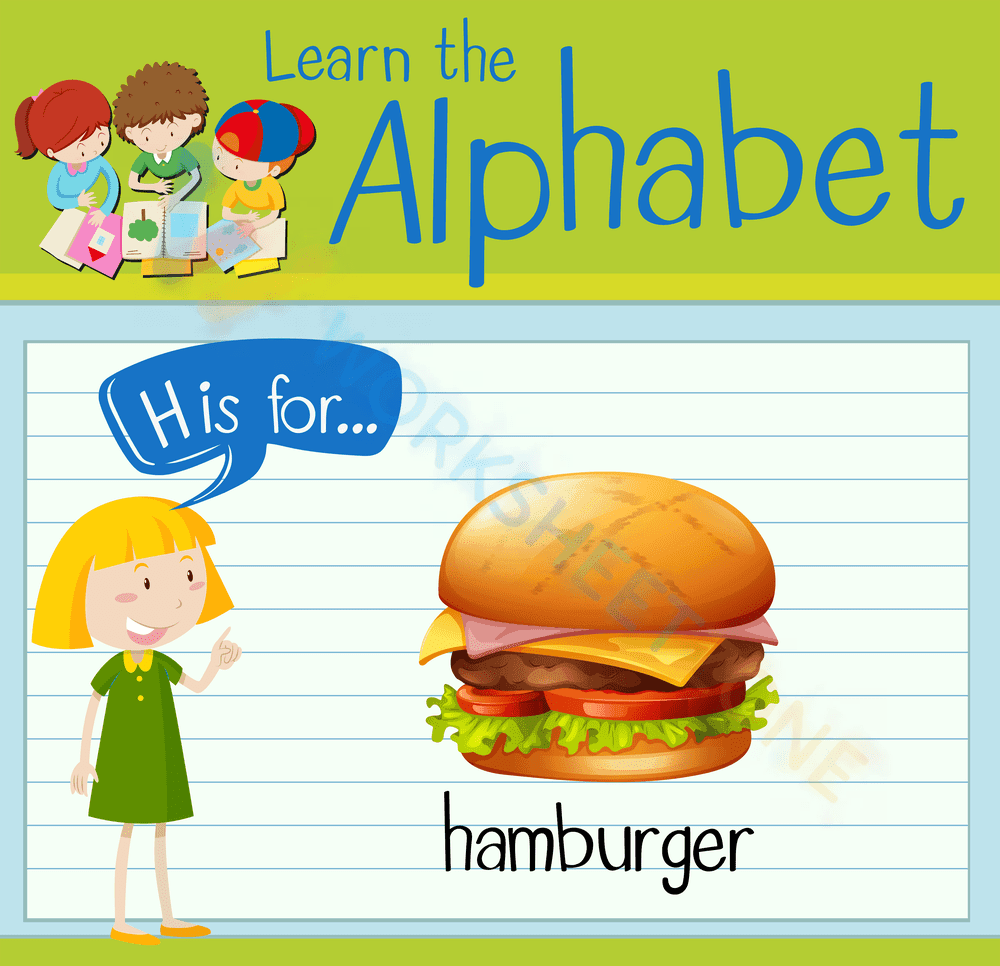
This printable letter H beginning sound worksheet helps early learners associate the letter H with its corresponding phoneme through visual association. Students identify the letter, look at the hamburger illustration, and practice pronouncing the starting sound. This resource builds foundational phonics skills necessary for early reading success.
At a Glance
- Grade: Kindergarten · Subject: ELA Phonics
- Standard:
CCSS.ELA-LITERACY.RF.K.3.A— Associate letter sounds with their common written symbols- Skill Focus: Letter H beginning sound recognition
- Format: 1 page · 1 task · Visual aid · PDF
- Best For: Morning work and phonics introduction
- Time: 5–10 minutes
This single-page PDF features a clear, high-quality illustration of a hamburger alongside the text "H is for... hamburger" to anchor the letter sound. The clean layout uses large, readable fonts designed specifically for young learners. It serves as a visual anchor chart or a simple tracing and pronunciation sheet, making it highly versatile for early childhood classrooms.
Teachers can integrate this resource into their daily routine with a simple three-step workflow. First, print the single-page PDF in under 1 minute. Second, distribute the sheet to students during morning arrival or phonics block, taking less than 30 seconds. Third, review the letter sound as a whole group by chanting "H is for hamburger" for 2 minutes. The total teacher preparation time is under 2 minutes, making this sheet an excellent choice for emergency sub plans or quick transition activities.
This resource aligns directly with the Common Core State Standard CCSS.ELA-LITERACY.RF.K.3.A, which requires students to demonstrate basic knowledge of one-to-one letter-sound correspondences by producing the primary sound for consonants. It also supports phonological awareness by helping students isolate the initial sound in spoken words. Both standard codes can be copied directly into lesson plans, IEP goals, or district curriculum mapping tools.
Use this sheet during direct instruction as a visual anchor chart to introduce the letter H sound. Project it on the board and have students repeat the word "hamburger" while emphasizing the initial /h/ sound. Alternatively, use it as a formative assessment tool during small-group intervention. Observe whether students can independently identify the letter H and connect it to the correct beginning sound, which takes about 5 minutes per group.
This worksheet targets kindergarten students, preschool learners transitioning to kindergarten, and first-grade students requiring phonics intervention. It accommodates diverse learners through its clear visual support, making it ideal for English language learners. Pair this sheet with a letter H tracing activity or a physical letter-sound matching game to reinforce the concept.
Early literacy research emphasizes the critical role of systematic phonics instruction in developing reading proficiency. According to the Fisher & Frey (2014) framework for gradual release of responsibility, visual anchors and direct letter-sound association tasks provide the necessary scaffolding for novice readers. This worksheet targets the CCSS.ELA-LITERACY.RF.K.3.A standard by linking the grapheme H to its phoneme /h/ using a familiar, high-frequency vocabulary word. By isolating the beginning sound, students build phonemic awareness, which serves as a primary predictor of later reading achievement. Utilizing structured visual aids helps young learners store letter-sound correspondences in their long-term memory, facilitating faster word recognition. This resource provides a practical, evidence-based tool for early childhood educators to reinforce foundational decoding skills during daily phonics instruction.


