




























Views
Downloads
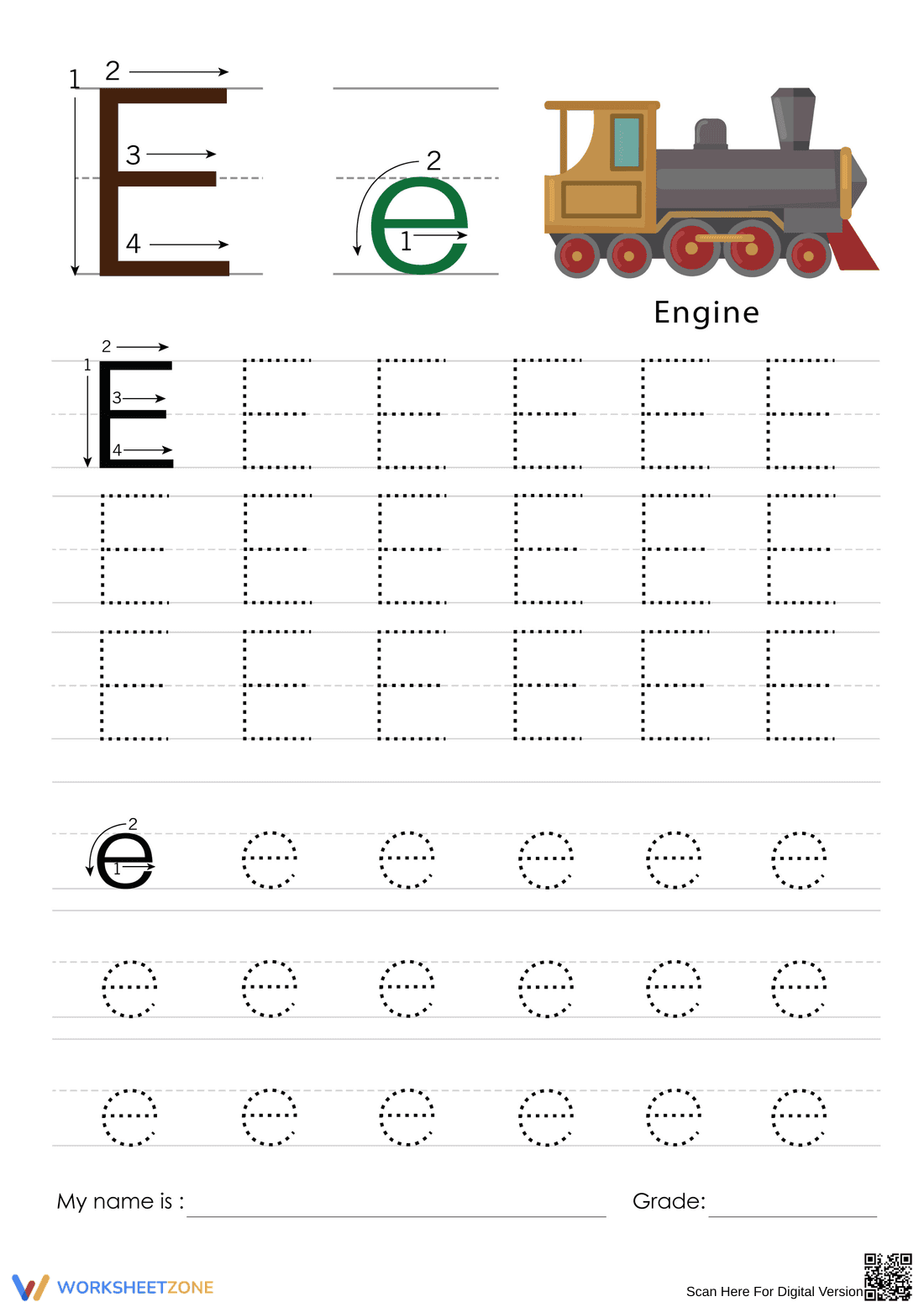

Letter E Tracing Worksheet | Printable Grade K-1

Paste this activity's link or code into your existing LMS (Google Classroom, Canvas, Teams, Schoology, Moodle, etc.).
Students can open and work on the activity right away, with no student login required.
You'll still be able to track student progress and results from your teacher account.
This Letter E tracing worksheet provides Kindergarten and Grade 1 students with structured practice to master uppercase and lowercase letter formation. By following numbered stroke guides, learners develop the muscle memory necessary for legible handwriting. This resource ensures students can confidently identify and produce the letter E in various contexts.
At a Glance
At a Glance
- Grade: Kindergarten · Subject: English
- Standard:
CCSS.ELA-LITERACY.L.K.1.A— Print many upper- and lowercase letters accurately- Skill Focus: Letter E formation
- Format: 1 page · 36 problems · PDF
- Best For: Daily morning work or handwriting centers
- Time: 10–15 minutes
What's Inside
The worksheet features a large visual anchor—a train engine—to reinforce the "E is for Engine" phonetic connection. It includes three rows of uppercase "E" and three rows of lowercase "e" tracing tasks. Each section begins with a large model letter featuring directional arrows and numbered steps to guide the initial pencil strokes.
Zero-Prep Workflow
- Print: Select the single-page PDF and print enough copies for your class in under 30 seconds.
- Distribute: Hand out the sheets during your literacy block or as a quiet transition activity.
- Review: Walk around to check for proper grip and stroke direction as students complete the 36 tracing tasks. Total teacher prep time is under 2 minutes, making this an ideal sub plan or morning work option.
Standards Alignment
This resource is aligned to CCSS.ELA-LITERACY.L.K.1.A, which requires students to print many upper- and lowercase letters. This worksheet specifically targets the vertical and horizontal strokes of the letter E. This standard code can be copied directly into lesson plans, IEP goals, or district curriculum mapping tools.
How to Use It
Use this as a formative assessment during the first weeks of school to identify students who need additional fine motor support. It also works well as a "fast finisher" activity for students who complete their primary literacy tasks early. Expected completion time for most students is 10 to 15 minutes.
Who It's For
This resource is designed for early childhood learners, including preschoolers and kindergarteners. It is particularly helpful for students requiring Tier 2 handwriting intervention or English Language Learners (ELLs) practicing basic alphabet mechanics. Pair this with a tactile sand tray or an alphabet anchor chart to reinforce letter recognition.
According to Fisher & Frey (2014), the gradual release of responsibility begins with clear modeling, which this worksheet provides through numbered stroke guides. Research indicates that repetitive tracing of specific characters like the letter E helps solidify the neural pathways required for automaticity in writing. By focusing on CCSS.ELA-LITERACY.L.K.1.A, educators ensure that students meet foundational literacy benchmarks early in their academic careers. This printable resource offers 36 distinct opportunities for practice, balancing uppercase and lowercase demands to ensure comprehensive mastery. The inclusion of a visual mnemonic, such as the engine, aligns with dual-coding theory, assisting students in retrieving the letter's sound and shape simultaneously. This systematic approach to handwriting is essential for preventing future writing fatigue and supporting overall literacy development in primary grades.


