




























Views
Downloads

Printable Triangle Drawing Worksheet | Kindergarten Math

Paste this activity's link or code into your existing LMS (Google Classroom, Canvas, Teams, Schoology, Moodle, etc.).
Students can open and work on the activity right away, with no student login required.
You'll still be able to track student progress and results from your teacher account.
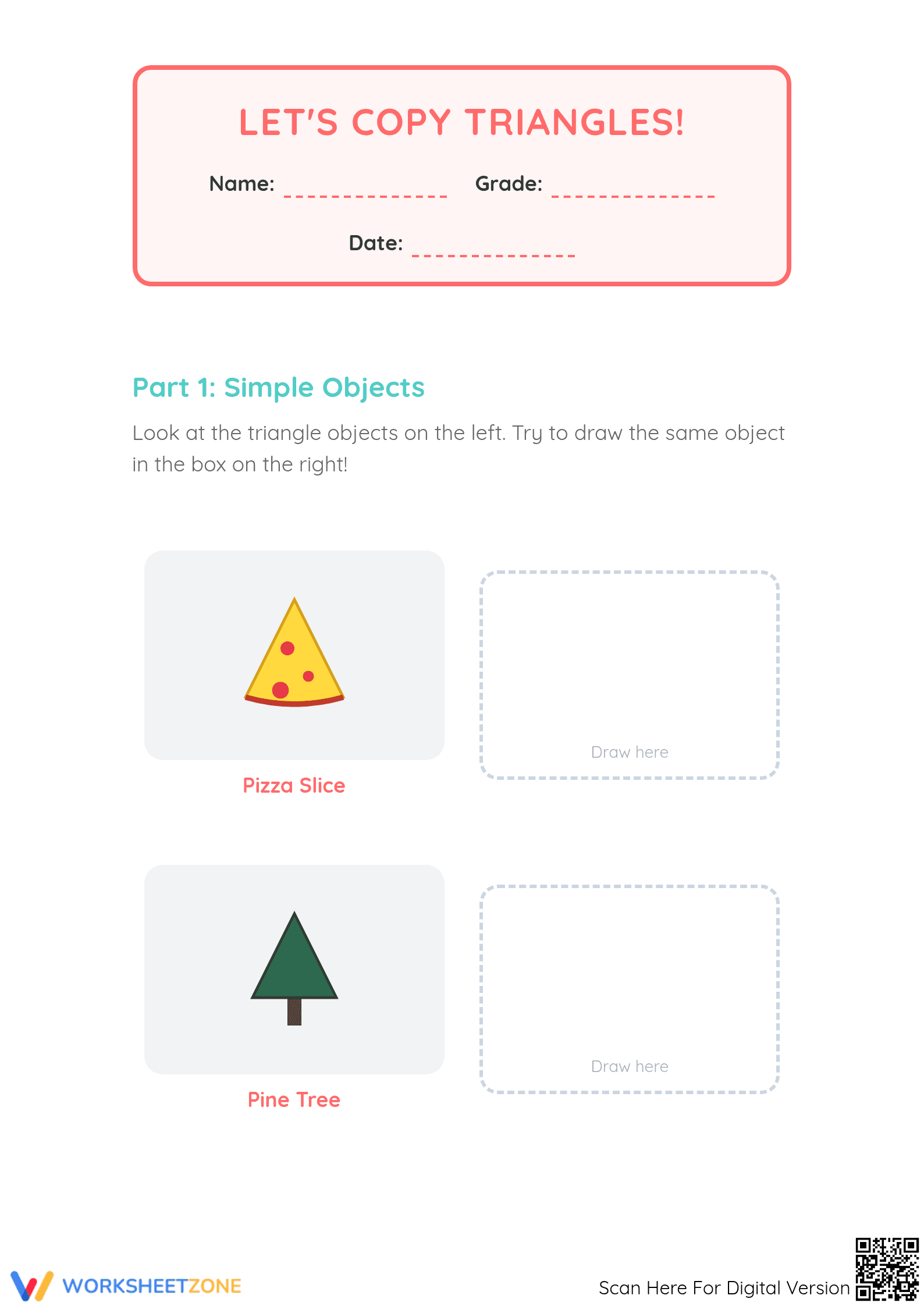
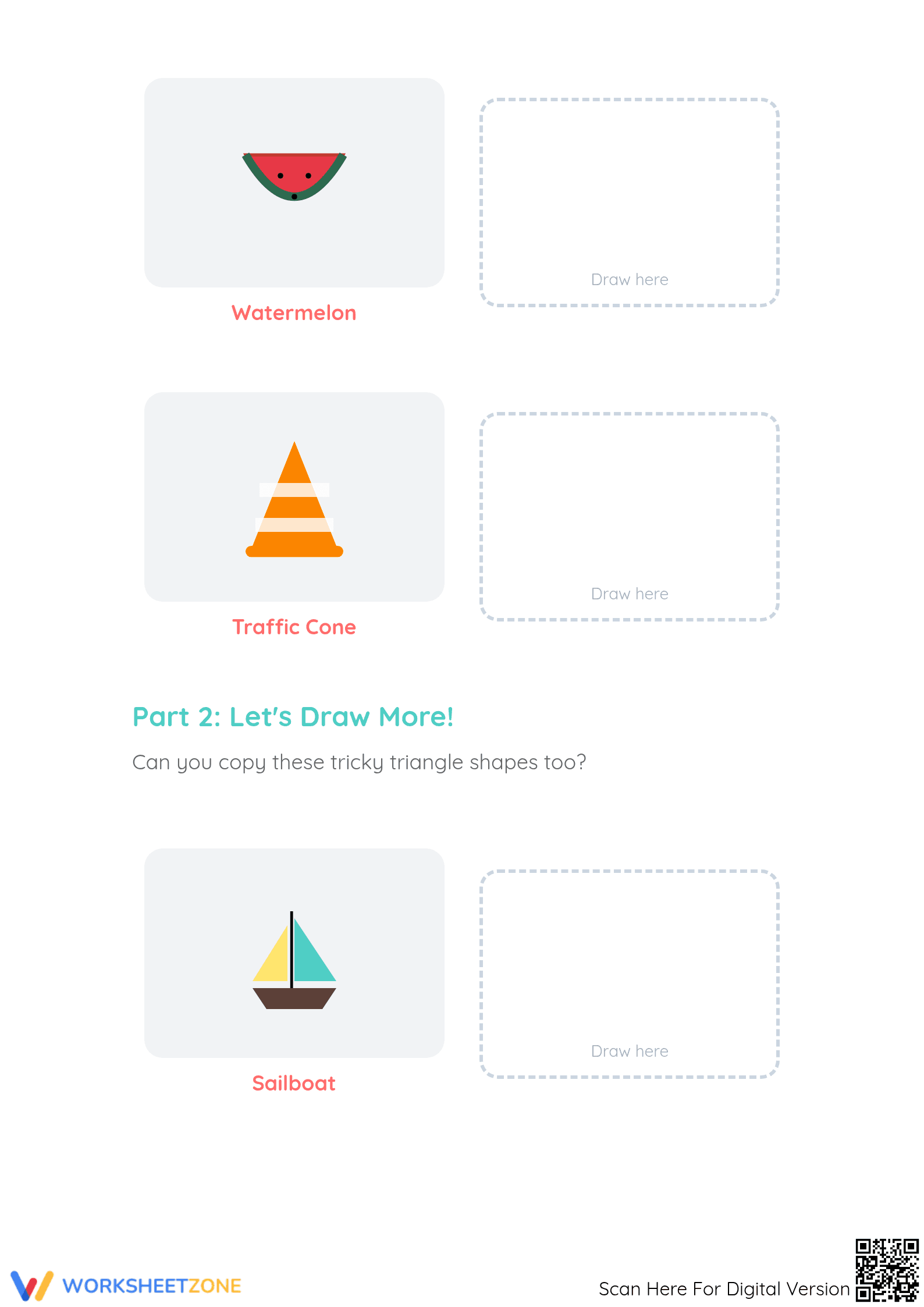
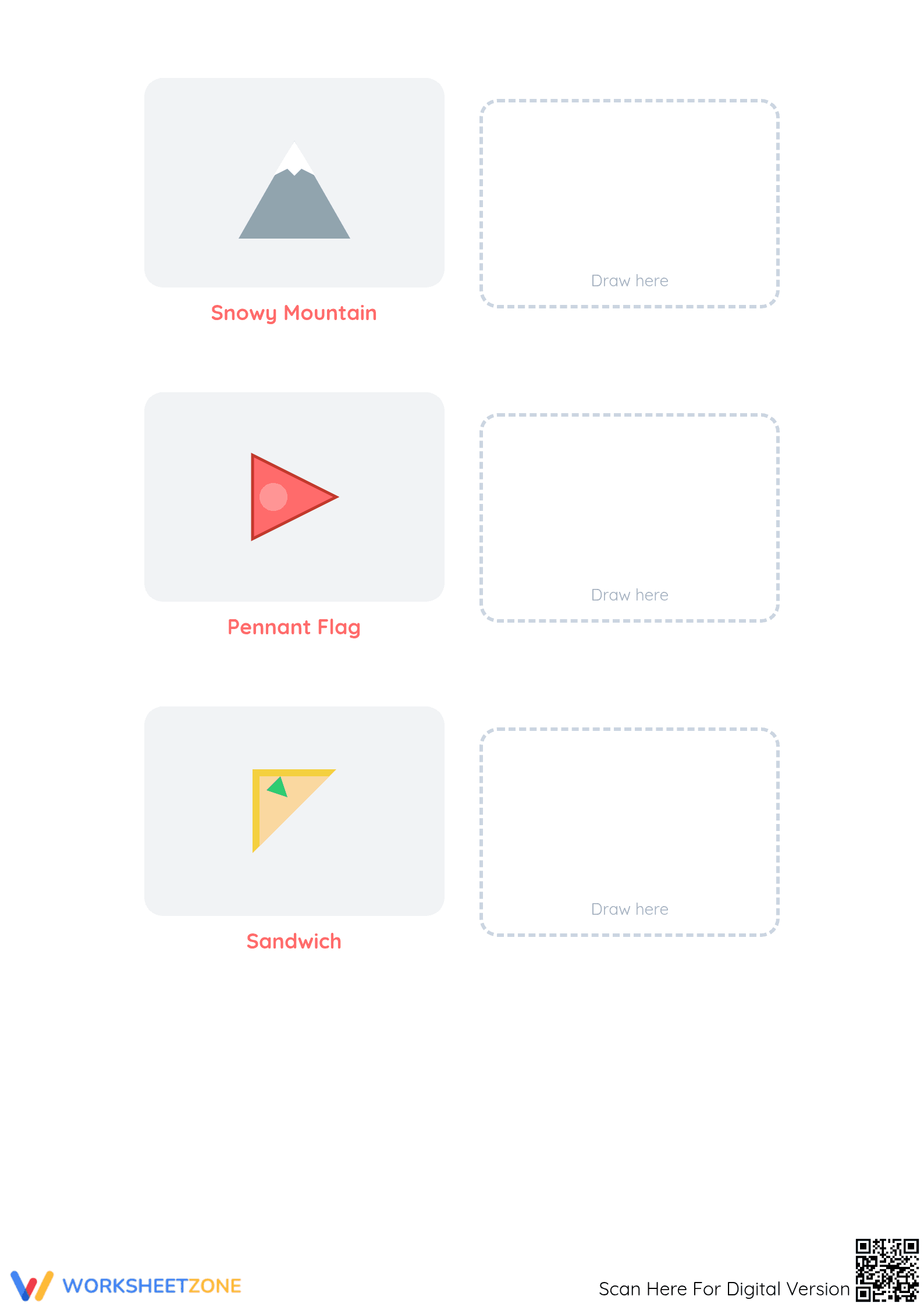
This Kindergarten geometry worksheet empowers early learners to identify and replicate triangular forms through engaging, real-world illustrations. By copying familiar objects and hunting for shapes in their environment, students build the foundational spatial reasoning and fine motor skills necessary for geometric mastery. It is an essential resource for developing shape recognition and artistic precision.
At a Glance
- Grade: Kindergarten · Subject: Math
- Standard:
CCSS.MATH.CONTENT.K.G.B.5— Model shapes in the world by building and drawing shapes.- Skill Focus: Triangle Identification and Geometric Drawing
- Format: 4 pages · 11 problems · No-prep PDF
- Best For: Early finishers and geometry center rotations
- Time: 15–20 minutes
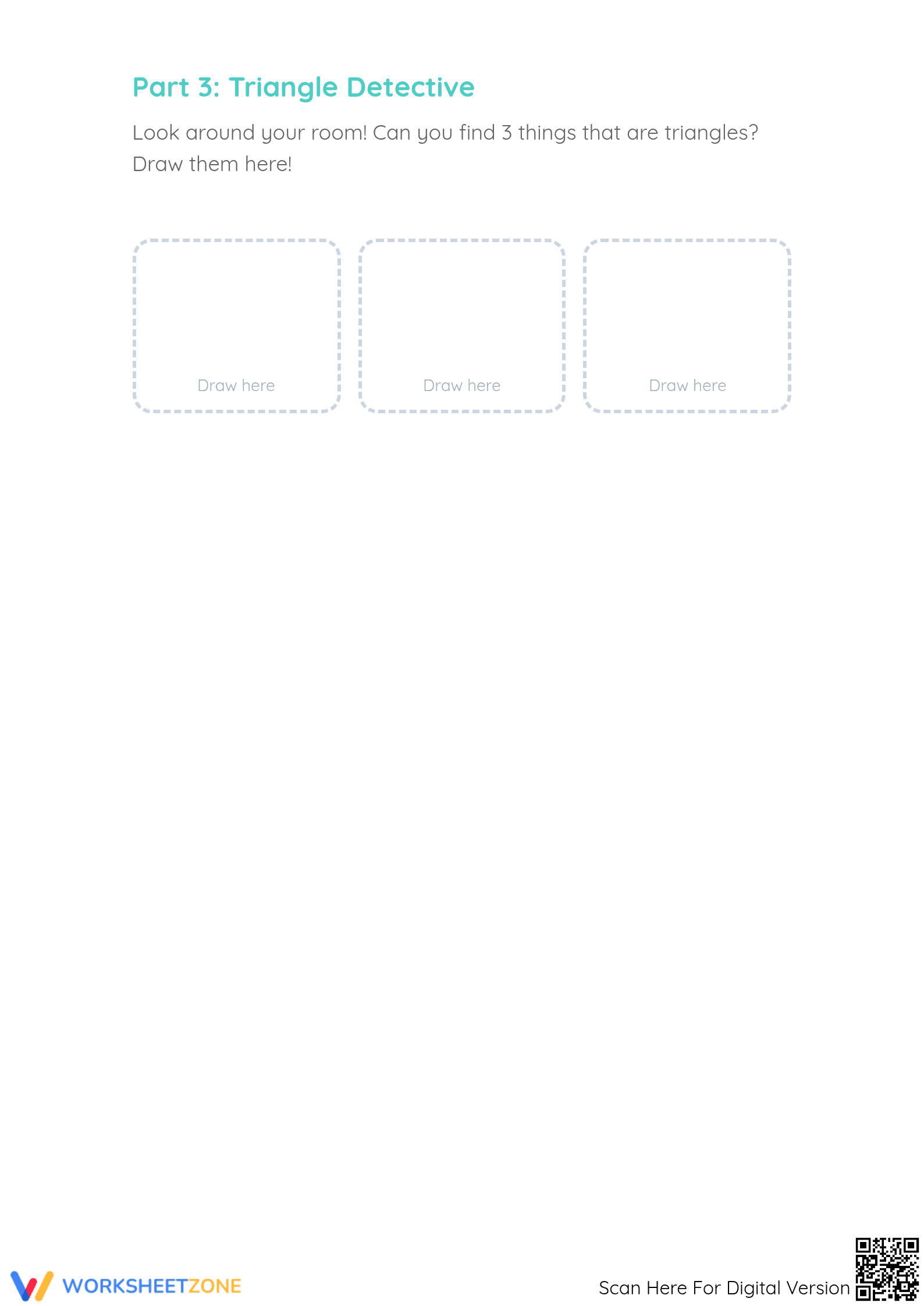
This comprehensive four-page PDF includes 11 structured drawing tasks designed to scaffold geometric understanding. Students begin by copying simple triangular objects like pizza slices and pine trees, progress to tricky shapes like sailboats and pennant flags, and conclude with a creative Triangle Detective activity. The layout features large, clear drawing boxes and high-contrast illustrations to support visual-motor development.
Zero-Prep Workflow
The print-and-go design ensures that teachers can integrate this activity into their lesson plans in under 2 minutes. Step one: Print the four-page set directly from your browser. Step two: Distribute to students for immediate engagement—no scissors or glue required. Step three: Review student work during a quick walk-through or transition period. This workflow is perfectly suited for emergency sub plans or last-minute classroom fillers.
Standards Alignment
This worksheet is rigorously aligned to CCSS.MATH.CONTENT.K.G.B.5, which requires students to model shapes in the world by building shapes from components and drawing shapes. By translating three-dimensional concepts into two-dimensional representations, students meet the core requirements of the Kindergarten geometry strand. The standard code can be copied directly into lesson plans, IEP goals, or district curriculum mapping tools.
How to Use It
Use this worksheet during the independent practice phase of a geometry lesson to assess shape recognition accuracy. It also functions as a powerful formative assessment tool; observe how students handle the vertices and angles of the triangles to identify those needing additional fine-motor support. Expect students to complete the entire set within 15 to 20 minutes depending on their drawing speed and attention to detail.
Who It's For
Designed primarily for Kindergarten students, this resource is also ideal for preschool learners ready for advanced shape work or first-grade students requiring remedial geometry practice. It pairs naturally with a classroom anchor chart detailing shape attributes or a read-aloud session featuring books about shapes in the environment, such as The Greedy Triangle, to reinforce real-world connections.
The Let's Copy Triangles worksheet aligns with the instructional shifts identified in the EdReports 2024 analysis, focusing on the coherence of geometric modeling in early childhood education. By requiring students to replicate specific attributes of a triangle—three sides and three vertices—the material supports the development of mental rotation skills and spatial visualization. Research from Fisher & Frey (2014) highlights the importance of guided modeling before independent practice, a structure mirrored in the progression from simple to complex objects within these four pages. The final Triangle Detective section encourages students to generalize their learning to their physical environment, a key indicator of conceptual mastery. This evidence-based approach ensures that students move beyond rote identification toward active geometric construction, providing a robust foundation for future polygon studies and spatial reasoning tasks in higher elementary grades.


