


























Views
Downloads
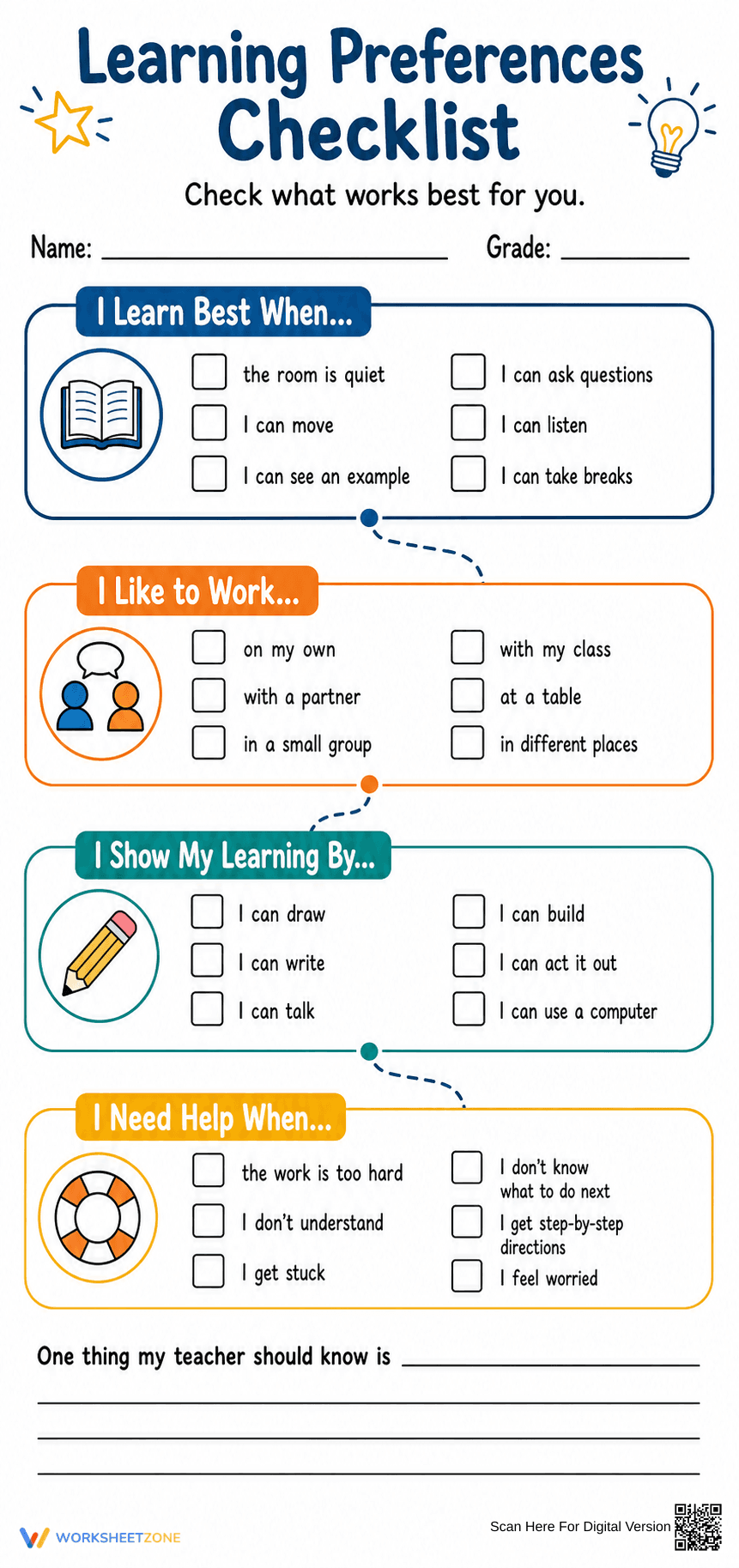

Learning Preferences Checklist | Grade 3-5 Essential
Paste this activity's link or code into your existing LMS (Google Classroom, Canvas, Teams, Schoology, Moodle, etc.).
Students can open and work on the activity right away, with no student login required.
You'll still be able to track student progress and results from your teacher account.
This Learning Preferences Checklist empowers students to identify and communicate their unique learning styles and environmental needs. By providing a structured format for self-reflection, this worksheet helps teachers build a responsive classroom culture from day one. Students gain agency by selecting specific strategies that support their academic success and personal well-being.
At a Glance
- Grade: 3-5 · Subject: Social Emotional Learning
- Standard:
CCSS.ELA-LITERACY.SL.3.1— Engage effectively in a range of collaborative discussions and self-reflection- Skill Focus: Self-Advocacy & Learning Styles
- Format: 1 page · 25 tasks · No answer key · PDF
- Best For: Back-to-school student interest surveys
- Time: 10–15 minutes
What's Inside
The worksheet features a clean, one-page layout with four distinct categories: learning conditions, social preferences, demonstration of knowledge, and support triggers. It includes 24 large checkboxes for easy selection and a dedicated open-response section at the bottom for personalized teacher notes. The visual design uses simple icons and a 'learning path' connector to guide students through the self-reflection process.
Zero-Prep Workflow
- Print (30 seconds): Select the single-page PDF and print copies for your class.
- Distribute (1 minute): Hand out the checklists during morning meeting or as a 'get to know you' task.
- Review (5 minutes): Scan the results to identify student needs.
Total teacher prep time is under 2 minutes, making this an ideal sub-plan or first-day activity.
Standards Alignment
This resource aligns with `CCSS.ELA-LITERACY.SL.3.1`, which focuses on students engaging effectively in collaborative discussions and expressing their own ideas clearly. By identifying how they 'show learning' and 'need help,' students prepare to participate in classroom discourse more confidently. This standard code can be copied directly into lesson plans, IEP goals, or district curriculum mapping tools.
How to Use It
Use this checklist during the first week of school to establish a student-centered classroom environment. It serves as an excellent formative assessment for understanding the diverse needs of a new cohort. Alternatively, assign it before a major project to help students choose the best 'Show My Learning' method, such as drawing, writing, or building.
Who It's For
This worksheet is designed for general education students in Grades 3-5, but it is particularly beneficial for students with IEPs or 504 plans who are learning to self-advocate. It pairs naturally with a 'Meet the Teacher' night or an introductory lesson on growth mindset and neurodiversity.
Effective classroom management begins with understanding the diverse instructional needs of every learner. According to Fisher & Frey (2014), student self-advocacy is a critical component of the gradual release of responsibility, as it allows learners to identify when they require additional scaffolding or environmental adjustments. This Learning Preferences Checklist facilitates that process by aligning with CCSS.ELA-LITERACY.SL.3.1, encouraging students to reflect on their own learning behaviors and communicate them clearly to their instructors. Research from the RAND AIRS 2024 report suggests that student-centered surveys significantly improve teacher-student rapport and academic engagement by validating individual learning paths. By utilizing this 25-task diagnostic tool, educators can gather actionable data on student preferences for quiet work, collaboration, and tactile learning. This evidence-based approach ensures that classroom instruction is not only standards-aligned but also responsive to the specific social-emotional and cognitive profiles of the student population.


