


























Views
Downloads

Printable Grade 6 Reading Comprehension Worksheet: Plants
Paste this activity's link or code into your existing LMS (Google Classroom, Canvas, Teams, Schoology, Moodle, etc.).
Students can open and work on the activity right away, with no student login required.
You'll still be able to track student progress and results from your teacher account.
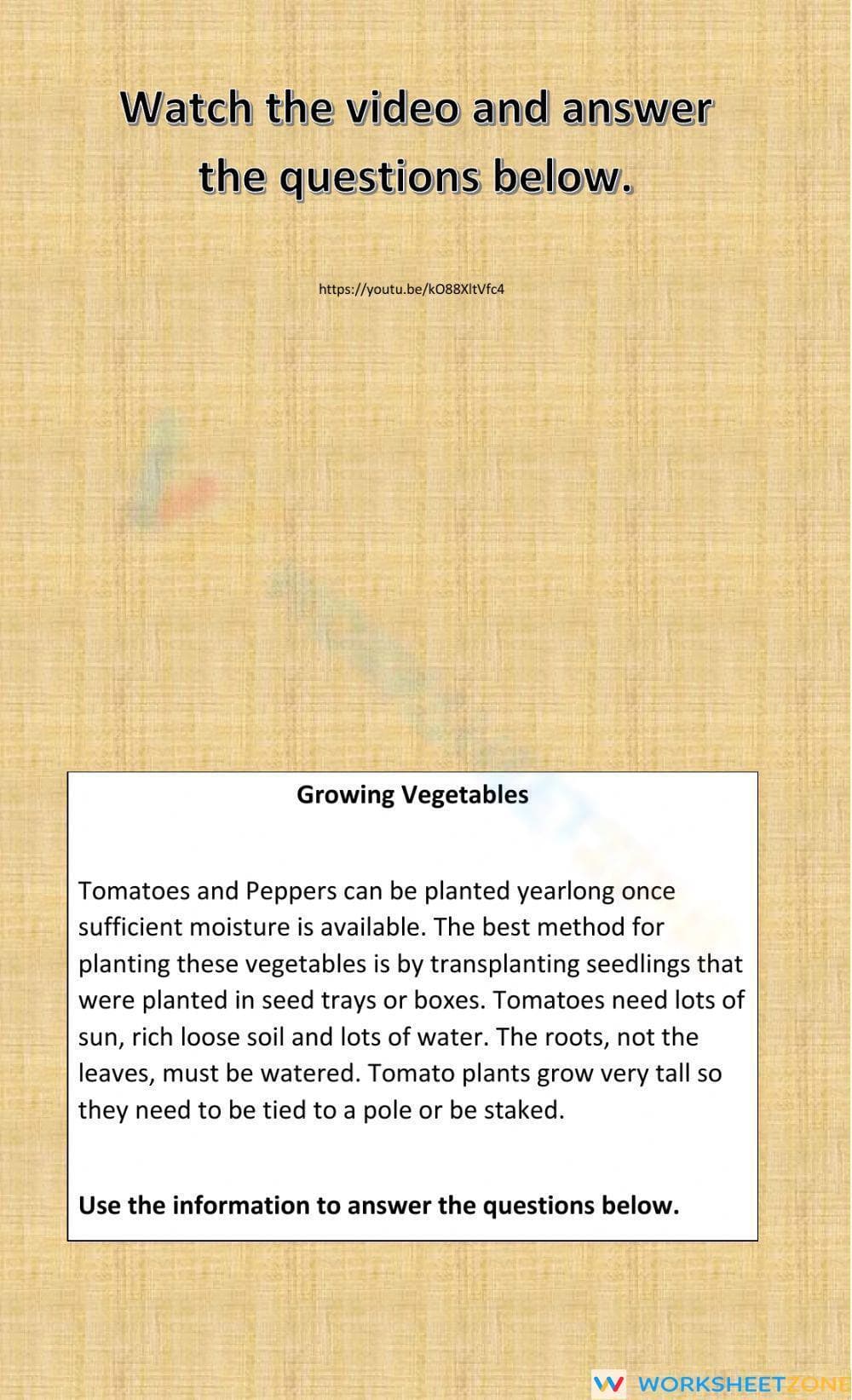
This Grade 6 ELA worksheet streamlines the teaching of informational text analysis through a focused study on vegetable cultivation. Students practice identifying explicit details and drawing logical inferences from a non-fiction passage. By engaging with technical vocabulary and procedural descriptions, learners build the foundational literacy skills required for middle school academic success.
At a Glance
- Grade: 6 · Subject: ELA
- Standard:
CCSS.ELA-LITERACY.RI.6.1— Cite textual evidence to support analysis of what the text says explicitly.- Skill Focus: Evidence Retrieval
- Format: 2 pages · 6 problems · Answer key included · PDF
- Best For: Quick informational text warm-up or assessment.
- Time: 15–20 minutes
What's Inside
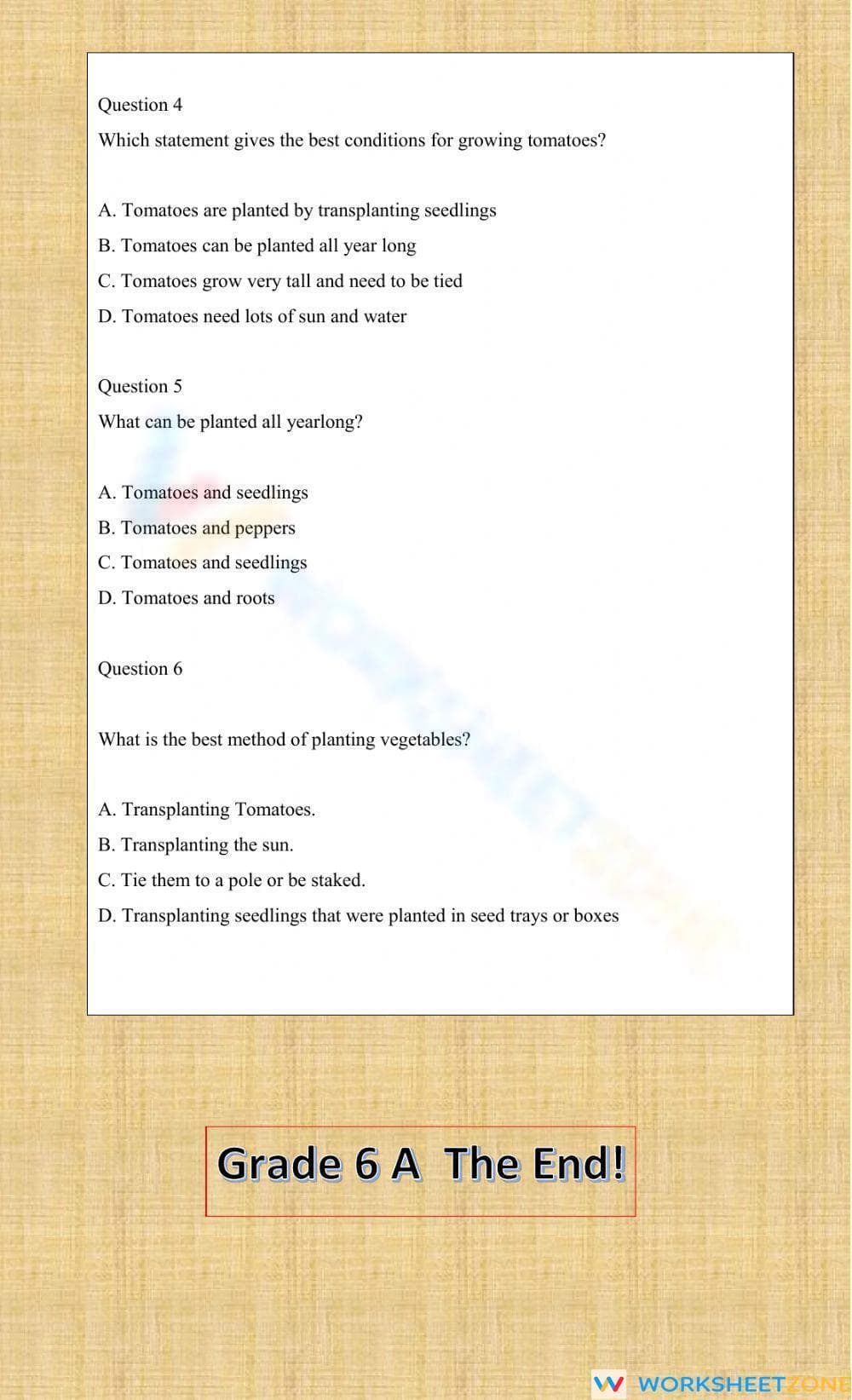
This two-page resource features an informational passage titled 'Growing Vegetables' paired with six comprehension questions. The curriculum includes multiple-choice items targeting evidence-based retrieval. The layout supports focused work, and an interactive video link is provided for multimodal engagement.
Zero-Prep Workflow
- Print (30 seconds): Download the PDF and print; no formatting is required.
- Distribute (1 minute): Hand out the sheets for a quick warm-up.
- Review (1 minute): Use the answer key for quick grading or a whole-class review. Total prep time is under two minutes.
Standards Alignment
This resource aligns with CCSS.ELA-LITERACY.RI.6.1, requiring students to cite textual evidence to support analysis. The questions prompt students to return to the passage to verify facts. This standard code can be copied directly into lesson plans, IEP goals, or district curriculum mapping tools.
How to Use It
Use this as a 'bell ringer' during an informational text unit. Alternatively, it works as a formative assessment after teaching main ideas. Observe if students highlight keywords like 'transplanting' to verify evidence. Completion typically takes 15–20 minutes.
Who It's For
This worksheet is ideal for Grade 6, but supports ELL and RTI Tier 2 students. The complexity also suits Grade 5 learners or Grade 7 review. Pair this with a gardening video or an RI.6.1 anchor chart for a complete instructional block.
The efficacy of explicit instruction in evidence-based reading is supported by the RAND AIRS 2024 report, which emphasizes that structured practice with informational texts is a critical predictor of secondary literacy proficiency. This worksheet targets the core requirements of CCSS.ELA-LITERACY.RI.6.1 by requiring students to extract procedural details regarding plant care and cultivation methods. Research from RAND indicates that students who engage with concise, high-interest non-fiction passages show improved retention of domain-specific vocabulary and better performance on standardized assessments. By bridging the gap between reading and evidence retrieval, this resource provides a scaffolded path toward mastery of informational text analysis. Educators can rely on this tool to provide consistent practice that aligns with national standards and research-backed pedagogical strategies. The plain-English skill addressed is citing textual evidence to support an analysis of non-fiction content, ensuring that Grade 6 learners develop the rigorous habits necessary for academic advancement.


