




























Views
Downloads
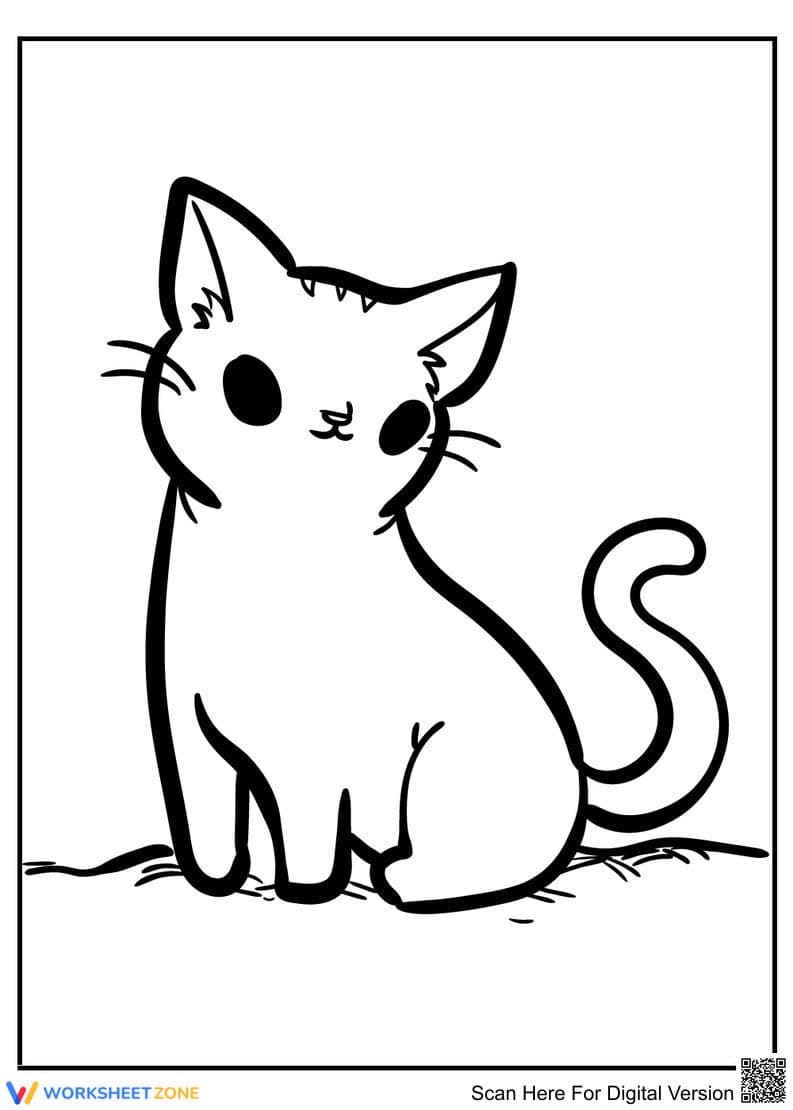

Kitten Coloring Page | Essential Grade K-2 Printable

Paste this activity's link or code into your existing LMS (Google Classroom, Canvas, Teams, Schoology, Moodle, etc.).
Students can open and work on the activity right away, with no student login required.
You'll still be able to track student progress and results from your teacher account.
This Kindergarten kitten coloring worksheet provides a simple yet effective way for young learners to develop essential fine motor skills while expressing their creativity. By focusing on a single, high-interest subject, students can practice precision and color selection without the pressure of complex instructions. This resource is designed to support early childhood development through engaging, hands-on artistic practice.
At a Glance
- Grade: Kindergarten · Subject: Arts & English
- Standard:
CCSS.ELA-LITERACY.SL.K.5— Add drawings or visual displays to descriptions to provide additional detail- Skill Focus: Fine motor skills
- Format: 1 page · 1 task · Answer key not required · PDF
- Best For: Morning work or early finisher activity
- Time: 15–20 minutes
This resource consists of a single-page PDF featuring a large kitten illustration with bold outlines. The design is tailored for younger children mastering the ability to color within lines. There are no complex backgrounds, allowing students to focus on the primary subject. The worksheet is ready to print and requires no teacher preparation.
Zero-Prep Workflow
This worksheet is designed for a zero-prep classroom experience. First, print the required copies, which takes less than 30 seconds. Second, distribute the pages during transition times or as part of a dedicated arts block. Finally, review the work by having students describe their color choices. Total teacher preparation time is under 2 minutes, making it an ideal sub plan.
Standards Alignment
The primary standard addressed is `CCSS.ELA-LITERACY.SL.K.5`, which asks students to add drawings to descriptions to provide detail. A supporting standard is `CCSS.ELA-LITERACY.L.K.1.A`, as the fine motor control developed through coloring directly supports early letter formation. Both standard codes can be copied directly into lesson plans, IEP goals, or district curriculum mapping tools.
How to Use It
Use this worksheet as a calming morning work activity to help students settle into the day. It also functions as an early finisher task for students who complete assignments ahead of schedule. To use it as a formative assessment, observe the student's pencil grip and their ability to control the coloring tool, providing insight into their physical readiness for writing.
Who It's For
This resource is ideal for Kindergarten and Grade 1 students, as well as preschool learners working on grip strength. It is useful for English Language Learners who can use the image to learn animal vocabulary. Pair this worksheet with a short story about pets or an anchor chart on using coloring tools to create a mini-lesson.
The use of coloring activities in early childhood education, such as this kitten-themed worksheet, serves as a foundational tool for developing fine motor control and visual-spatial awareness. According to the RAND AIRS 2024 report, integrating visual arts into the primary curriculum supports the gradual release of responsibility by allowing students to engage in low-stakes creative tasks that build confidence before transitioning to complex writing. This specific resource aligns with CCSS.ELA-LITERACY.SL.K.5, which encourages students to use visual displays to enhance their communication. Research indicates that the precise movements required to color within defined boundaries strengthen the small muscles in the hand, directly impacting a child's later ability to master letter formation and pencil grip. By providing a structured yet creative outlet, this worksheet helps bridge the gap between artistic expression and the technical requirements of early literacy and manual dexterity in a classroom setting.


