


























Views
Downloads

Grade K Pumpkin Life Cycle — Printable No-Prep Worksheet
Paste this activity's link or code into your existing LMS (Google Classroom, Canvas, Teams, Schoology, Moodle, etc.).
Students can open and work on the activity right away, with no student login required.
You'll still be able to track student progress and results from your teacher account.
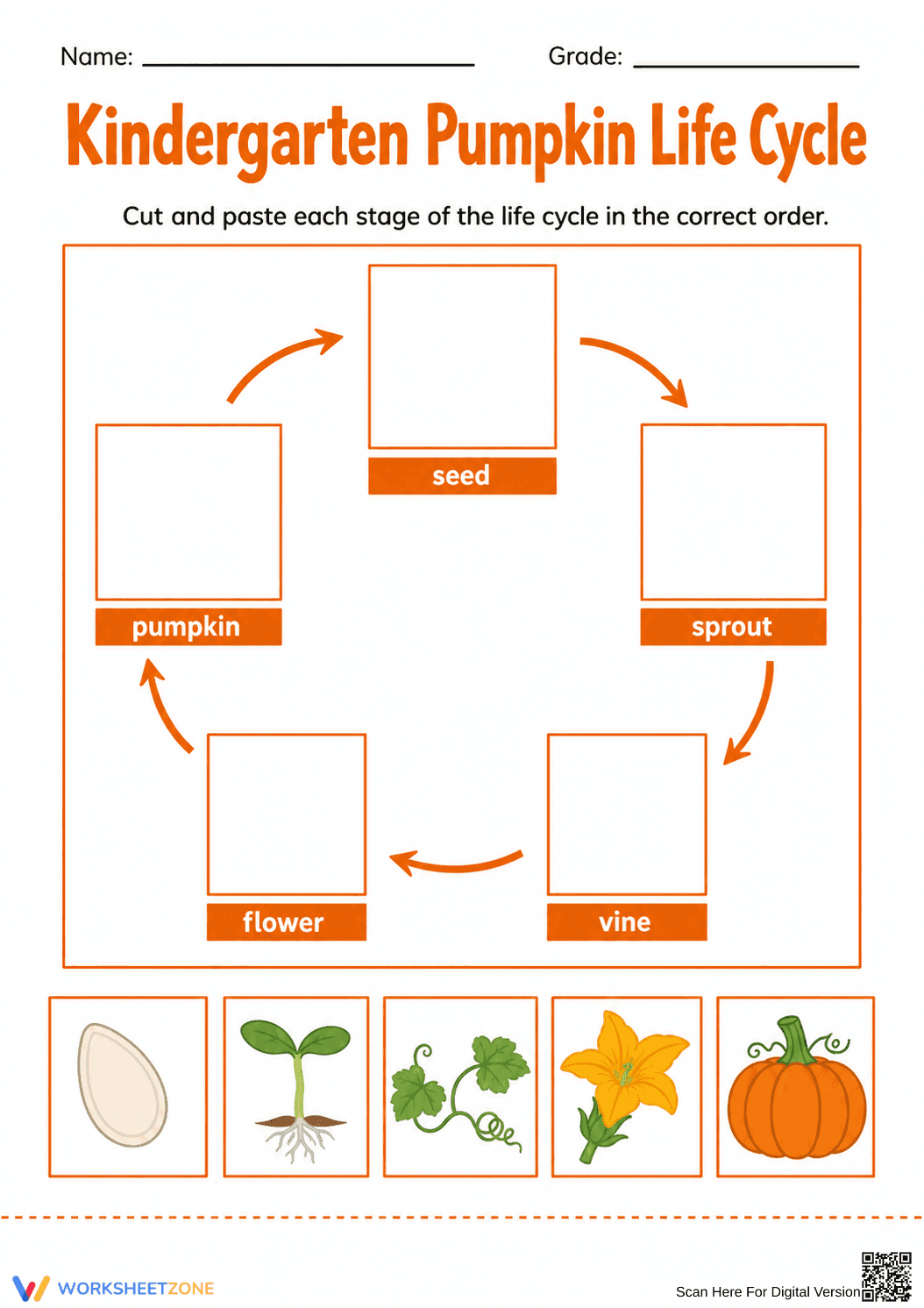
This printable Kindergarten science worksheet introduces young learners to the pumpkin life cycle through an engaging cut-and-paste activity. Students practice critical sequencing skills and fine motor development by ordering the five stages of plant growth, from seed to mature pumpkin, ensuring a solid foundation in early biological concepts.
At a Glance
- Grade: K · Subject: Science
- Standard:
K-LS1-1— Observe and describe patterns of plant growth and survival- Skill Focus: Sequencing life cycles
- Format: 1 page · 5 problems · Answer key included · PDF
- Best For: Independent practice and centers
- Time: 15–20 minutes
This single-page resource features a clear, circular graphic organizer with five labeled boxes representing the stages of a pumpkin's growth: seed, sprout, vine, flower, and pumpkin. At the bottom of the page, students will find five corresponding illustrated picture cards to cut out. A complete answer key is provided to allow for quick checking by teachers or parent helpers.
Zero-Prep Workflow
This activity is designed for immediate classroom implementation with minimal teacher setup:
- Print (1 minute): Generate enough copies for your class directly from the PDF file.
- Distribute (1 minute): Hand out the worksheets along with scissors and glue sticks.
- Review (3 minutes): Briefly discuss the five stages of growth before letting students work independently.
With a total teacher prep time of under two minutes, this resource is an excellent addition to any fall science unit or emergency sub plan.
Standards Alignment
This worksheet aligns with K-LS1-1, requiring students to use observations to describe patterns of what plants and animals need to survive and grow. By sequencing the developmental stages of a pumpkin, children recognize the predictable patterns of biological life cycles. Both standard codes can be copied directly into lesson plans, IEP goals, or district curriculum mapping tools.
How to Use It
Use this worksheet during a whole-group fall science lesson after reading a book about how pumpkins grow. It also functions perfectly as an independent science center activity where students can practice their fine motor skills. As a formative assessment tip, observe students while they are cutting and sorting the cards; check if they can verbally explain why the sprout comes before the vine before they glue the pieces down. Expect students to complete this task within 15 to 20 minutes.
Who It's For
This resource is primarily designed for Kindergarten students developing their understanding of basic biological sequences and practicing scissor skills. It includes clear visual cues and simple vocabulary, making it accessible for early readers and English Language Learners. Pair this activity with a hands-on pumpkin exploration lesson or a classroom anchor chart detailing plant life cycles.
Integrating hands-on sequencing tasks into early childhood science instruction significantly reinforces foundational cognitive frameworks. According to a recent ScienceDirect TpT Analysis, multimodal activities that combine physical manipulation with conceptual ordering improve long-term retention of biological processes in young learners. This worksheet directly supports this methodology by having students physically arrange the pumpkin life cycle. By aligning with the K-LS1-1 standard, the activity ensures that children actively observe and describe patterns of plant growth and survival. The tactile experience of cutting and pasting the five distinct stages—seed, sprout, vine, flower, and pumpkin—bridges the gap between abstract scientific concepts and concrete understanding. Providing structured, interactive tasks like this allows educators to effectively measure student comprehension of sequential events while simultaneously developing essential fine motor capabilities required for early academic success.


