


























Views
Downloads

Essential Pumpkin Life Cycle Worksheet | Grade K Science
Paste this activity's link or code into your existing LMS (Google Classroom, Canvas, Teams, Schoology, Moodle, etc.).
Students can open and work on the activity right away, with no student login required.
You'll still be able to track student progress and results from your teacher account.
This Kindergarten pumpkin life cycle worksheet provides a hands-on way for students to master biological sequencing. By identifying and ordering the 6 distinct stages of growth, learners develop a concrete understanding of how plants change over time. This activity transforms abstract botanical concepts into a tactile learning experience that reinforces scientific observation and logical thinking.
At a Glance
- Grade: Kindergarten · Subject: Science
- Standard:
K-LS1-1— Use observations to describe patterns of what plants need to survive and grow- Skill Focus: Pumpkin life cycle sequencing
- Format: 2 pages · 6 problems · Answer key included · PDF
- Best For: Fall science centers and fine motor practice
- Time: 15–20 minutes
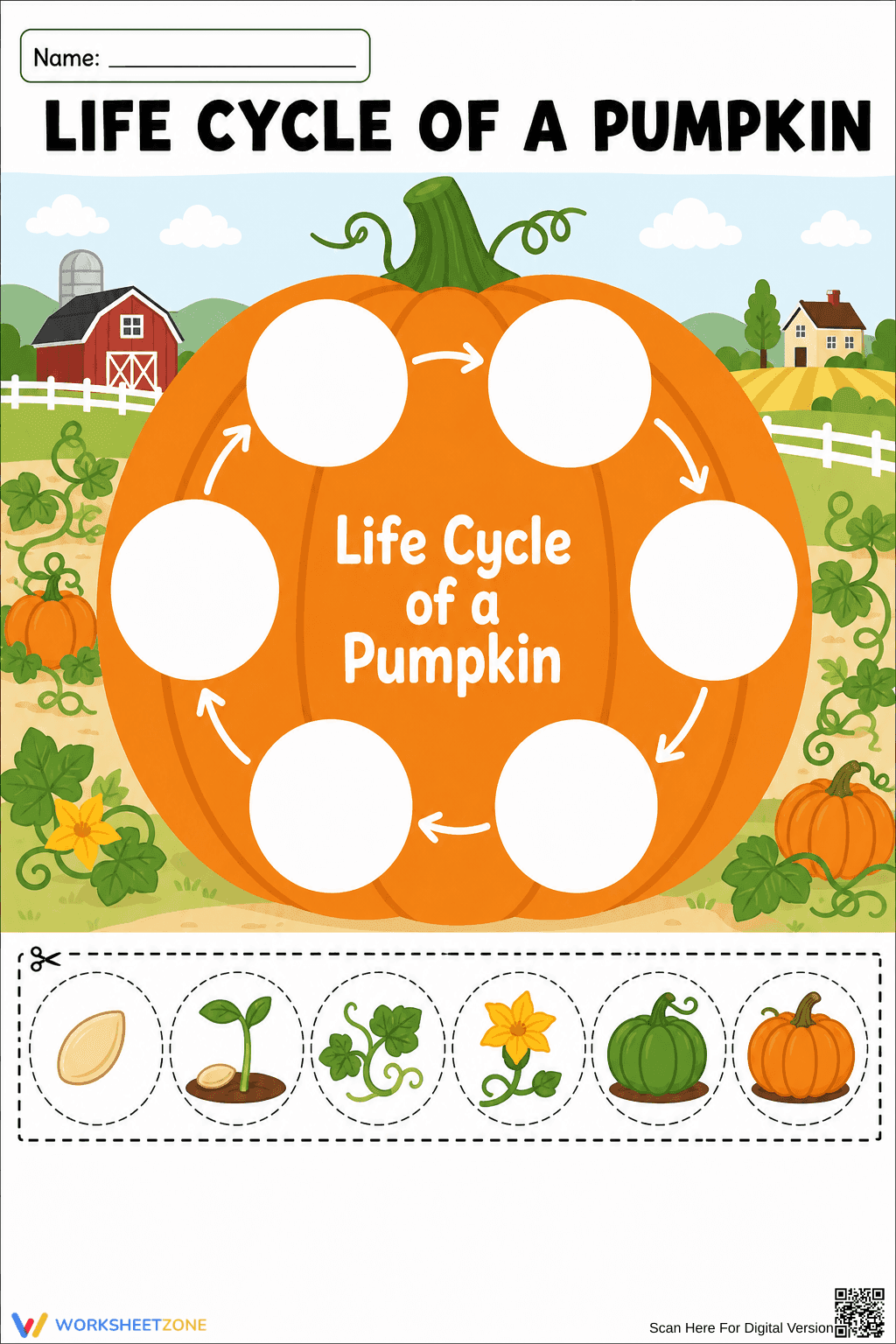
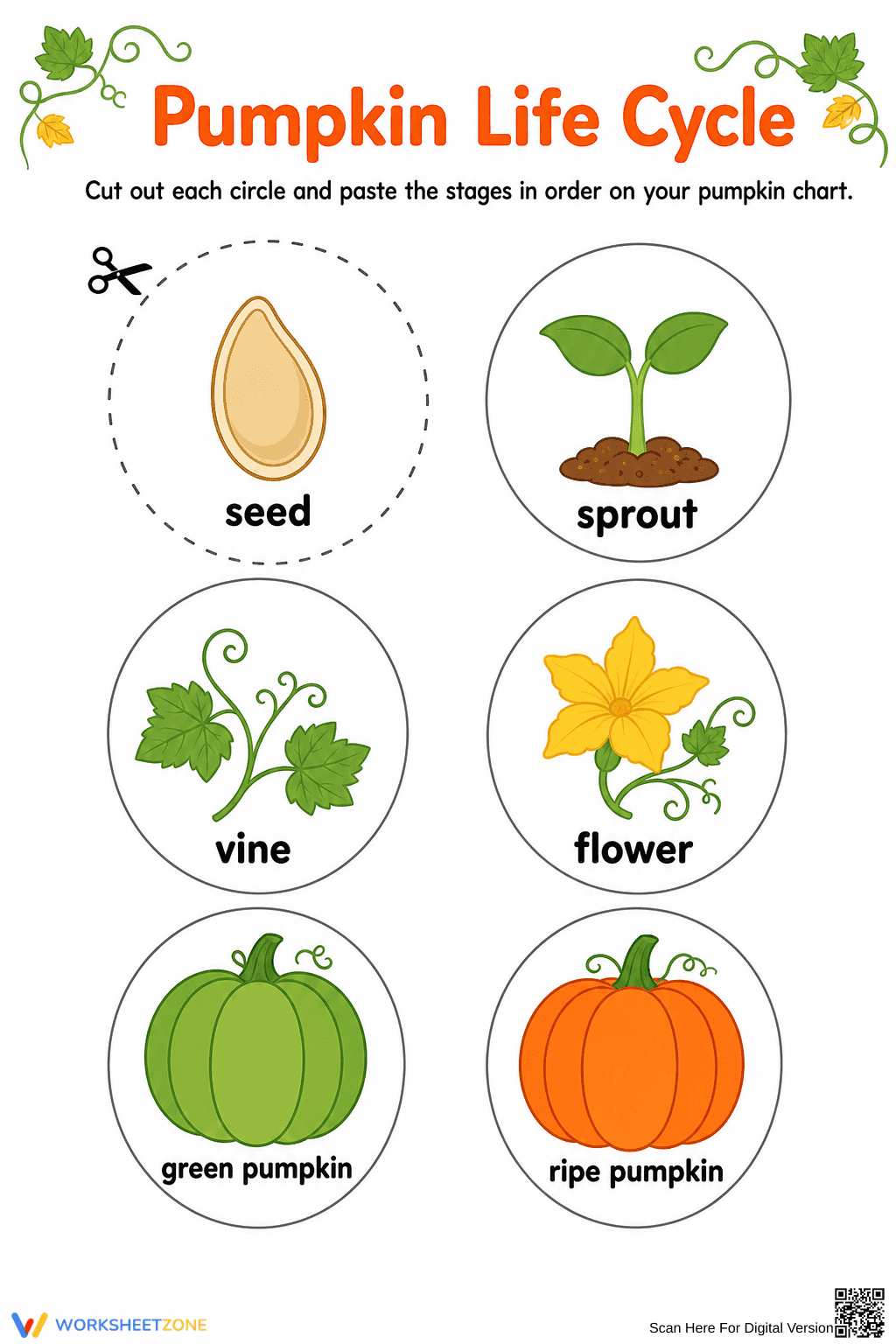
The resource consists of a 2-page PDF designed for immediate classroom use. The first page features a large pumpkin-themed cycle diagram with directional arrows to guide the flow of growth. The second page provides six high-quality circular illustrations representing the seed, sprout, vine, flower, green pumpkin, and ripe pumpkin stages. Each illustration includes a clear text label to support early literacy and vocabulary acquisition during the science block.
This worksheet is designed for a zero-prep workflow to save valuable instructional time. First, print the 2-page set for your class in under 1 minute. Second, distribute the sheets along with scissors and glue; students spend approximately 15 minutes cutting and arranging the stages. Finally, review the completed cycles as a whole group to check for accuracy. Total teacher preparation time is under 2 minutes, making it an ideal choice for emergency sub plans or busy seasonal transitions.
This activity aligns with `K-LS1-1`, requiring students to use observations to describe patterns in the natural world. By correctly ordering the pumpkin's growth, students demonstrate an understanding of the predictable stages of a plant's life. This standard code can be copied directly into lesson plans, IEP goals, or district curriculum mapping tools to ensure compliance with NGSS requirements and state frameworks.
Use this worksheet during a fall-themed science unit or after a field trip to a pumpkin patch. It serves as an excellent formative assessment to gauge if students can distinguish between early growth (sprout) and mature stages (ripe pumpkin). For an extension, have students color the illustrations before pasting to further engage their fine motor skills and attention to detail. It works well as a quiet independent activity or a collaborative partner task.
This resource is tailored for Kindergarten students but is also highly effective for Pre-K learners or ESL students who benefit from visual-heavy science materials. It pairs naturally with a read-aloud about plant growth or a hands-on pumpkin exploration lab where students look for seeds inside a real pumpkin. The clear borders and simple labels make it accessible for students still developing their scissor skills.
According to research by Fisher & Frey (2014) on the gradual release of responsibility, hands-on sequencing tasks like this pumpkin life cycle activity provide the necessary collaborative or independent practice phase that cements new vocabulary. The use of the K-LS1-1 standard ensures that the activity moves beyond simple craft-work into meaningful scientific inquiry. By physically manipulating the stages of growth—from seed to ripe fruit—students build a mental model of biological cycles that serves as a foundation for more complex life science concepts in later grades. This specific worksheet has been designed to minimize cognitive load by using clear, distinct visuals, allowing the student to focus entirely on the logic of the sequence. Such structured practice is essential for early learners to develop the pattern-recognition skills required by the National Assessment of Educational Progress (NAEP) science frameworks and early childhood development goals.


