


























Views
Downloads



Narrative Writing Elements Worksheet | Grade 3 Essential
Paste this activity's link or code into your existing LMS (Google Classroom, Canvas, Teams, Schoology, Moodle, etc.).
Students can open and work on the activity right away, with no student login required.
You'll still be able to track student progress and results from your teacher account.
This Grade 3 narrative writing worksheet helps students identify and apply the core building blocks of storytelling. By mastering elements like conflict and point of view, young writers transition from simple sentences to structured, engaging narratives. Students will define key terms, analyze a short text, and plan their own original story.
At a Glance
- Grade: 3 · Subject: ELA
- Standard:
CCSS.ELA-LITERACY.W.3.3— Write narratives using effective technique, descriptive details, and clear event sequences- Skill Focus: Narrative Elements Identification
- Format: 3 pages · 11 problems · Answer key included · PDF
- Best For: Narrative writing unit introduction or review
- Time: 25–35 minutes
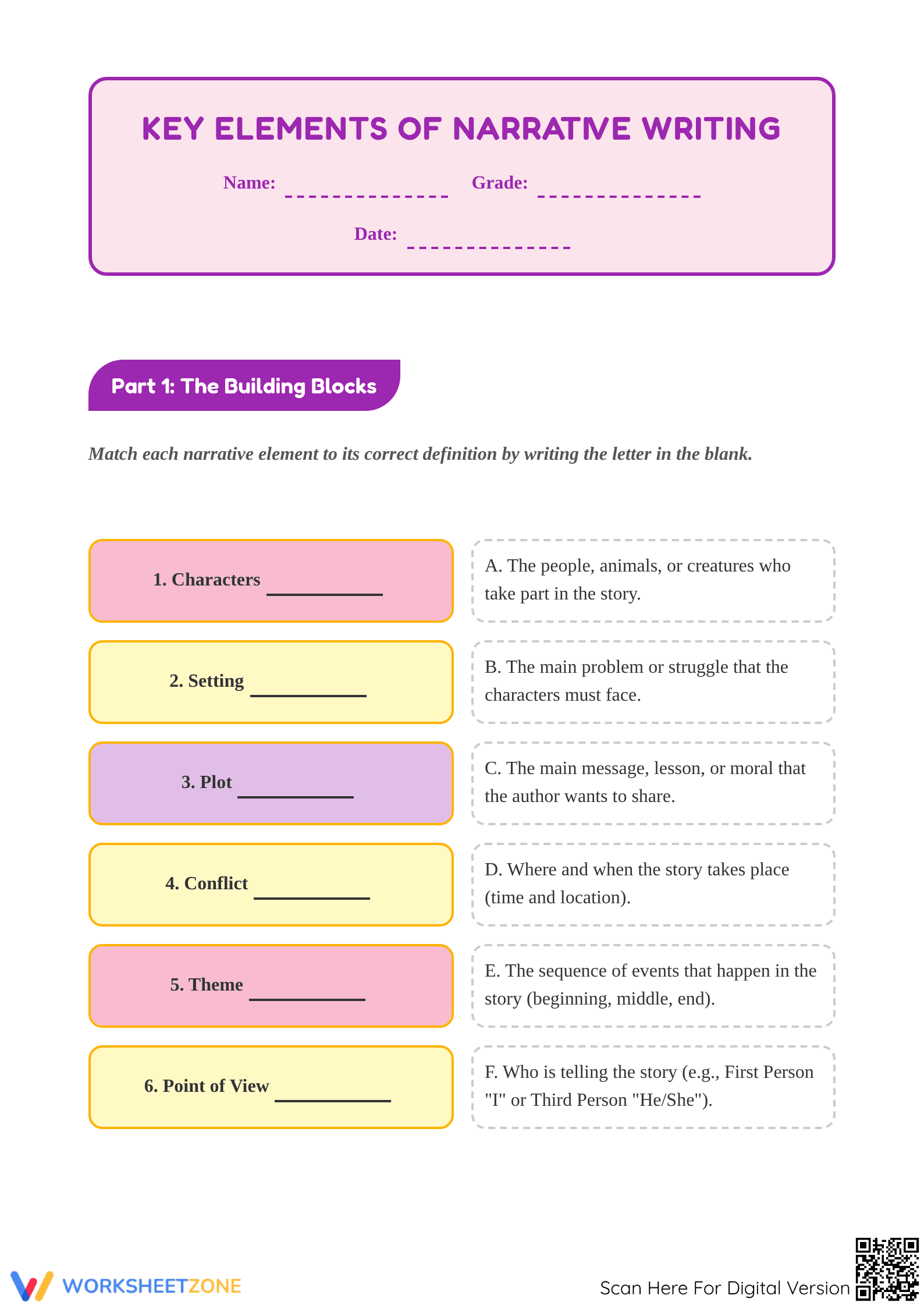
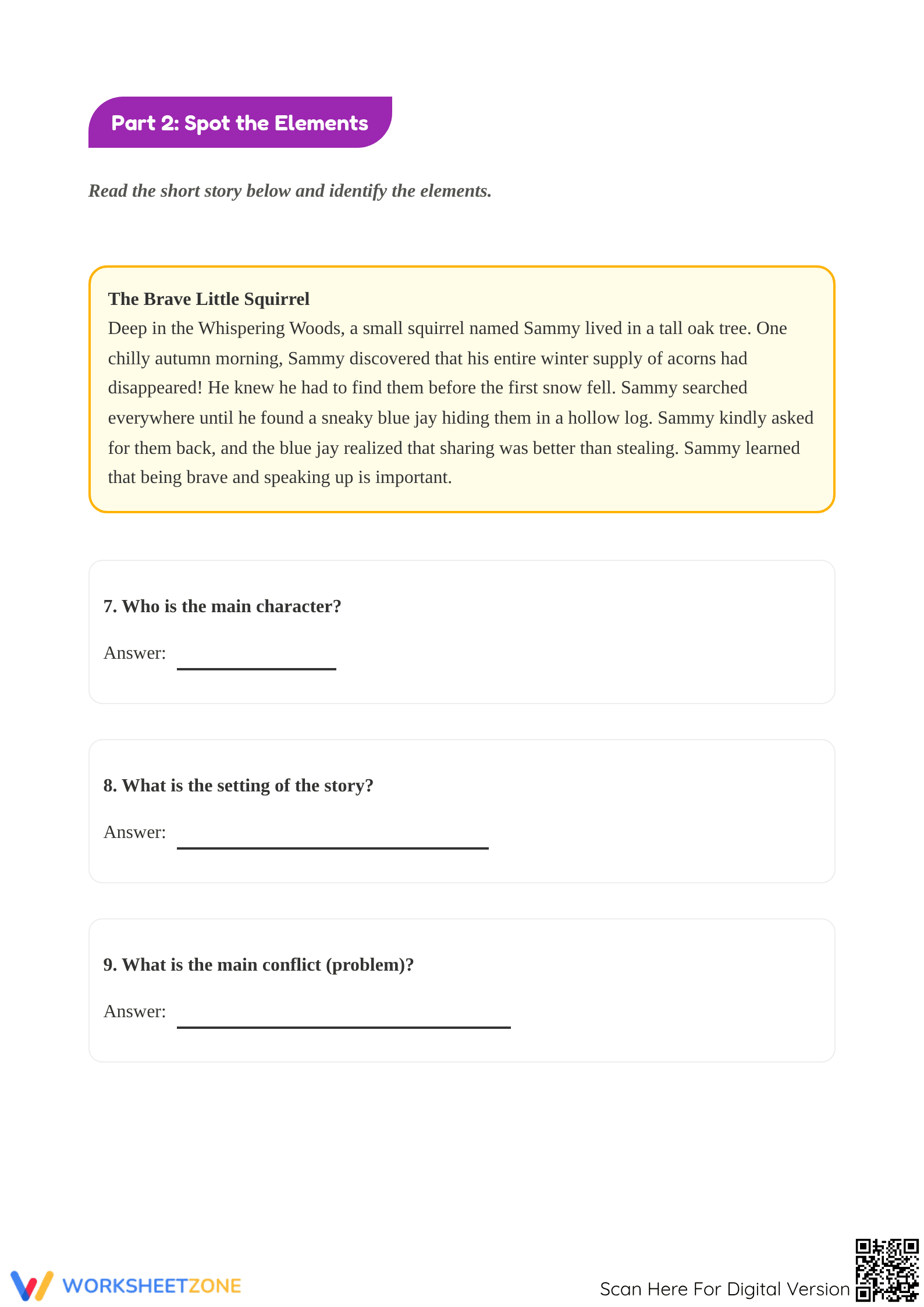
What's Inside: The packet contains three distinct sections across three printable pages. It begins with a vocabulary matching task for six essential terms, followed by a reading comprehension passage titled "The Brave Little Squirrel" where students extract story elements. It concludes with a structured graphic organizer for story planning. A full answer key is provided for the objective sections.
Skill Progression
- Guided Practice: Students match 6 core narrative terms (Characters, Setting, Plot, Conflict, Theme, Point of View) to their definitions to establish a shared vocabulary.
- Supported Practice: A 4-question analysis of a provided short story allows students to see these elements in action within a controlled text environment.
- Independent Practice: A final planning task requires students to generate their own narrative framework, applying all learned concepts to an original story idea.
This sequence follows a gradual-release model, moving from conceptual definition to practical application.
Standards Alignment
This resource is primarily aligned with `CCSS.ELA-LITERACY.W.3.3`, which requires students to develop narratives with clear event sequences and descriptive details. It also supports `CCSS.ELA-LITERACY.RL.3.3` by asking students to identify characters and their roles within a plot. Both standard codes can be copied directly into lesson plans, IEP goals, or district curriculum mapping tools.
How to Use It
Use this worksheet during the introductory phase of a narrative writing unit to ensure all students understand the terminology. It also serves as an excellent formative assessment after reading a mentor text. Expect students to spend approximately 30 minutes completing all three parts. Observe if students can distinguish between "Plot" and "Conflict" during the matching phase.
Who It's For
This resource is designed for third-grade general education classrooms, but the clear definitions and sentence-level tasks make it highly effective for English Language Learners (ELLs) and students receiving Tier 2 writing interventions. Pair this with a narrative anchor chart or a favorite picture book for a complete lesson.
According to the RAND AIRS 2024 report on elementary literacy, explicit instruction in story grammar—the structural components of a narrative—significantly improves a student's ability to organize their own writing and comprehend complex texts. This worksheet targets the CCSS.ELA-LITERACY.W.3.3 standard by breaking down abstract concepts like theme and point of view into concrete, manageable tasks. By identifying these elements in a short story before attempting to write their own, Grade 3 students build the cognitive scaffolding necessary for narrative mastery. Research from Fisher & Frey (2014) supports this gradual release of responsibility, moving from definitional matching to independent story planning. Providing students with a clear framework for characters, setting, and conflict ensures that their creative writing remains grounded in logical structure, a key indicator of writing proficiency in early elementary grades.


