


























0
Views
0
Downloads

0.0
0
Save
0 Likes
Share
Invasive Species Matching Worksheet
0 Views
0 Downloads
Paste this activity's link or code into your existing LMS (Google Classroom, Canvas, Teams, Schoology, Moodle, etc.).
Students can open and work on the activity right away, with no student login required.
You'll still be able to track student progress and results from your teacher account.
Information
Description
What It Is:
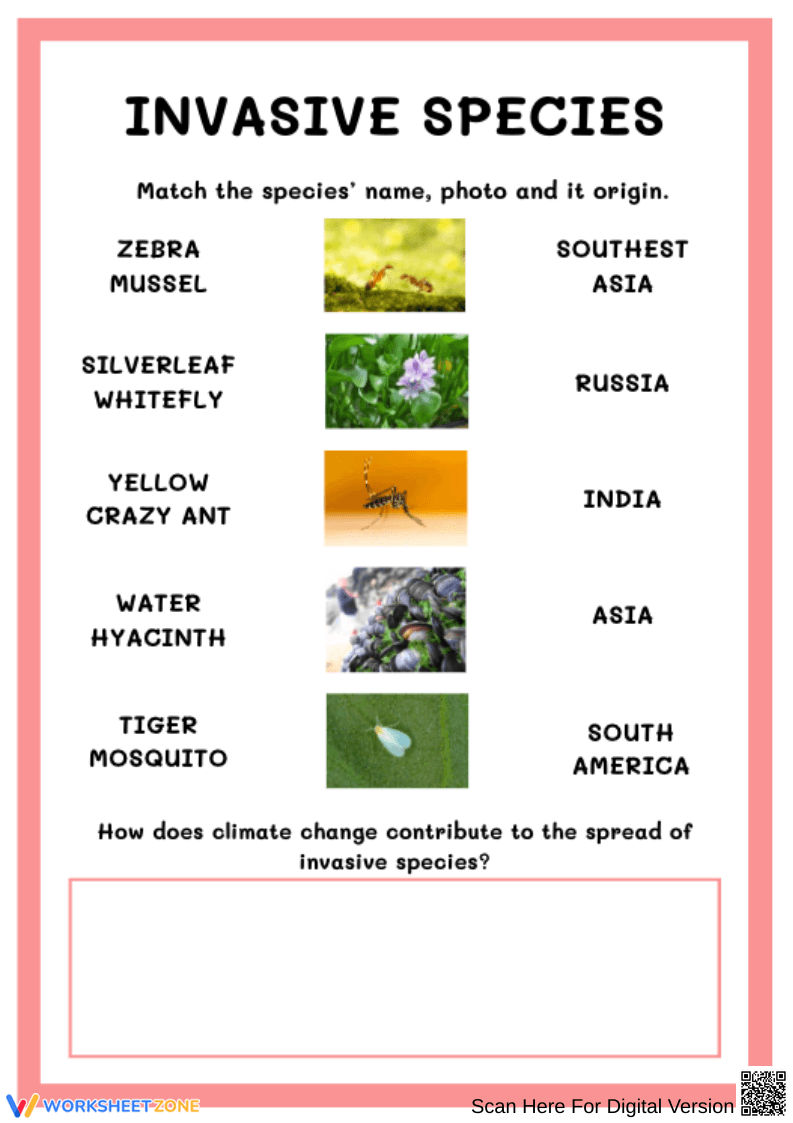
An interactive worksheet on invasive species where students match species’ names, photos, and their origin. Includes examples such as zebra mussel, silverleaf whitefly, yellow crazy ant, water hyacinth, and tiger mosquito.
Why Use It:
This worksheet engages learners in understanding invasive species, their global spread, and how climate change influences their expansion. It promotes critical thinking about biodiversity and ecosystems.
How to Use It:
• Match species’ names with their pictures and origins.
• Use in environmental science or ecology lessons.
• Add as a classroom discussion starter about invasive species control.
• Assign as homework or group activity with a reflection question on climate change.
Grade Suitability:
Best suited for middle and high school levels.
• Grades 5–8: Introductory ecology and geography.
• Grades 9–12: In-depth analysis of global environmental issues.
Target Users:
Science teachers, environmental educators, and students exploring ecosystems and global biodiversity.
An interactive worksheet on invasive species where students match species’ names, photos, and their origin. Includes examples such as zebra mussel, silverleaf whitefly, yellow crazy ant, water hyacinth, and tiger mosquito.
Why Use It:
This worksheet engages learners in understanding invasive species, their global spread, and how climate change influences their expansion. It promotes critical thinking about biodiversity and ecosystems.
How to Use It:
• Match species’ names with their pictures and origins.
• Use in environmental science or ecology lessons.
• Add as a classroom discussion starter about invasive species control.
• Assign as homework or group activity with a reflection question on climate change.
Grade Suitability:
Best suited for middle and high school levels.
• Grades 5–8: Introductory ecology and geography.
• Grades 9–12: In-depth analysis of global environmental issues.
Target Users:
Science teachers, environmental educators, and students exploring ecosystems and global biodiversity.


