




























Views
Downloads

Essential Integumentary System Review | HS Biology Ready

Paste this activity's link or code into your existing LMS (Google Classroom, Canvas, Teams, Schoology, Moodle, etc.).
Students can open and work on the activity right away, with no student login required.
You'll still be able to track student progress and results from your teacher account.
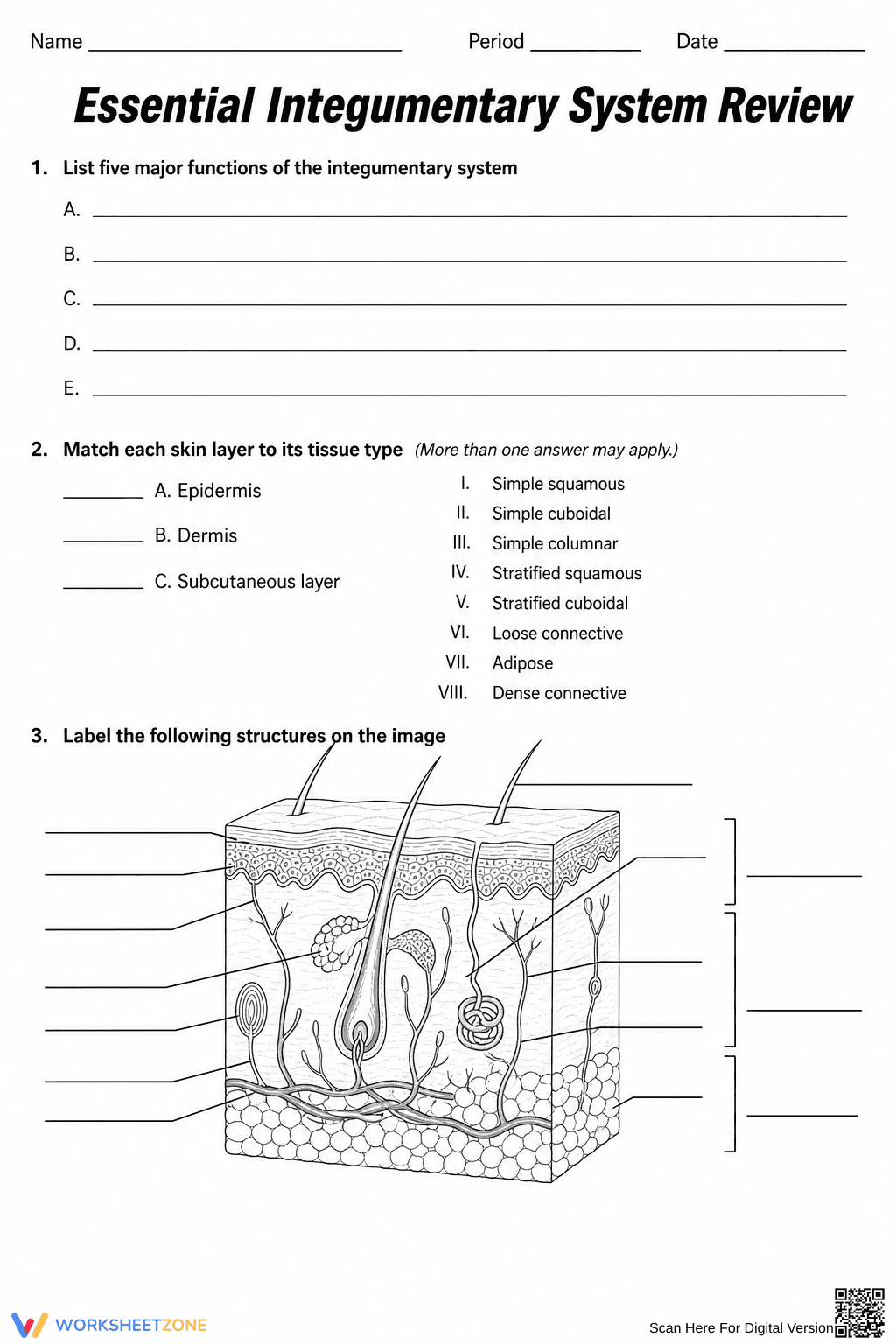
This High School Biology worksheet provides a comprehensive review of the integumentary system, ensuring students master the complex layers and functions of human skin. Students will identify structures, explain physiological processes like repair and growth, and categorize tissues. It serves as a rigorous summative assessment or a detailed study guide for anatomy units.
At a Glance
- Grade: High School · Subject: Biology
- Standard:
HS-LS1-2— Develop and use a model to illustrate hierarchical organization of interacting systems- Skill Focus: Skin anatomy, glands, and physiological repair
- Format: 4 pages · 15 problems · Answer key included · PDF
- Best For: Unit review or summative assessment
- Time: 45–60 minutes
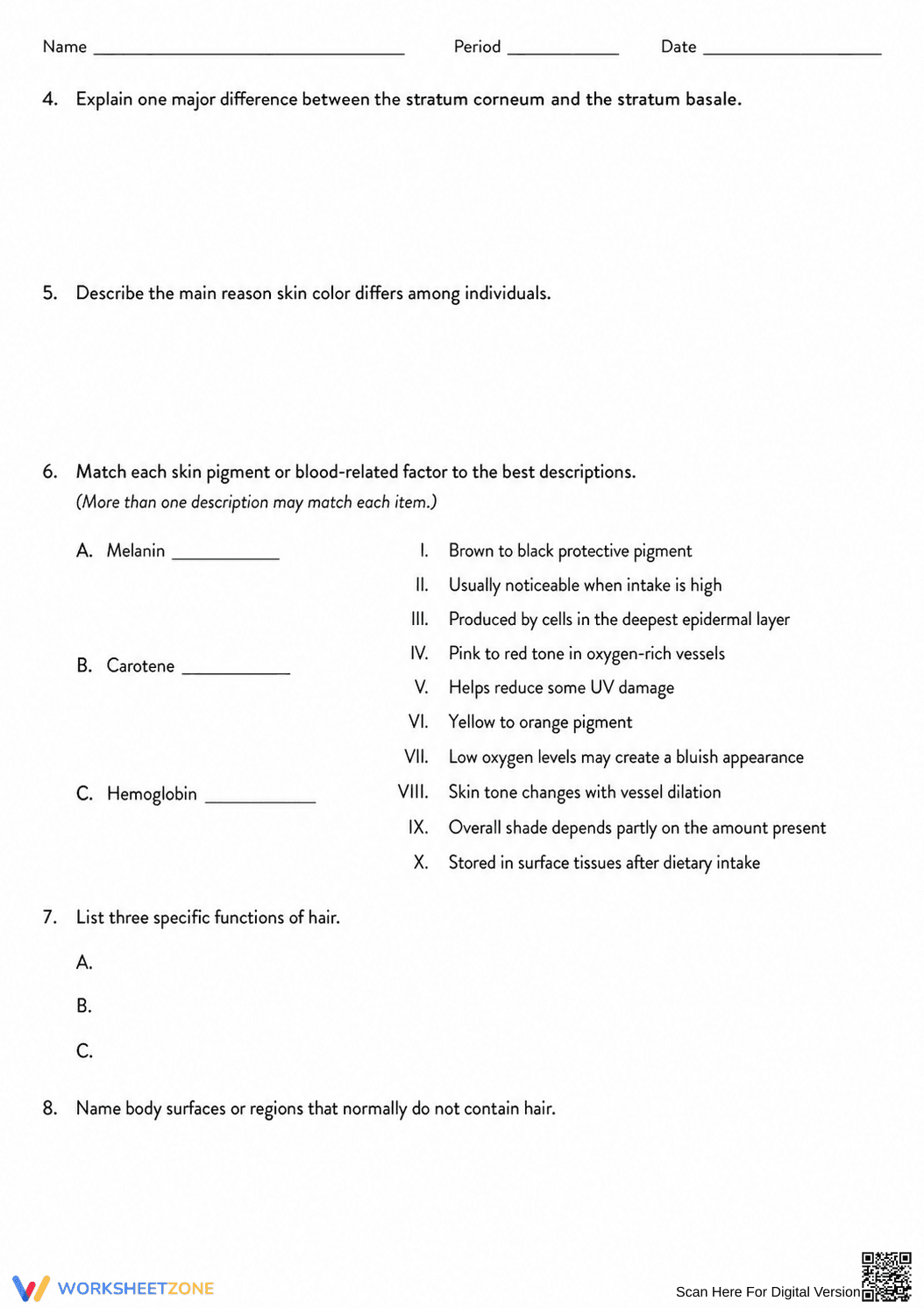
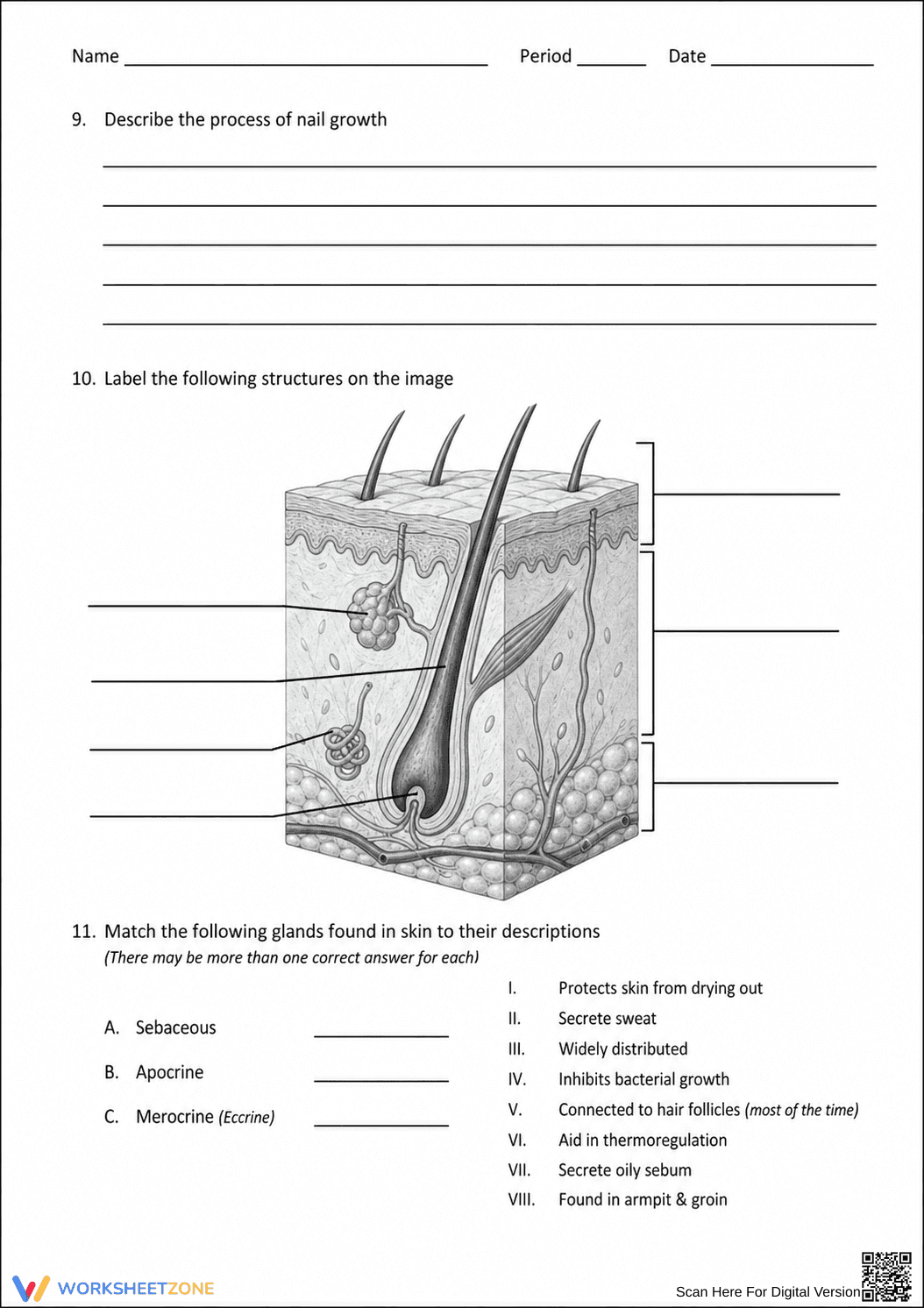
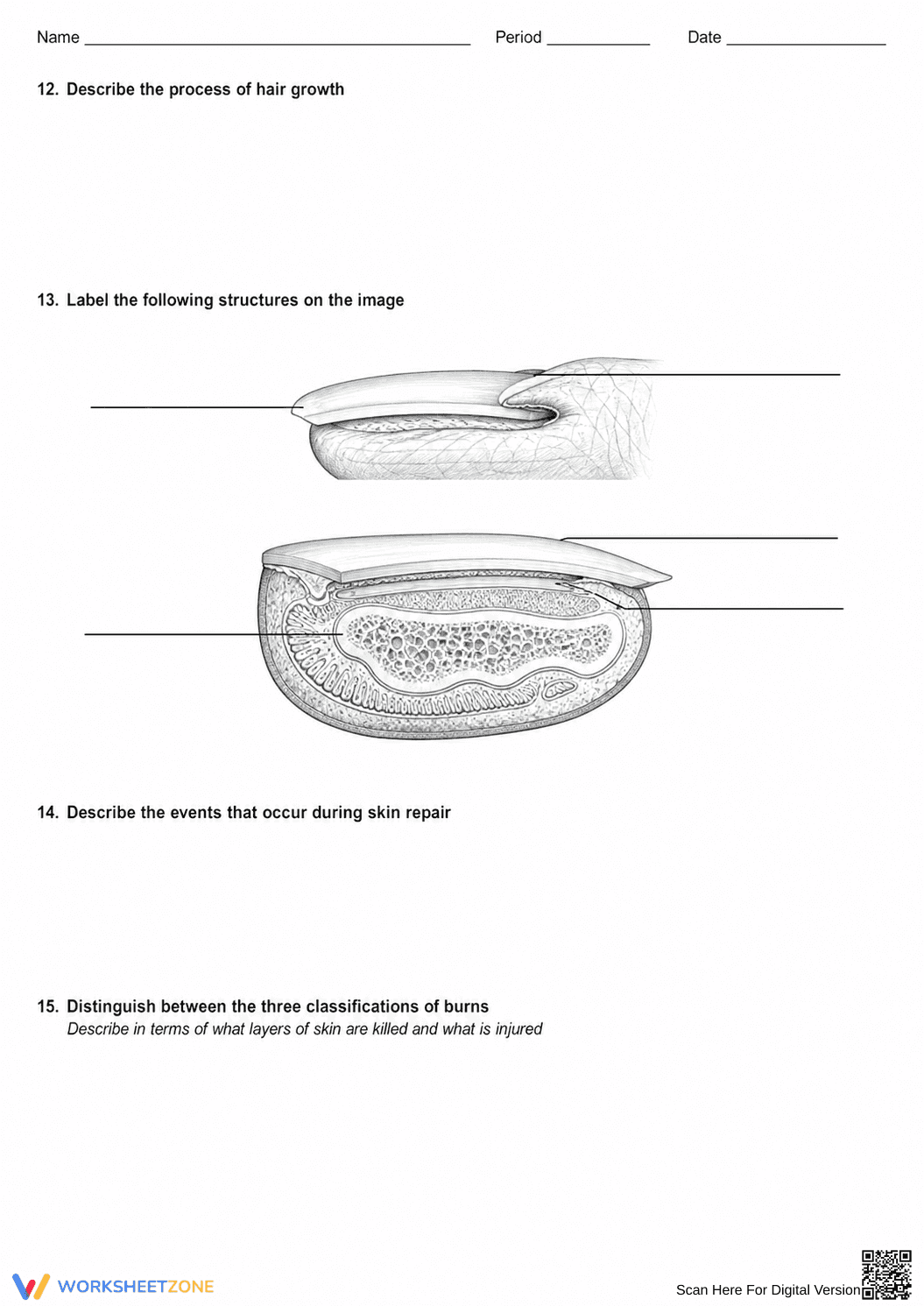
What's Inside: This 4-page PDF contains 15 multi-part questions designed to evaluate student understanding of the body's largest organ system. The resource includes three detailed anatomical diagrams for labeling: a skin cross-section, a hair follicle, and nail structures. Task types vary from matching tissue types and pigments to descriptive short-answer questions regarding hair growth, nail development, and the stages of skin repair.
Zero-Prep Workflow
- Print: Select the 4-page document and print copies for your class in under 30 seconds.
- Distribute: Hand out the packets at the start of the period for independent or collaborative review (1 minute).
- Review: Use the included answer key to grade or project diagrams for a whole-class review of anatomical structures (5 minutes).
Total teacher preparation time is under 2 minutes, making this an ideal resource for sub plans or busy unit transitions.
Standards Alignment
This resource is aligned to `HS-LS1-2`, focusing on how the integumentary system functions as a protective barrier and thermoregulator within the body's hierarchical organization. It also supports `HS-LS1-3` regarding homeostasis and the interaction of specialized cells. Both standard codes can be copied directly into lesson plans, IEP goals, or district curriculum mapping tools.
How to Use It
Assign this worksheet as a culminating activity after completing direct instruction on the integumentary system. It works effectively as a silent review where students use their notes to verify anatomical details. For formative assessment, observe students during the diagram labeling sections to identify common misconceptions regarding the dermis and epidermis boundaries. Expected completion time ranges from 45 to 60 minutes.
Who It's For
This review is tailored for High School Biology or Anatomy & Physiology students. It is particularly useful for learners who benefit from visual models and categorized matching tasks. It provides the necessary rigor for honors-level courses while remaining accessible for general education students through clear formatting. Pair this with a skin model or a histology slide lab for a complete instructional cycle.
According to the NAEP Science Framework, the ability to relate anatomical structures to their physiological functions is a hallmark of secondary science proficiency. This worksheet facilitates that connection by requiring students to not only label diagrams but also explain the processes behind hair growth and skin repair. Research from Fisher & Frey (2014) emphasizes that structured review materials with visual scaffolds, such as the 3 detailed diagrams included here, significantly improve long-term retention of complex biological terminology. By engaging with 15 distinct tasks that span from cellular tissue matching to systemic burn classification, students build a robust mental model of the integumentary system. This resource aligns with the 2024 EdReports criteria for high-quality instructional materials by providing clear evidence of student mastery through varied task demands.


