




























Views
Downloads
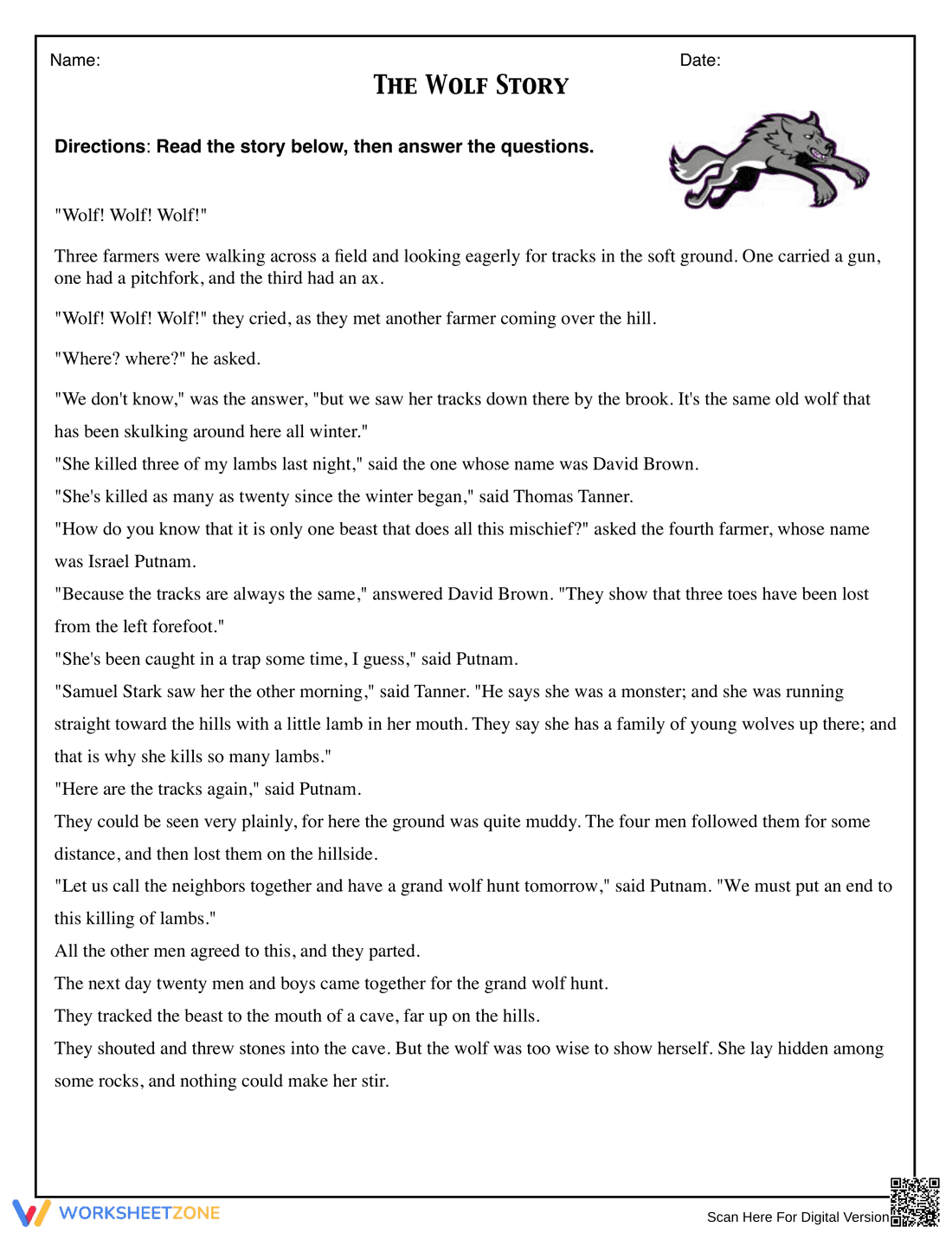
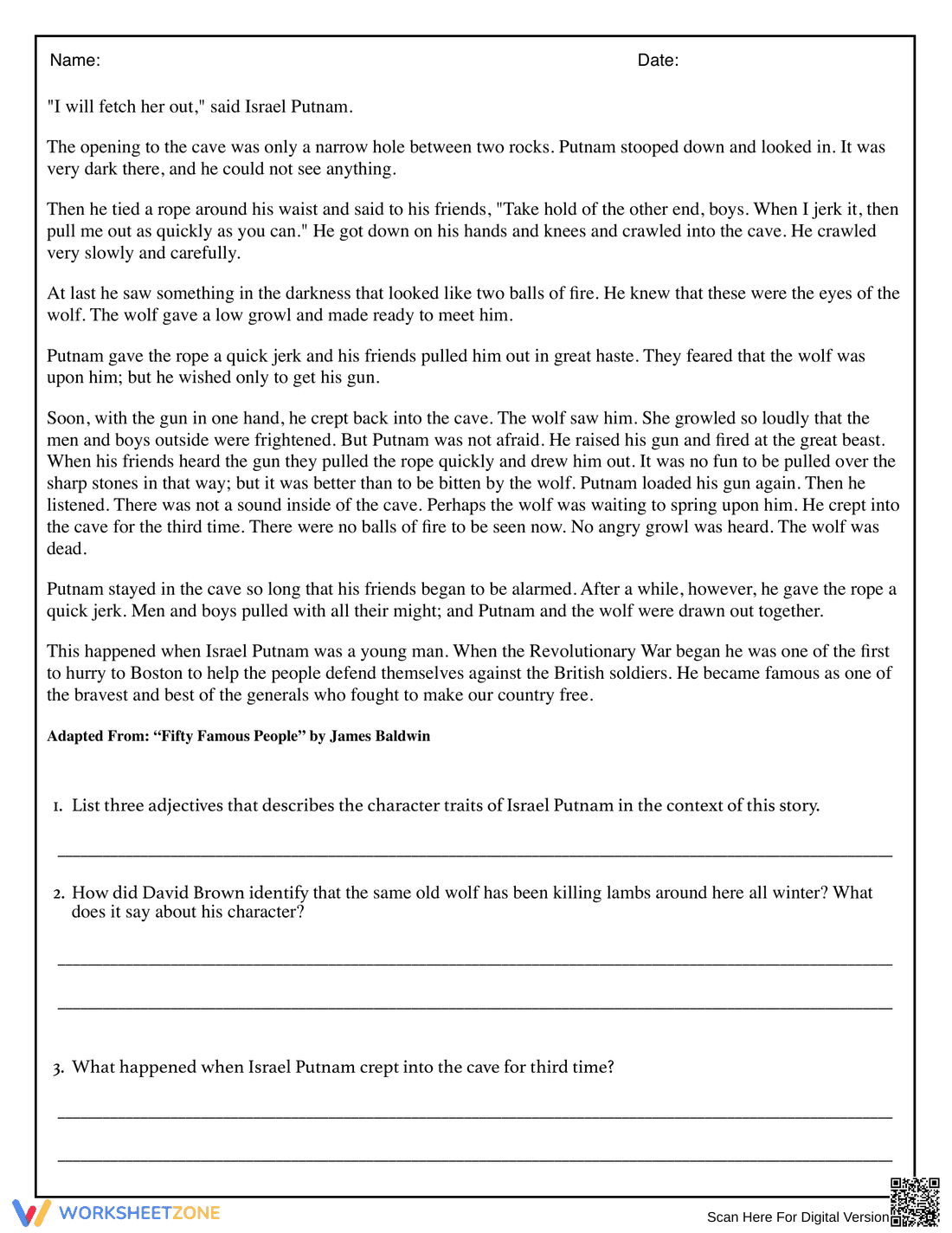

Printable Wolf Story Reading Worksheet | Grade 5-8

Paste this activity's link or code into your existing LMS (Google Classroom, Canvas, Teams, Schoology, Moodle, etc.).
Students can open and work on the activity right away, with no student login required.
You'll still be able to track student progress and results from your teacher account.
This reading comprehension worksheet helps middle grade students master informational text analysis by citing direct evidence. Students read a historical narrative about Israel Putnam and answer targeted questions to demonstrate comprehension. This resource strengthens critical reading skills and supports independent analysis of complex historical texts.
At a Glance
- Grade: 5-9 · Subject: ELA
- Standard:
CCSS.ELA-LITERACY.RI.4.1— Refer to details and examples in a text when explaining what the text says explicitly- Skill Focus: Textual evidence and character analysis
- Format: 2 pages · 3 problems · Answer key included · PDF
- Best For: Independent reading practice and formative assessment
- Time: 20–30 minutes
This two-page PDF contains a historical narrative adapted from James Baldwin's "Fifty Famous People" titled "The Wolf Story." The text is followed by three structured, open-ended comprehension questions. These questions prompt students to identify character traits, locate specific textual evidence, and summarize key plot events. A complete answer key is provided.
- Guided Practice: Students identify three specific adjectives describing the character traits of Israel Putnam based on the text.
- Supported Practice: Students locate and explain how David Brown identified the wolf, connecting clues to character reasoning.
- Independent Practice: Students synthesize the climax by explaining what occurred during Putnam's third entry into the cave.
This progression follows a gradual-release model, moving from trait identification to deeper textual synthesis.
Standards Alignment
This resource aligns directly with the primary standard CCSS.ELA-LITERACY.RI.4.1, which requires students to quote accurately from a text when explaining what the text says explicitly and when drawing inferences. Additionally, it supports development in analyzing character interactions and summarizing historical texts. Both standard codes can be copied directly into lesson plans, IEP goals, or district curriculum mapping tools.
How to Use It
Use this worksheet during or after direct instruction on citing textual evidence. It works well as an independent practice activity following a mini-lesson on character analysis. Teachers can also use the three open-ended questions as a formative assessment to observe how well students locate specific details in a longer narrative. Expect students to complete the reading and questions within 20 to 30 minutes.
Who It's For
This worksheet is designed for students in grades 5 through 9 who need targeted practice with informational texts and historical narratives. It is highly beneficial for general education classrooms, reading intervention groups, and English language learners requiring structured comprehension support. Pair this resource with an anchor chart on character traits or a direct instruction lesson on drawing inferences from historical accounts.
This educational resource targets the core requirements of the CCSS.ELA-LITERACY.RI.4.1 standard, focusing on a student's ability to locate and cite explicit textual evidence. According to research from Fisher & Frey (2014) on close reading instruction, engaging students with complex historical narratives and structured text-dependent questions significantly improves literal comprehension and critical thinking. By requiring students to extract specific details—such as identifying character traits and explaining plot developments—this worksheet reinforces the cognitive pathways necessary for deep text analysis. The structured layout ensures that learners practice retrieving evidence directly from the passage rather than relying on memory or external assumptions. This evidence-based design helps educators measure student progress accurately, making it a valuable tool for diagnostic assessments, daily reading practice, or targeted intervention sessions.


