


























Views
Downloads
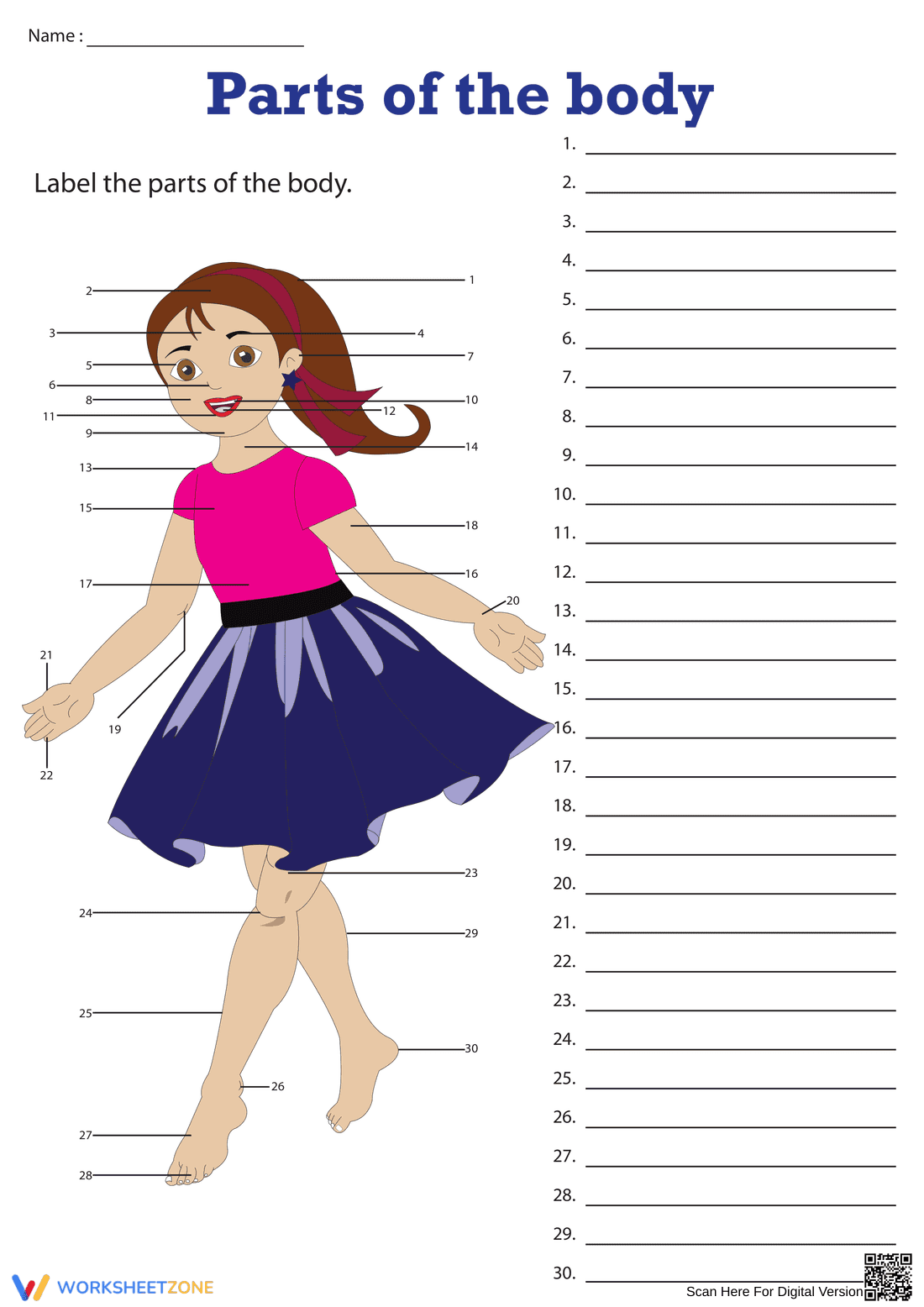

Grade 2 Body Parts — Essential No-Prep Worksheet
Paste this activity's link or code into your existing LMS (Google Classroom, Canvas, Teams, Schoology, Moodle, etc.).
Students can open and work on the activity right away, with no student login required.
You'll still be able to track student progress and results from your teacher account.
This Grade 2 science worksheet helps learners master anatomy by labeling thirty body parts on a clear diagram. Students improve scientific vocabulary and spelling as they match physical locations to names. This resource effectively assesses foundational anatomical knowledge while strengthening word recognition in early elementary units.
At a Glance
- Grade: 2 · Subject: Science
- Standard:
LS1.A— Identify external parts of the human body and their functions- Skill Focus: Anatomical vocabulary and spelling
- Format: 1 page · 30 problems · Answer key included · PDF
- Best For: Vocabulary practice and spelling assessments
- Time: 15–20 minutes
What's Inside
The worksheet features a human figure with thirty leader lines pointing to anatomical features, from the eyebrow to the heel. A numbered column on the right provides space for student answers. A comprehensive answer key is included for quick grading or self-correction.
Zero-Prep Workflow
This resource is designed for immediate integration with under 2 minutes of teacher prep, making it perfect for sub plans. Step 1: Print the single-page worksheet (30 seconds). Step 2: Distribute and allow students to work independently (15-20 minutes). Step 3: Review with the answer key (2 minutes).
Standards Alignment
This aligns with NGSS LS1.A: Structure and Function: "All organisms have external parts. Different animals use their body parts in different ways to see, hear, grasp objects, protect themselves, and move." This code can be copied into lesson plans or curriculum mapping tools.
How to Use It
Use this as a summative assessment after a unit on the human body to verify vocabulary mastery. Alternatively, assign it as a homework task to help students practice spelling science words in a visual format. Completion typically takes 20 minutes.
Who It's For
This is ideal for Grade 2 students and English Language Learners (ELL) who benefit from visual vocabulary. It pairs well with a human body anchor chart. Differentiation can be achieved by providing a word bank for struggling writers.
The systematic identification of physical structures is a foundational component of early childhood science education, aligning with the LS1.A core idea regarding the external parts of organisms. By requiring students to produce the written names of thirty different body parts, this worksheet supports the development of technical vocabulary and orthographic precision. Research from Fisher & Frey (2014) emphasizes that the use of visual diagrams paired with independent labeling tasks facilitates the gradual release of responsibility, moving students from guided observation to autonomous mastery of complex nomenclature. This worksheet provides the structured practice necessary for Grade 2 students to internalize anatomical terms that serve as prerequisites for later studies of internal systems and biological functions. Educators can rely on this assessment to identify specific gaps in student vocabulary or spelling proficiency, ensuring that all learners meet the rigorous demands of state and national science frameworks.


