


























Views
Downloads
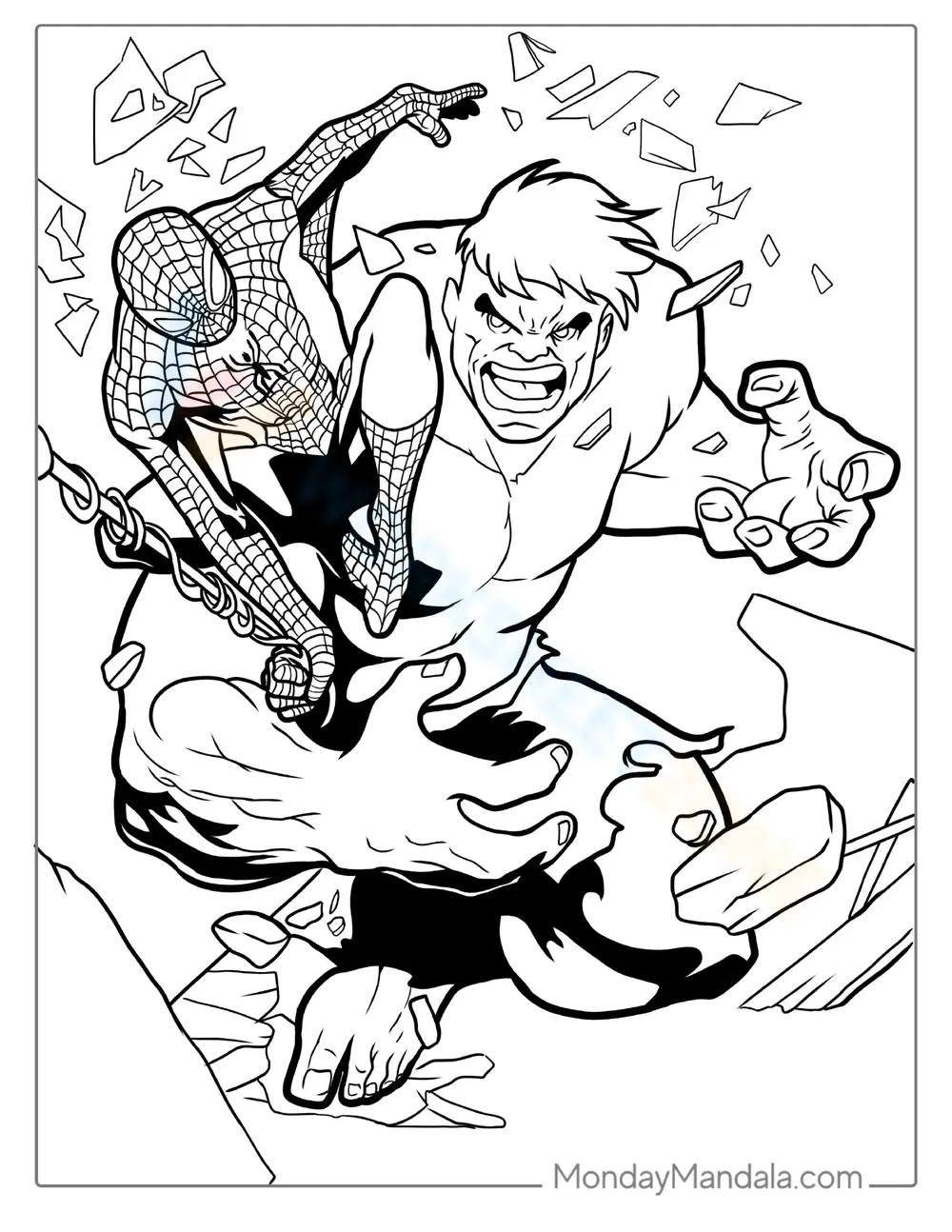

Spider-Man & Hulk Coloring Page | Printable K-2 Activity
Paste this activity's link or code into your existing LMS (Google Classroom, Canvas, Teams, Schoology, Moodle, etc.).
Students can open and work on the activity right away, with no student login required.
You'll still be able to track student progress and results from your teacher account.
This printable Spider-Man and Hulk coloring page provides early learners with an engaging way to develop essential fine motor skills and hand-eye coordination. By coloring these popular superhero characters, students practice grip control and spatial awareness, building a strong foundation for future writing tasks in a fun, creative format.
At a Glance
- Grade: K-2 · Subject: English
- Standard:
CCSS.ELA-LITERACY.SL.K.5— Add drawings to descriptions to provide detail- Skill Focus: Fine Motor Skills
- Format: 1 page · 1 task · No answer key · PDF
- Best For: Morning work or early finishers
- Time: 15–20 minutes
Inside this single-page PDF, educators will find a black-and-white line art illustration featuring Spider-Man and the Hulk. The dynamic scene includes varied shapes and line thicknesses, offering students broad spaces for general coloring and smaller sections requiring precise crayon control. No answer key is required, allowing complete creative freedom.
This resource offers a zero-prep workflow.
- Print (1 minute): Simply download the PDF and print the required number of copies. The high-contrast lines ensure clean reproduction on standard copy paper.
- Distribute (1 minute): Hand out the sheets along with crayons, colored pencils, or markers. No additional teacher instruction or setup is necessary.
- Review (0 minutes): Because this is an open-ended creative task, there is no formal grading required.
With prep time under two minutes, it suits sub plans or transition periods.
This activity aligns with CCSS.ELA-LITERACY.SL.K.5: Add drawings or other visual displays to descriptions as desired to provide additional detail. While primarily a fine motor and art activity, coloring detailed scenes helps students understand how visual elements convey action and story, supporting early narrative comprehension. Both standard codes can be copied directly into lesson plans, IEP goals, or district curriculum mapping tools.
Use this coloring page as morning work to help students settle before direct instruction. It can also be utilized as a reward or quiet activity for early finishers during literacy or math blocks. While students color, teachers can conduct formative assessments by observing pencil grip, hand dominance, and the ability to stay within the lines. The expected completion time ranges from 15 to 20 minutes, depending on the student's attention to detail.
This resource is primarily designed for Kindergarten through Grade 2 students who are refining their fine motor control and spatial awareness. It naturally supports differentiation, as students can choose their coloring tools and level of detail based on their individual abilities. This worksheet pairs exceptionally well with a superhero-themed read-aloud or a direct instruction lesson on character traits, allowing students to visually connect with the heroes they are learning about.
Developing fine motor skills through activities like coloring is a critical precursor to handwriting and overall academic readiness. This resource aligns with CCSS.ELA-LITERACY.SL.K.5, encouraging students to add drawings to descriptions to provide detail. According to Fisher & Frey (2014), integrating high-interest visual elements into early childhood routines significantly increases student engagement and time on task. When children interact with familiar figures like Spider-Man and Hulk, their intrinsic motivation to complete the physical task of coloring improves. This sustained practice strengthens the small muscles in the hands and fingers, directly supporting the dexterity required for legible writing and tool manipulation. By providing structured yet creative outlets, educators can foster both physical development and artistic expression in a low-stress environment, ensuring young learners build the foundational skills necessary for future literacy success.


