


























Views
Downloads

Reading Charts Printable Worksheet | Grade 3 ELA
Paste this activity's link or code into your existing LMS (Google Classroom, Canvas, Teams, Schoology, Moodle, etc.).
Students can open and work on the activity right away, with no student login required.
You'll still be able to track student progress and results from your teacher account.
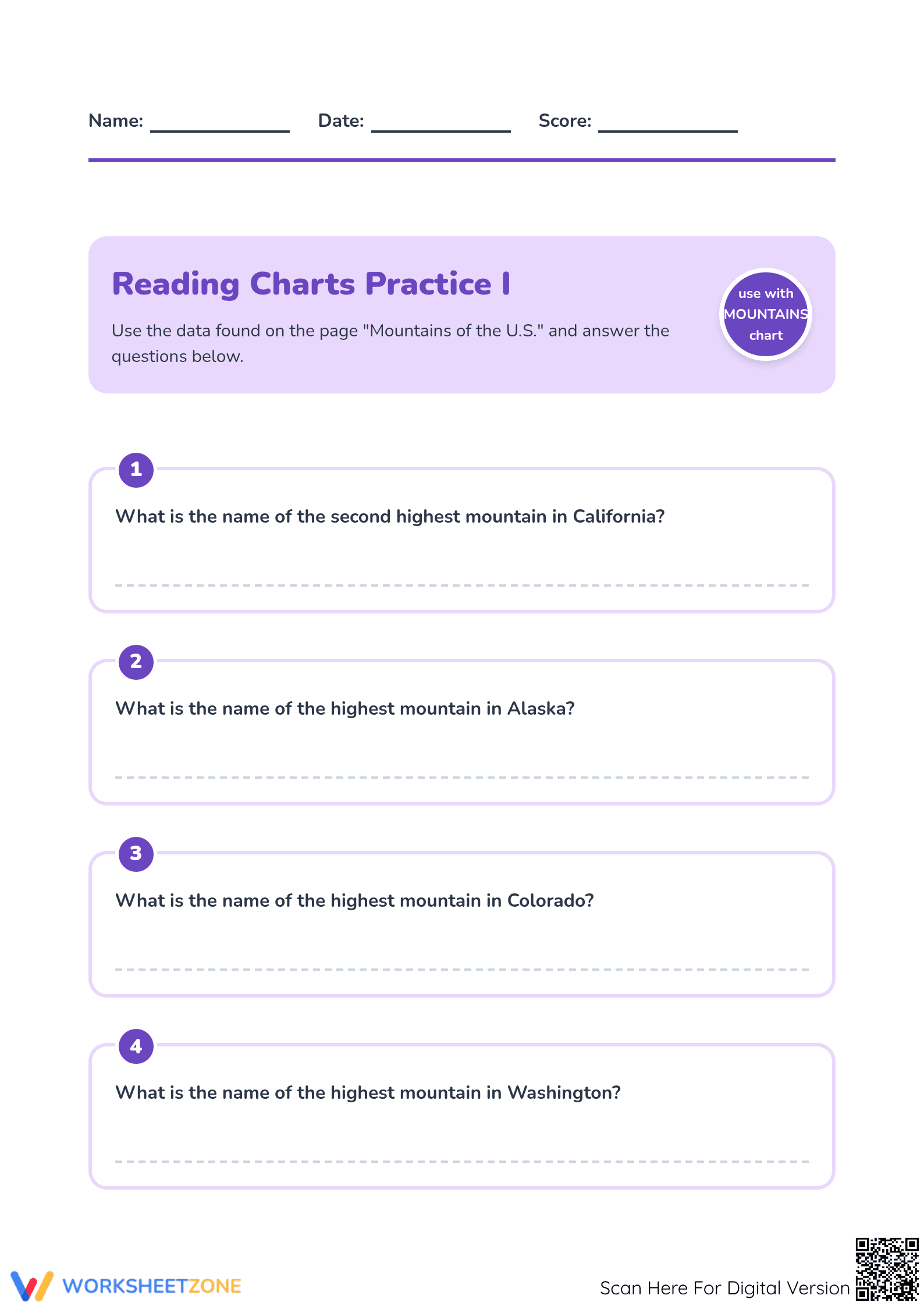
This Grade 3 reading comprehension worksheet helps students master data interpretation by analyzing a nonfiction chart. Students extract specific facts about U.S. mountains to answer targeted questions, building essential visual literacy skills. This focused practice ensures learners confidently navigate informational texts and graphic features.
At a Glance
- Grade: 3 · Subject: ELA
- Standard:
CCSS.ELA-LITERACY.RI.3.7— Use information from illustrations and words to demonstrate understanding- Skill Focus: Reading Charts and Data Interpretation
- Format: 3 pages · 10 problems · Answer key included · PDF
- Best For: Independent practice and reading centers
- Time: 15–20 minutes
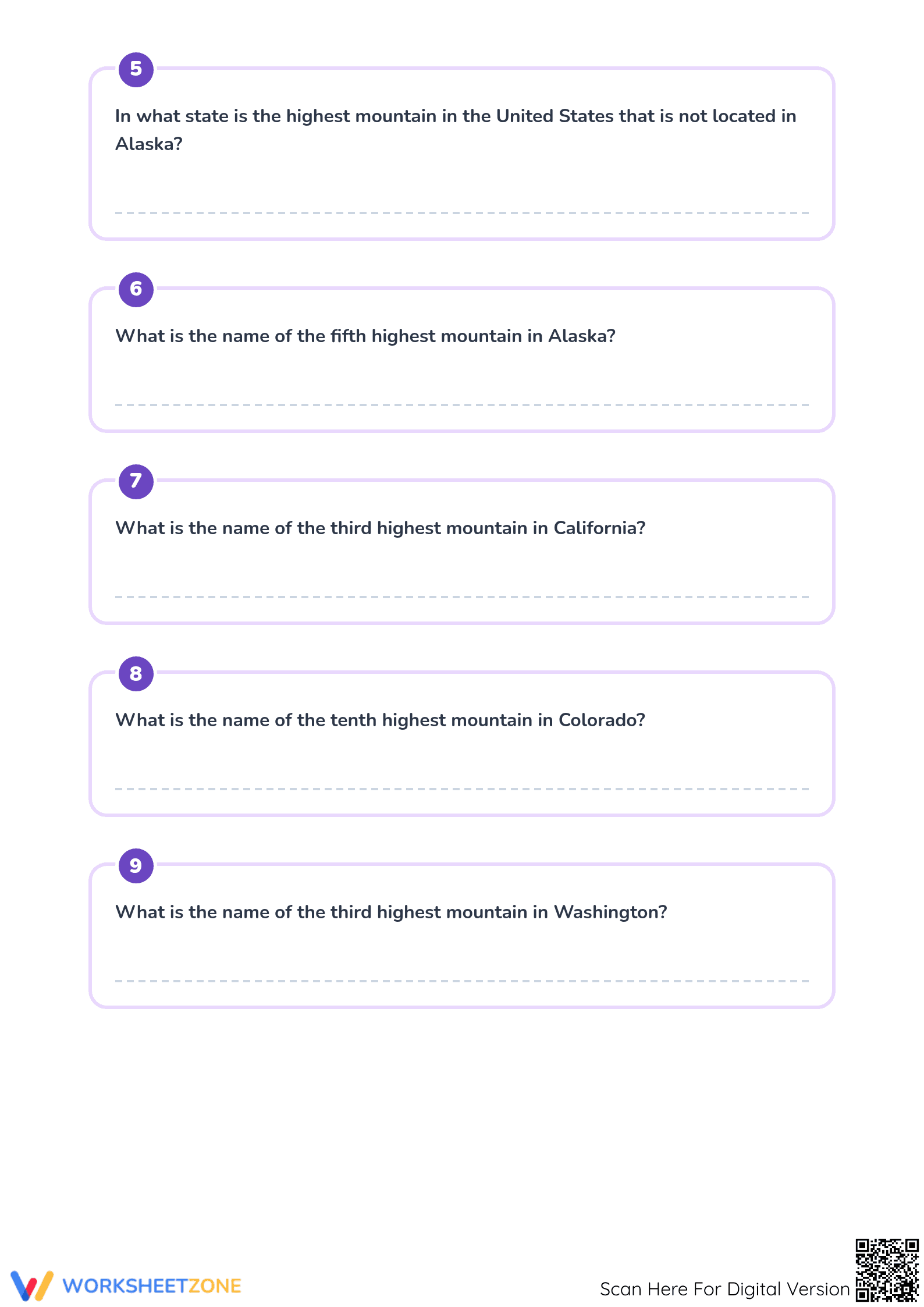
This resource includes three pages containing 10 fill-in-the-blank comprehension questions. Students reference a companion chart to locate specific elevation data and geographical names. A complete answer key is provided for quick grading, making it easy to verify student comprehension of the visual data.
Skill Progression
- Guided practice: The first few questions ask for straightforward data retrieval, such as identifying the second highest mountain in California, allowing students to familiarize themselves with the chart's layout.
- Supported practice: Mid-level questions require students to scan multiple columns or rows, such as finding the highest mountain in the United States not located in Alaska.
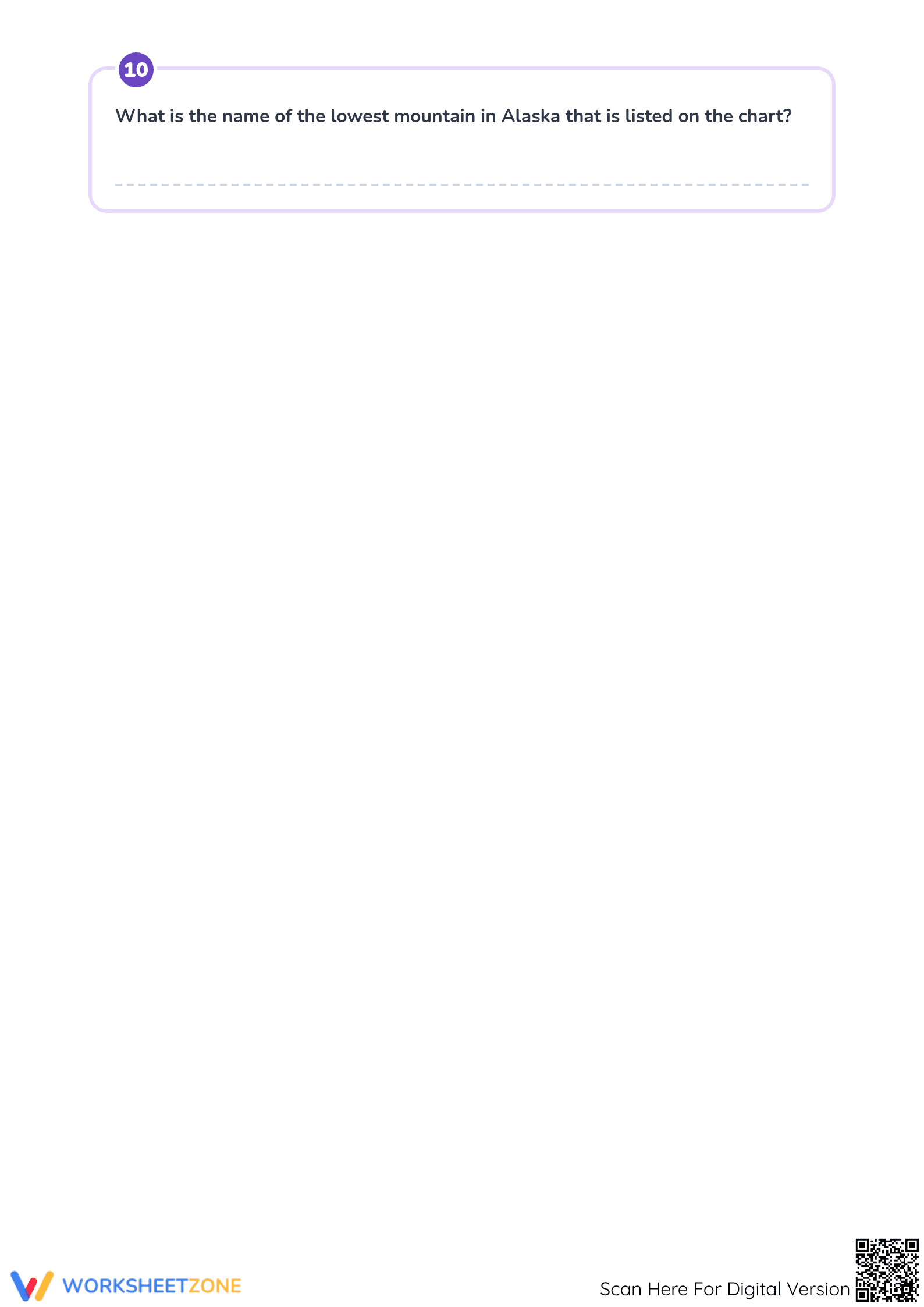
- Independent practice: The final questions challenge students to synthesize information, like identifying the lowest mountain listed for a specific state.
This structure follows a gradual-release model, moving from simple I Do, We Do tasks to independent You Do mastery.
Standards Alignment
This worksheet is aligned to primary standard CCSS.ELA-LITERACY.RI.3.7: Use information gained from illustrations and the words in a text to demonstrate understanding of the text. Both standard codes can be copied directly into lesson plans, IEP goals, or district curriculum mapping tools.
How to Use It
Deploy this worksheet during a nonfiction reading unit after introducing how to read informational graphics. It works exceptionally well as an independent reading center activity or a homework assignment. As a formative assessment tip, observe whether students are using their fingers to track across the rows and columns of the chart; this physical tracking often indicates they are actively processing the grid structure. Expected completion time is 15 to 20 minutes.
Who It's For
This resource is designed for third-grade students developing their informational text skills. It provides excellent practice for visual learners who benefit from structured data retrieval tasks. For students needing extra support, consider highlighting alternating rows on the reference chart to prevent visual tracking errors. Pair this worksheet with a direct instruction lesson on text features or a nonfiction passage about U.S. geography.
Mastering visual data is a critical component of modern literacy. According to a RAND AIRS 2024 report, students who regularly engage with informational graphics demonstrate significantly higher comprehension scores when reading complex nonfiction texts. This worksheet directly targets CCSS.ELA-LITERACY.RI.3.7, requiring students to use information from illustrations and words to demonstrate understanding. By systematically practicing how to extract specific facts from a structured grid, third graders build the cognitive stamina needed for advanced academic reading. The ability to accurately read charts and graphs not only supports English Language Arts proficiency but also lays a vital foundation for success in STEM disciplines. Integrating targeted visual literacy exercises into weekly routines ensures learners are equipped to interpret the diverse text features they will encounter in upper elementary grades and beyond.


