What It Is:
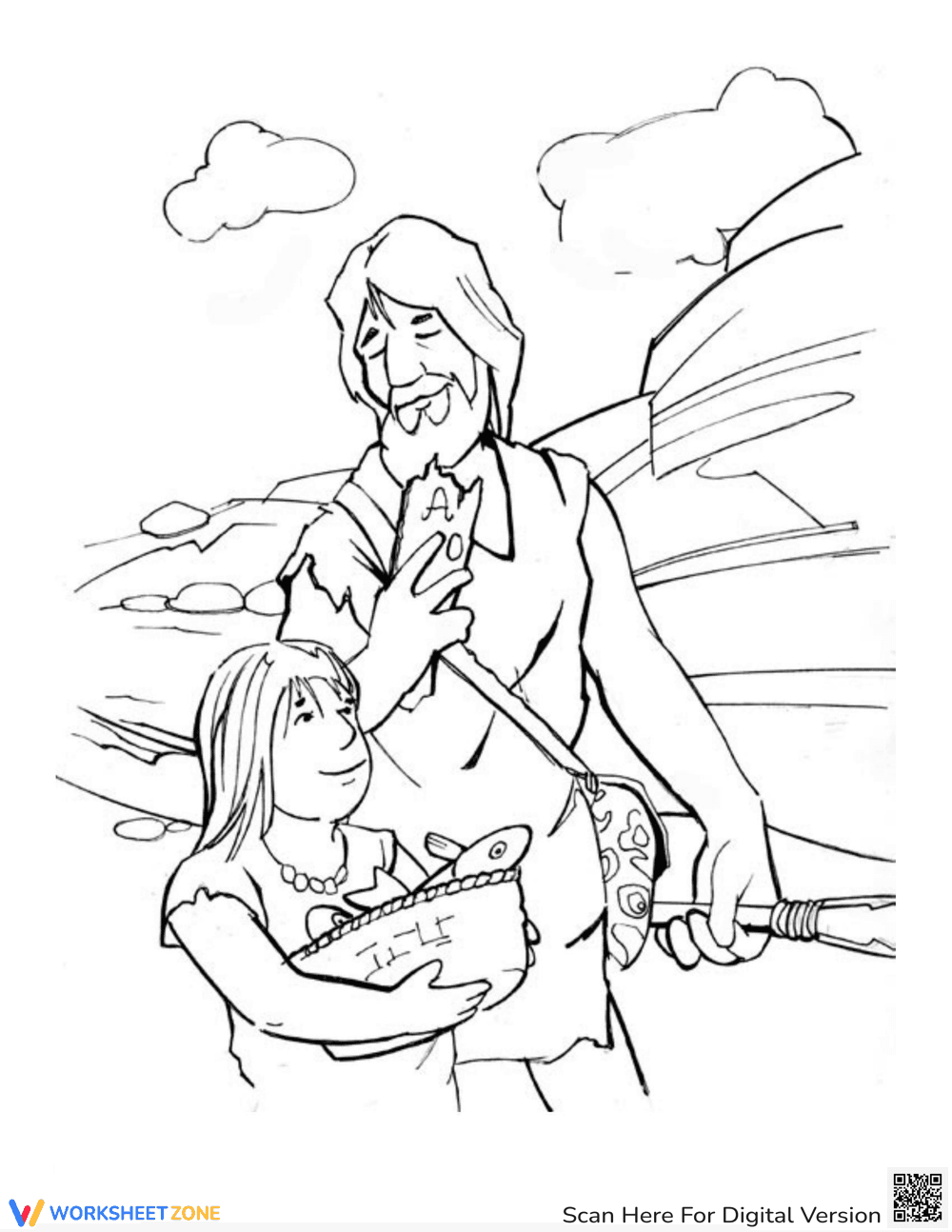
This is an educational worksheet featuring a story titled 'How the Alphabet Was Made' by Rudyard Kipling. The worksheet includes text passages from the story, illustrations of the characters Taffy and Tegumai, and examples of how sounds were turned into visual representations of letters, such as the sound 'Ah' becoming a drawing of a fish with its mouth open (A), the 'Yer' sound becoming a tail (Y), the 'Ooh' sound becoming a round egg (O), and the 'Ssh' sound becoming a snake (S).
Grade Level Suitability:
This worksheet is suitable for grades 2-4. The reading level is appropriate for these grades, and the concept of associating sounds with visual symbols is a foundational skill for literacy development typically taught in these grades.
Why Use It:
This worksheet helps students understand the origins of the alphabet in a fun and engaging way through a story. It reinforces the connection between sounds and letters, promotes reading comprehension, and encourages creative thinking about language. It can also be used to spark discussions about early forms of communication.
How to Use It:
Students can read the story aloud or silently. Discuss the characters and the main idea of the story. Focus on how Taffy and Tegumai create visual representations for sounds. Students could then be challenged to create their own visual representations for different sounds or letters.
Target Users:
This worksheet is beneficial for elementary school students, particularly those in grades 2-4, who are learning about the alphabet, reading comprehension, and the origins of language. It is also useful for teachers looking for engaging and creative literacy activities.