


























Views
Downloads
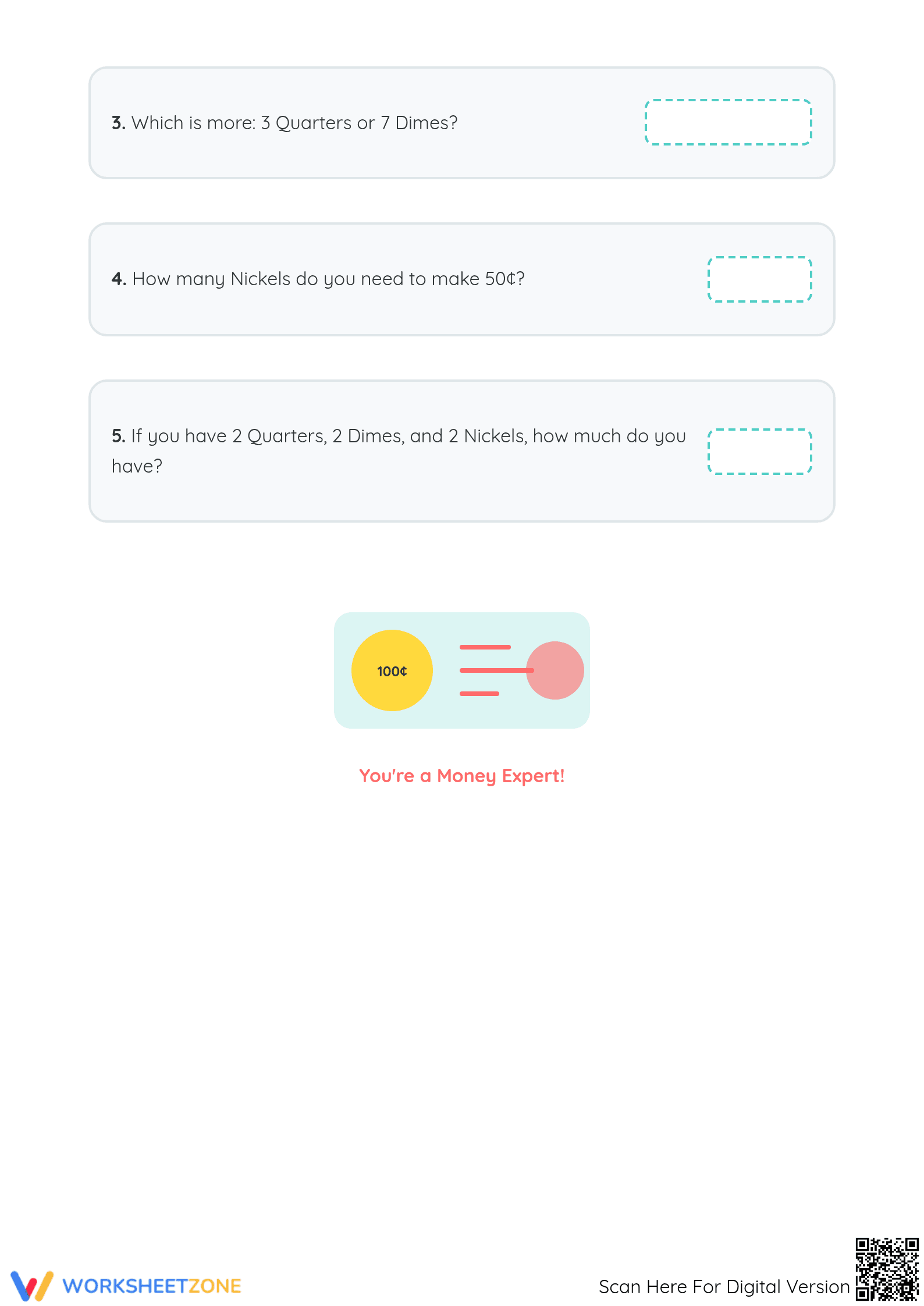

Printable Counting Coins Worksheet | Grade 2 Math
Paste this activity's link or code into your existing LMS (Google Classroom, Canvas, Teams, Schoology, Moodle, etc.).
Students can open and work on the activity right away, with no student login required.
You'll still be able to track student progress and results from your teacher account.
Equip your students with essential financial literacy through this comprehensive counting coins worksheet designed for Grade 2. Students will master the identification and summation of pennies, nickels, dimes, and quarters through 25 structured problems that progress from basic addition to complex change-making. This multi-page resource ensures students can confidently calculate values and compare currency amounts in real-world scenarios.
At a Glance
- Grade: 2 · Subject: Math (Currency)
- Standard:
2.MD.C.8— Solve word problems involving coin values and calculate change from one dollar- Skill Focus: US Coin Identification and Summation
- Format: 5 pages · 25 problems · Answer key included · PDF
- Best For: Small group practice or independent math centers
- Time: 25–40 minutes
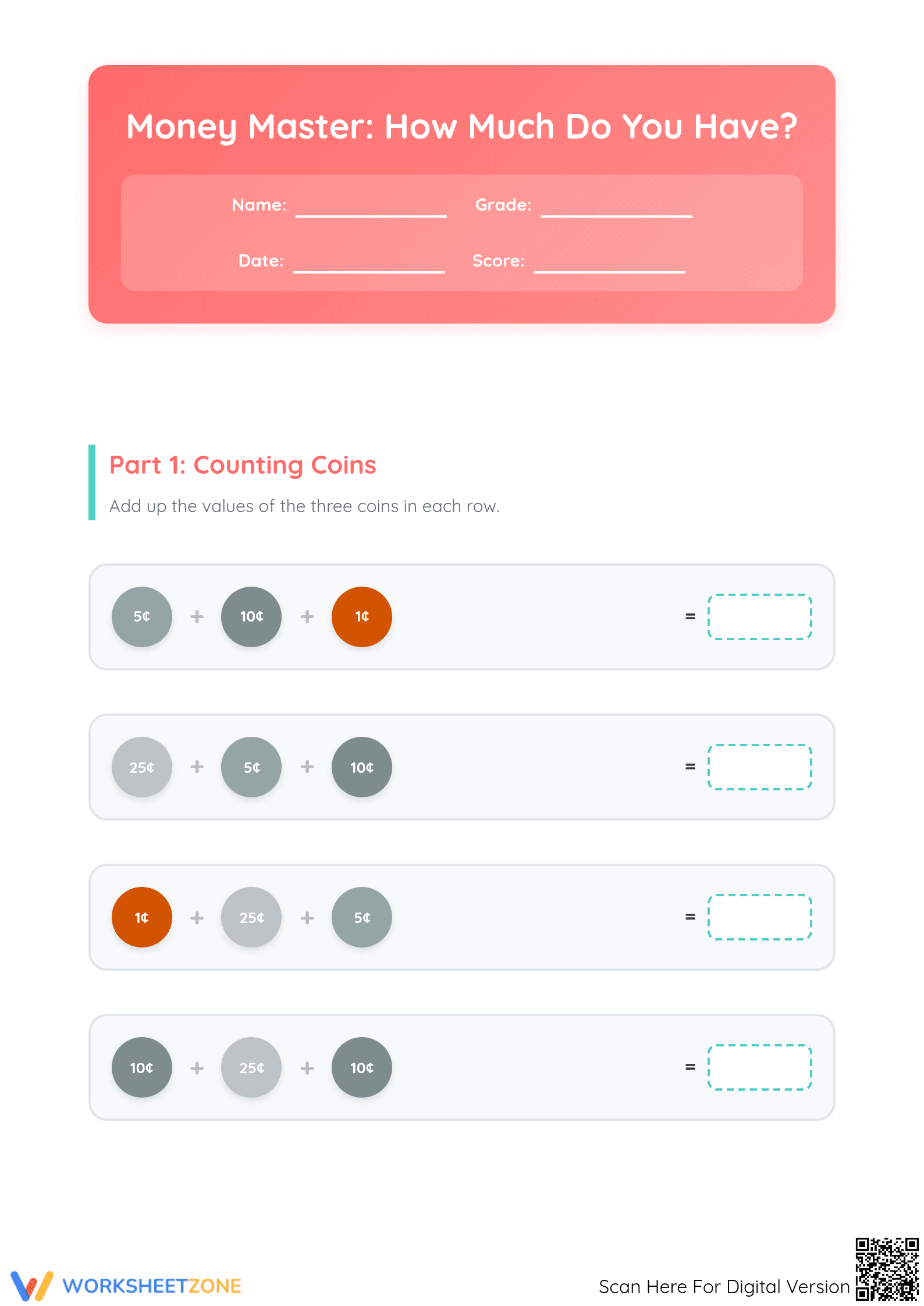
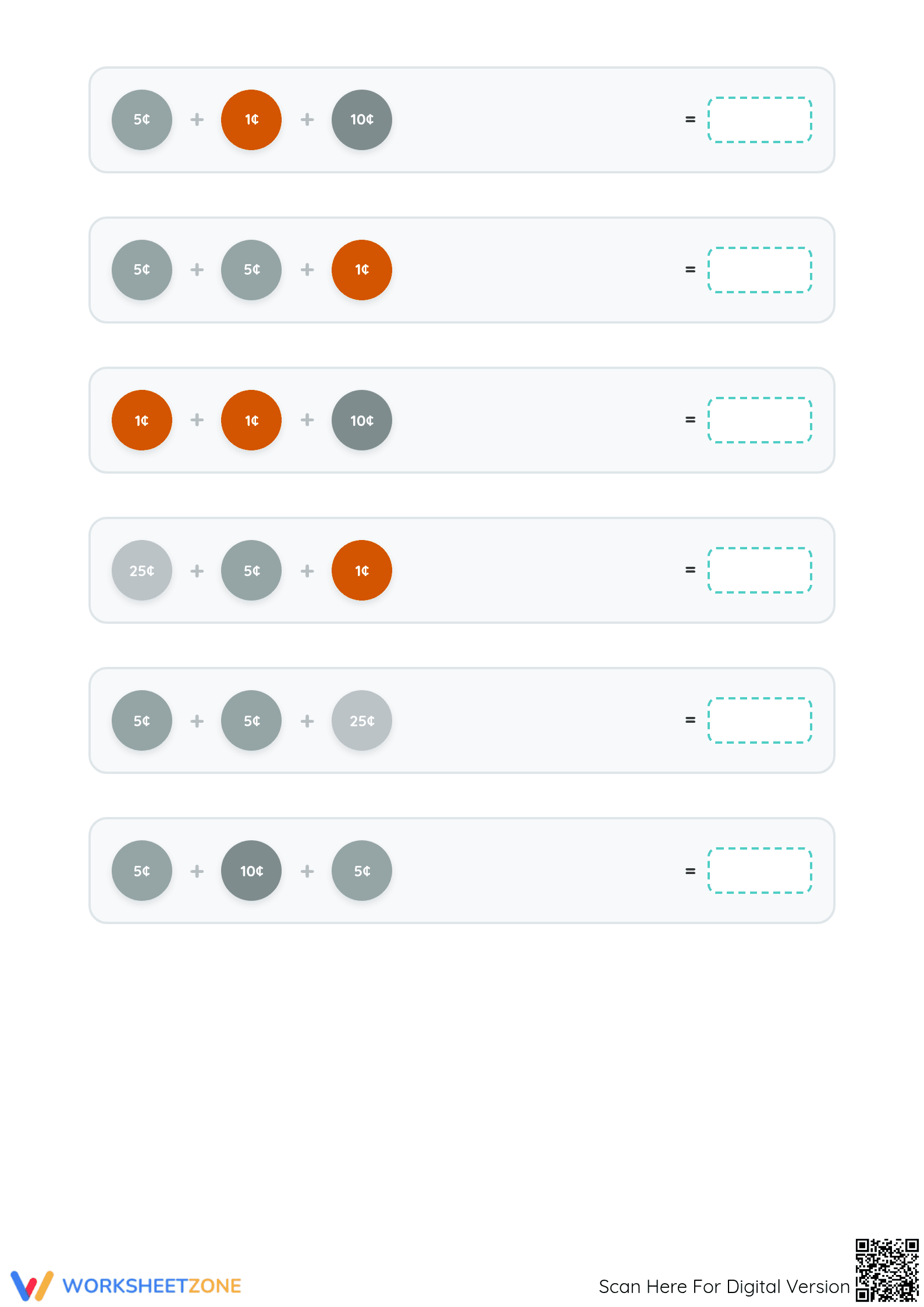
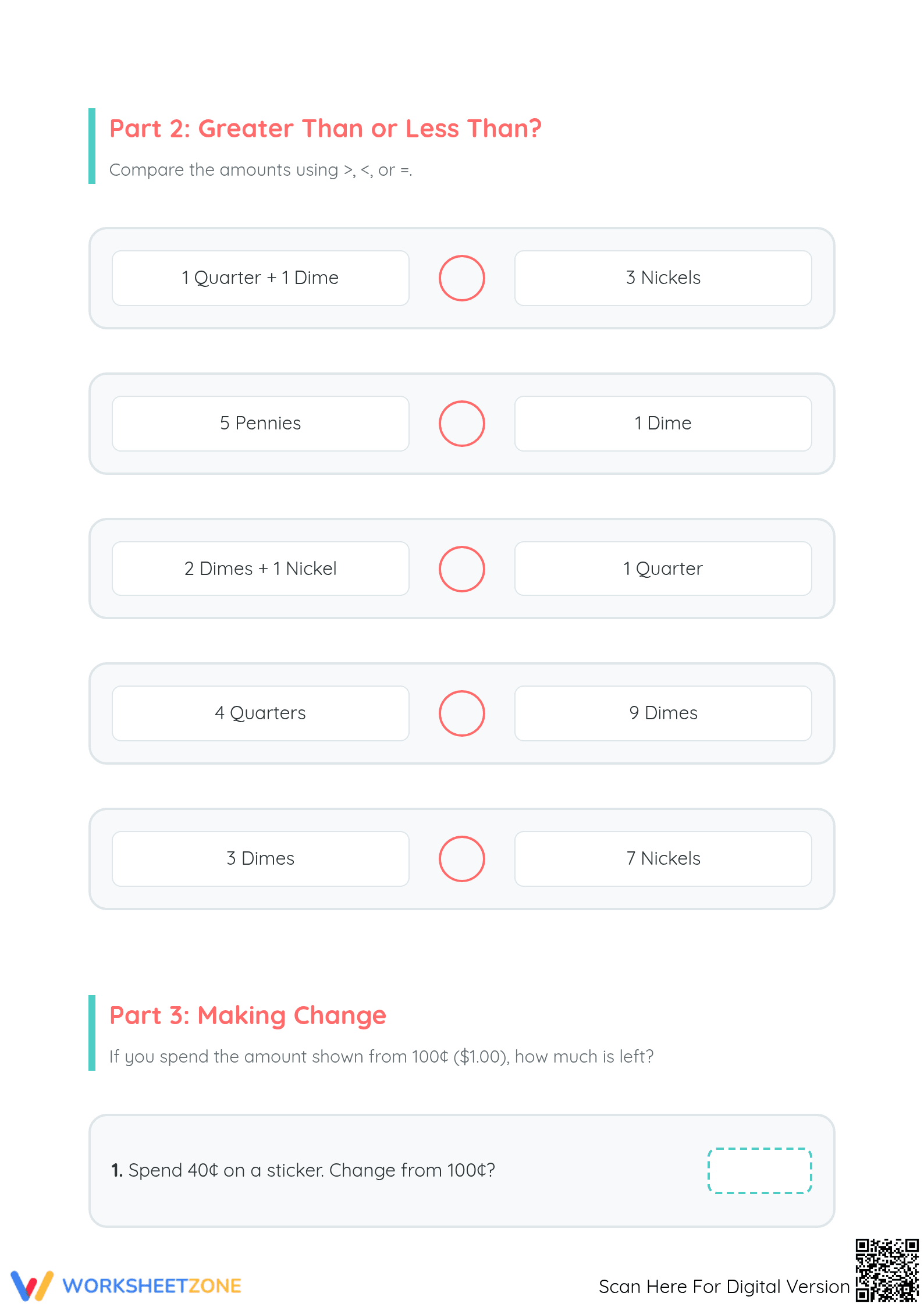
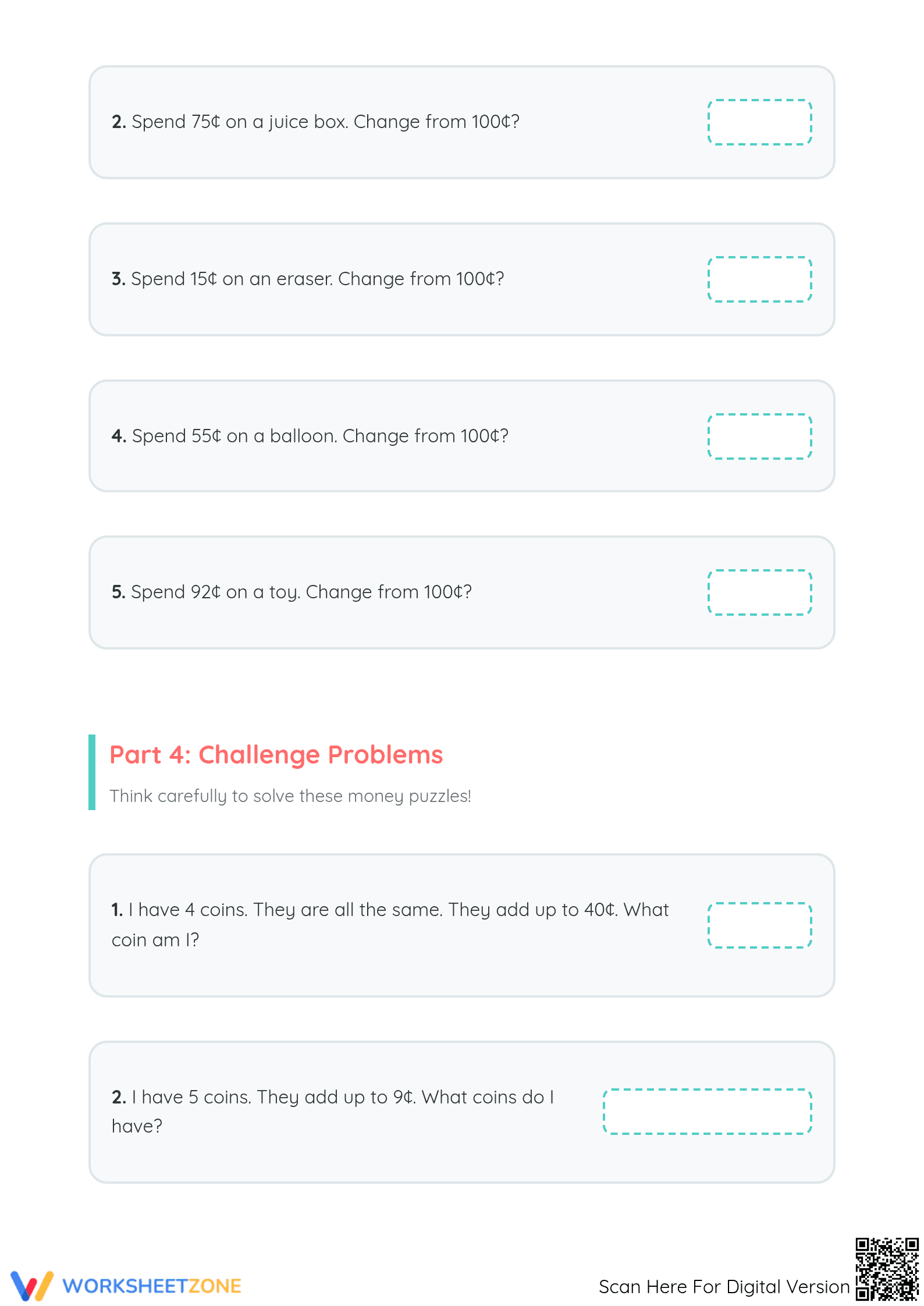
This 5-page PDF packet contains 25 diverse tasks spread across four distinct sections. Students start with visual counting rows to find sums. The packet transitions to comparison problems and practical change-making questions from 100 cents. Finally, five challenge puzzles require students to deduce coin combinations, accompanied by a full answer key for immediate feedback and grading.
- Guided Practice: Visual coin rows provide a clear starting point, allowing students to label individual values before calculating the total sum for each set.
- Supported Practice: Students transition to comparing written amounts and calculating change from $1.00, requiring them to convert between coin names and numeric values mentally.
- Independent Practice: The "Challenge Problems" section encourages higher-order thinking by asking students to identify specific coin sets based on sum and count constraints.
This gradual-release approach ensures students build confidence through the "I Do, We Do, You Do" framework, moving from visual identification to abstract problem-solving.
Standards Alignment
The primary focus of this worksheet is CCSS.MATH.CONTENT.2.MD.C.8: "Solve word problems involving dollar bills, quarters, dimes, nickels, and pennies, using $ and ¢ symbols appropriately." The activities also support 2.NBT.B.5 by reinforcing addition and subtraction within 100. Both standard codes can be copied directly into lesson plans, IEP goals, or district curriculum mapping tools.
How to Use It
Use this packet as a focused rotation during a math center or as a comprehensive assessment after direct instruction on money. During the "Making Change" section, observe if students use counting-up strategies or traditional subtraction from 100 to identify potential areas for intervention. Most students will complete the full 5-page set within 35 minutes, though it can easily be split across multiple days.
Who It's For
This resource is tailored for second-grade students mastering currency, though it serves as an excellent extension for advanced first graders or a remedial tool for third graders. It pairs naturally with a hands-on "class store" simulation or a visual anchor chart displaying coin faces and values. The clear layout and large fonts provide accessibility for students with diverse learning needs.
This curriculum asset targets proficiency in CCSS.MATH.CONTENT.2.MD.C.8, focusing on the identification and summation of US currency including pennies, nickels, dimes, and quarters. Research from the NAEP underscores that mastery of money-related arithmetic provides a critical bridge between basic addition and more complex decimal systems encountered in upper elementary grades. By requiring students to navigate multiple representations—from visual coin sets to verbal descriptions and comparison logic—this worksheet reinforces the cognitive shifting necessary for mathematical fluency. Fisher & Frey (2014) highlight that structured practice with diverse problem types, such as the challenge puzzles and change-making tasks included here, supports the transition from procedural knowledge to conceptual application. This 5-page resource offers 25 specific opportunities for students to apply these skills in varied contexts, ensuring a robust understanding of value-based calculations. Educators can use these data points to track IEP progress or general classroom mastery of essential financial literacy foundations before moving to multi-step word problems involving larger dollar amounts.


