


























Views
Downloads

Grade 4 Homophones — Printable No-Prep Worksheet
Paste this activity's link or code into your existing LMS (Google Classroom, Canvas, Teams, Schoology, Moodle, etc.).
Students can open and work on the activity right away, with no student login required.
You'll still be able to track student progress and results from your teacher account.
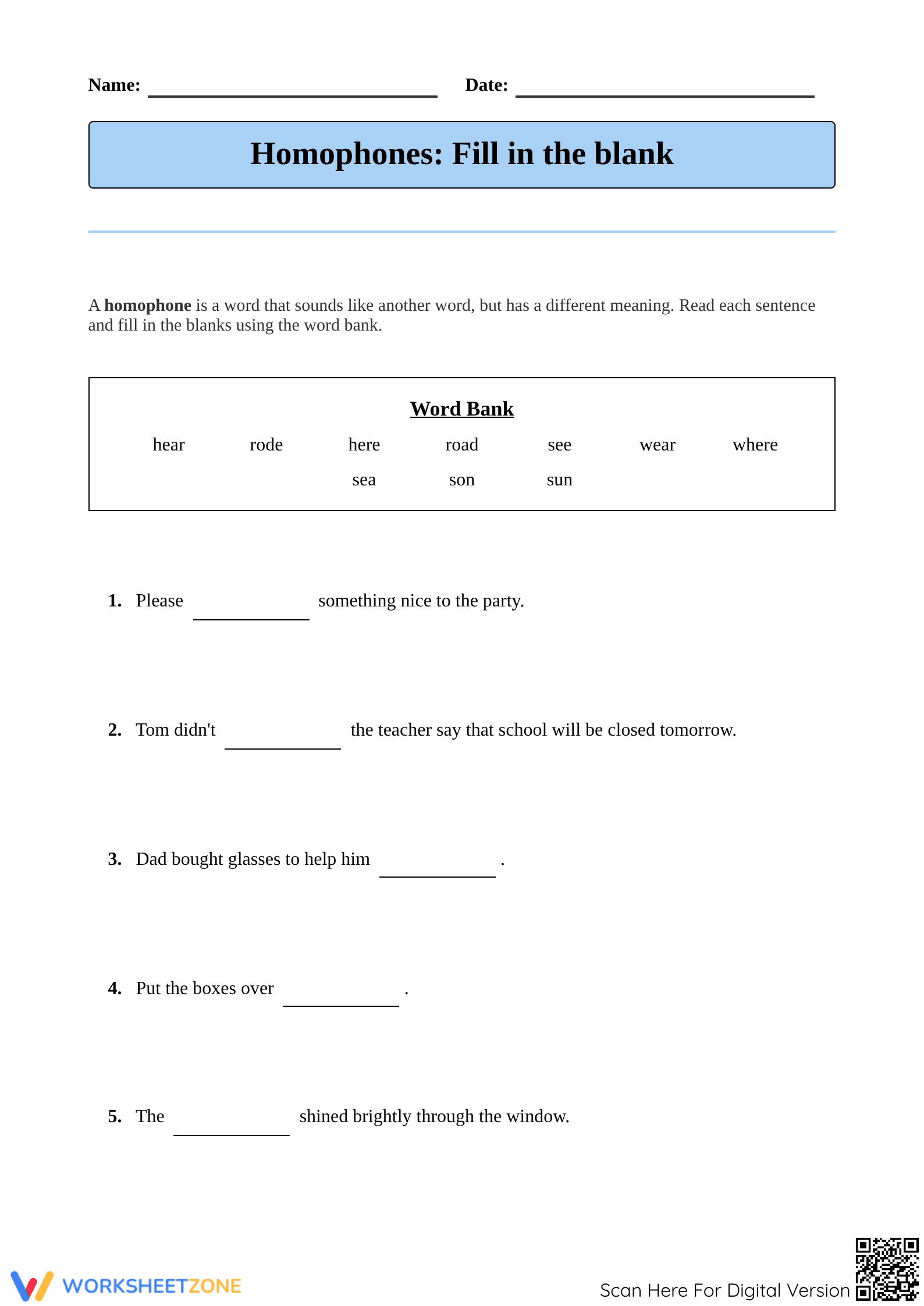
This Grade 4 English Language Arts worksheet helps students master homophones by applying them correctly in context. By reading sentences and selecting the right word from a provided bank, learners build essential vocabulary and spelling skills, ensuring they can distinguish between words that sound alike but have different meanings.
At a Glance
- Grade: 4 · Subject: ELA
- Standard:
CCSS.ELA-LITERACY.L.4.1.G— Correctly use frequently confused words in context- Skill Focus: Homophones
- Format: 2 pages · 10 problems · Answer key included · PDF
- Best For: Independent practice and review
- Time: 10–15 minutes
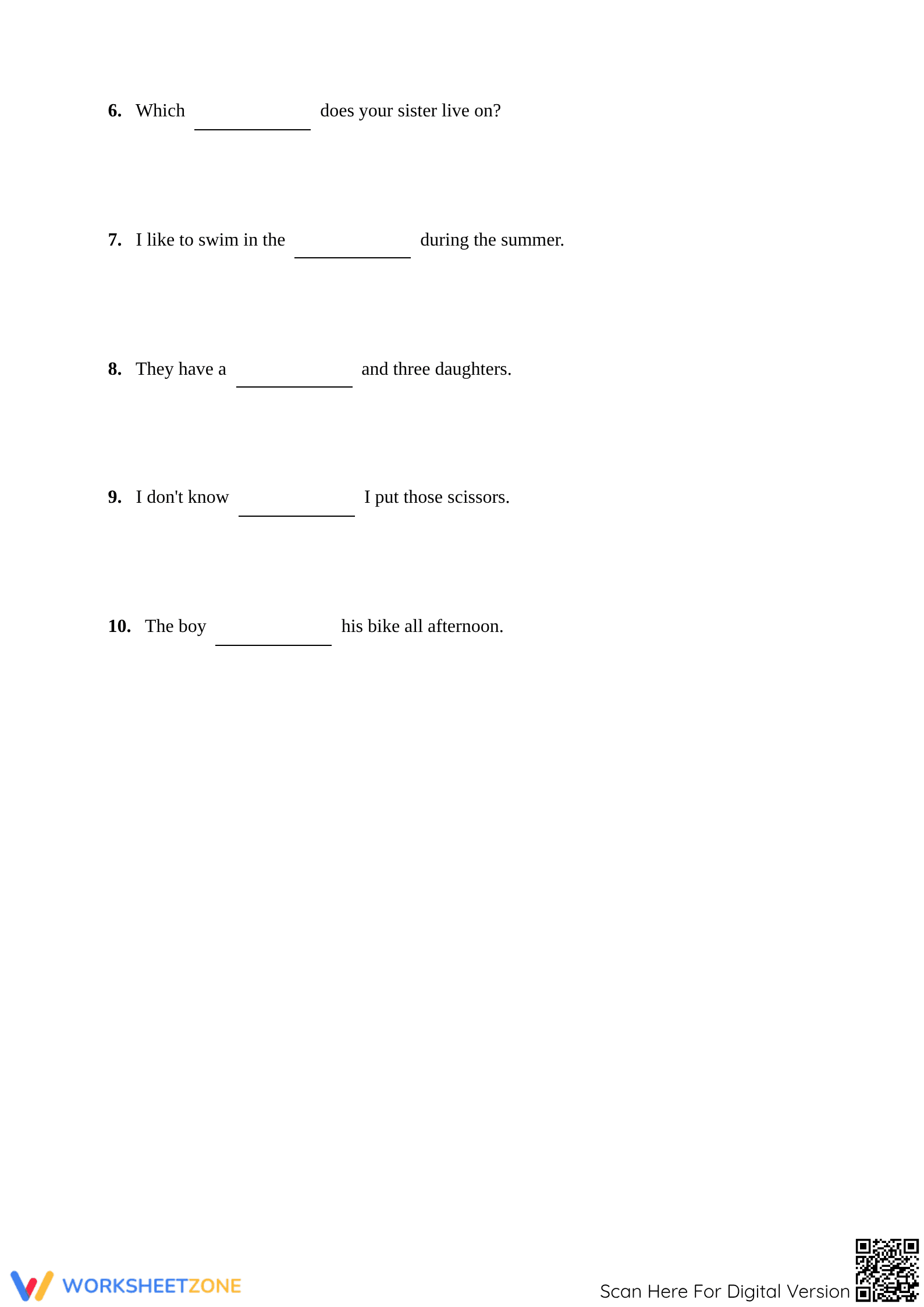
This resource features a clear, student-friendly layout spread across two pages. It begins with a concise definition of homophones, followed by a helpful word bank containing ten common homophone pairs such as "hear/here" and "road/rode." Students will complete ten fill-in-the-blank sentences, relying on context clues to choose the correct spelling. A complete answer key is included to make grading fast and accurate.
This worksheet is designed for immediate classroom use with absolutely no teacher setup required.
- Print (1 minute): Simply download the PDF and print the two-page student handout.
- Distribute (1 minute): Hand out the worksheets. The included definition and word bank mean students can begin working immediately.
- Review (3 minutes): Use the provided answer key to quickly check student work or facilitate a whole-class review session.
With a total prep time of under two minutes, this activity is an excellent addition to any emergency sub plan or busy morning routine.
This activity is directly aligned to CCSS.ELA-LITERACY.L.4.1.G, requiring students to correctly use frequently confused words. It also supports broader vocabulary acquisition and reading comprehension goals by forcing students to rely on sentence-level context clues. Both standard codes can be copied directly into lesson plans, IEP goals, or district curriculum mapping tools.
Teachers can deploy this worksheet during independent literacy centers after a brief mini-lesson on homophones. It also serves as an effective morning work assignment to activate prior knowledge before a larger writing block. As a formative assessment tip, observe which specific homophone pairs students struggle with most; if multiple students confuse "wear" and "where," you can quickly address it with a targeted anchor chart. Students should be able to complete the ten sentences within 10 to 15 minutes.
This resource is primarily designed for fourth-grade students, though it serves as excellent review material for fifth graders or targeted intervention for older students struggling with spelling. The built-in word bank provides a natural scaffold for English Language Learners and students needing extra support. Pair this worksheet with a visual anchor chart displaying common homophone pairs to maximize student success.
Mastering homophones is a critical component of developing fluent reading and writing skills in elementary education. Aligned with CCSS.ELA-LITERACY.L.4.1.G, this resource requires students to correctly use frequently confused words in context, bridging the gap between phonetic decoding and reading comprehension. According to Fisher & Frey (2014), explicit vocabulary instruction that includes morphological and contextual analysis significantly improves students' ability to comprehend complex texts. When students practice distinguishing between words that sound identical but carry different meanings and spellings, they strengthen their orthographic mapping capabilities. This targeted practice reduces spelling errors in independent writing and improves overall reading fluency. By integrating a word bank and contextual sentences, this worksheet provides the structured repetition necessary for students to internalize these common vocabulary distinctions effectively.


