


























Views
Downloads

Homophones Practice Worksheet | Grade 4 Essential
Paste this activity's link or code into your existing LMS (Google Classroom, Canvas, Teams, Schoology, Moodle, etc.).
Students can open and work on the activity right away, with no student login required.
You'll still be able to track student progress and results from your teacher account.
Homophones can be tricky for young writers to master. This worksheet provides targeted practice to help students distinguish between words that sound the same but have different meanings and spellings. By applying context clues, learners build the confidence needed for accurate spelling and clear communication in their daily writing tasks.
At a Glance
- Grade: 4 · Subject: ELA
- Standard:
L.4.1.G— Correctly use frequently confused words like there, their, and they're- Skill Focus: Homophone identification and usage
- Format: 3 pages · 14 problems · Answer key included · PDF
- Best For: Independent practice or morning work
- Time: 15–20 minutes
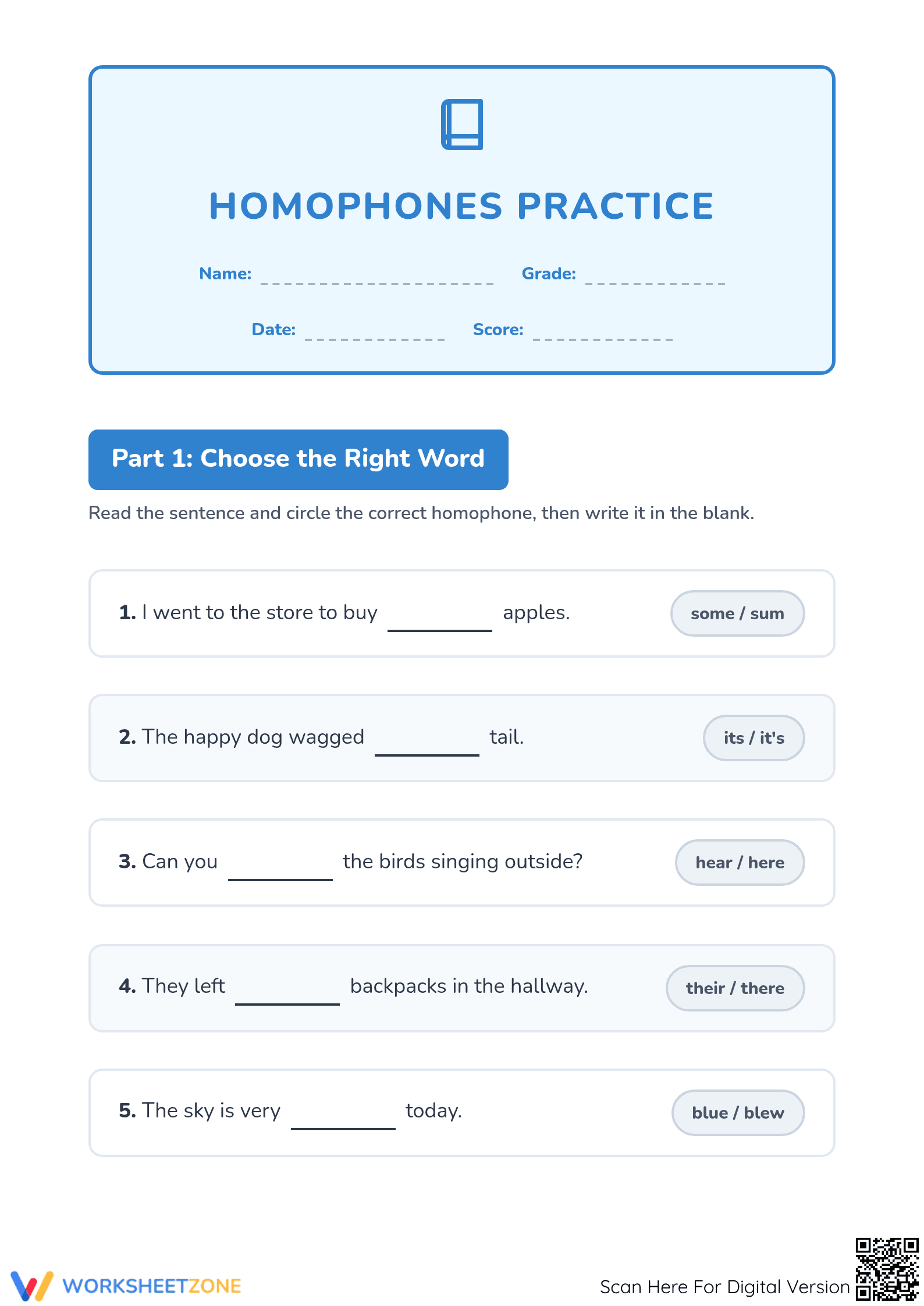
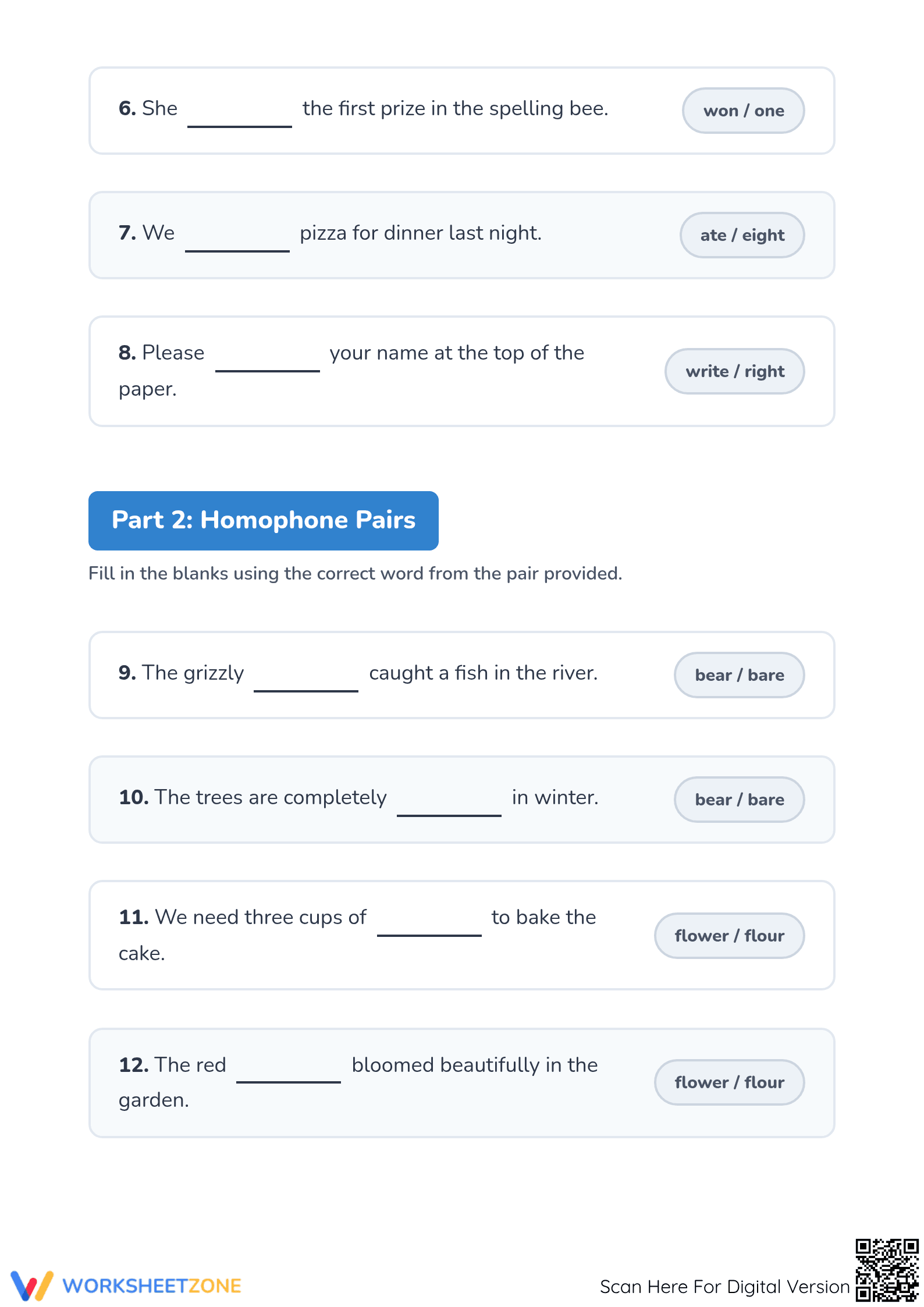
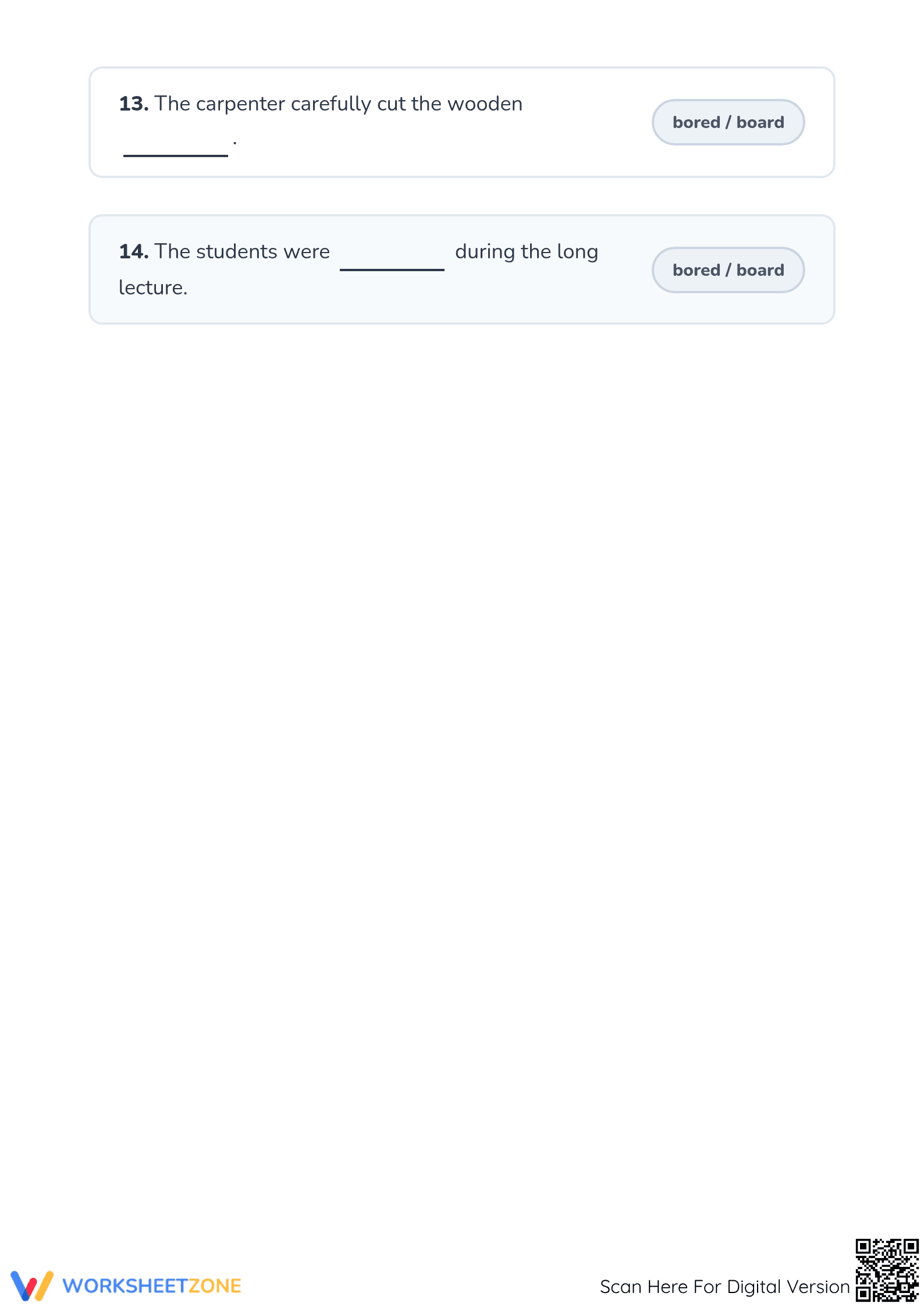
This comprehensive resource contains 14 fill-in-the-blank sentences spread across three organized pages. The layout is clean and student-friendly, featuring large text and clear response areas. Part 1 focuses on choosing between common pairs such as "some/sum" and "their/there," while Part 2 introduces slightly more complex pairs like "bear/bare" and "flower/flour." A complete answer key is provided to facilitate rapid grading or student self-correction.
Zero-Prep Workflow
- Print (1 minute): Select the pages you need and print enough copies for your class or small group.
- Distribute (30 seconds): Hand out the sheets as a bell ringer, homework assignment, or center activity.
- Review (5 minutes): Use the included answer key to check for understanding or project it for a whole-class review session.
This resource is an ideal choice for emergency sub plans or quick formative assessments because it requires no teacher setup or additional materials.
Standards Alignment
This worksheet aligns with CCSS.ELA-LITERACY.L.4.1.G: "Correctly use frequently confused words (e.g., to, too, two; there, their, they're)." It also supports vocabulary acquisition by requiring students to analyze sentence context to determine word meaning. Both standard codes can be copied directly into lesson plans, IEP goals, or district curriculum mapping tools.
How to Use It
Assign this worksheet during the "You Do" phase of a gradual release lesson on grammar. It works exceptionally well as a mid-week check for understanding after students have been introduced to the concept of homophones. For a formative assessment tip, observe which students struggle with the "its/it's" distinction in problem 2, as this often indicates a need for a mini-lesson on possessive pronouns versus contractions. Expect most students to finish within 20 minutes.
Who It's For
This resource is designed for 4th-grade students but is also highly effective for 3rd-grade enrichment or 5th-grade review. It is particularly helpful for English Language Learners (ELLs) who may find auditory similarities confusing. Pair this worksheet with a homophone anchor chart or a short reading passage to provide a complete instructional cycle.
Research by Fisher & Frey (2014) emphasizes that vocabulary development is most effective when students engage in repeated, contextualized practice with frequently confused words. This worksheet addresses that need by providing 14 specific instances where students must evaluate semantic differences between homophones like "won/one" and "ate/eight." By requiring students to both circle and write the correct word, the activity reinforces the orthographic mapping necessary for long-term retention. Aligned to the L.4.1.G standard, this tool ensures that students move beyond simple recognition toward mastery of word usage in varied sentence structures. Educators can use the results to identify specific phonetic pairs that require additional direct instruction, making it a valuable component of a data-driven ELA curriculum. This structured approach to grammar instruction supports the development of precise writing skills essential for meeting national literacy benchmarks.


