


























Views
Downloads
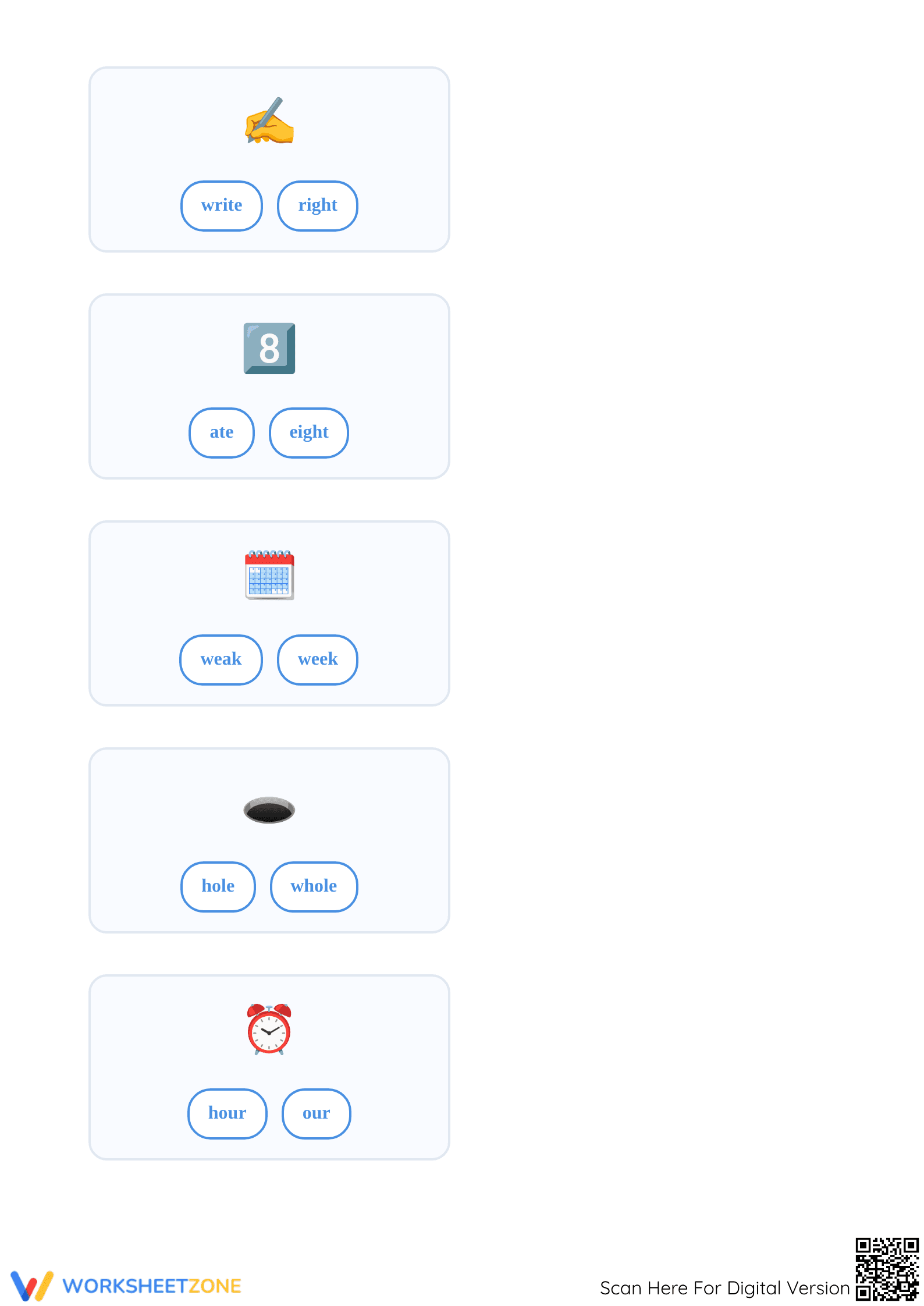

Grade 1 Homophones Adventure — Essential Printable Worksheet
Paste this activity's link or code into your existing LMS (Google Classroom, Canvas, Teams, Schoology, Moodle, etc.).
Students can open and work on the activity right away, with no student login required.
You'll still be able to track student progress and results from your teacher account.
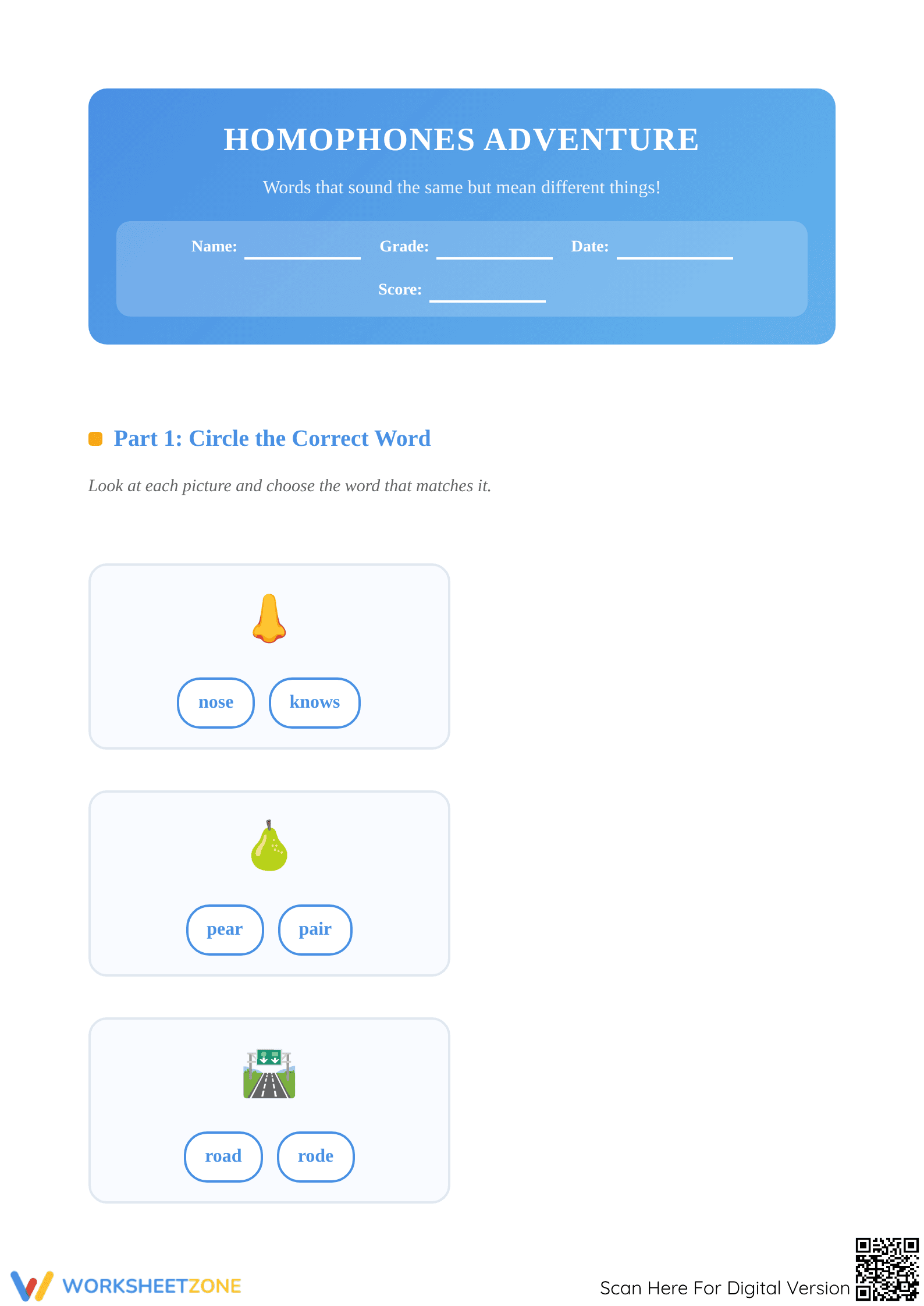
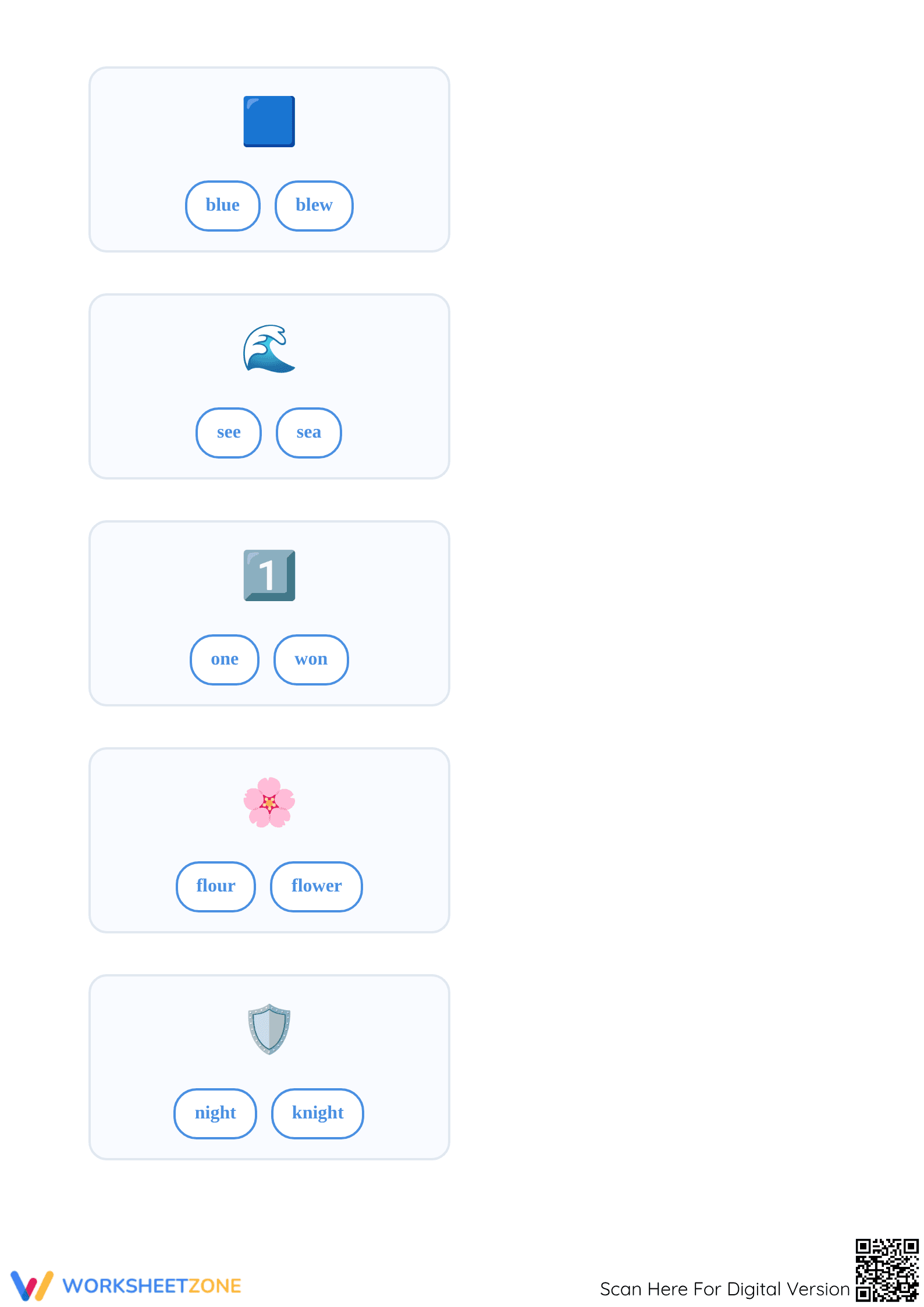
This Grade 1 ELA worksheet helps young learners master homophones through an engaging visual matching process. Students look at 22 distinct illustrations and select the correctly spelled word from pairs like nose/knows or blue/blew. By connecting sounds to visual context, children build a solid foundation for lexical accuracy and reading comprehension.
At a Glance
- Grade: 1 · Subject: ELA
- Standard:
CCSS.ELA-LITERACY.L.1.4— Identify and use common homophones by matching sounds to visual meanings- Skill Focus: Lexical Word Classes
- Format: 5 pages · 22 problems · Answer key included · PDF
- Best For: Literacy centers and early morning work
- Time: 15–20 minutes
What's Inside
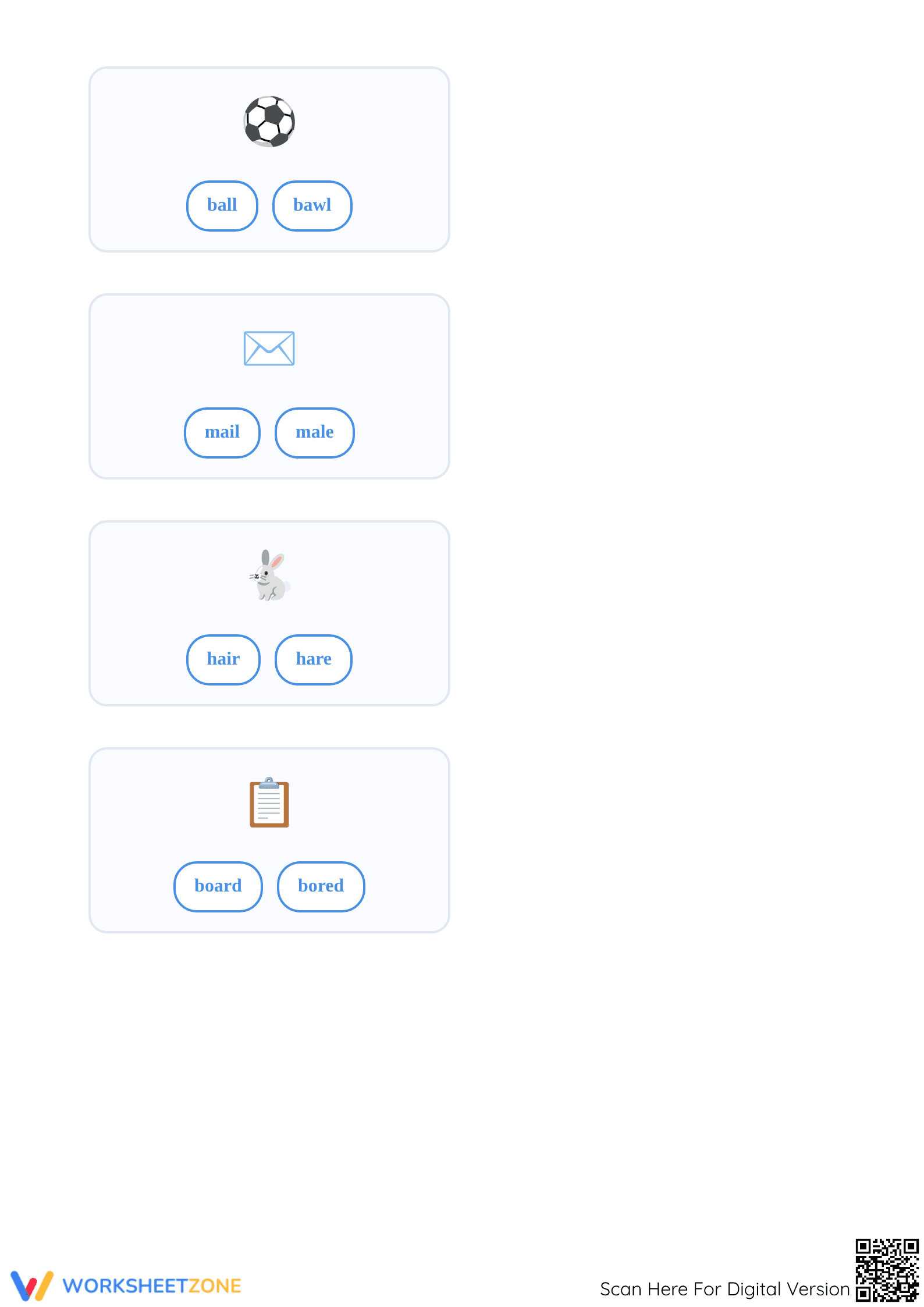
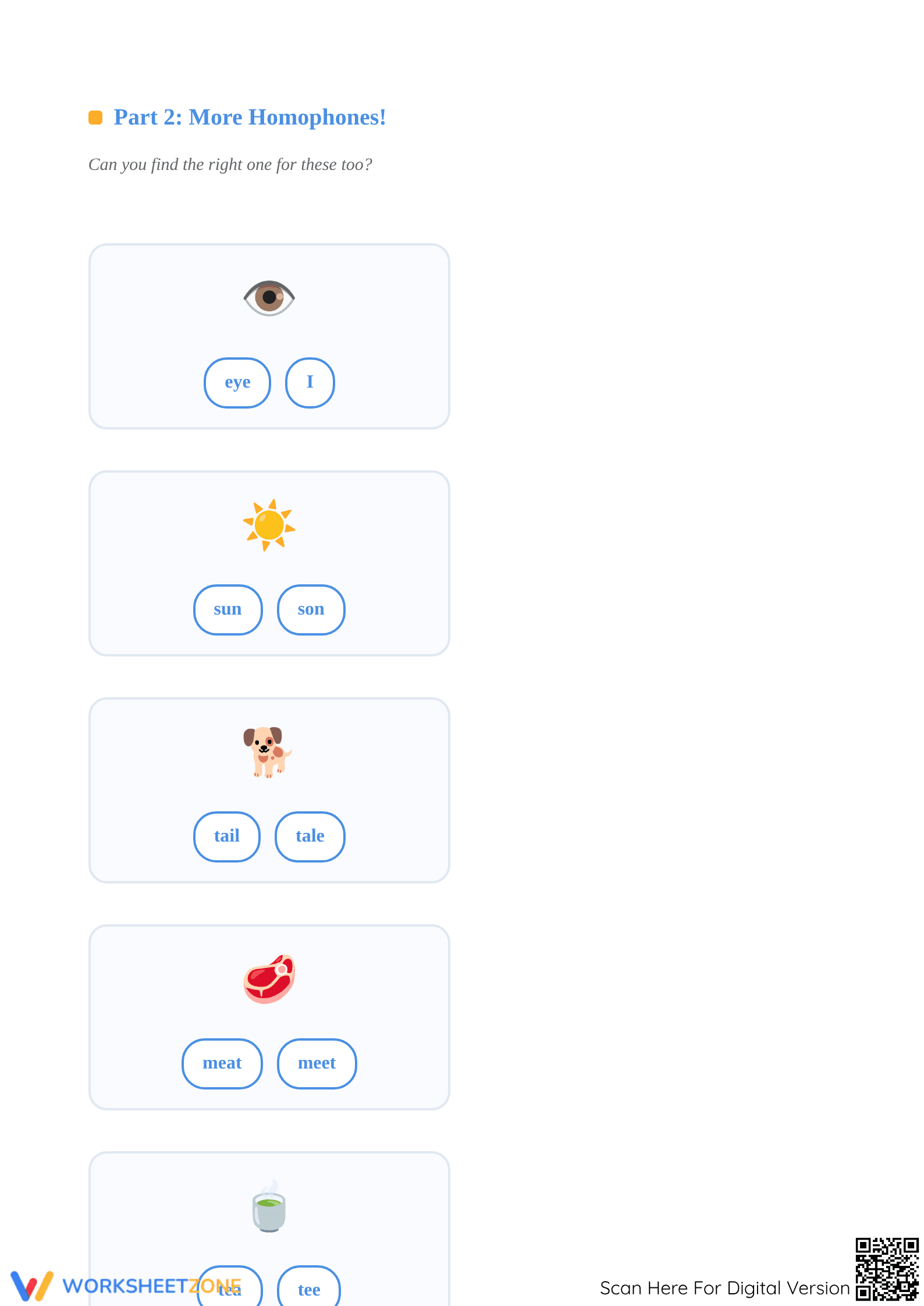
This comprehensive 5-page PDF contains two major sections of vocabulary practice. Part 1 features 12 illustrated tasks, while Part 2 offers 10 additional homophone pairs for extended practice. The layout is clean and spacious, featuring high-quality icons to represent each word, making it ideal for first-grade students. A complete answer key is provided for immediate grading or self-correction.
Zero-Prep Workflow
- Print (30 seconds): Download the PDF and send all 5 pages to your printer.
- Distribute (1 minute): Hand out the worksheets during your phonics block or as a transition activity.
- Review (1 minute): Use the included answer key to quickly check for understanding or have students self-correct during a whole-group review.
Total teacher prep time is under two minutes, making this an ideal solution for emergency sub plans or last-minute literacy rotations.
Standards Alignment
The primary standard addressed is `CCSS.ELA-LITERACY.L.1.4`, which requires students to determine or clarify the meaning of unknown and multiple-meaning words. This activity specifically targets the nuances of words that sound identical but differ in spelling and meaning. Both standard codes can be copied directly into lesson plans, IEP goals, or district curriculum mapping tools.
How to Use It
Use this packet during direct instruction to demonstrate how spelling changes word meaning. It serves as an excellent formative-assessment tool; observe if students rely on the pictures or can differentiate based on sentence context you provide orally. Expected completion time ranges from 15 to 20 minutes depending on student reading speed and phonemic awareness levels.
Who It's For
This resource is designed for first-grade students, but it also supports second-grade review and ELL populations needing visual vocabulary support. It pairs naturally with anchor charts focused on common homophones or direct instruction lessons featuring wordplay and pun-based humor.
Mastering homophones is a critical milestone in early literacy, as identified by Fisher & Frey (2014) in their research on gradual release of responsibility. When students encounter words that sound the same but look different, they must engage in orthographic mapping—the process of forming letter-sound connections to bond the spellings, pronunciations, and meanings of specific words in memory. This Grade 1 worksheet provides 22 structured opportunities for students to practice this skill using the `CCSS.ELA-LITERACY.L.1.4` standard. By providing immediate visual feedback through illustrations, the resource reduces cognitive load and allows students to focus on the lexical distinction between pairs like road/rode and tail/tale. This systematic approach ensures that lexical development is both accessible and measurable for diverse learners. Standardized assessment data from NAEP consistently highlights the importance of early vocabulary acquisition as a predictor of long-term reading success in later elementary years.


