


























Views
Downloads

Printable Homophones Worksheet | Grade 1 ELA Practice
Paste this activity's link or code into your existing LMS (Google Classroom, Canvas, Teams, Schoology, Moodle, etc.).
Students can open and work on the activity right away, with no student login required.
You'll still be able to track student progress and results from your teacher account.
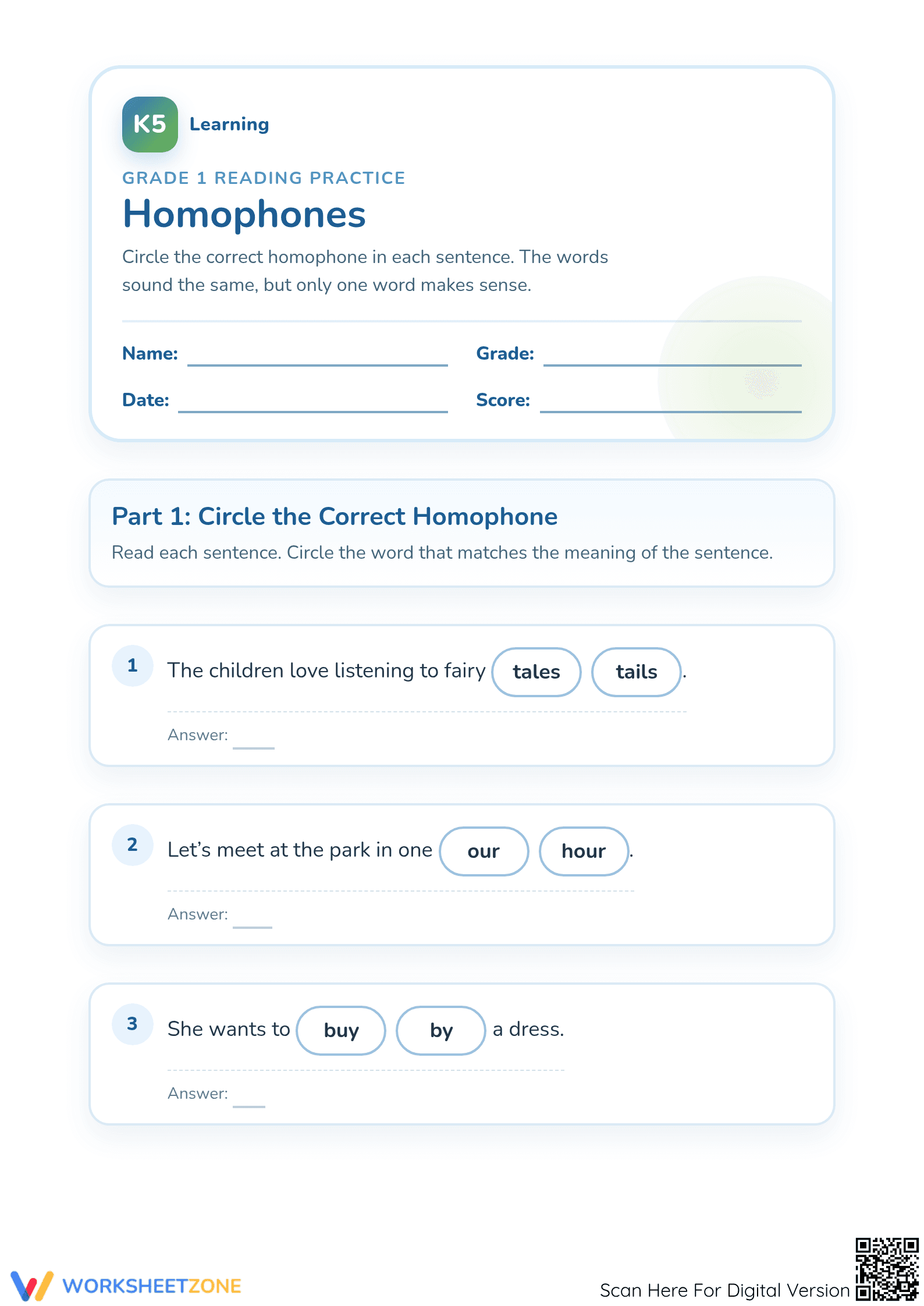
This Grade 1 homophones worksheet helps early readers distinguish between words that sound the same but have different meanings. By circling the correct word in context, students build essential lexical awareness and vocabulary precision. It provides a structured way to master common sound-alike pairs like tales/tails and see/sea through meaningful sentence completion tasks.
At a Glance
- Grade: 1 · Subject: English Language Arts (ELA)
- Standard:
CCSS.ELA-LITERACY.L.1.4— Use context to determine which sound-alike word fits the sentence correctly- Skill Focus: Homophones and Context Clues
- Format: 3 pages · 10 problems · Answer key included · PDF
- Best For: Independent practice or literacy centers
- Time: 15–20 minutes
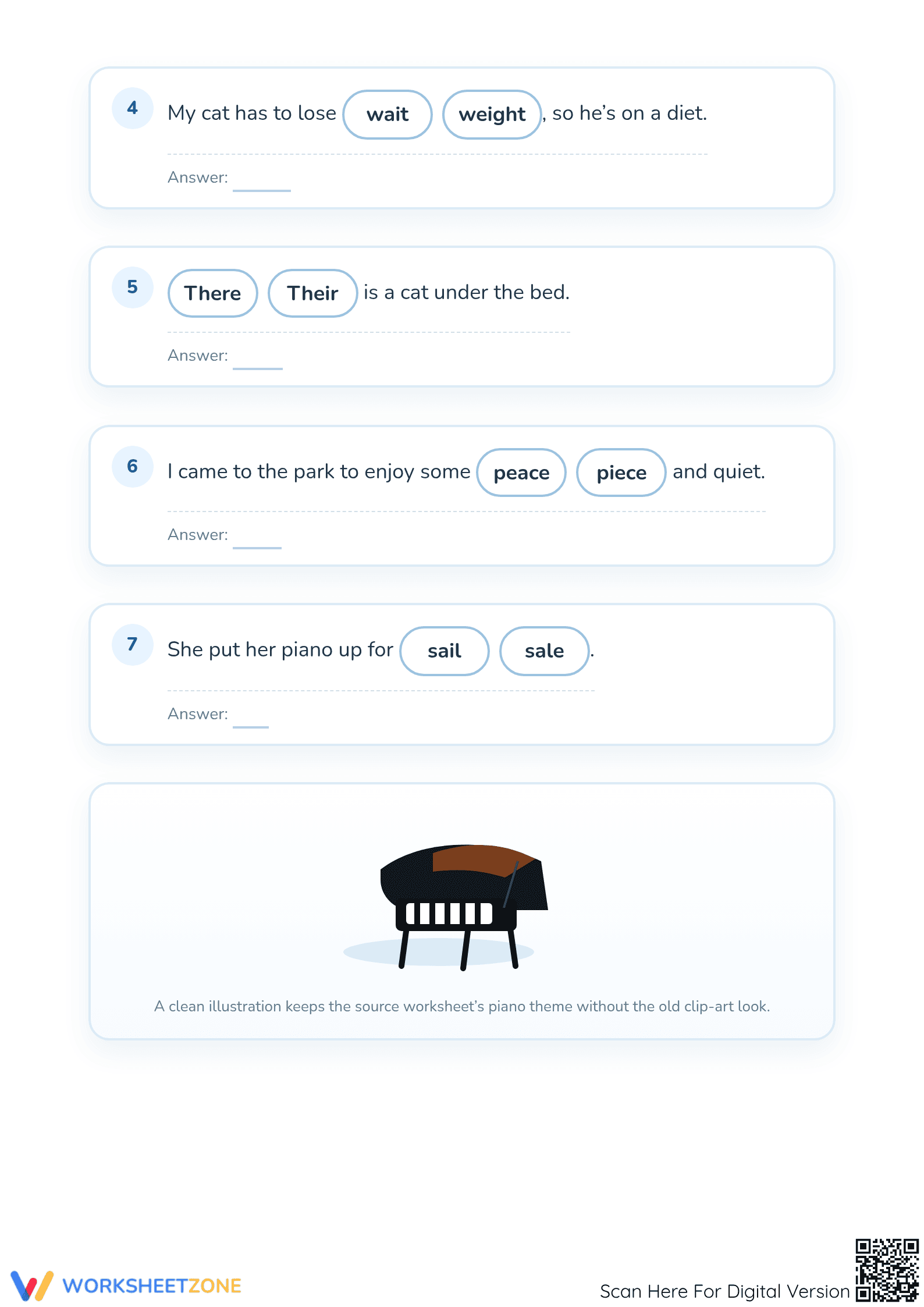
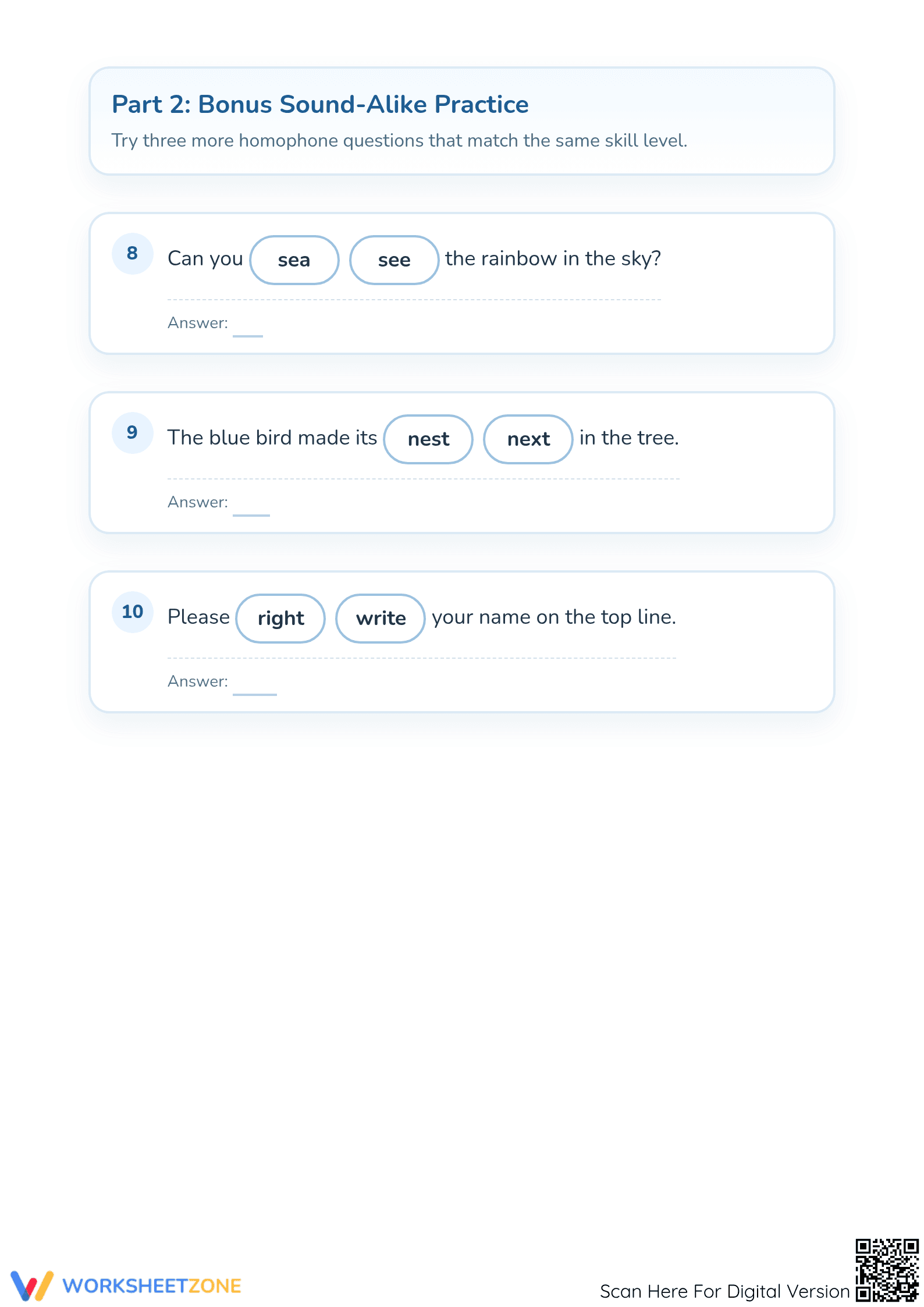
The resource contains three pages of focused practice. Part 1 features seven sentences where students choose between two homophones (e.g., "buy" vs "by"). Part 2 offers a "Bonus Sound-Alike Practice" section with three additional items. The layout is clean and spacious, including dedicated answer lines and a visual cue on page two to maintain student engagement. A complete answer key is provided for quick grading.
This worksheet is designed for immediate classroom implementation. Teachers can Print the three-page PDF in under 30 seconds. Distribute the copies to students at the start of a literacy block (1 minute). Review the work using the included answer key during the final five minutes of the lesson for instant feedback. Total teacher preparation time is less than two minutes, making it ideal for busy mornings or sudden sub plans.
The primary focus is CCSS.ELA-LITERACY.L.1.4, which requires students to determine or clarify the meaning of unknown and multiple-meaning words and phrases. This worksheet specifically addresses sound-alike words that change meaning based on spelling. It also supports CCSS.ELA-LITERACY.L.1.2.E, focusing on spelling patterns. Both standard codes can be copied directly into lesson plans, IEP goals, or district curriculum mapping tools.
Use this as a "You Do" activity following a direct instruction lesson on homophones. Teachers can observe students as they read the sentences aloud to ensure they aren't just guessing based on the sounds. It also works well as a formative assessment exit ticket. Have students explain why they chose "tails" over "tales" to check for deeper conceptual understanding. Completion usually takes 15 to 20 minutes.
This worksheet is primarily for Grade 1 students, though it serves as an excellent review for Grade 2 learners or a challenge for advanced Kindergartners. It is a natural pairing for any phonics-based reading passage or a "Word of the Day" anchor chart. The clear font and simple instructions also make it accessible for English Language Learners (ELLs) practicing basic vocabulary.
Mastering homophones is a critical milestone in early literacy, as it bridges the gap between phonetic decoding and semantic comprehension. According to Fisher & Frey (2014), providing students with structured opportunities to distinguish between multiple-meaning words in context significantly enhances their overall reading fluency and lexical depth. This worksheet targets CCSS.ELA-LITERACY.L.1.4 by presenting 10 targeted problems that require students to evaluate word choice based on sentence meaning rather than sound alone. Research indicates that early exposure to these nuances prevents common spelling errors and improves writing clarity in later grades. By using this printable resource, educators provide a proven method for reinforcing these foundational English Language Arts skills within a standard classroom setting. The inclusion of an answer key ensures that instructional time is maximized while providing students with the immediate reinforcement necessary for mastery and confidence in their expanding vocabulary.


