


























Views
Downloads

Printable Homophones Worksheet | Grade 1 ELA Aligned
Paste this activity's link or code into your existing LMS (Google Classroom, Canvas, Teams, Schoology, Moodle, etc.).
Students can open and work on the activity right away, with no student login required.
You'll still be able to track student progress and results from your teacher account.
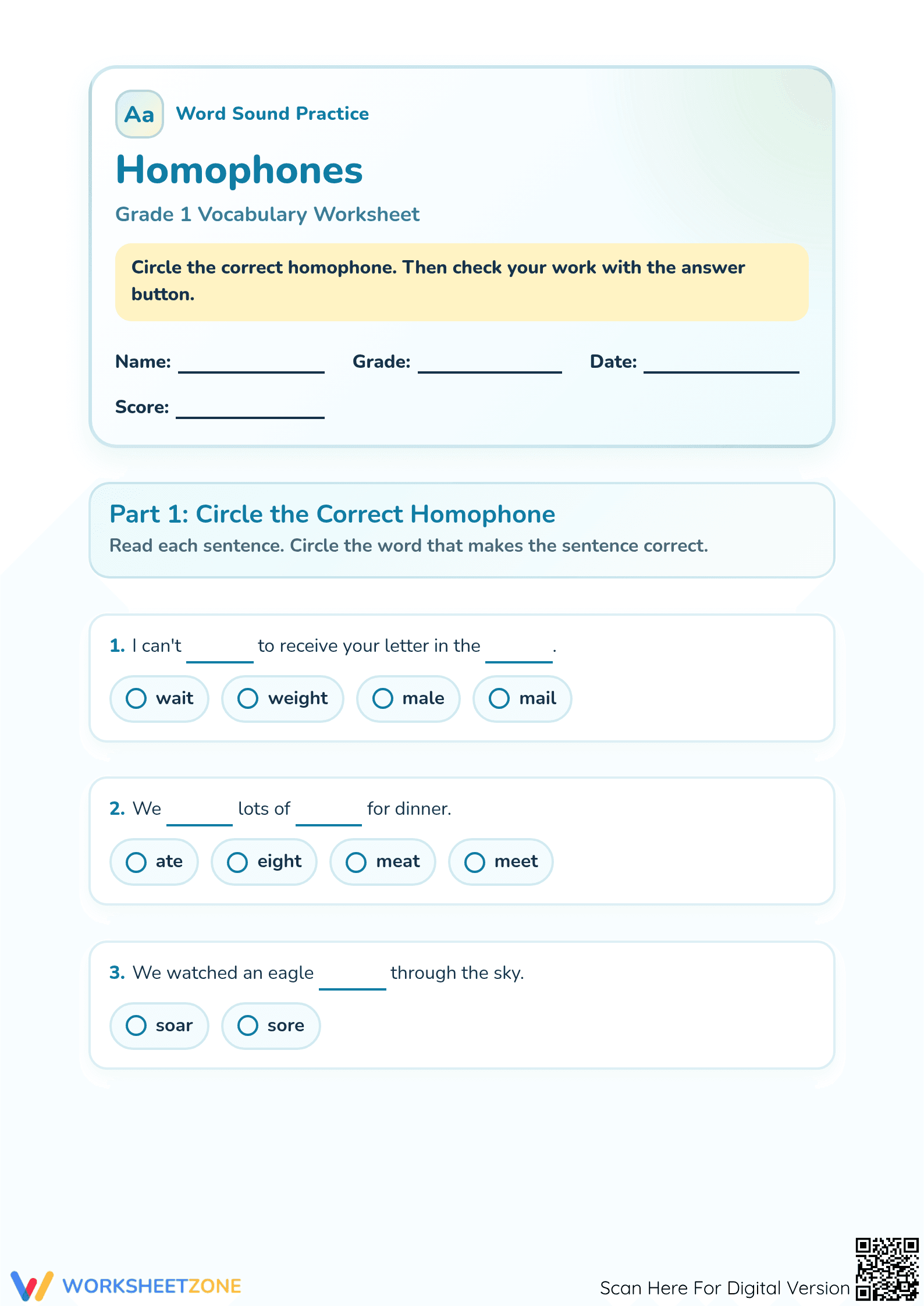
This Essential Grade 1 homophones worksheet helps students master frequently confused word pairs through sentence-level context. By identifying the correct spelling of words like "wait/weight" and "sun/son," learners build vital vocabulary and spelling foundations. This resource ensures students can distinguish between lexical sounds and meanings, leading to improved reading comprehension and writing accuracy.
At a Glance
- Grade: 1 · Subject: English Language Arts
- Standard:
CCSS.ELA-LITERACY.L.1.4— Use sentence-level context as a clue to the meaning of a word or phrase.- Skill Focus: Homophones and Word Sound Discrimination
- Format: 4 pages · 15 problems · Answer key included · PDF
- Best For: Literacy centers and independent practice sessions
- Time: 15–20 minutes
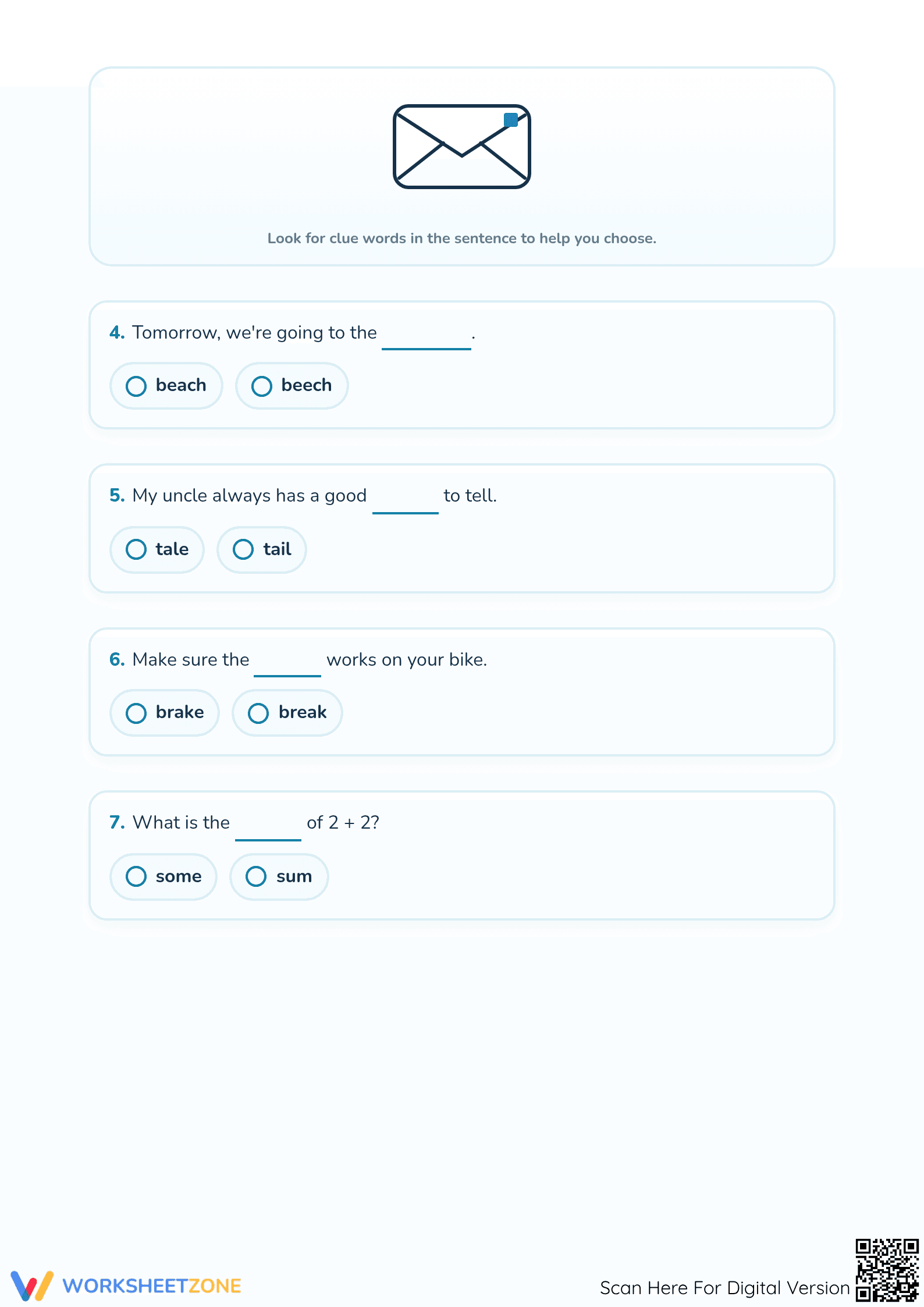
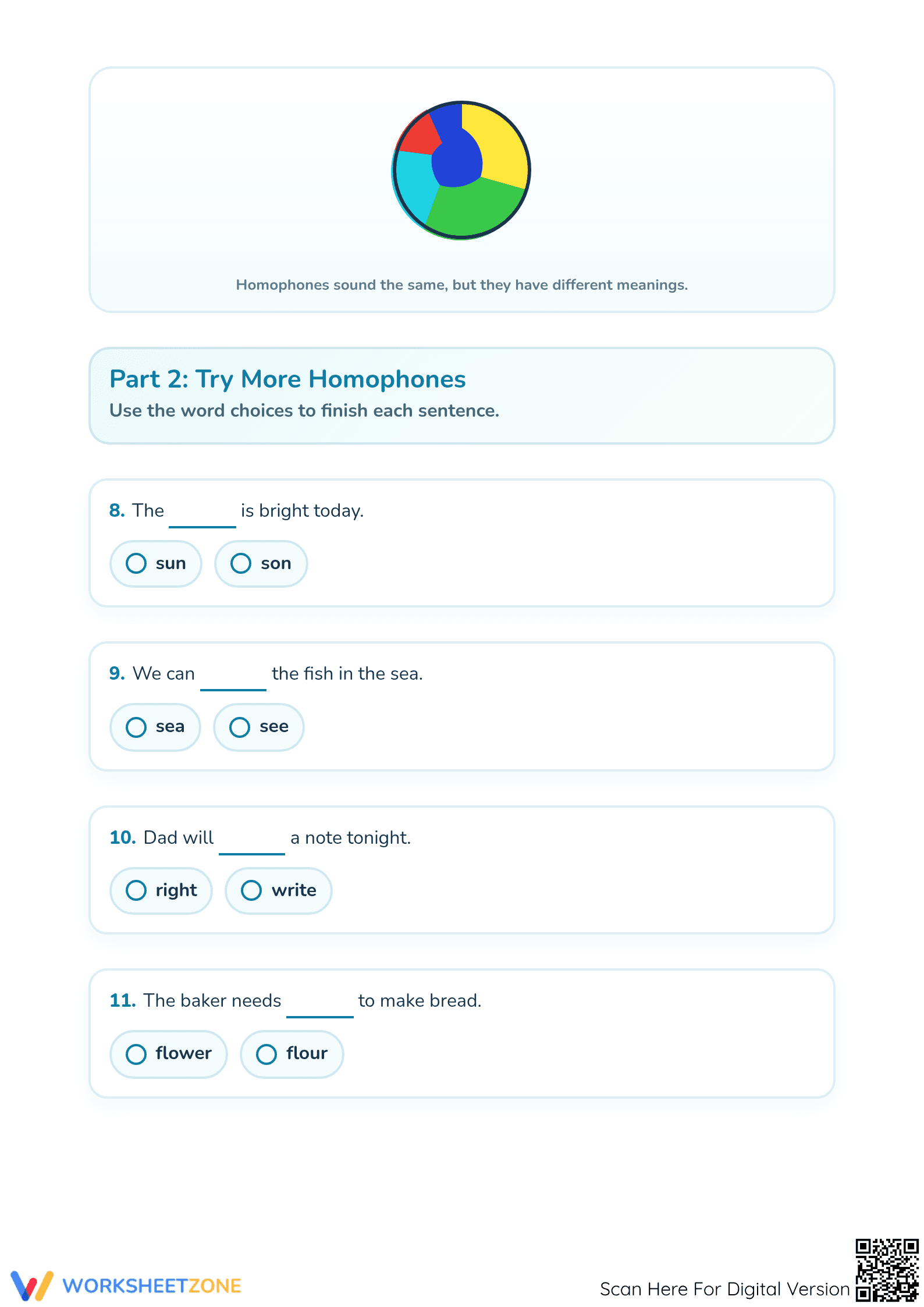
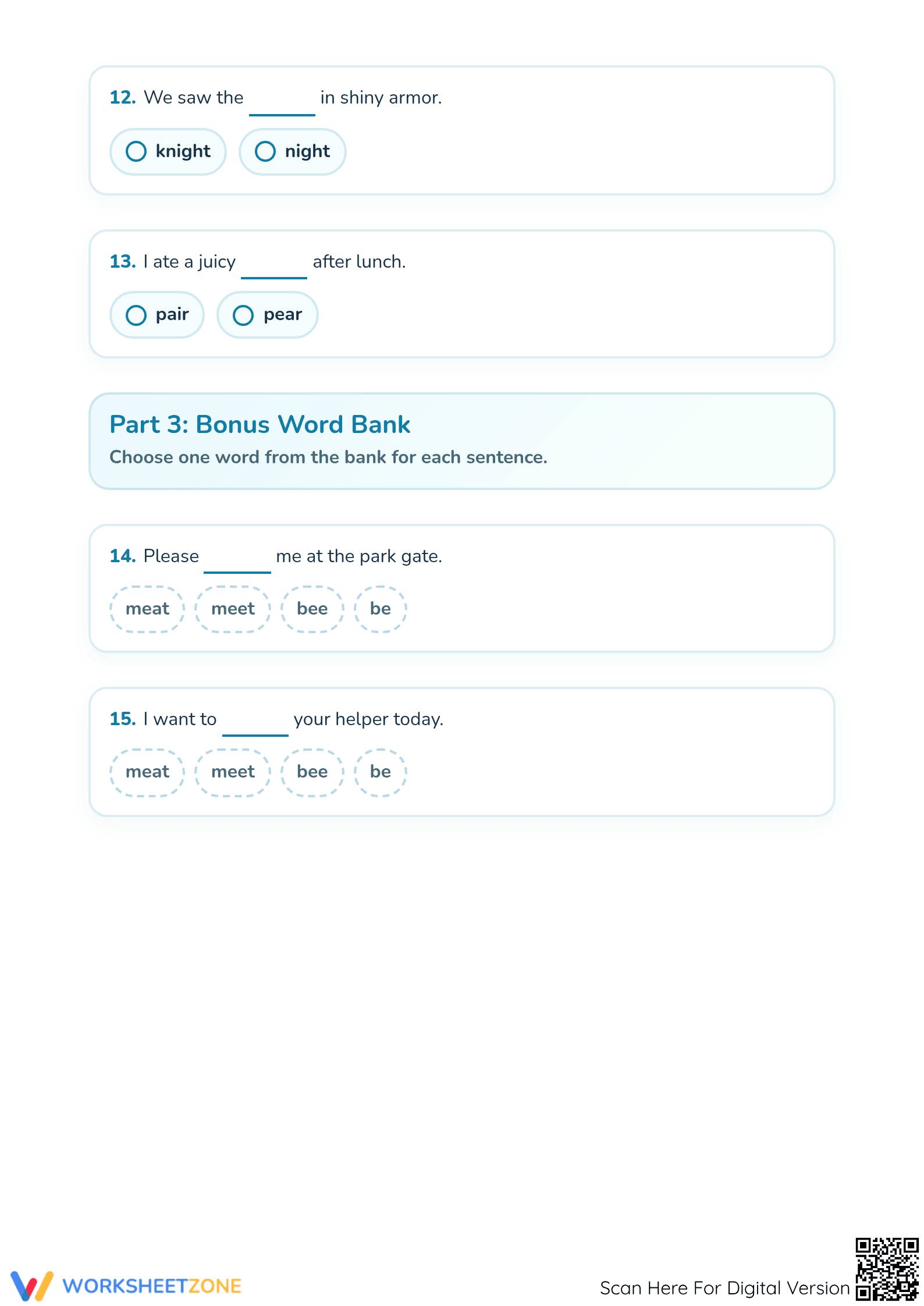
This comprehensive 4-page resource contains 15 structured problems divided into three distinct sections. Part 1 and Part 2 utilize a multiple-choice format, providing visual scaffolding through clue words and illustrations. Part 3 introduces a bonus word bank challenge, requiring students to apply their knowledge to new sentences. The clear typeface and generous white space are designed for early elementary learners.
Implementing this activity requires zero teacher preparation beyond basic printing. 1. Print: Send the 4-page PDF to your printer in seconds. 2. Distribute: Hand out the sheets for immediate independent use or as a quiet sub-plan activity. 3. Review: Use the included answer key to check student progress in under 2 minutes. This streamlined workflow provides high-quality content without setup time.
The primary focus of this worksheet is CCSS.ELA-LITERACY.L.1.4, requiring students to determine or clarify word meanings. It specifically targets using sentence-level context clues to choose the correct homophone. Additionally, the resource supports spelling conventions through repeated exposure to lexical patterns. Both standard codes can be copied directly into lesson plans, IEP goals, or district curriculum mapping tools.
This worksheet is best used during the independent practice phase of a vocabulary lesson. After a direct instruction session on words that sound the same, assign the first two pages to gauge understanding. As a formative assessment, observe if students are reading the entire sentence for context. For a collaborative extension, have students work in pairs to act out meanings of word bank items.
Designed for Grade 1 students, this resource is also suitable for Kindergarteners ready for advanced phonics or Grade 2 students needing remedial support. The visual aids and repetitive structure benefit English Language Learners by providing concrete examples of word usage. It pairs naturally with a homophone-themed picture book or classroom anchor charts displaying word pairs like sea and see.
The systematic identification of homophones is a critical milestone in early literacy development, as noted in the ScienceDirect TpT Analysis. Research indicates that explicit practice with multiple-meaning words improves the cognitive flexibility required for fluent reading. This worksheet aligns with CCSS.ELA-LITERACY.L.1.4 by providing 15 targeted opportunities for students to apply context clues to word sound practice. By isolating homophones within meaningful sentences, the activity bridges the gap between phonetic awareness and semantic understanding. Fisher & Frey (2014) emphasize that such scaffolded vocabulary tasks are essential for building a robust internal lexicon. Providing clear visual cues and a structured word bank allows first graders to navigate the complexities of English spelling with confidence. This resource serves as a printable assessment tool that reliably measures a student's ability to discriminate between words that sound identical but perform different grammatical functions.


