


























Views
Downloads


Home Decor Worksheet | Grade 3 Essential Vocabulary
Paste this activity's link or code into your existing LMS (Google Classroom, Canvas, Teams, Schoology, Moodle, etc.).
Students can open and work on the activity right away, with no student login required.
You'll still be able to track student progress and results from your teacher account.
This Home Decor Word Search and Vocabulary set helps students master domain-specific language through interactive puzzles and creative application. By identifying, sorting, and describing household items, learners build strong semantic connections and improve their descriptive writing skills. It is a comprehensive tool for enhancing environmental vocabulary in elementary classrooms.
At a Glance
- Grade: 3 · Subject: English Language Arts
- Standard:
CCSS.ELA-LITERACY.L.3.6— Acquire and use domain-specific words and phrases related to home environments- Skill Focus: Interior Design Vocabulary & Categorization
- Format: 3 pages · 32 tasks · Answer key included · PDF
- Best For: Literacy centers and independent vocabulary practice
- Time: 25–35 minutes
What's Inside
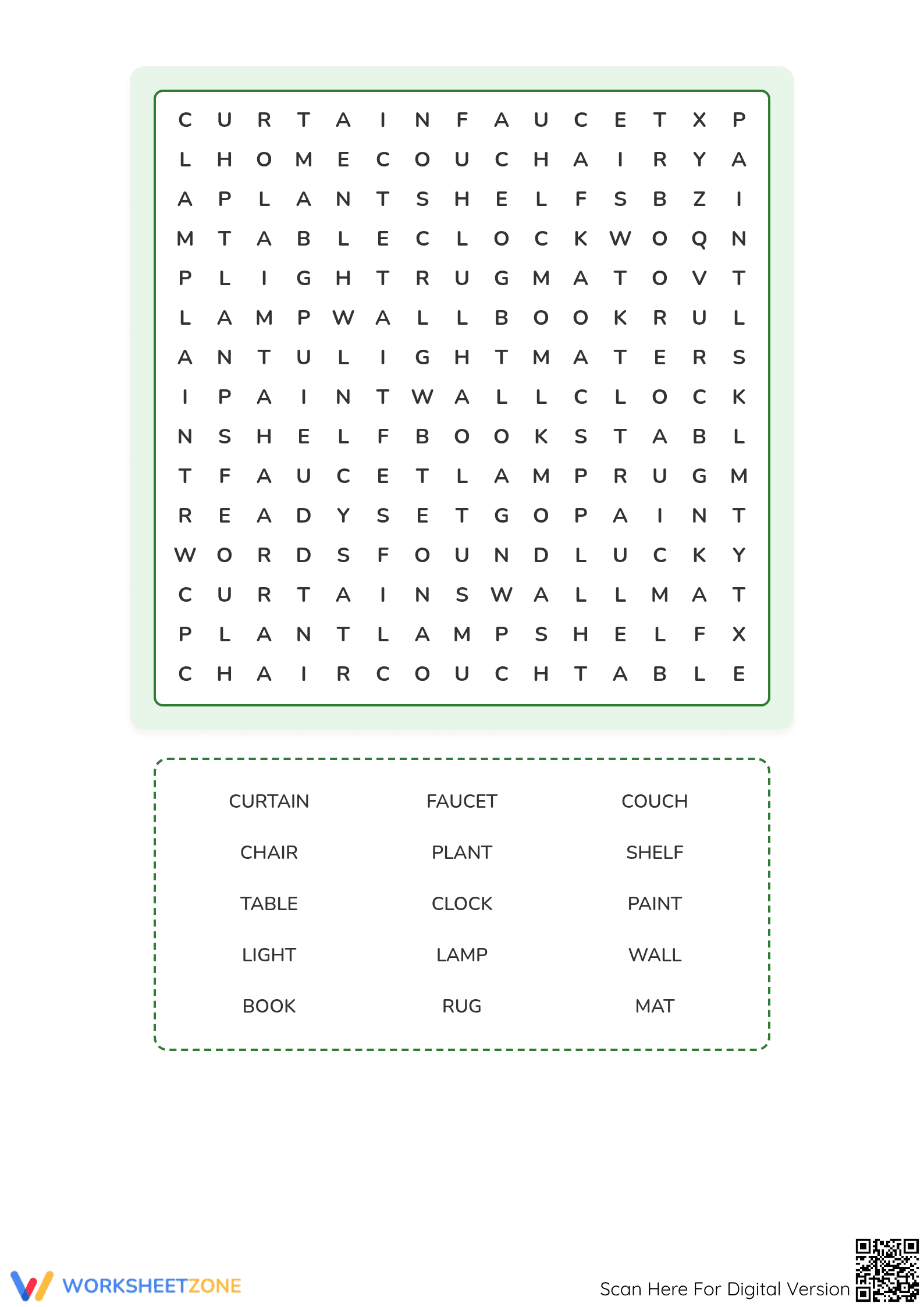
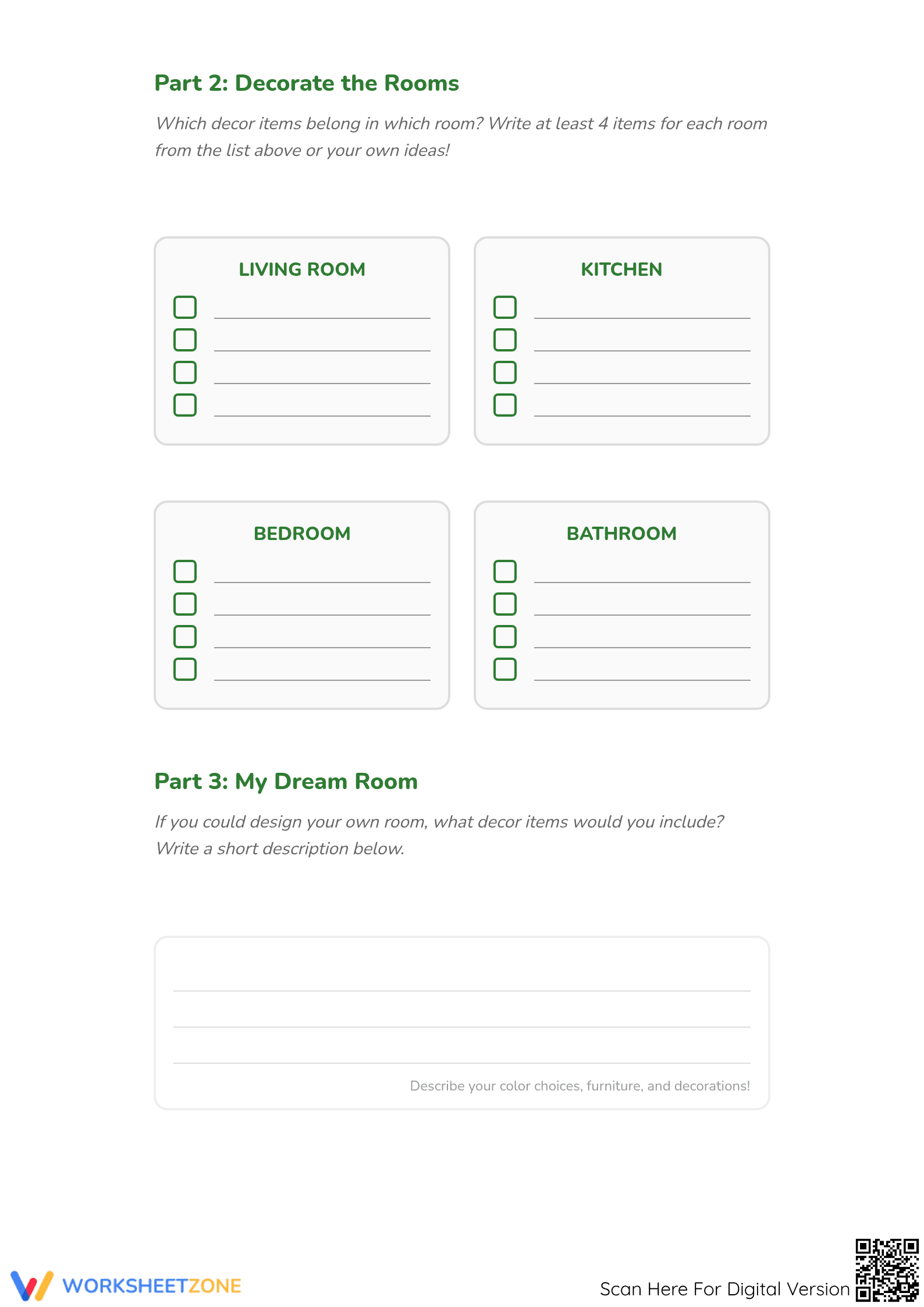
This three-page PDF packet contains a variety of engaging activities designed for grade-appropriate vocabulary acquisition. Page one provides space for student notes. Page two features a 15-word grid search with a clear word bank for support. Page three shifts to higher-order thinking with a categorization task across four major rooms and a creative "Dream Room" design prompt. A full answer key ensures quick grading.
Zero-Prep Workflow
Teachers can implement this resource in under two minutes with a simple three-step process. First, print the three-page PDF set. Second, distribute the packets as an independent morning work activity or a literacy center rotation. Finally, use the included answer key for a quick teacher check. This self-contained structure makes it an ideal choice for emergency sub plans or quiet-time transitions.
Standards Alignment
The primary alignment is `CCSS.ELA-LITERACY.L.3.6`, which requires students to acquire and use accurately grade-appropriate general academic and domain-specific words and phrases. This worksheet specifically targets the "domain-specific" aspect by focusing on household furnishings and decorative elements. This standard code can be copied directly into lesson plans, IEP goals, or district curriculum mapping tools.
How to Use It
Use this worksheet as a formative assessment after a unit on communities to see how well students can apply specific terminology. Alternatively, assign it as a "bridge" activity to prepare students for a descriptive narrative writing assignment about their homes. During the room categorization task, observe if students can justify why certain items like a "mat" might belong in multiple rooms.
Who It's For
This resource is designed for Grade 2 through Grade 4 students, particularly those who benefit from visual-spatial tasks. It is an excellent fit for English Language Learners (ELL) who need concrete vocabulary support. Pair this worksheet with a home-decor magazine collage project to extend the learning into a multi-sensory experience that reinforces these essential domain-specific terms.
According to the EdReports 2024 analysis of elementary literacy materials, the integration of domain-specific vocabulary within familiar contexts is a critical factor in long-term reading comprehension. This worksheet aligns with the standard CCSS.ELA-LITERACY.L.3.6 by providing structured opportunities for students to engage with "home decor" terminology through a tiered approach of identification, classification, and descriptive application. Research from the NAEP underscores that students who possess a rich bank of everyday vocabulary are better equipped to tackle complex informational texts in later grades. By moving from the "Find the Words" search to the "Decorate the Rooms" categorization, the resource supports cognitive retrieval and semantic mapping. This standalone summary confirms the resource's utility as a research-backed supplement for elementary language arts instruction, ensuring students meet grade-level expectations for vocabulary acquisition and usage in real-world scenarios.


