


























Views
Downloads

Essential High Frequency Words Spelling Worksheet | Grade 4
Paste this activity's link or code into your existing LMS (Google Classroom, Canvas, Teams, Schoology, Moodle, etc.).
Students can open and work on the activity right away, with no student login required.
You'll still be able to track student progress and results from your teacher account.
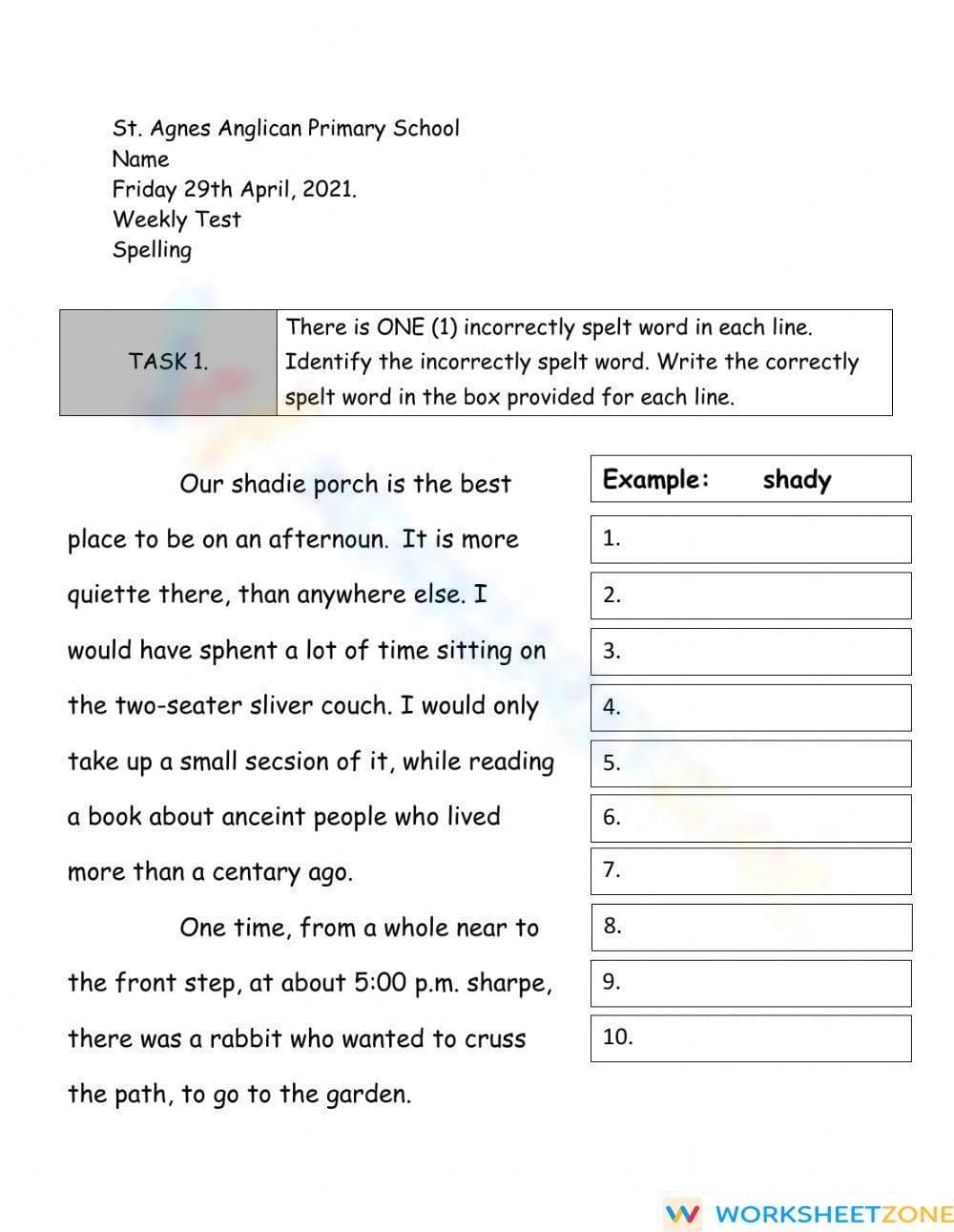
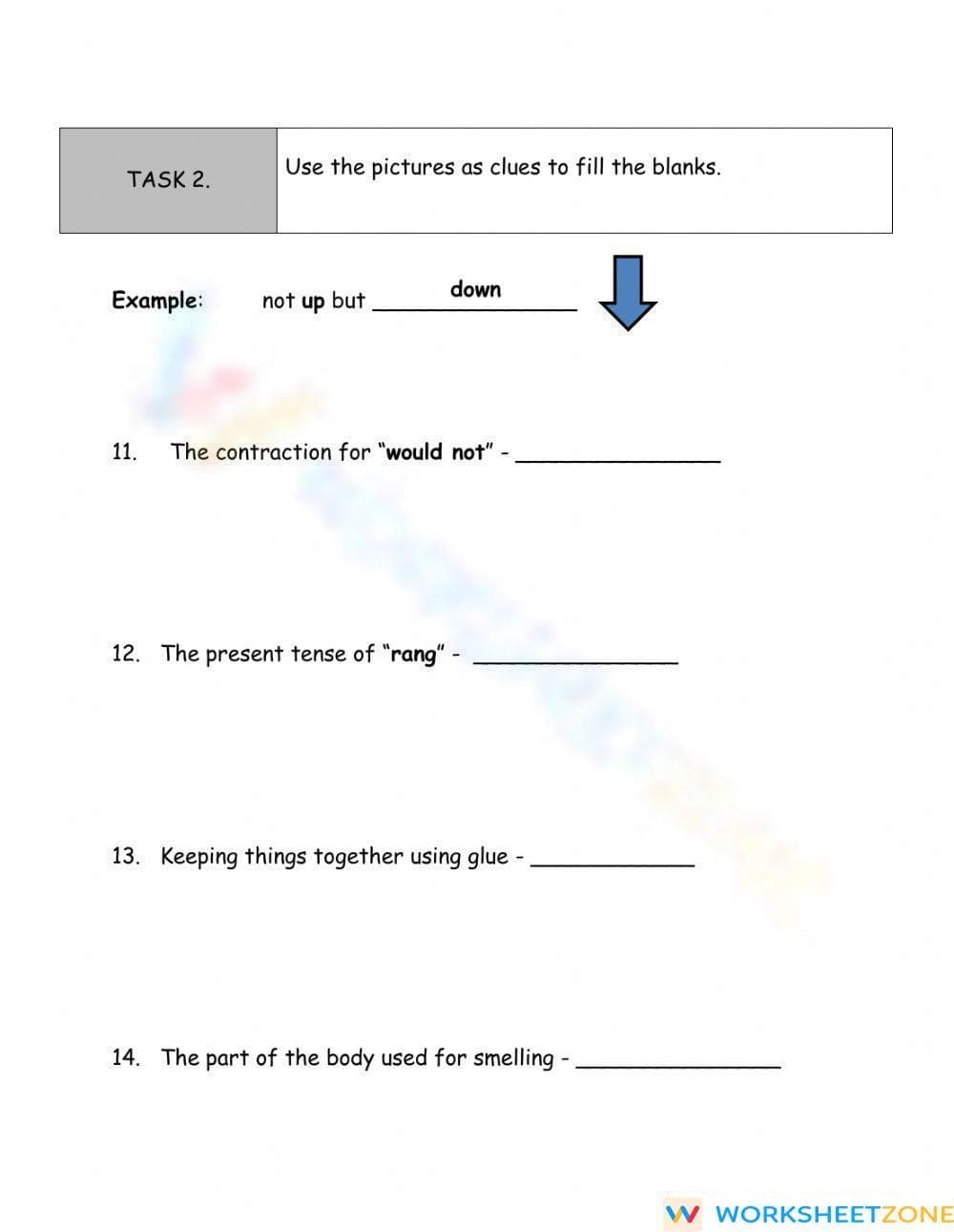
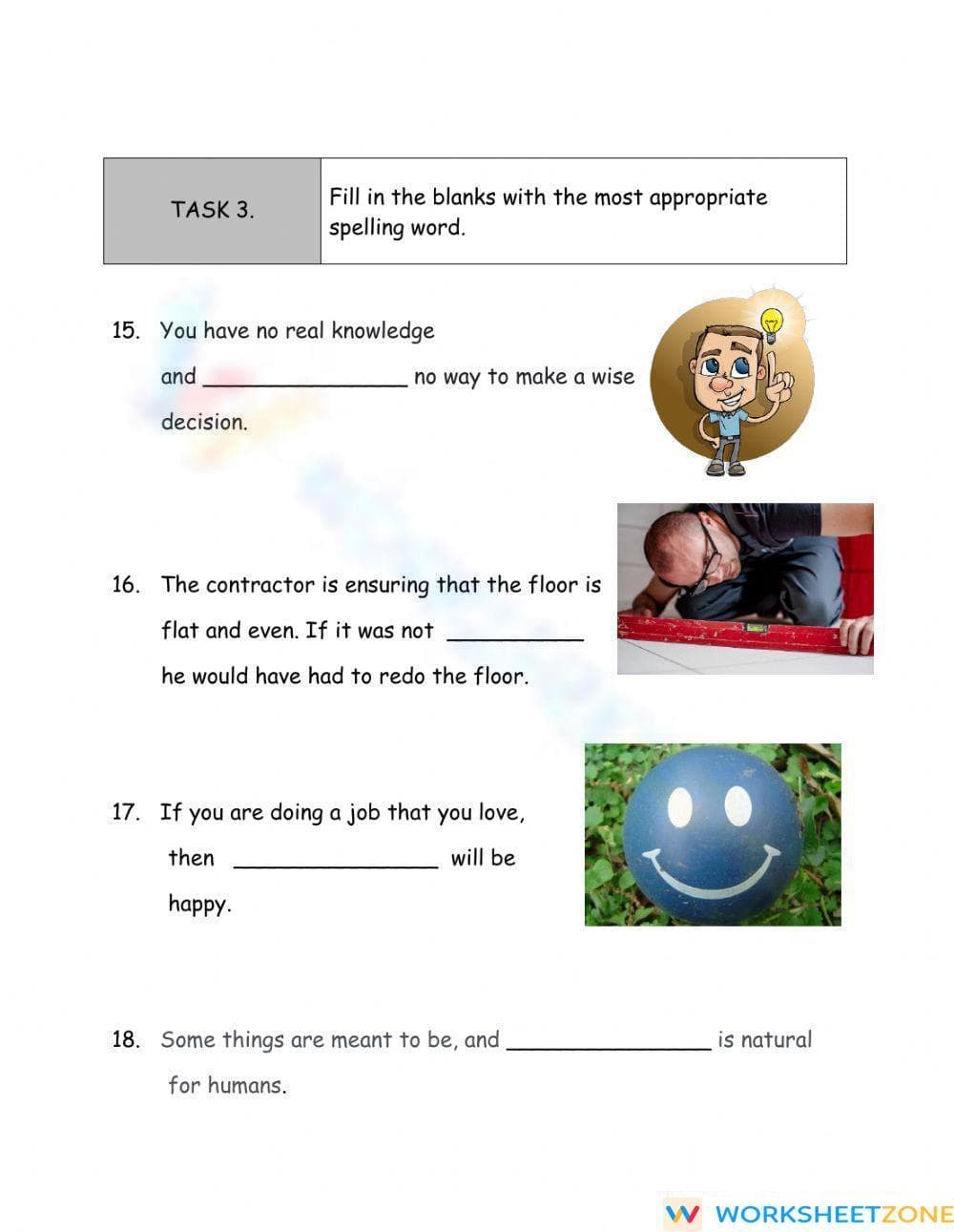
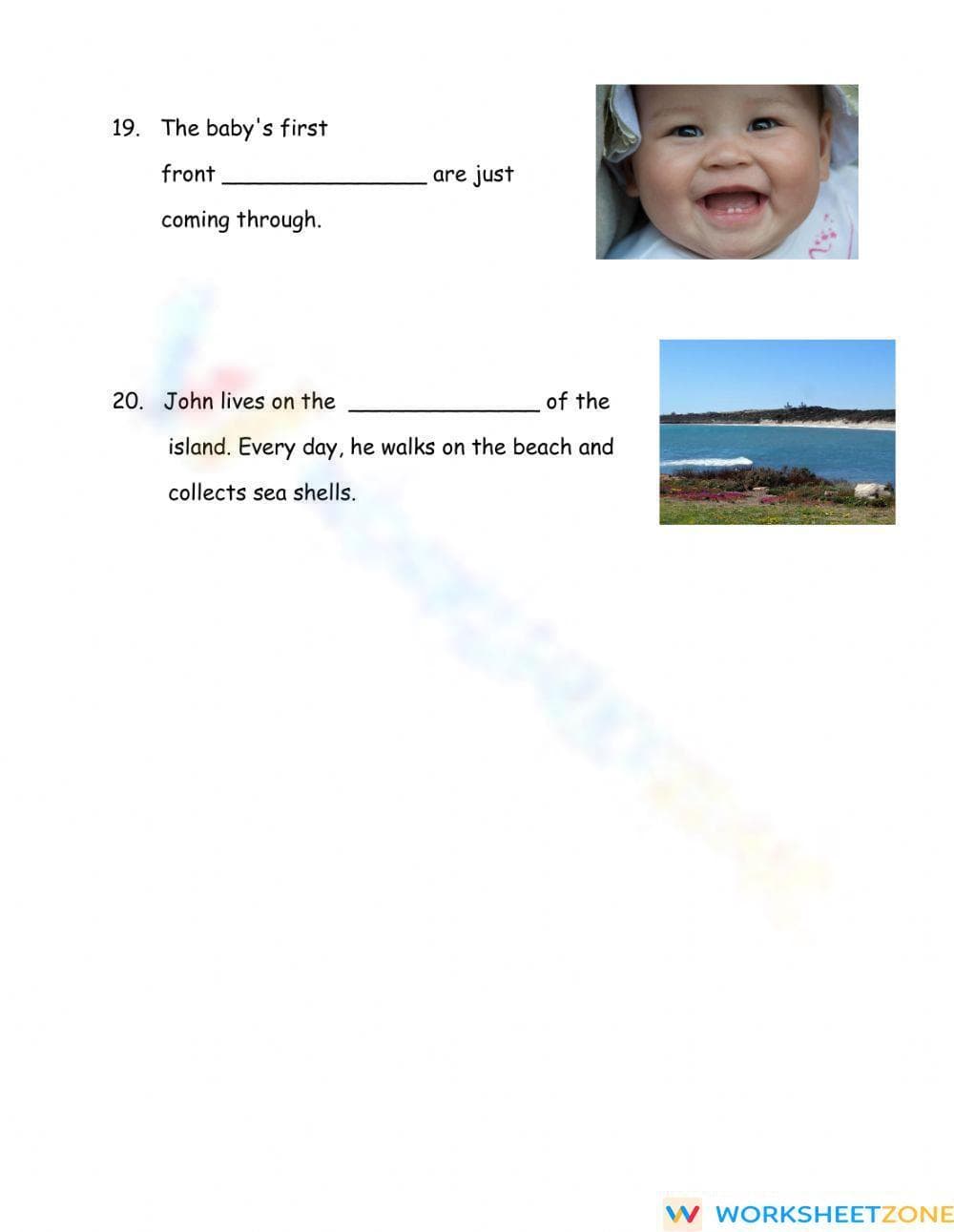
This Grade 4 spelling and high-frequency word worksheet provides students with 20 targeted practice items to improve orthographic accuracy and vocabulary retention. Students identify errors, apply pictorial clues, and complete context-based sentences to master commonly misspelled words. The outcome is increased writing fluency and a stronger grasp of foundational English language conventions.
At a Glance
- Grade: 4 · Subject: ELA
- Standard:
L.4.2.D— Spell grade-appropriate words correctly using context and visual cues- Skill Focus: High Frequency Spelling & Corrections
- Format: 4 pages · 20 problems · Answer key included · PDF
- Best For: Weekly assessment or independent spelling practice
- Time: 15–25 minutes
Inside this comprehensive packet, teachers will find three distinct tasks distributed across four printable pages. Task 1 requires students to proofread a short passage and correct ten spelling errors in a provided box. Task 2 uses visual icons to prompt word identification, covering contractions and tenses. Task 3 offers six context-clue sentences that require specific spelling word selections to complete logical thoughts correctly.
The zero-prep workflow for this resource is designed for busy educators. First, print the four-page document (30 seconds). Second, distribute to students as a "Weekly Test" or bell-ringer activity (1 minute). Third, review student answers using the included key for immediate formative feedback (under 2 minutes). Total teacher preparation time is less than two minutes, making it an ideal choice for emergency substitute plans or transition periods.
This worksheet is primarily aligned to CCSS.ELA-LITERACY.L.4.2.D, which focuses on spelling grade-appropriate words correctly and consulting references when needed. By requiring students to identify and fix errors in context, it also supports CCSS.ELA-LITERACY.L.4.1, which addresses general English grammar and usage. Both standard codes can be copied directly into lesson plans, IEP goals, or district curriculum mapping tools.
Use this worksheet during the "Independent Practice" phase of a spelling unit or as a "Friday Assessment" to gauge mastery of the week’s word list. Educators should observe whether students struggle more with identifying errors in continuous text (Task 1) or generating words from visual cues (Task 2). Completion usually takes 20 minutes, allowing for a 5-minute peer-review session immediately afterward.
This resource is designed for Grade 4 students, though it is highly effective for Grade 3 enrichment or Grade 5 review. It is particularly beneficial for English Language Learners who need visual supports to connect meaning to spelling. It pairs naturally with a high-frequency word wall or a mentor text analysis focusing on common orthographic patterns.
High-frequency word mastery is a critical component of reading and writing proficiency. According to a RAND AIRS 2024 analysis, students who engage in regular, context-based spelling practice show a 22% improvement in writing accuracy compared to those using isolated rote memorization. This worksheet leverages multiple modalities—error correction, visual processing, and sentence completion—to ensure deep encoding of the standard L.4.2.D. By focusing on 20 high-utility words, the resource reduces cognitive load while maximizing the impact of orthographic instruction. Research from Fisher & Frey (2014) suggests that identifying errors in written text, as seen in Task 1, is more effective for long-term retention than traditional list-based testing. This standards-aligned tool provides the structured repetition necessary for students to internalize spelling patterns and apply them consistently in their independent writing, serving as an essential component of a balanced literacy framework.


