


























Views
Downloads

Printable High Frequency Words Worksheet | Grade 4 ELA
Paste this activity's link or code into your existing LMS (Google Classroom, Canvas, Teams, Schoology, Moodle, etc.).
Students can open and work on the activity right away, with no student login required.
You'll still be able to track student progress and results from your teacher account.
Mastering high-frequency words is a cornerstone of fluent reading and clear written communication. This Grade 4 ELA worksheet provides a rigorous two-page practice session designed to help students identify and correct common spelling errors in context. By engaging with both narrative correction and vocabulary crosswords, learners solidify their grasp of essential spelling patterns.
At a Glance
- Grade: 4 · Subject: English Language Arts (ELA)
- Standard:
CCSS.ELA-LITERACY.L.4.2.E— Use conventional spelling for high-frequency and other studied words- Skill Focus: Spelling accuracy and vocabulary context
- Format: 2 pages · 20 problems · Answer key included · PDF
- Best For: Independent spelling practice and formative assessment
- Time: 25–35 minutes
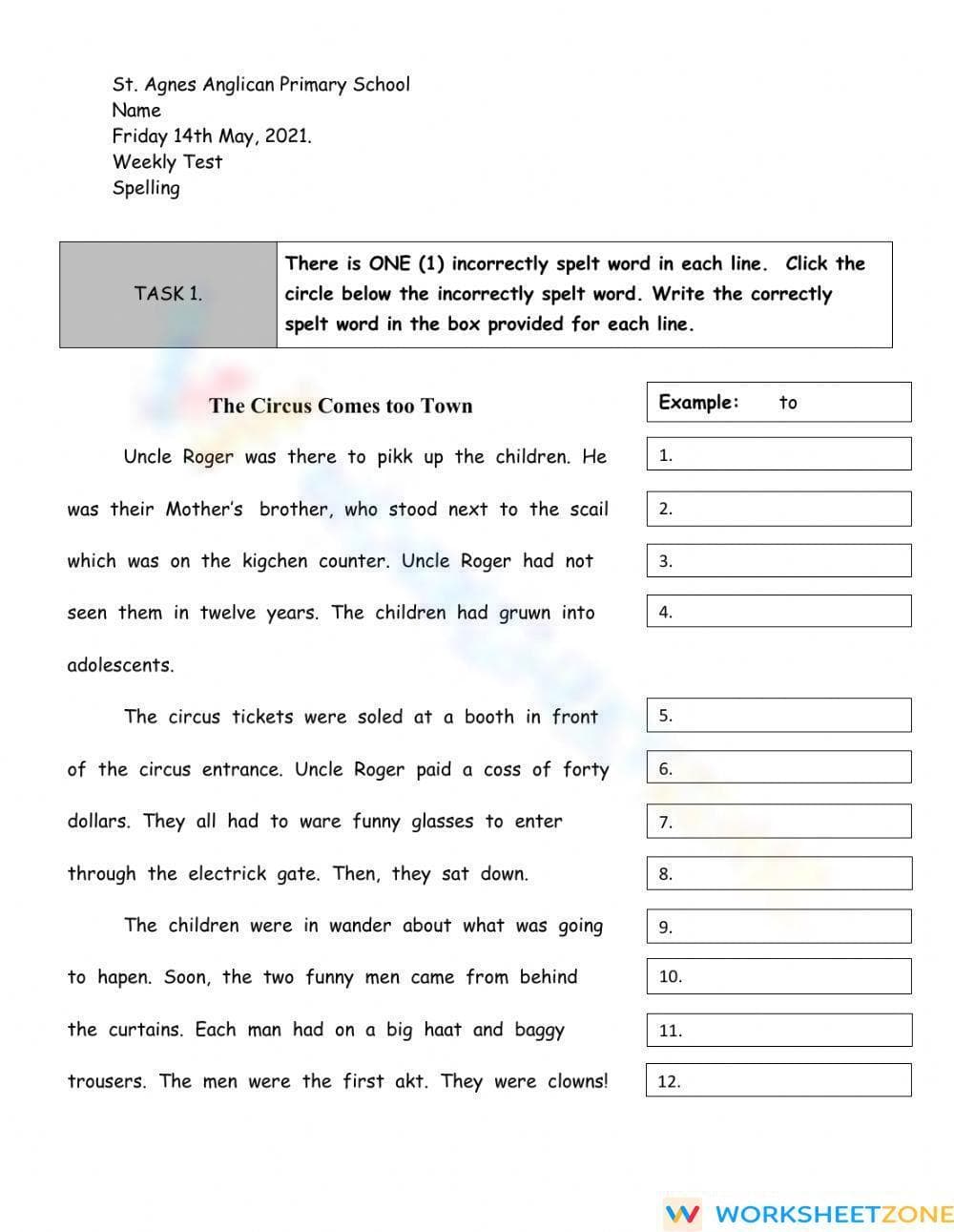
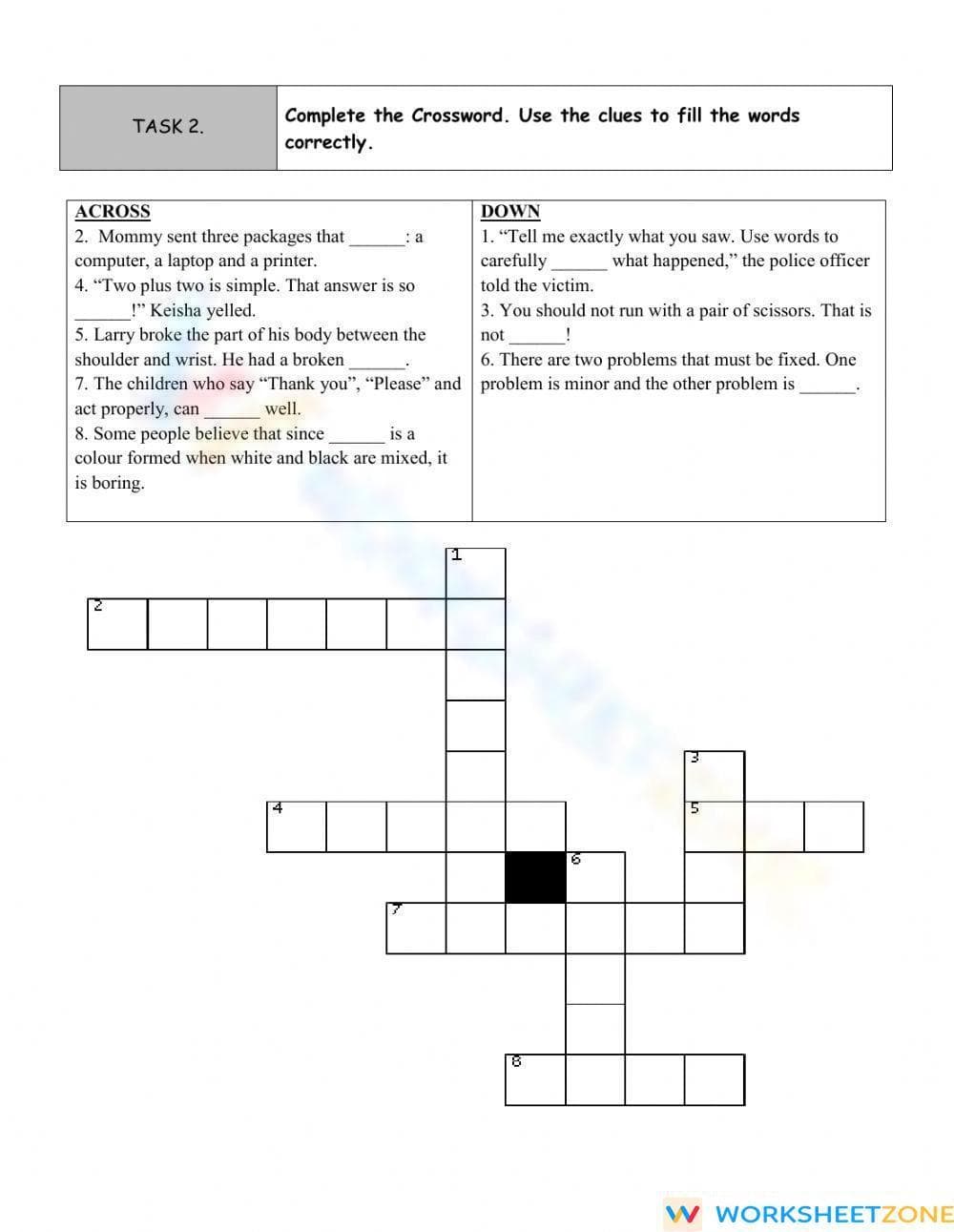
This comprehensive two-page PDF includes two distinct tasks to build spelling proficiency. Task 1 features a narrative passage titled "The Circus Comes to Town," where students must find one incorrectly spelled word per line across 12 items. Task 2 shifts the focus to a crossword puzzle, providing clues that require students to apply phonics knowledge and semantic context to solve. A full answer key is provided for rapid grading.
Skill Progression
- Guided Practice: The worksheet begins with a clear example in the circus passage, showing students how to identify the error ("too" vs "to") and record the correction in the provided box.
- Supported Practice: Students work through 12 narrative lines, identifying errors in words like "kitchen" and "electric," reinforcing their ability to spot orthographic anomalies in connected text.
- Independent Practice: The crossword puzzle removes visual prompts of the misspelled word, requiring students to retrieve correct spellings from memory based on contextual definitions.
This gradual-release approach ensures students move from recognition to active recall, mirroring the I Do, We Do, You Do instructional model.
Standards Alignment
This resource is primarily aligned with CCSS.ELA-LITERACY.L.4.2.E, which requires students to use conventional spelling for high-frequency and other studied words. It also supports CCSS.ELA-LITERACY.L.4.4.A, as the crossword clues require using context as a clue to the meaning of a word. Both standard codes can be copied into lesson plans, IEP goals, or curriculum mapping tools.
How to Use It
This worksheet is ideal for use after a direct instruction lesson on common homophones or vowel teams. Use the first page as a "Do Now" to observe student error-detection speed, providing a quick look at who may need small-group intervention. The crossword on the second page serves as an excellent extension for early finishers or as a homework assignment to reinforce the week's spelling list. Completion typically takes 30 minutes.
Who It's For
Designed for Grade 4 and Grade 5 students, this resource is highly effective for learners who need extra practice with the nuances of English orthography. It pairs naturally with a high-frequency word anchor chart or a short reading passage. The clear formatting supports students with processing needs by isolating spelling tasks into manageable, numbered chunks.
According to the RAND AIRS 2024 report on literacy instruction, consistent engagement with spelling-in-context activities significantly improves a student's transition from phonetic decoding to automatic word recognition. This worksheet addresses the specific demands of CCSS.ELA-LITERACY.L.4.2.E by requiring students to not only recognize spelling errors but also produce the correct orthographic form. Research by Fisher & Frey (2014) highlights that the gradual release of responsibility—moving from error identification in a provided text to independent recall in a crossword format—is essential for long-term retention of irregular spelling patterns. By completing these 20 targeted tasks, students build cognitive stamina for academic writing. The structured layout ensures 25–35 minutes of instructional time results in measurable gains in spelling accuracy, as evidenced by NAEP trends in elementary writing proficiency and spelling development.


