


























Views
Downloads
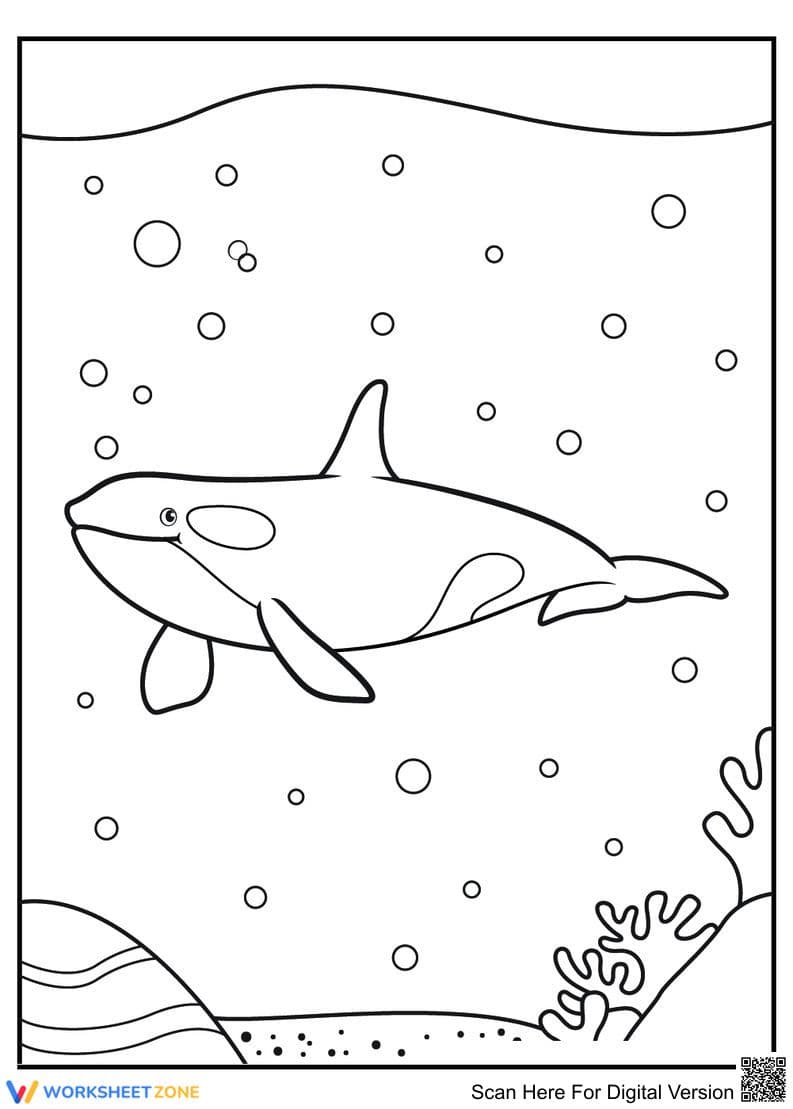

Happy Whale Coloring Page | Essential Grade K-5 Ready
Paste this activity's link or code into your existing LMS (Google Classroom, Canvas, Teams, Schoology, Moodle, etc.).
Students can open and work on the activity right away, with no student login required.
You'll still be able to track student progress and results from your teacher account.
This Happy Whale coloring page provides a creative outlet for students to explore marine biology while developing essential fine motor control. By engaging with the detailed underwater scene, learners strengthen their hand-eye coordination and color recognition. It serves as a versatile tool for early finishers or as a thematic supplement to ocean-themed science units.
At a Glance
- Grade: K-5 · Subject: Arts & Science
- Standard:
K-LS1-1— Observe and describe patterns of what plants and animals need to survive- Skill Focus: Fine motor development and animal identification
- Format: 1 page · 1 task · No answer key needed · PDF
- Best For: Morning work or science centers
- Time: 15–20 minutes
Inside this resource, you will find a high-quality, single-page PDF featuring a cheerful orca whale surrounded by bubbles and sea flora. The clean line art is designed to accommodate various coloring mediums, from crayons to watercolors. The layout includes a clear border, ensuring that student work remains contained and ready for classroom display or portfolio inclusion.
This resource follows a true zero-prep workflow. First, print the single-page PDF (30 seconds). Second, distribute the sheets to students along with their preferred coloring tools (1 minute). Third, review the completed artwork to assess fine motor precision or use the image to spark a discussion about whale habitats (variable). Total teacher preparation time is under two minutes.
This worksheet aligns with K-LS1-1, focusing on the observation of animals in their natural environments. Students can identify the whale and the surrounding ocean elements, discussing what a whale needs to survive in the water. This standard code can be copied directly into lesson plans, IEP goals, or district curriculum mapping tools.
Use this page during a direct instruction lesson on marine mammals to keep younger students engaged while listening. Alternatively, assign it as a formative assessment for fine motor skills; observe how students handle small details like the bubbles and coral. Expected completion time ranges from 15 to 20 minutes depending on the student's age.
This activity is designed for Preschool through Grade 5 students, particularly those needing sensory breaks or fine motor support. It pairs naturally with a non-fiction passage about orcas or an anchor chart detailing ocean zones. It is an excellent resource for inclusive classrooms where visual engagement is a priority.
Research by Fisher & Frey (2014) emphasizes the importance of visual literacy and fine motor engagement in early childhood development. Coloring activities like this Happy Whale page are not merely recreational; they provide the foundational grip strength and spatial awareness necessary for later writing proficiency. According to the RAND AIRS 2024 report, integrating creative arts into core subjects like science improves student retention of biological concepts. By observing the whale's environment, students meet the K-LS1-1 standard through active participation. This worksheet bridges the gap between artistic expression and scientific observation, making it a valuable asset for any elementary classroom. The simplicity of the task allows for immediate success, fostering a positive learning environment while reinforcing vocabulary related to marine life. Educators can confidently use this resource to support both developmental milestones and curriculum-aligned science goals in a low-stress, high-engagement format.


