


























Views
Downloads
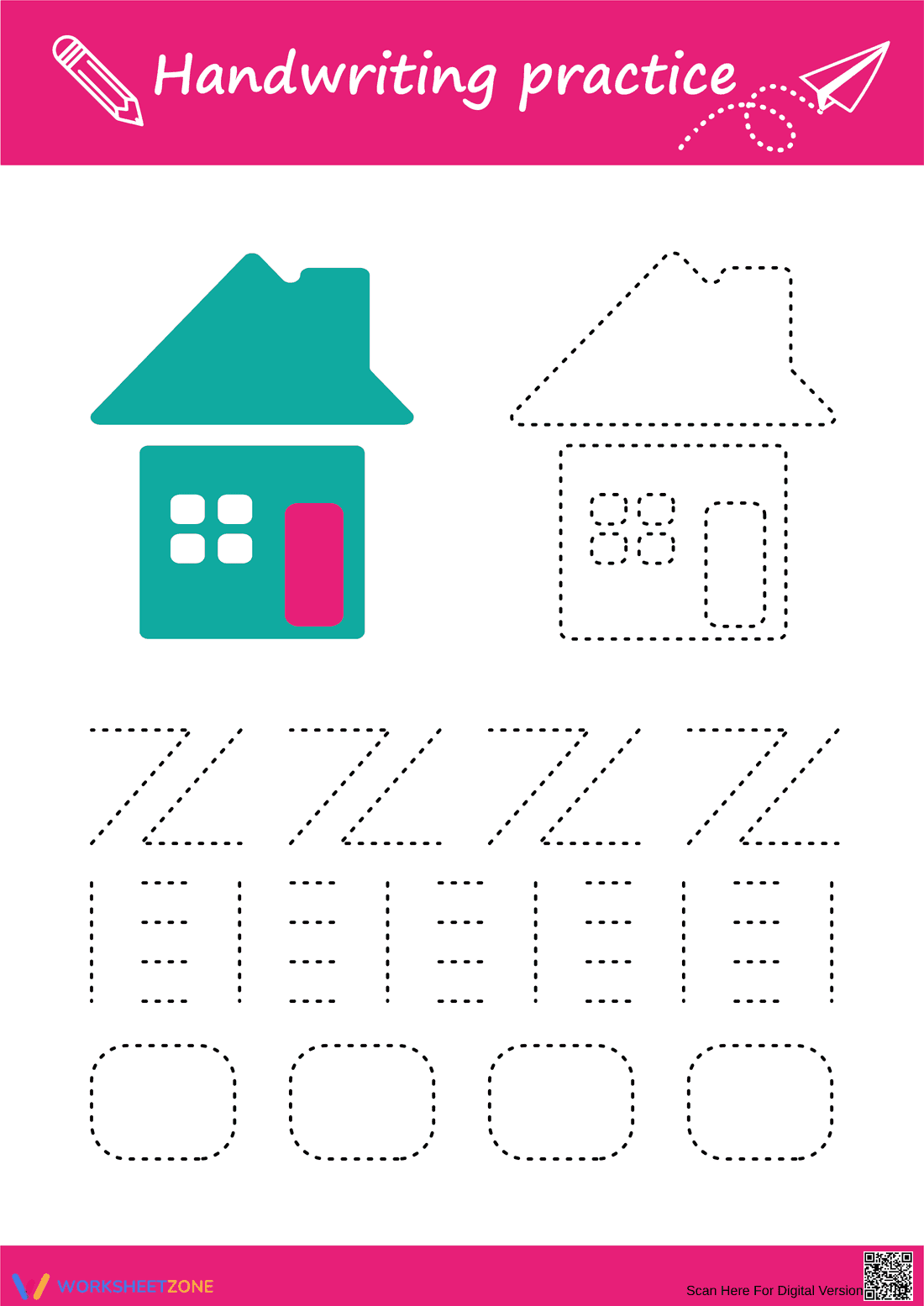

Pre-K Tracing Shapes: Printable Handwriting Worksheet
Paste this activity's link or code into your existing LMS (Google Classroom, Canvas, Teams, Schoology, Moodle, etc.).
Students can open and work on the activity right away, with no student login required.
You'll still be able to track student progress and results from your teacher account.
This foundational pre-writing worksheet helps early learners develop essential fine motor control by tracing familiar shapes and patterns. By guiding their pencils along dotted lines to form houses, zig-zags, and ovals, students build the hand-eye coordination required for future letter formation and neat handwriting.
At a Glance
- Grade: Pre-K · Subject: Handwriting
- Standard:
CCSS.ELA-LITERACY.L.K.1.A— Form basic strokes for printing- Skill Focus: Tracing shapes and patterns
- Format: 1 page · 4 tracing sections · No answer key · PDF
- Best For: Morning work and centers
- Time: 10–15 minutes
This single-page resource features four distinct tracing activities. Students begin by tracing the outline of a house, matching a colorful visual example. The page then transitions into three rows of repetitive pattern practice, including zig-zags, vertical dashed lines, and continuous ovals. These varied strokes mimic the fundamental movements needed for writing letters.
Zero-Prep Workflow
This worksheet is designed for immediate classroom implementation.
- Print (1 minute): Download the PDF and print a class set. The high-contrast lines ensure clean copies.
- Distribute (1 minute): Hand out the sheets with thick pencils or crayons.
- Review (1 minute): Briefly model how to follow the dashed path before letting students work independently.
With prep time under three minutes, this activity is an excellent addition to any sub plan.
Standards Alignment
This pre-writing practice aligns with foundational skills leading up to CCSS.ELA-LITERACY.L.K.1.A: Print many upper- and lowercase letters. By mastering the straight lines, slanted lines, and curves featured in these patterns, students develop the precise motor memory required to execute formal letter strokes. Both standard codes can be copied directly into lesson plans, IEP goals, or district curriculum mapping tools.
How to Use It
This tracing activity works beautifully as a morning bell-ringer to settle students into the day while activating their fine motor muscles. It is also highly effective as an independent literacy center station. While students work, teachers can conduct quick formative assessments by observing pencil grip and stroke directionality. Expect most early learners to complete the page within 10 to 15 minutes, depending on their current level of manual dexterity.
Who It's For
This resource is primarily designed for Preschool and Kindergarten students who are just beginning their handwriting journey. It serves as an excellent intervention tool for first graders who need additional occupational therapy support or struggle with pencil control. Pair this worksheet with a tactile activity, such as tracing shapes in sand or shaving cream, to reinforce the motor pathways before moving to paper.
Developing early fine motor skills through targeted tracing activities is a critical precursor to writing fluency. According to a 2024 report by EdReports, structured pre-writing exercises that emphasize directional strokes significantly improve later letter formation and overall handwriting legibility. This worksheet directly supports these findings by providing repetitive practice with zig-zags, vertical lines, and curves. By engaging with these specific patterns, students build the foundational muscle memory necessary to achieve CCSS.ELA-LITERACY.L.K.1.A, which requires them to form basic strokes for printing. Consistent practice with guided paths reduces cognitive load during early literacy instruction, allowing young learners to focus entirely on physical control and spatial awareness on the page. Integrating this evidence-based approach ensures that students establish the correct grip and stroke habits early, preventing the need for difficult corrections in later elementary grades.


