




























Views
Downloads
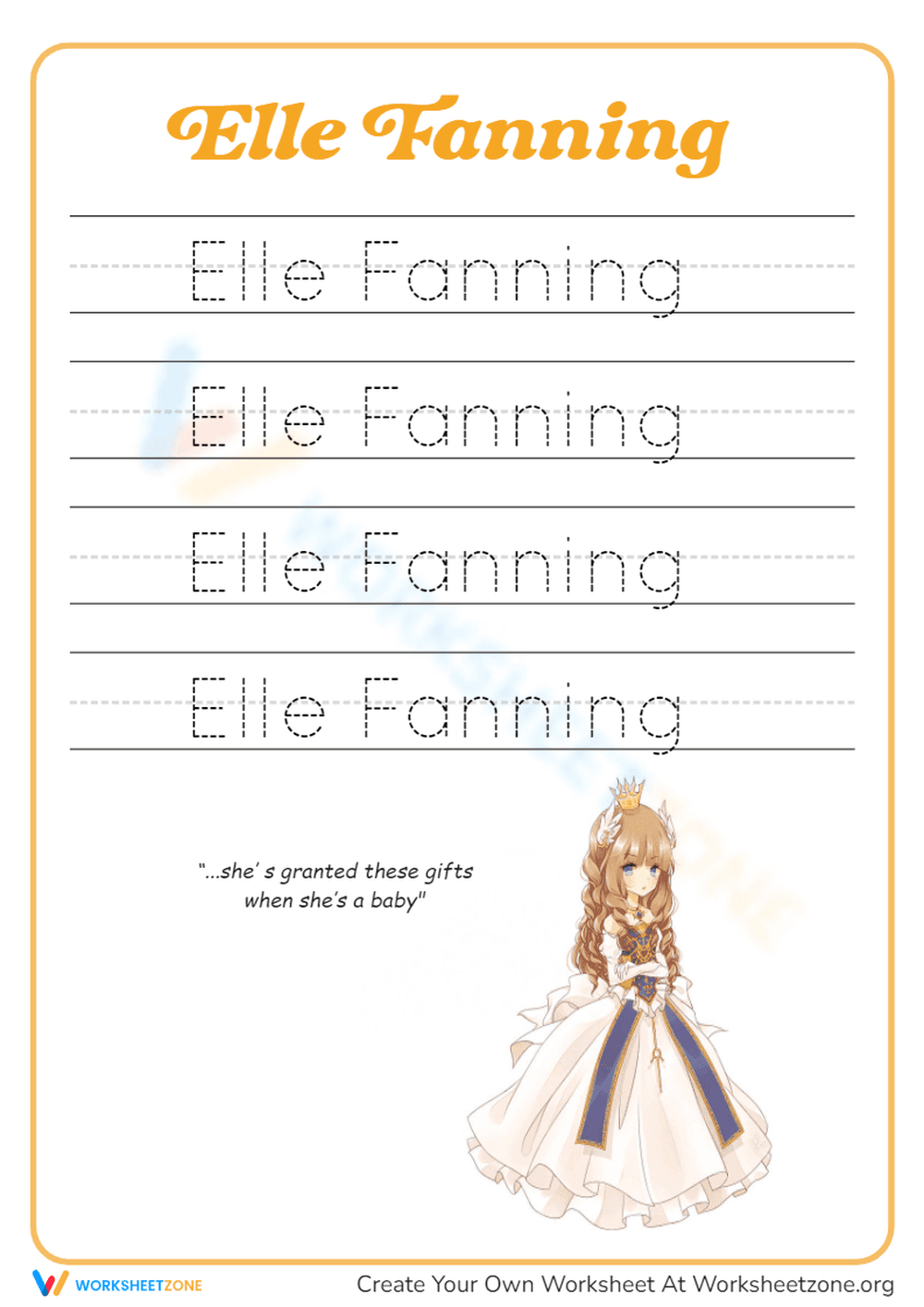

Kindergarten Elle Fanning Name Tracing Printable Worksheet

Paste this activity's link or code into your existing LMS (Google Classroom, Canvas, Teams, Schoology, Moodle, etc.).
Students can open and work on the activity right away, with no student login required.
You'll still be able to track student progress and results from your teacher account.
This printable handwriting worksheet helps early learners master fine motor control and letter formation by tracing the name Elle Fanning. Students practice proper stroke sequence and spacing to build legible print handwriting. This simple activity reinforces letter recognition and pencil grip through repetitive tracing exercises.
At a Glance
- Grade: Kindergarten to Grade 1 · Subject: Handwriting and Writing
- Standard:
CCSS.ELA-LITERACY.L.K.1.A— Print upper- and lowercase letters legibly- Skill Focus: Proper name tracing and pencil control
- Format: 1 printable page · 4 tracing lines · No answer key required · PDF
- Best For: Independent morning work and fine motor skill practice
- Time: 5–10 minutes
What's Inside
This single-page resource features four identical tracing lines dedicated to the name Elle Fanning. Each line provides dotted-line guides with clear letter boundaries to assist young writers in maintaining consistent height and alignment. The page includes a colorful illustration of a princess character at the bottom to maintain student engagement during writing practice.
Zero-Prep Workflow
This resource requires zero teacher preparation. First, print the single-page PDF document, which takes less than 30 seconds. Second, distribute the sheets to students along with pencils or crayons, taking about 1 minute. Finally, review student letter formation and pencil grip during or after the activity, requiring under 1 minute of teacher time. The total preparation time is under 2 minutes, making this worksheet ideal for emergency sub plans, quick warm-ups, or independent center rotations.
Standards Alignment
This activity aligns directly with the Common Core State Standard CCSS.ELA-LITERACY.L.K.1.A, which requires students to print many upper- and lowercase letters. By tracing both capital and lowercase letters in a structured name format, students build the muscle memory needed for independent writing. Both standard codes can be copied directly into lesson plans, IEP goals, or district curriculum mapping tools.
How to Use It
Use this worksheet during morning arrival or as a transition activity between subjects. For direct instruction, model proper stroke order on a whiteboard before students begin tracing. During the activity, observe student pencil grip and stroke direction to provide immediate corrective feedback. The worksheet takes approximately 5 to 10 minutes to complete, serving as a quick formative assessment of fine motor readiness.
Who It's For
This worksheet is designed for kindergarten and first-grade students who are developing basic handwriting skills. It serves struggling writers who need extra scaffolding, as well as English language learners practicing letter shapes. Pair this worksheet with a letter-formation anchor chart or a read-aloud book about names to create a cohesive writing lesson.
This handwriting worksheet targets the foundational literacy skill of letter formation, aligned with standard CCSS.ELA-LITERACY.L.K.1.A. According to research by Fisher & Frey (2014) on the gradual release of responsibility, structured tracing activities provide the necessary scaffolding for early learners before they transition to independent writing. Tracing dotted letters helps students internalize the spatial relationships and stroke sequences required for legible print. By focusing on a specific name, the worksheet makes handwriting practice contextual and engaging for young children. Educators can use this resource to support fine motor development, print awareness, and letter recognition in early childhood classrooms. The structured layout ensures that students practice consistent letter height and spacing, which are critical components of early writing development. This evidence-based approach to handwriting instruction supports overall literacy acquisition and prepares students for more complex writing tasks in later grades.


