




























Views
Downloads
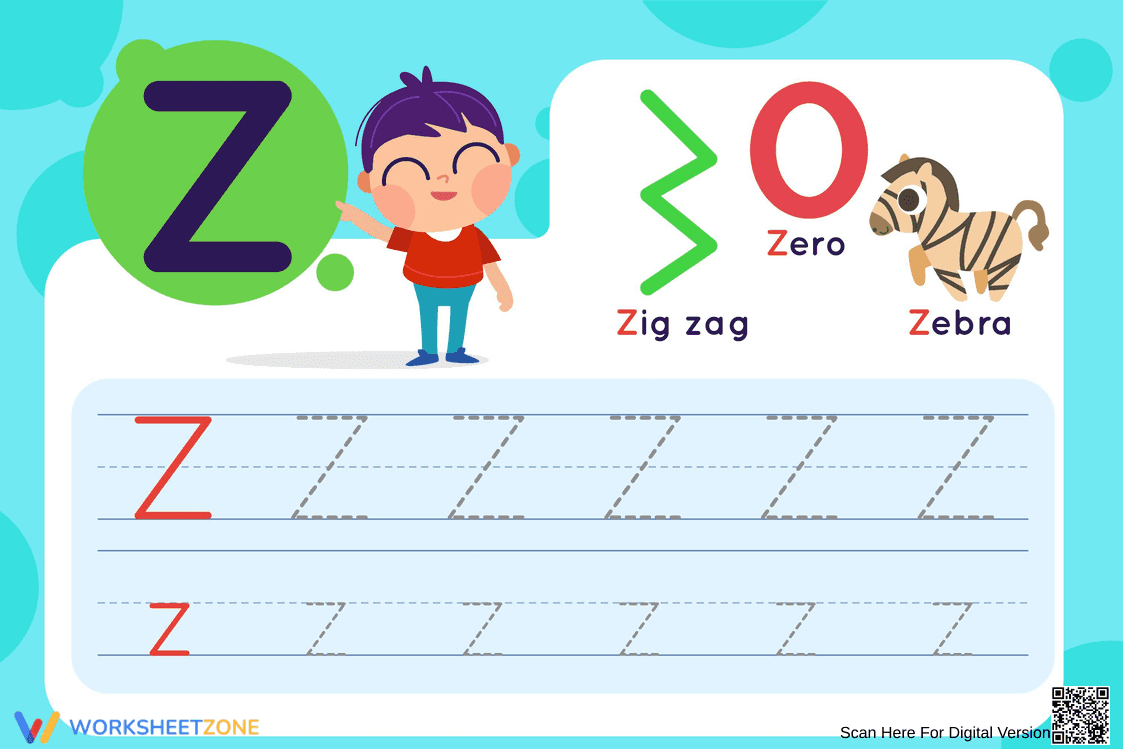

Printable Letter Z Tracing Worksheet | Grade K

Paste this activity's link or code into your existing LMS (Google Classroom, Canvas, Teams, Schoology, Moodle, etc.).
Students can open and work on the activity right away, with no student login required.
You'll still be able to track student progress and results from your teacher account.
This Kindergarten handwriting worksheet helps early learners master the letter Z through focused tracing practice. Students develop fine motor control and letter recognition by tracing uppercase letters on guided lines. The activity connects handwriting to vocabulary with visual cues for words like zebra, zero, and zig zag.
At a Glance
- Grade: Kindergarten · Subject: English
- Standard:
CCSS.ELA-LITERACY.L.K.1.A— Print upper- and lowercase letters- Skill Focus: Letter Z tracing and handwriting
- Format: 1 page · 12 problems · No answer key needed · PDF
- Best For: Independent practice and morning work
- Time: 10–15 minutes
This single-page resource features a clear, distraction-free layout designed specifically for early childhood education. The top section introduces the letter Z alongside illustrations of a zebra, zero, and a zig zag pattern. Below, students find two rows of guided handwriting lines containing 12 dashed uppercase Zs. The primary dashed lines provide essential spatial boundaries, ensuring students learn proper letter height and proportion as they trace.
Zero-Prep Workflow
This worksheet requires zero teacher preparation.
- Print (1 minute): Print a class set directly from the PDF.
- Distribute (1 minute): Hand out the sheets with standard pencils. No special materials are necessary.
- Review (1 minute): Briefly model the correct stroke order for the letter Z on the board, then let students begin.
Total teacher prep time is under two minutes, making this an ideal resource for emergency sub plans, quick morning work, or spontaneous literacy center rotations.
Standards Alignment
This handwriting activity is directly aligned to CCSS.ELA-LITERACY.L.K.1.A, which requires students to print many upper- and lowercase letters. By providing structured tracing paths, the worksheet supports the foundational motor skills necessary for independent writing. Both standard codes can be copied directly into lesson plans, IEP goals, or district curriculum mapping tools.
How to Use It
Deploy this worksheet during morning arrival to settle students into the daily routine. Alternatively, use it as an independent station during literacy centers while the teacher conducts small group reading instruction. As a formative assessment tip, observe students while they trace to ensure they are starting the letter Z from the top left and using continuous strokes. Most kindergarteners will complete this task within 10 to 15 minutes.
Who It's For
This resource is optimized for Kindergarten students who are developing basic handwriting and fine motor skills. It also serves as an intervention tool for first graders needing remedial practice with letter formation. Pair this worksheet with a read-aloud book featuring the letter Z or a whole-group anchor chart brainstorming other Z words to reinforce the phonetic connection.
Developing automaticity in letter formation is a critical precursor to expressive writing and reading fluency in early childhood education. According to Fisher & Frey (2014), explicit instruction and repeated practice in handwriting significantly reduce the cognitive load required for transcription. This allows young learners to allocate more mental resources to idea generation, vocabulary acquisition, and reading comprehension. This specific worksheet supports that essential developmental milestone by directly targeting CCSS.ELA-LITERACY.L.K.1.A, helping students print upper- and lowercase letters with accuracy and confidence. By combining guided tracing paths with visual vocabulary cues like zebra and zero, the activity reinforces both the physical motor patterns and the phonetic identity of the letter Z. Consistent, structured practice on primary dashed lines ensures that students internalize correct letter proportions and stroke sequences. Providing these targeted, brief handwriting exercises builds the foundational muscle memory necessary for long-term academic success across all literacy domains.


