


























Views
Downloads

Halloween Number Tracing Printable | Grade K Math
Paste this activity's link or code into your existing LMS (Google Classroom, Canvas, Teams, Schoology, Moodle, etc.).
Students can open and work on the activity right away, with no student login required.
You'll still be able to track student progress and results from your teacher account.
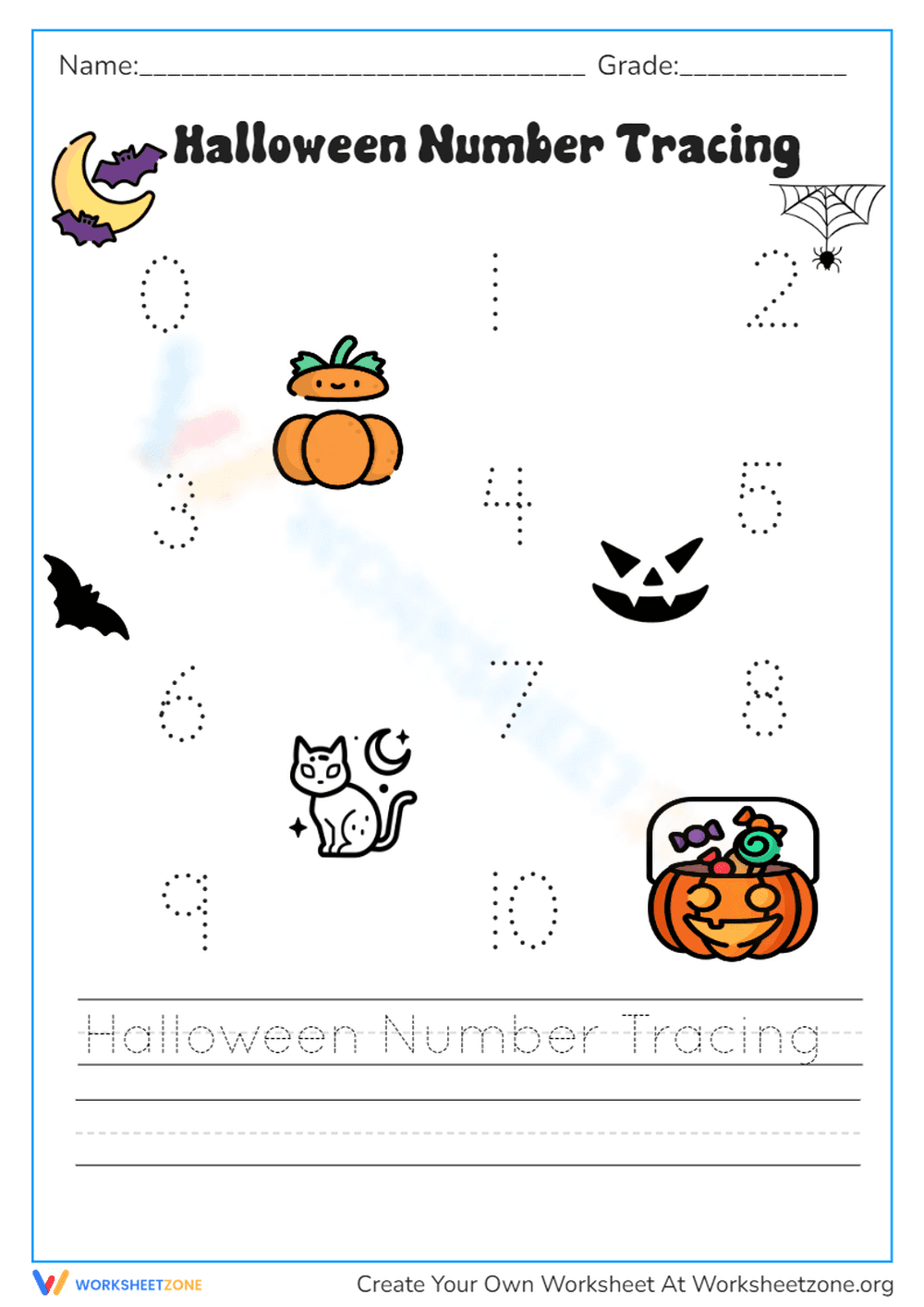
This printable Halloween number tracing worksheet provides Kindergarten students with targeted handwriting practice for numerals 0 through 10. By tracing dotted numbers alongside festive holiday imagery, early learners develop fine motor control and numeral recognition skills essential for foundational math fluency.
At a Glance
- Grade: Kindergarten · Subject: Math
- Standard:
CCSS.MATH.CONTENT.K.CC.A.3— Write numbers from 0 to 20- Skill Focus: Numeral tracing and fine motor control
- Format: 1 page · 12 problems · No answer key needed · PDF
- Best For: Morning work or math centers
- Time: 10–15 minutes
This single-page resource features eleven number tracing tasks for digits 0 through 10, plus a sentence tracing activity. Numerals use a clear, dotted primary font for early writers. The page includes engaging seasonal clip art—pumpkins, bats, and a cat—to maintain interest during fine motor practice. An answer key is not required.
Zero-Prep Workflow
This worksheet is designed for immediate classroom implementation with minimal teacher setup:
- Print (1 minute): Simply download the PDF and print the required number of copies. The black-and-white friendly design ensures clear reproduction.
- Distribute (1 minute): Hand out the sheets along with pencils or crayons. The visual cues make the task immediately obvious to early learners.
- Review (0 minutes): Students can complete the tracing independently. Teachers can quickly scan the finished pages to check for proper pencil grip and stroke direction.
With total prep time under two minutes, this resource suits emergency sub plans perfectly.
Standards Alignment
This activity aligns directly with CCSS.MATH.CONTENT.K.CC.A.3, which requires students to write numbers from 0 to 20. The tracing format provides the necessary scaffolding for students who are just beginning to form these numerals. Additionally, the bottom text tracing supports early literacy handwriting goals. Both standard codes can be copied directly into lesson plans, IEP goals, or district curriculum mapping tools.
How to Use It
Deploy this worksheet during morning arrival as a calm activity before direct instruction, or as an independent math center station. Teachers should conduct formative assessment observations by watching pencil grip and noting correct top-to-bottom stroke paths. Expected completion time is 10 to 15 minutes.
Who It's For
This resource is primarily designed for Kindergarten students, though it serves as excellent remediation for first graders needing extra handwriting support. For differentiation, teachers can provide textured surfaces underneath the paper for tactile feedback or offer thick crayons for students struggling with standard pencil grips. Pair this worksheet with a whole-class counting lesson or a seasonal Halloween read-aloud to create a cohesive thematic unit.
Developing automaticity in numeral formation is a critical stepping stone for early mathematics and overall academic readiness. According to research from Fisher & Frey (2014), providing structured, scaffolded practice opportunities allows students to internalize foundational skills, freeing up cognitive load for more complex problem-solving tasks later in their educational journey. This Halloween number tracing activity directly supports CCSS.MATH.CONTENT.K.CC.A.3 by helping students write numbers from 0 to 20 with confidence and precision. By combining fine motor repetition with engaging thematic elements, educators can foster both rapid skill acquisition and sustained student attention. Regular tracing practice ensures that young learners build the essential muscle memory required for legible handwriting, which correlates strongly with future academic success across multiple disciplines. This targeted approach to early numeral literacy provides a reliable, evidence-based method for building essential kindergarten competencies.


