


























Views
Downloads
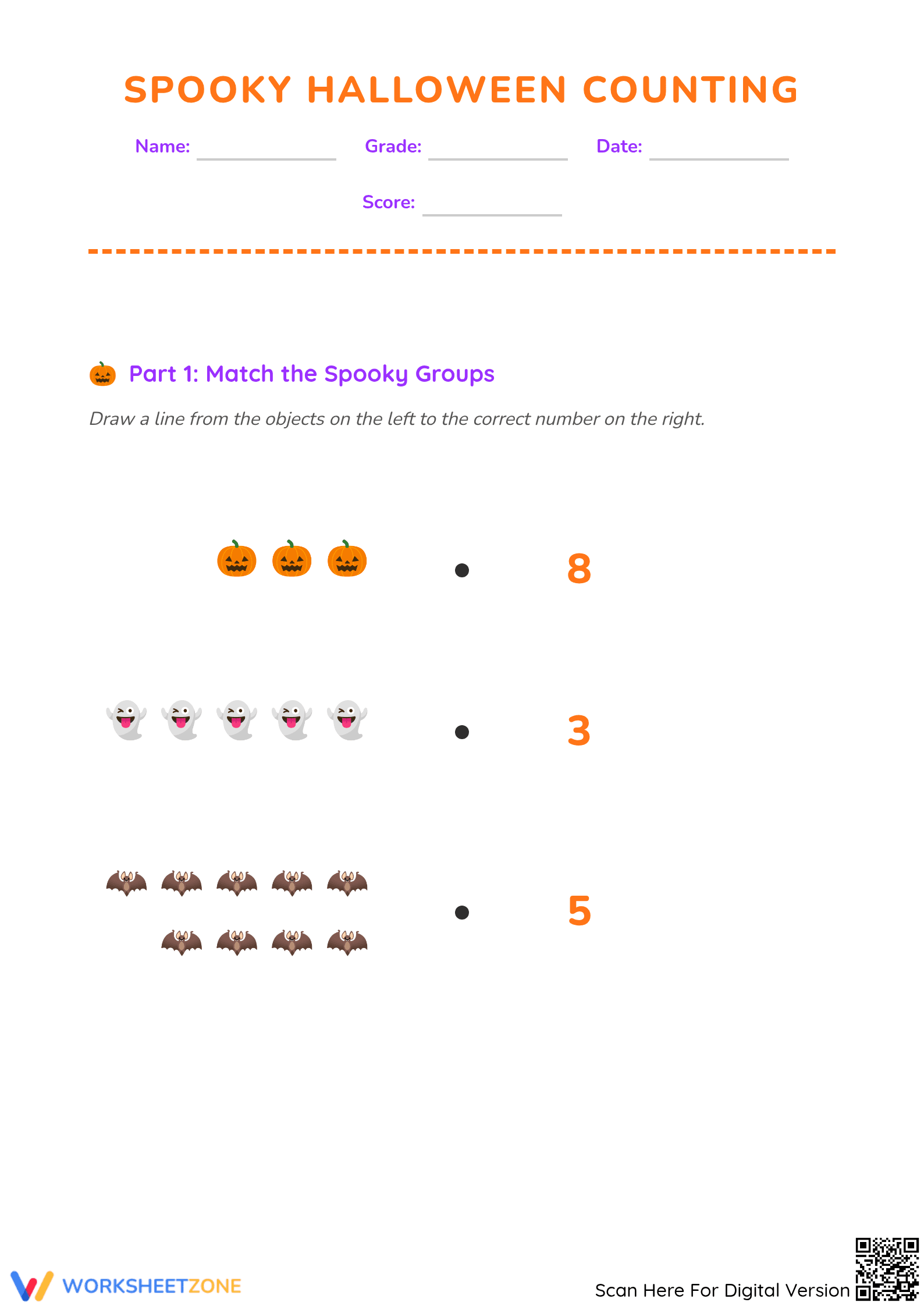
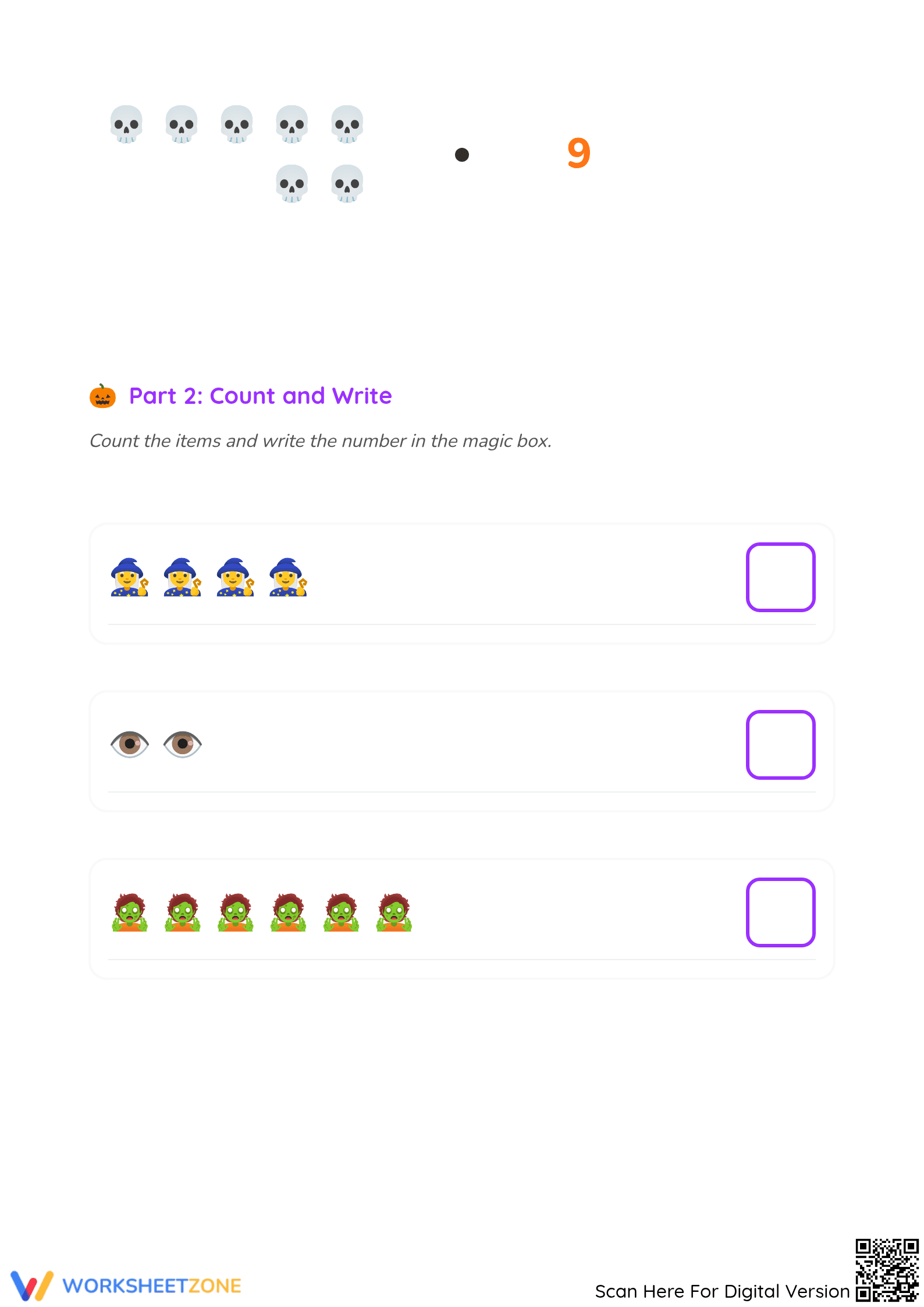
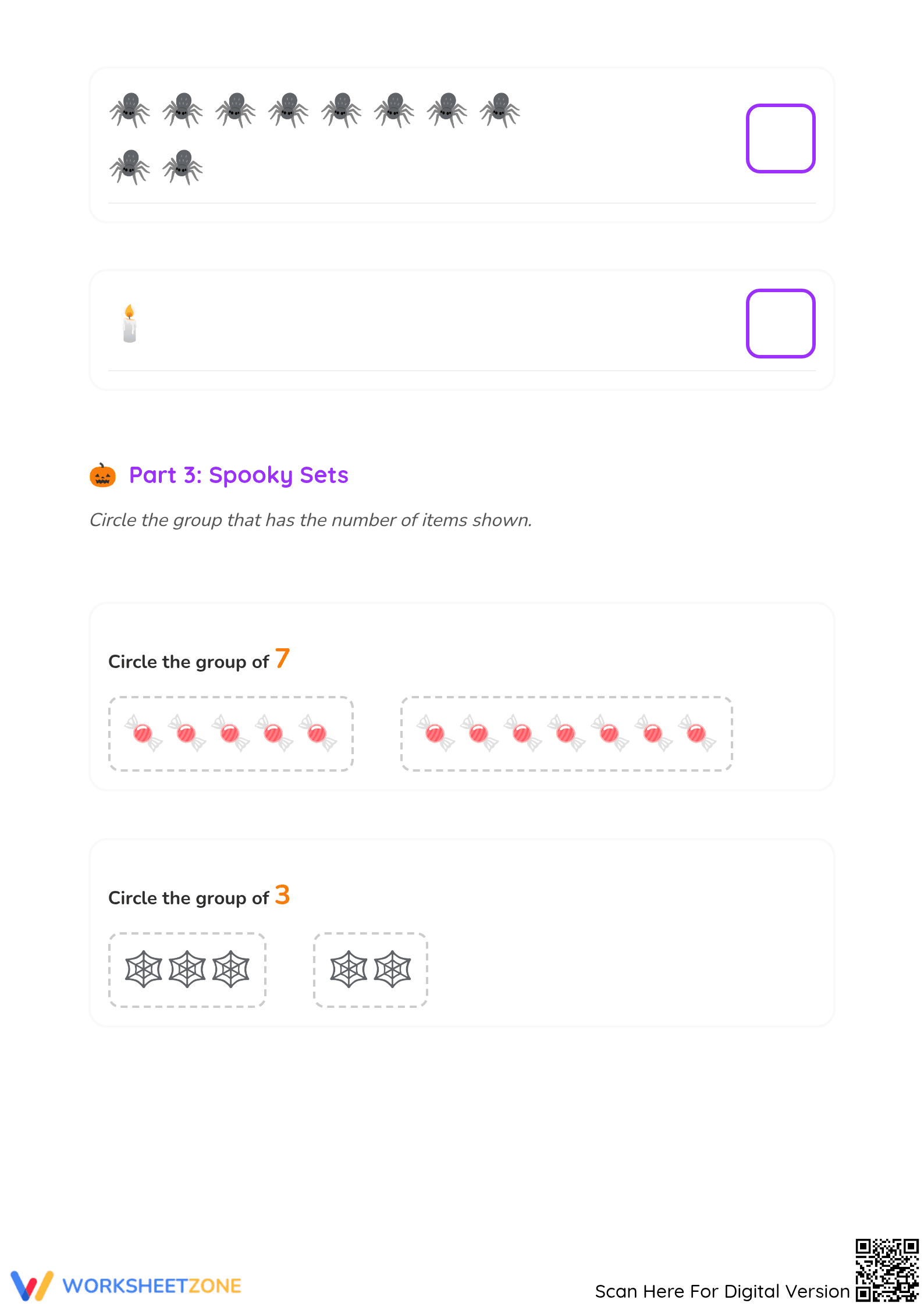
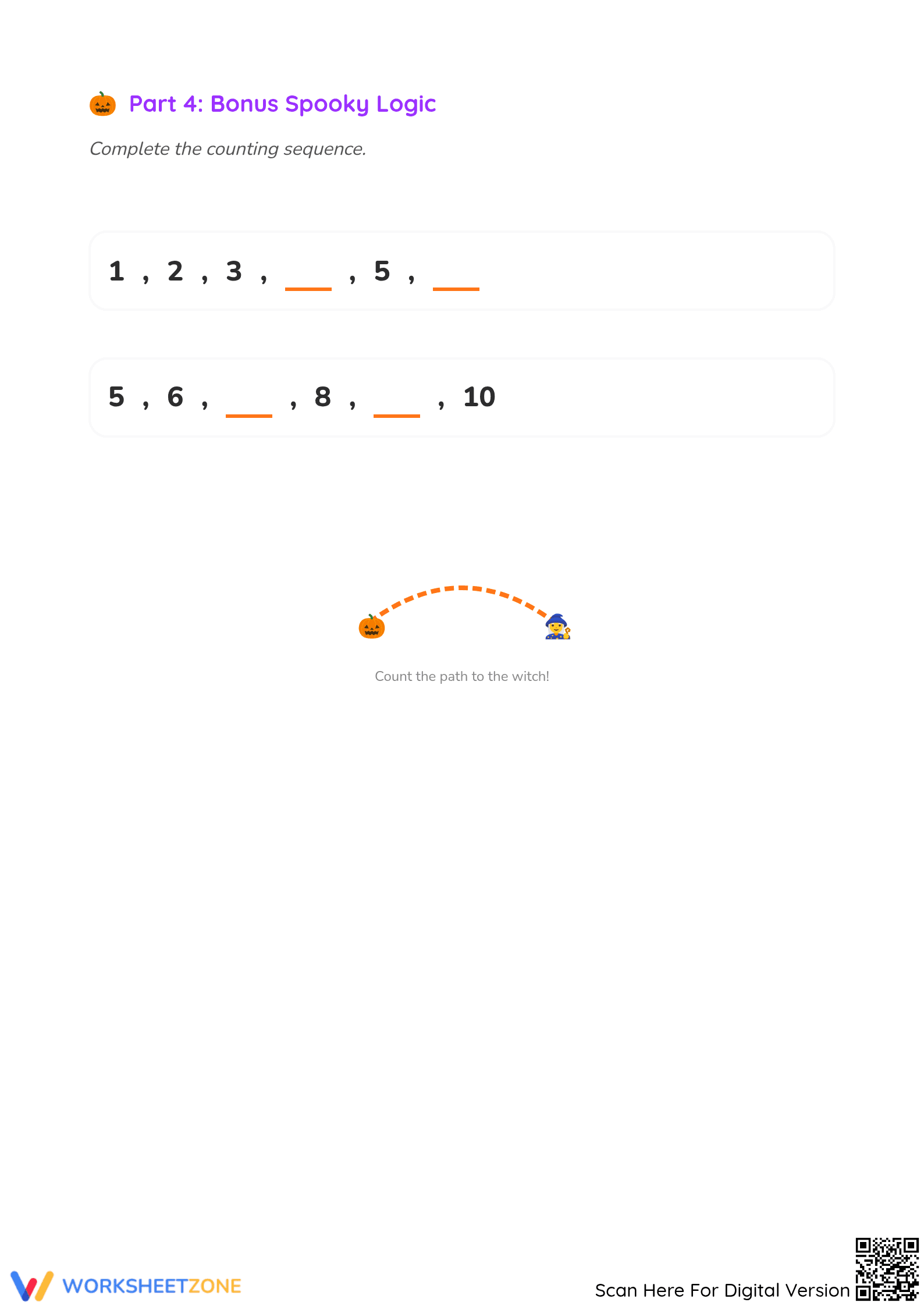

Grade K Halloween Counting — Printable No-Prep Worksheet
Paste this activity's link or code into your existing LMS (Google Classroom, Canvas, Teams, Schoology, Moodle, etc.).
Students can open and work on the activity right away, with no student login required.
You'll still be able to track student progress and results from your teacher account.
This Halloween-themed counting worksheet helps young learners master one-to-one correspondence and number recognition. By engaging with festive icons like bats and pumpkins, students develop essential early numeracy skills through tactile-visual practice. This resource ensures that mastering basic math concepts remains an exciting seasonal adventure for preschoolers and kindergarteners.
At a Glance
- Grade: K–1 · Subject: Math
- Standard:
CCSS.MATH.CONTENT.K.CC.B.5— Count to answer "how many?" questions about up to 20 objects- Skill Focus: Counting and Cardinality
- Format: 4 pages · 9 problems · Answer key included · PDF
- Best For: Independent math centers or seasonal homework
- Time: 15–20 minutes
What's Inside
This 4-page PDF pack features a variety of counting tasks designed for early childhood learners. The first page presents a mixed set of Halloween icons including ghosts, spiders, and black cats, requiring students to count and record totals. Subsequent pages provide focused practice on specific quantities of bats, pumpkins, and ghosts. The layout includes clear workspace for number writing and large graphics that support students with developing fine motor skills.
Zero-Prep Workflow
The zero-prep workflow for this resource is designed for busy educators. First, print the four-page document in seconds; the high-contrast design ensures clarity without wasting ink. Second, distribute the sheets to students with zero teacher-led setup required. Third, review the work using the included answer key to identify students who may need additional support with cardinality. The entire preparation process takes less than two minutes, making it an ideal choice for sub plans or holiday activities.
Standards Alignment
This activity aligns perfectly with `CCSS.MATH.CONTENT.K.CC.B.5`, which requires students to count to answer "how many?" questions about as many as 20 things. It also supports `CCSS.MATH.CONTENT.K.CC.B.4`, fostering an understanding of the relationship between numbers and quantities. Both standard codes can be copied directly into lesson plans, IEP goals, or district curriculum mapping tools.
How to Use It
Use this worksheet as a formative assessment after introducing the concept of counting. Observe students as they touch each object to verify they are using one-to-one correspondence rather than just guessing. It also serves as an excellent "early finisher" task during October. Completion time is expected to range between 15 and 20 minutes depending on mastery.
Who It's For
This resource is tailored for Kindergarten and Grade 1 students, but is also appropriate for preschool learners ready for structured math. It provides scaffolding through clear visual grouping. Pair this worksheet with physical manipulatives, such as small plastic spiders or orange counters, to provide a multisensory learning experience during direct instruction.
According to the NAEP framework and research from Fisher & Frey (2014) on the gradual release of responsibility, seasonal themes like Halloween significantly increase student engagement during repetitive practice tasks. This worksheet addresses the core requirements of CCSS.MATH.CONTENT.K.CC.B.5 by providing structured opportunities to connect numerical symbols with physical quantities. The "how many" questioning format is a fundamental building block for later operations. By integrating visual scaffolds with clear writing spaces, the activity ensures that students focus on counting without distraction. NAEP data suggests that early mastery of one-to-one correspondence is a strong predictor of third-grade proficiency. This 4-page PDF resource provides the essential repetition needed for mastery while maintaining a festive atmosphere for young learners. It represents a complete solution for reinforcing cardinality during the autumn instructional window.


