


























Views
Downloads
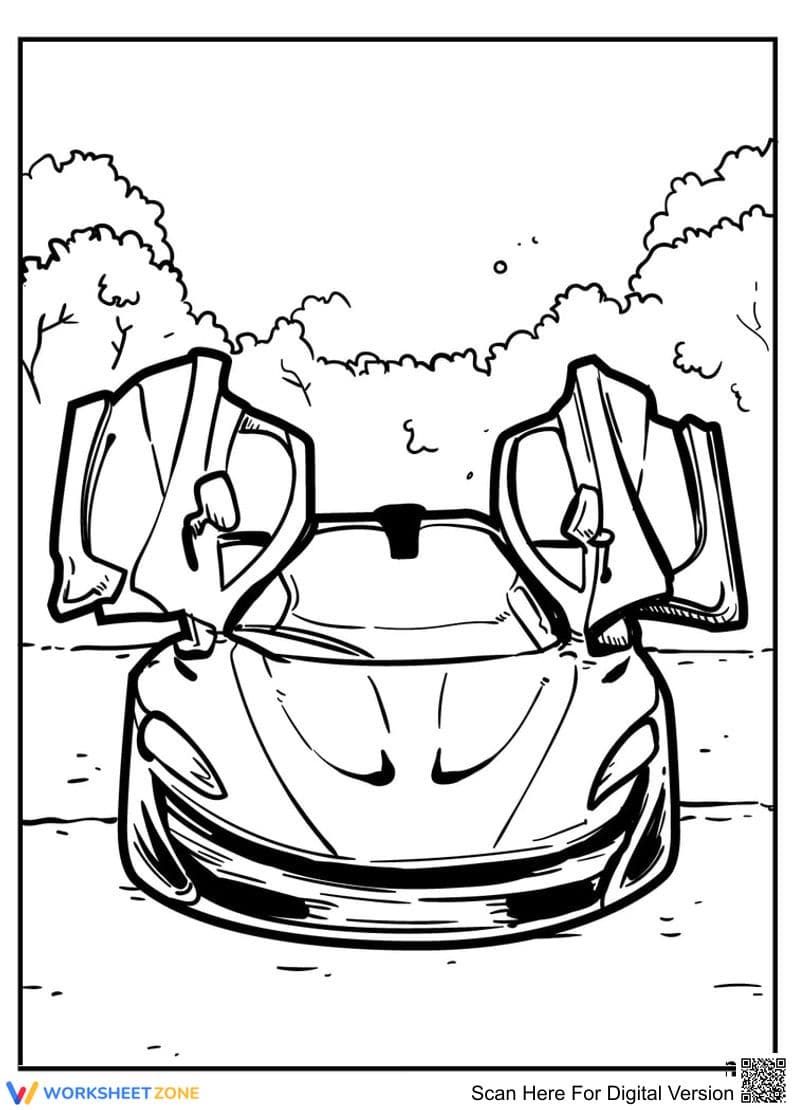

Grade 2 Gull-wing Doors — Printable No-Prep Worksheet
Paste this activity's link or code into your existing LMS (Google Classroom, Canvas, Teams, Schoology, Moodle, etc.).
Students can open and work on the activity right away, with no student login required.
You'll still be able to track student progress and results from your teacher account.
This printable Gull-wing Doors coloring worksheet provides Grade 2 students with a creative outlet to develop fine motor control and visual spatial awareness. By focusing on the unique mechanics of luxury vehicle design, students engage in an artistic task that bridges the gap between technical observation and creative expression.
At a Glance
- Grade: 2 · Subject: Arts & English
- Standard:
CCSS.ELA-LITERACY.SL.2.5— Create visual displays to clarify ideas, thoughts, and feelings- Skill Focus: Fine motor skills & vehicle design
- Format: 1 page · 1 task · No answer key needed · PDF
- Best For: Early finishers and creative brain breaks
- Time: 15–20 minutes
What's Inside
This resource consists of a single, high-quality PDF page featuring a detailed line-art illustration of a modern sports car with its iconic gull-wing doors fully extended. The clean, bold outlines are designed to accommodate various coloring media, from crayons to fine-tip markers. There are no complex instructions, allowing the student to focus entirely on color selection and staying within the lines.
Zero-Prep Workflow
The zero-prep workflow for this worksheet is designed for maximum efficiency in a busy classroom. First, print the single-page PDF (30 seconds). Second, distribute the sheets to students during transition periods or as a reward (30 seconds). Third, review the completed artwork to assess fine motor precision and color choice (1 minute). Total teacher preparation time is under 2 minutes, making it an ideal sub-plan addition.
Standards Alignment
The primary standard addressed is CCSS.ELA-LITERACY.SL.2.5, which encourages students to create visual displays to clarify ideas, thoughts, and feelings. While primarily an artistic endeavor, the act of coloring complex shapes supports the hand-eye coordination necessary for the CCSS.ELA-LITERACY.L.2.1 writing standards. Both standard codes can be copied directly into lesson plans, IEP goals, or district curriculum mapping tools.
How to Use It
Use this worksheet during the after phase of direct instruction as a calming transition activity. It serves as an excellent formative assessment tool; observe how students handle the intricate lines of the car's interior and doors to gauge their manual dexterity. Expected completion time ranges from 15 to 20 minutes depending on the level of detail the student chooses to apply.
Who It's For
This worksheet is tailored for elementary students in Grades K-5 who enjoy automotive themes. It is particularly effective for students requiring sensory breaks or those working on occupational therapy goals related to grip and pressure. Pair this with a descriptive writing prompt about luxury travel or a non-fiction passage about automotive engineering.
Research from Fisher & Frey (2014) emphasizes the importance of visual literacy and the role of non-linguistic representations in cognitive development. This Gull-wing Doors coloring worksheet aligns with these findings by allowing students to process complex mechanical structures through artistic engagement. By focusing on CCSS.ELA-LITERACY.SL.2.5, the activity encourages students to use visual displays to communicate their understanding of symmetry and design. According to the RAND AIRS 2024 report, integrated arts activities in the elementary classroom contribute significantly to student engagement and the development of fine motor skills required for proficient writing. This 1-page resource provides a structured yet flexible environment for students to practice these essential skills without the pressure of high-stakes testing. It serves as a practical tool for teachers looking to incorporate creative expression into their daily English Language Arts or Arts & Crafts curriculum while maintaining alignment with national standards.


