


























Views
Downloads
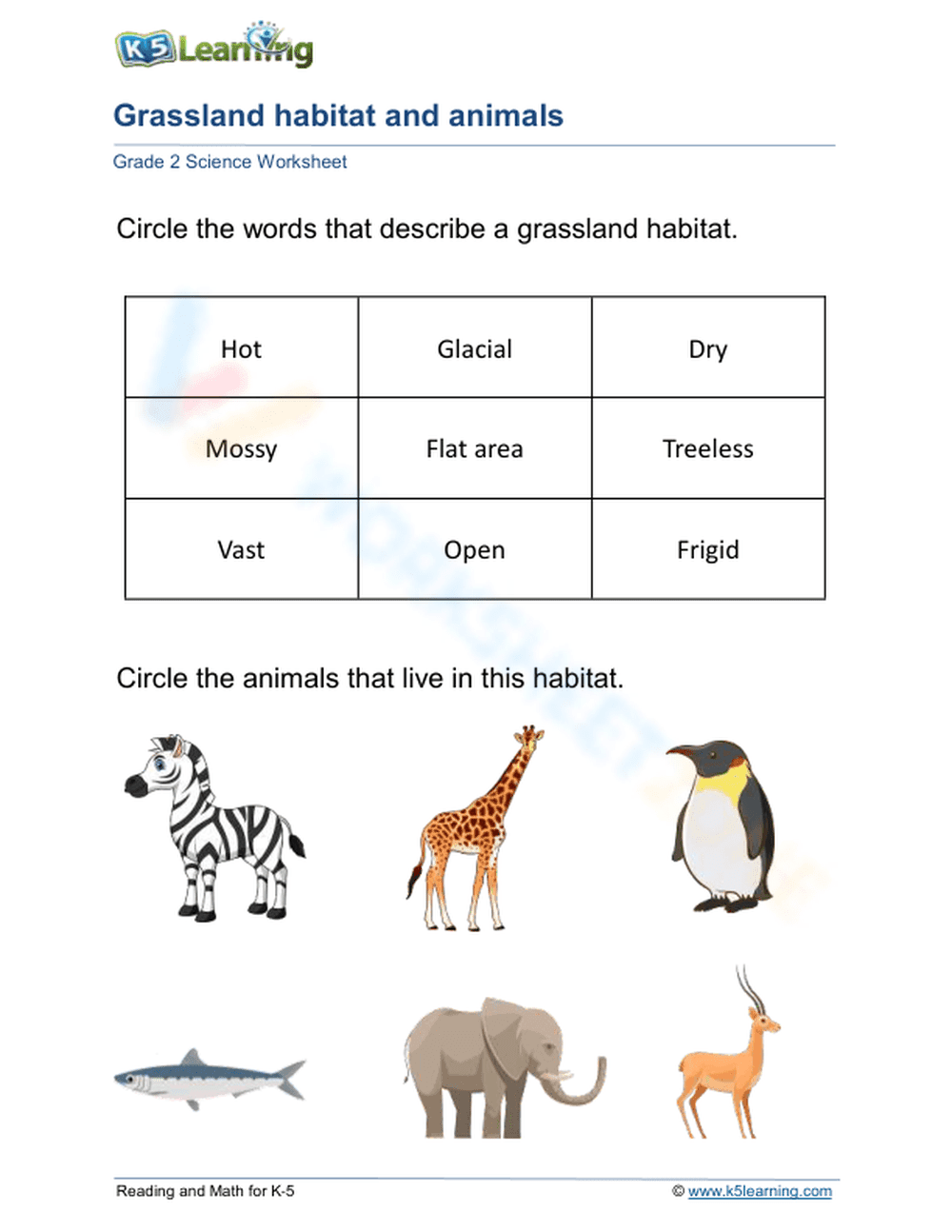
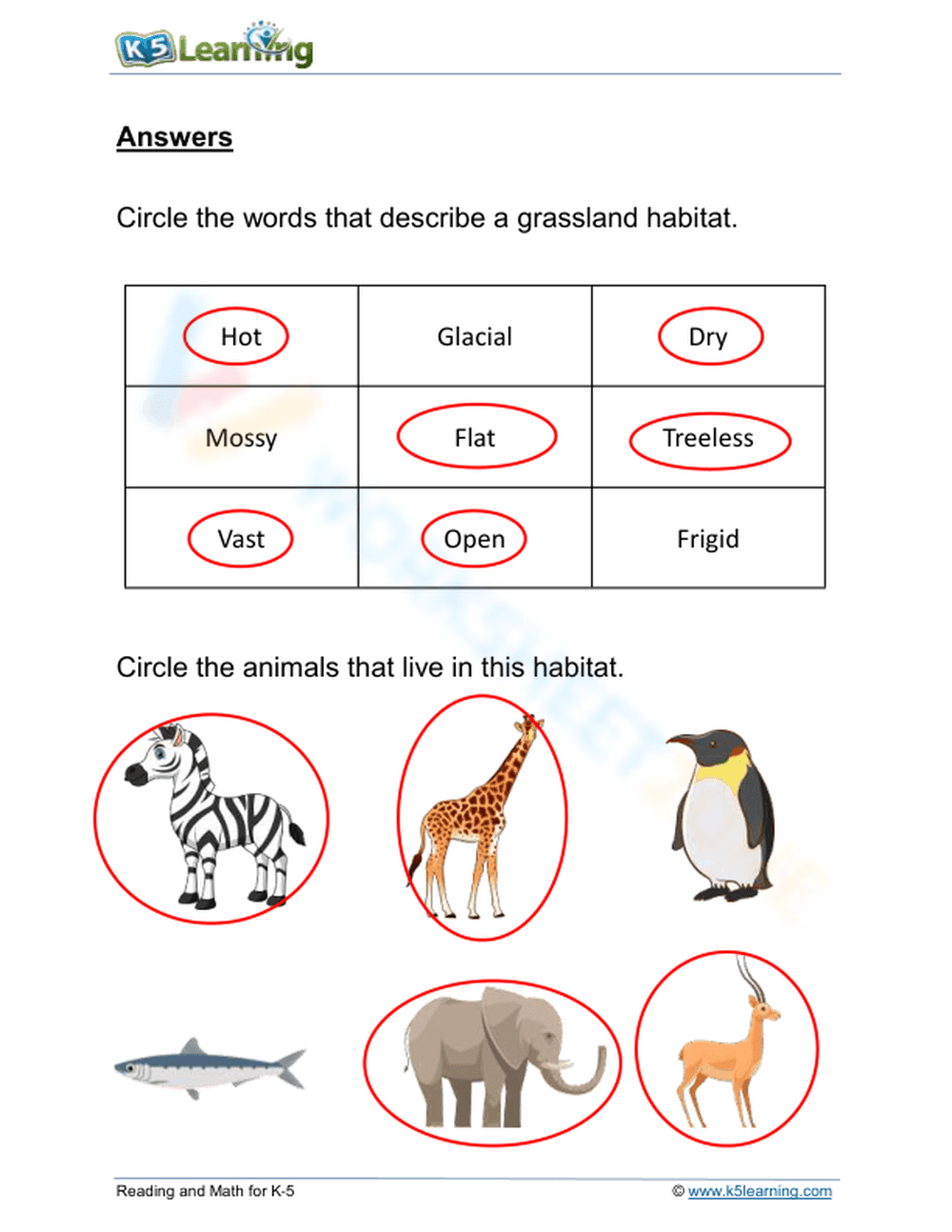

Essential Grassland Habitat Worksheet | Grade 2 Science
Paste this activity's link or code into your existing LMS (Google Classroom, Canvas, Teams, Schoology, Moodle, etc.).
Students can open and work on the activity right away, with no student login required.
You'll still be able to track student progress and results from your teacher account.
This essential Grade 2 science worksheet helps students identify the unique characteristics of grassland habitats and the animals that call them home. By evaluating descriptive terms and animal images, learners build foundational ecological knowledge. Students successfully distinguish between diverse environments, strengthening their ability to observe and categorize biological data in real-world contexts.
At a Glance
- Grade: 2 · Subject: Science
- Standard:
2-LS4-1— Observe plants and animals to compare diversity of life in different habitats- Skill Focus: Grassland habitat characteristics and animal identification
- Format: 2 pages · 15 tasks · Answer key included · PDF
- Best For: Independent practice or quick formative assessment
- Time: 10–15 minutes
This two-page PDF resource includes a focused one-page student activity and a corresponding full-page answer key. The worksheet features two distinct tasks: a word-sorting grid with nine environmental descriptors and a visual identification section with six animal illustrations. The clear layout and high-contrast images ensure students can work independently without extensive teacher guidance.
The zero-prep design of this resource minimizes teacher workload while maximizing instructional time. First, print the single-sided student page in under thirty seconds. Second, distribute the worksheets for students to complete individually or in pairs over ten to fifteen minutes. Third, use the included answer key to conduct a quick whole-class review or grade the papers efficiently. This streamlined process is perfect for sub plans, morning work, or exit ticket assessments.
Aligned to 2-LS4-1, this worksheet requires students to make observations of plants and animals to compare the diversity of life in different habitats. By selecting animals like zebras and giraffes while excluding penguins and fish, students demonstrate an understanding of environmental suitability. Both standard codes can be copied directly into lesson plans, IEP goals, or district curriculum mapping tools.
Use this worksheet during the explain or elaborate phase of a science lesson on ecosystems. It serves as an excellent follow-up to a video or reading passage about savannas. For a formative assessment tip, observe which students struggle with the term treeless in the word grid, as this often reveals a need for more direct vocabulary instruction regarding plant life in the grasslands.
This resource is designed for Grade 2 students but is appropriate for Grade 1 enrichment or Grade 3 review. It supports English Language Learners through visual cues and clear, repetitive phrasing. It pairs naturally with a classroom anchor chart detailing world habitats or a non-fiction reading passage about African wildlife to provide a comprehensive learning experience.
Research from RAND AIRS 2024 emphasizes that structured visual identification tasks significantly improve retention of scientific concepts in primary grades. This worksheet targets the 2-LS4-1 standard by requiring students to distinguish the plain-English skill of identifying habitat-specific traits and resident species. By evaluating fifteen distinct items, learners engage in the critical thinking necessary to understand biological diversity and environmental adaptation. Fisher & Frey (2014) highlight the importance of gradual release models, and this resource provides the necessary independent practice phase to solidify classroom instruction. The inclusion of an answer key supports immediate feedback, which NAEP data correlates with higher student achievement in foundational science. This comprehensive tool serves as a reliable bridge between introductory lessons and mastery-level assessments of ecosystem dynamics, ensuring all Grade 2 learners meet essential benchmarks for environmental literacy and scientific observation.


