


























Views
Downloads
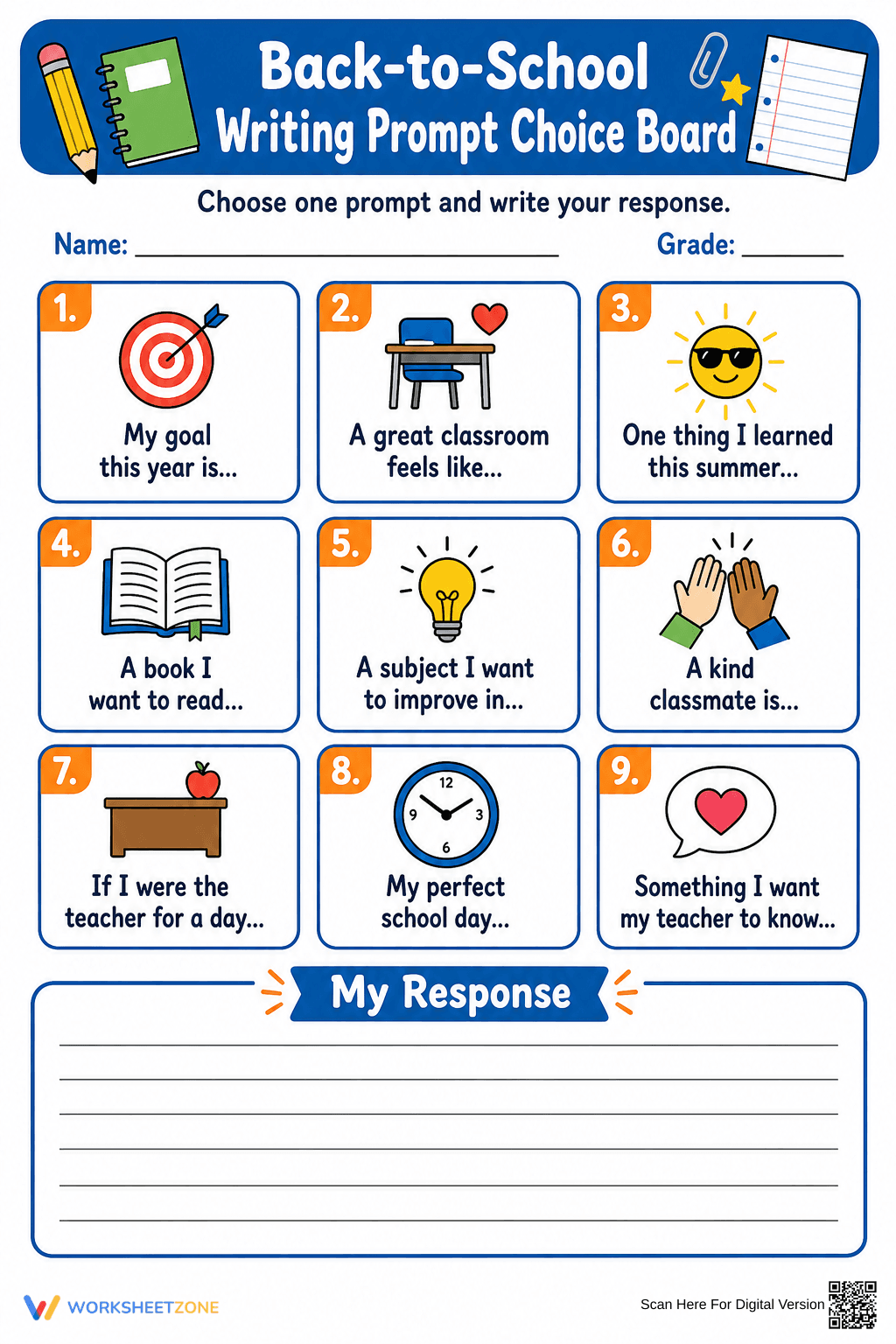

Grade 4 Writing Choice Board — Printable No-Prep Worksheet
Paste this activity's link or code into your existing LMS (Google Classroom, Canvas, Teams, Schoology, Moodle, etc.).
Students can open and work on the activity right away, with no student login required.
You'll still be able to track student progress and results from your teacher account.
This Back-to-School Writing Prompt Choice Board provides Grade 4 students with nine engaging options to kickstart their academic year. By offering choice, the worksheet encourages student agency while assessing baseline writing skills through reflective and narrative tasks. Students select a prompt that resonates with them and compose a thoughtful response in the provided space.
At a Glance
- Grade: 4 · Subject: ELA Writing
- Standard:
CCSS.ELA-LITERACY.W.4.10— Write routinely for shorter time frames for a range of tasks and purposes- Skill Focus: Reflective & Narrative Writing
- Format: 1 page · 9 prompts · Writing lines included · PDF
- Best For: First-week icebreakers and baseline assessments
- Time: 15–25 minutes
The worksheet features a clean, organized 3x3 grid containing nine unique writing prompts. Each tile includes a visual icon and a sentence starter to support student brainstorming. Prompts cover topics such as personal goals, classroom environment, and summer reflections. Below the choice board, a dedicated "My Response" section provides ruled lines, ensuring students have everything they need on a single page.
The zero-prep design allows for immediate classroom implementation. 1. Print (30 seconds): Simply print the single-page PDF for your entire class. 2. Distribute (1 minute): Hand out the sheets as a morning work activity or a transition task during the first week of school. 3. Review (1 minute): Because the prompts are open-ended, teacher review focuses on participation and initial writing stamina. This workflow makes the resource an ideal candidate for emergency sub plans.
This resource is primarily aligned with `CCSS.ELA-LITERACY.W.4.10`, which requires students to write routinely over shorter time frames for a range of tasks. It also supports CCSS.ELA-LITERACY.W.4.4 by emphasizing clear and coherent writing appropriate to the task. Both standard codes can be copied directly into lesson plans, IEP goals, or district curriculum mapping tools.
Use this worksheet during the first three days of school as a formative assessment to gauge student writing fluency and handwriting. It works exceptionally well as a "Fast Finisher" activity during the hectic first week when schedules are still being finalized. Observe how students select their prompts; those who struggle to choose may benefit from more structured sentence frames in future assignments.
This resource is designed for Grade 4 students, including English Language Learners who benefit from the visual icons that provide context for each prompt. Pair this worksheet with a "Classroom Expectations" anchor chart or a read-aloud about new beginnings to provide additional inspiration for their writing.
The Back-to-School Writing Prompt Choice Board is a practical application of the "Choice and Voice" framework, which research suggests significantly increases student engagement in literacy tasks. By aligning with CCSS.ELA-LITERACY.W.4.10, the worksheet ensures that students are practicing the essential skill of writing routinely for varied purposes. According to Fisher & Frey (2014), providing students with choice in their writing tasks fosters a sense of ownership and can lead to higher-quality output compared to mandatory, single-topic prompts. This resource allows educators to collect a baseline sample of student writing in a low-stakes, high-interest format. The inclusion of 9 distinct prompts ensures that every learner finds a relatable entry point into the writing process. This evidence-based approach to early-year assessment helps teachers identify individual student needs while building a positive classroom culture centered on expression and reflection.


