


























Views
Downloads

Essential Grade 2 Spelling Practice | Printable Worksheet
Paste this activity's link or code into your existing LMS (Google Classroom, Canvas, Teams, Schoology, Moodle, etc.).
Students can open and work on the activity right away, with no student login required.
You'll still be able to track student progress and results from your teacher account.
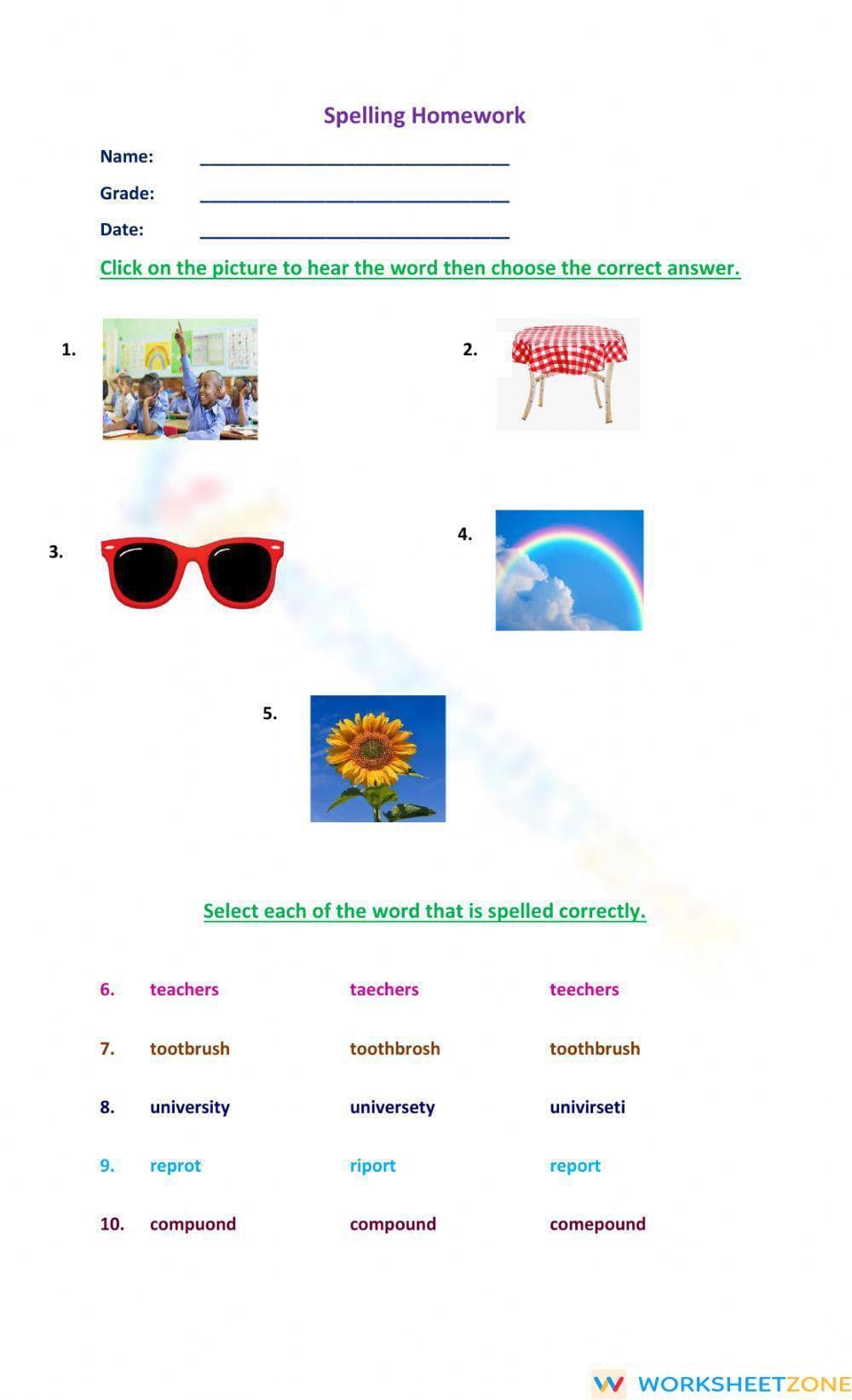
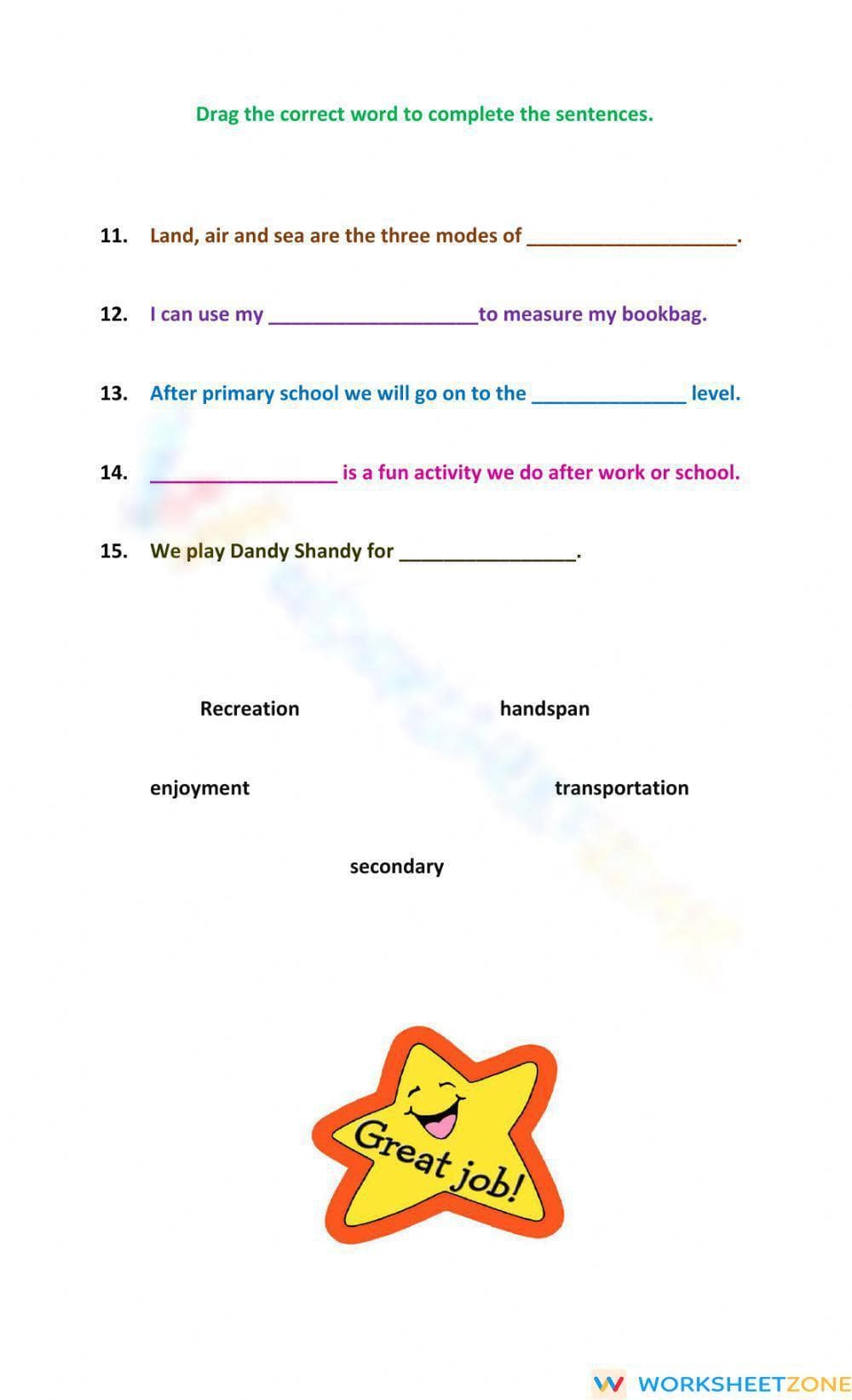
This Grade 2 Spelling Practice worksheet provides a comprehensive review of essential orthographic patterns through 15 structured tasks. Students identify correct spellings from visual cues, choose between common misspellings, and apply vocabulary in context to build long-term retention. This resource ensures students master standard English spelling conventions while developing independent editing skills.
At a Glance
- Grade: 2 · Subject: ELA
- Standard:
CCSS.ELA-LITERACY.L.2.2.D— Generalize learned spelling patterns when writing words- Skill Focus: Spelling patterns and context application
- Format: 2 pages · 15 problems · Answer key included · PDF
- Best For: Homework, independent practice, or morning work
- Time: 15–20 minutes
What's Inside
Inside this 2-page PDF, teachers will find a multi-modal approach to spelling instruction. The first section uses five visual cues to prompt word recognition, followed by five multiple-choice questions targeting high-frequency word orthography like teachers, university, and compound. The final section contains five sentence-completion tasks where students select correct words from a word bank to complete sentences meaningfully.
Skill Progression
- Guided Practice: Five visual-identification tasks anchor word meaning to spelling, providing an initial entry point for learners.
- Supported Practice: Five multiple-choice selections require students to discriminate between correct patterns and common phonemic errors (5 tasks).
- Independent Practice: Five sentence-completion tasks demand that students apply their knowledge in a realistic writing context with zero scaffolding.
This resource utilizes a gradual-release model (I Do, We Do, You Do) to move students from recognition to application.
Standards Alignment
This resource is directly aligned with CCSS.ELA-LITERACY.L.2.2.D, which requires students to generalize learned spelling patterns when writing words. By practicing with multi-syllabic words and common prefixes, students build the foundational phonics skills necessary for fluent reading and writing. Both standard codes can be copied directly into lesson plans, IEP goals, or district curriculum mapping tools.
How to Use It
Use this worksheet as a formative assessment following a direct instruction lesson on specific spelling patterns or as a spelling homework assignment to reinforce weekly lists. Teachers should observe students during the word-bank section to identify if errors stem from spelling ignorance or a lack of vocabulary comprehension. This 2-page set is typically completed in 15 to 20 minutes by a standard Grade 2 student.
Who It's For
This printable is designed for Grade 2 students but serves as an excellent intervention tool for Grade 3 or 4 learners who require additional support with foundational spelling patterns. It pairs naturally with a weekly spelling list or an anchor chart featuring common vowel teams and consonant clusters.
This spelling resource aligns with the "Gradual Release of Responsibility" framework popularized by Fisher & Frey (2014), which emphasizes the importance of moving students from guided identification to independent application. Research from the NAEP highlights that early mastery of spelling patterns is a significant predictor of future reading fluency and writing proficiency. By providing students with 15 structured opportunities to interact with word structures—ranging from visual recognition to contextual sentence placement—this worksheet addresses the critical need for orthographic mapping in the primary grades. Systematic spelling instruction that includes both pattern recognition and contextual usage has been shown to improve overall literacy outcomes by reducing the cognitive load during the drafting phase of writing. Educators can utilize this data-informed approach to ensure that students are not merely memorizing lists but are instead generalizing orthographic rules to unfamiliar vocabulary, a hallmark of advanced literacy development.


