


























Views
Plays


Printable Physical Education Mid-Term Exam | Grade 10-11
Paste this activity's link or code into your existing LMS (Google Classroom, Canvas, Teams, Schoology, Moodle, etc.).
Students can open and work on the activity right away, with no student login required.
You'll still be able to track student progress and results from your teacher account.
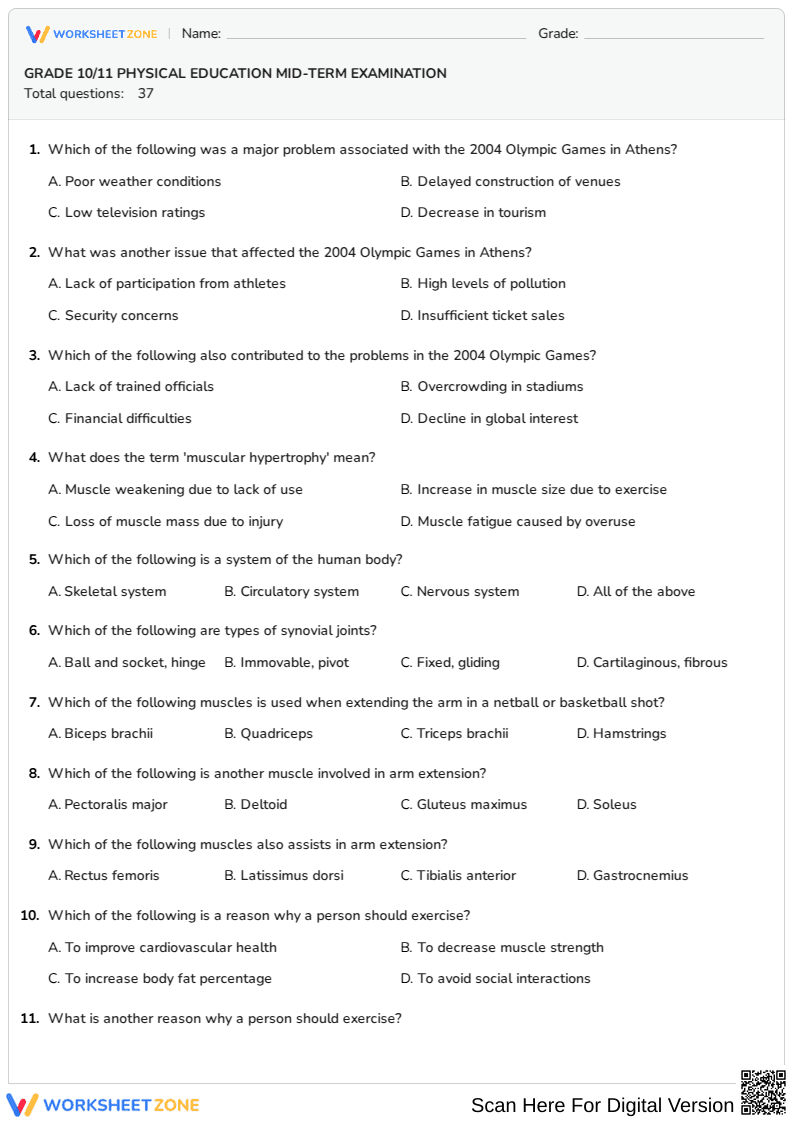
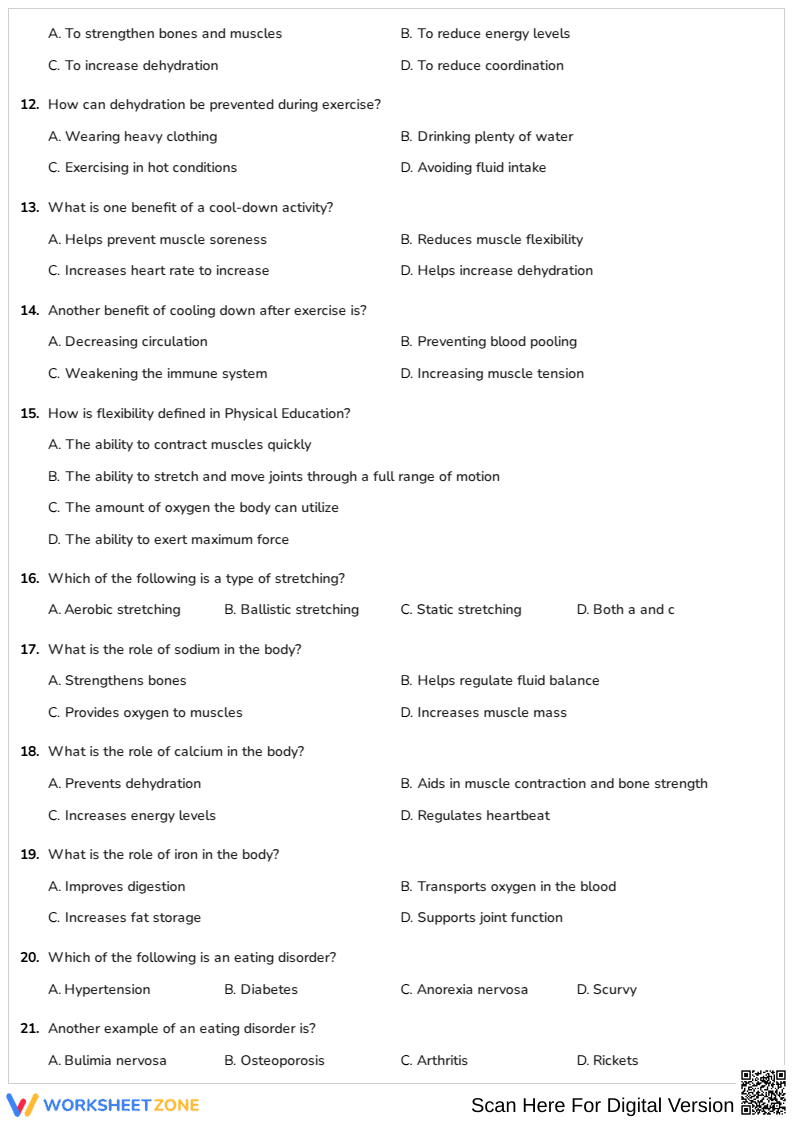
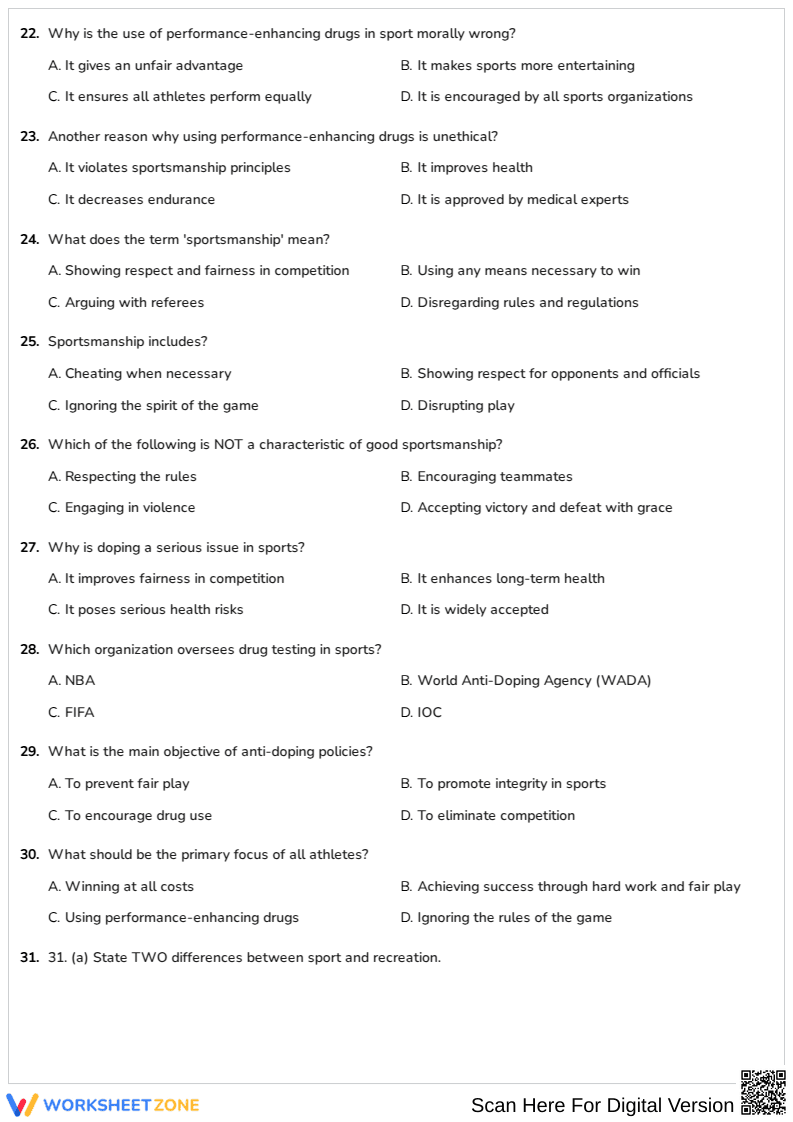
This Grade 10 and 11 Physical Education mid-term examination evaluates student understanding of essential health concepts. Students demonstrate knowledge of muscular anatomy, sportsmanship, nutrition, and exercise physiology. This ready-to-use assessment provides teachers with a clear measure of student progress in physical literacy.
At a Glance
- Grade: 10 · Subject: Physical Education
- Standard:
TEKS 116.54— Apply physiological and biomechanical principles to physical activity- Skill Focus: Anatomy, fitness, and sportsmanship
- Format: 5 pages · 37 problems · Answer key included · PDF
- Best For: Mid-term assessment or review
- Time: 45–60 minutes
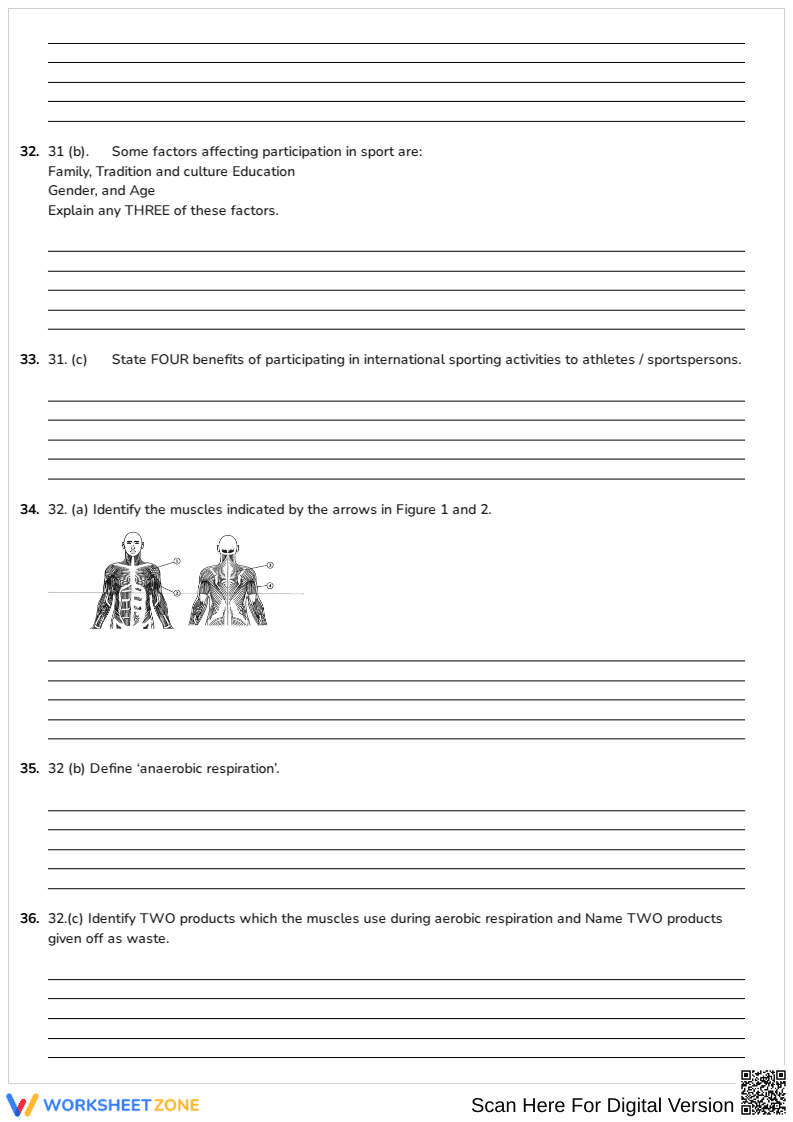
This five-page examination features 37 questions to test physical education mastery. It includes 30 multiple-choice questions covering Olympic history, muscular hypertrophy, joint types, and performance-enhancing drugs. The final section contains seven short-answer questions, requiring students to identify muscle groups from diagrams, explain sports participation factors, and define aerobic respiration.
Implementing this examination requires minimal preparation, making it an ideal zero-prep solution.
- Print (1 min): Download the PDF and print the assessment.
- Distribute (1 min): Hand out the examination. Instructions are self-explanatory.
- Review (15 mins): Collect exams for grading. The structured format streamlines evaluation.
Total teacher prep time is under two minutes, providing a classroom-ready tool suitable for sub plans.
Aligned to TEKS 116.54, this examination ensures students meet high school physical education requirements. The assessment addresses the standard: "The student applies physiological and biomechanical principles related to exercise." By evaluating knowledge of muscular systems and sports ethics, the test provides a holistic view of competency. Both standard codes can be copied directly into lesson plans, IEP goals, or district curriculum mapping tools.
This resource serves as a formal mid-term examination administered halfway through a physical education course. Alternatively, utilize it as a diagnostic tool to gauge baseline knowledge of anatomy. During the assessment, observe how students approach diagram questions to identify gaps in biology knowledge. Expected completion time is 45 to 60 minutes.
Designed for Grades 10 and 11 students in physical education or personal fitness courses. For students requiring accommodations, teachers might allow extra time or reduce short-answer requirements. This assessment pairs excellently with a foundational unit on the muscular system or a lesson on sports ethics.
Evaluating student comprehension of physical literacy through structured assessments like this TEKS 116.54 aligned examination is critical for long-term health outcomes. When students apply physiological and biomechanical principles to physical activity, they build a robust foundation for lifelong wellness and injury prevention. According to a comprehensive EdReports 2024 analysis, high school physical education curricula that integrate rigorous cognitive assessments alongside traditional physical activity significantly improve students' understanding of how their bodies function during exercise. This dual instructional approach ensures that learners do not just passively participate in sports, but actively comprehend the underlying mechanics, nutritional requirements, and ethical considerations involved in athletic competition. By systematically testing concepts ranging from muscular hypertrophy and joint mobility to the role of anti-doping policies, educators can definitively verify that students are internalizing the core tenets of physical health. This comprehensive evaluation strategy effectively bridges the gap between theoretical health knowledge and practical, everyday fitness applications.


