


























Views
Downloads
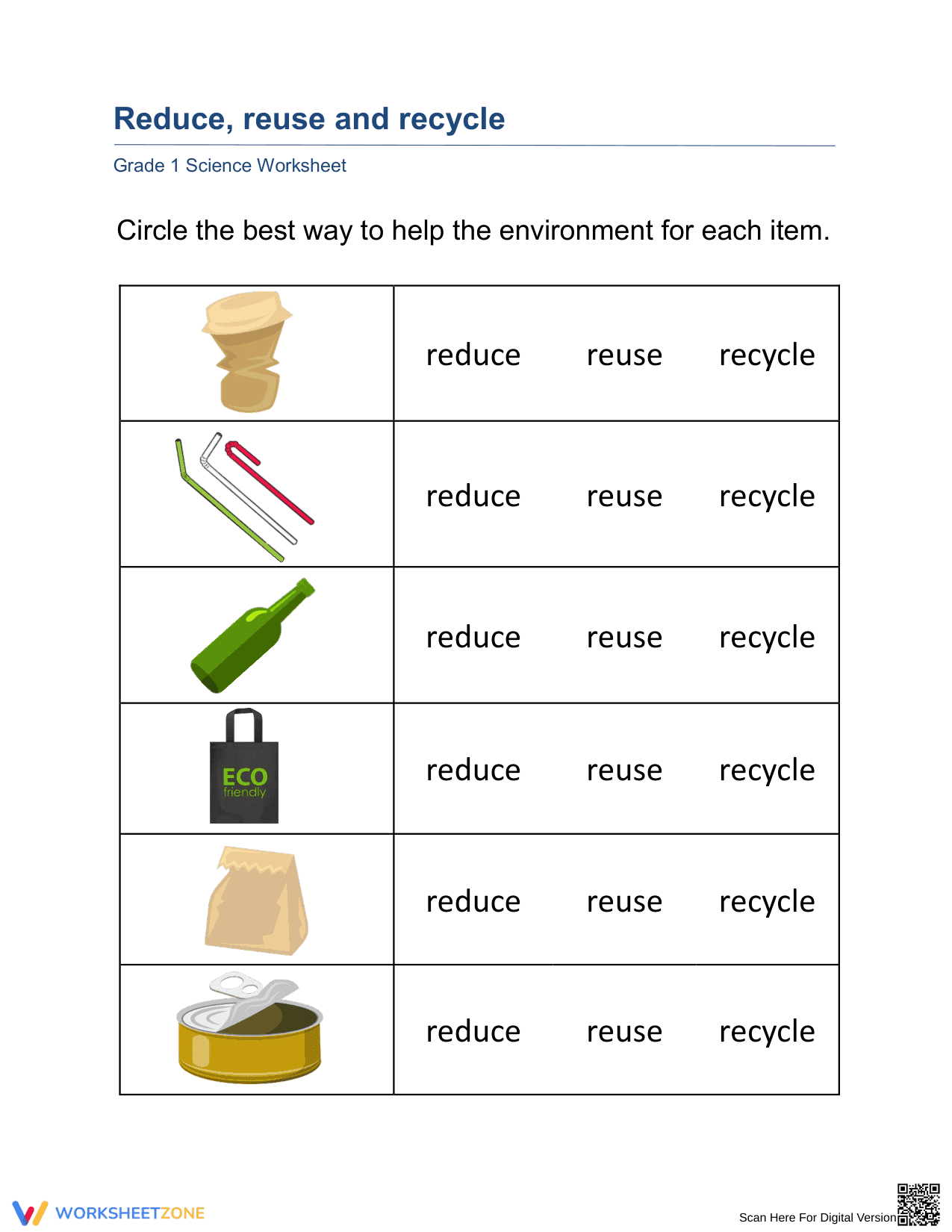

Grade 1 Reduce Reuse Recycle — Printable No-Prep Worksheet
Paste this activity's link or code into your existing LMS (Google Classroom, Canvas, Teams, Schoology, Moodle, etc.).
Students can open and work on the activity right away, with no student login required.
You'll still be able to track student progress and results from your teacher account.
This Grade 1 Science worksheet helps students master the three R’s: reduce, reuse, and recycle. By categorizing common household items, young learners build foundational conservation skills and understand how their choices impact the local environment. Students will identify the most effective way to manage waste, fostering early environmental stewardship and critical thinking.
At a Glance
- Grade: 1 · Subject: Science
- Standard:
1-ESS3-1— Communicate solutions that will reduce the impact of humans on the environment- Skill Focus: Conservation (Reduce, Reuse, Recycle)
- Format: 2 pages · 6 problems · Answer key included · PDF
- Best For: First-grade environmental science sub plans
- Time: 10–15 minutes
What's Inside
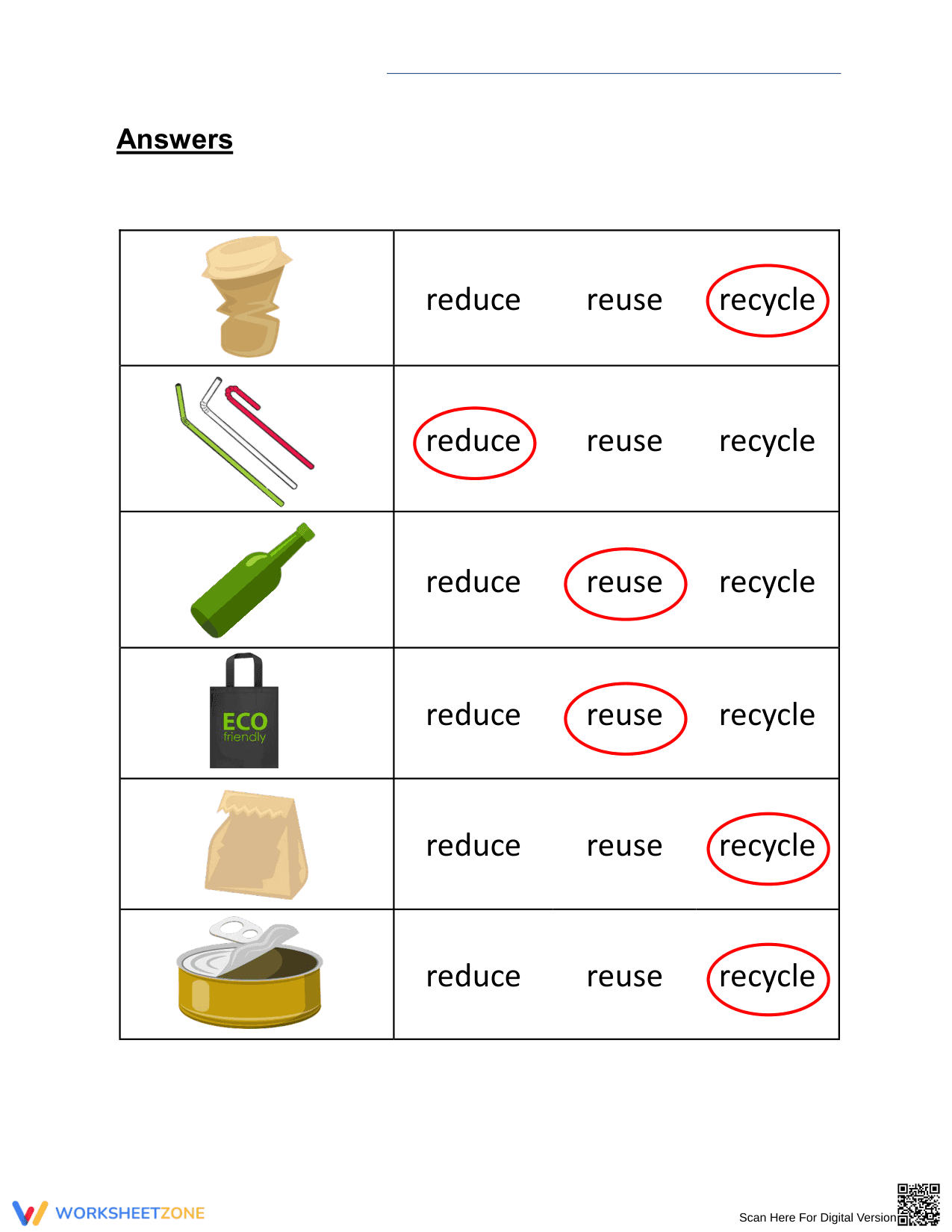
This resource features a clear, visually engaging table containing six distinct items, such as a reusable grocery bag and a tin can. Students choose between three options to determine the best ecological action. High-quality illustrations ensure accessibility for early readers, while a comprehensive answer key facilitates quick grading or student self-correction.
Zero-Prep Workflow
This worksheet is designed for immediate classroom implementation with a total teacher prep time of less than 2 minutes. First, print the single-page student handout (1 minute). Second, distribute the materials to students for an independent or small-group activity (30 seconds). Third, review the answers using the provided key to provide instant feedback on student understanding (30 seconds). Its simplicity makes it a perfect choice for unexpected sub plans or morning work.
Standards Alignment
The worksheet is strictly aligned to 1-ESS3-1, which requires students to communicate solutions that will reduce the impact of humans on the land, water, air, and living things. By selecting appropriate waste management strategies, students demonstrate an understanding of human-environment interactions. This standard code can be copied directly into lesson plans, IEP goals, or district curriculum mapping tools.
How to Use It
Use this activity as a formative assessment after a direct instruction lesson on waste management to check for understanding. Alternatively, assign it as a collaborative center activity where students discuss why certain items are better reused than recycled. For a quick check, observe if students can distinguish between "reuse" and "recycle" for the glass bottle and tin can during the 15-minute completion window.
Who It's For
This resource is tailored for first-grade students but is also appropriate for Kindergarten enrichment or Second Grade review. It supports diverse learners through visual cues and simple vocabulary. Pair this worksheet with a short passage about a local recycling center or an anchor chart displaying the three R's symbols to deepen the instructional impact.
According to RAND AIRS 2024, early exposure to environmental conservation concepts significantly improves long-term scientific literacy and civic engagement in elementary students. This worksheet targets the 1-ESS3-1 standard by requiring learners to identify practical solutions for waste reduction, a core component of human impact studies. Research from Fisher & Frey (2014) emphasizes that high-quality visual scaffolds, like the ones used here, support vocabulary acquisition for young learners exploring complex concepts like "sustainability" and "conservation." By categorizing six common items into reduce, reuse, or recycle workflows, students move from abstract theory to concrete application. This resource provides a structured, evidence-based approach to teaching ecological responsibility, ensuring that Grade 1 students meet national science benchmarks while developing a sense of agency regarding their environmental footprint. The inclusion of a clear answer key supports the iterative feedback loops necessary for early mastery.


